
The foundation of any successful digital presence begins with choosing the right web architecture. Two dominant approaches have emerged: the modern Jamstack and traditional server-based architectures. Each represents a fundamentally different way of building and delivering web experiences, with significant implications for performance, security, and scalability.
This article will examine the core principles of both architectures, their distinct advantages and limitations, and provide clear guidance on selecting the right approach for your specific project requirements.
Understanding Traditional Web Architecture
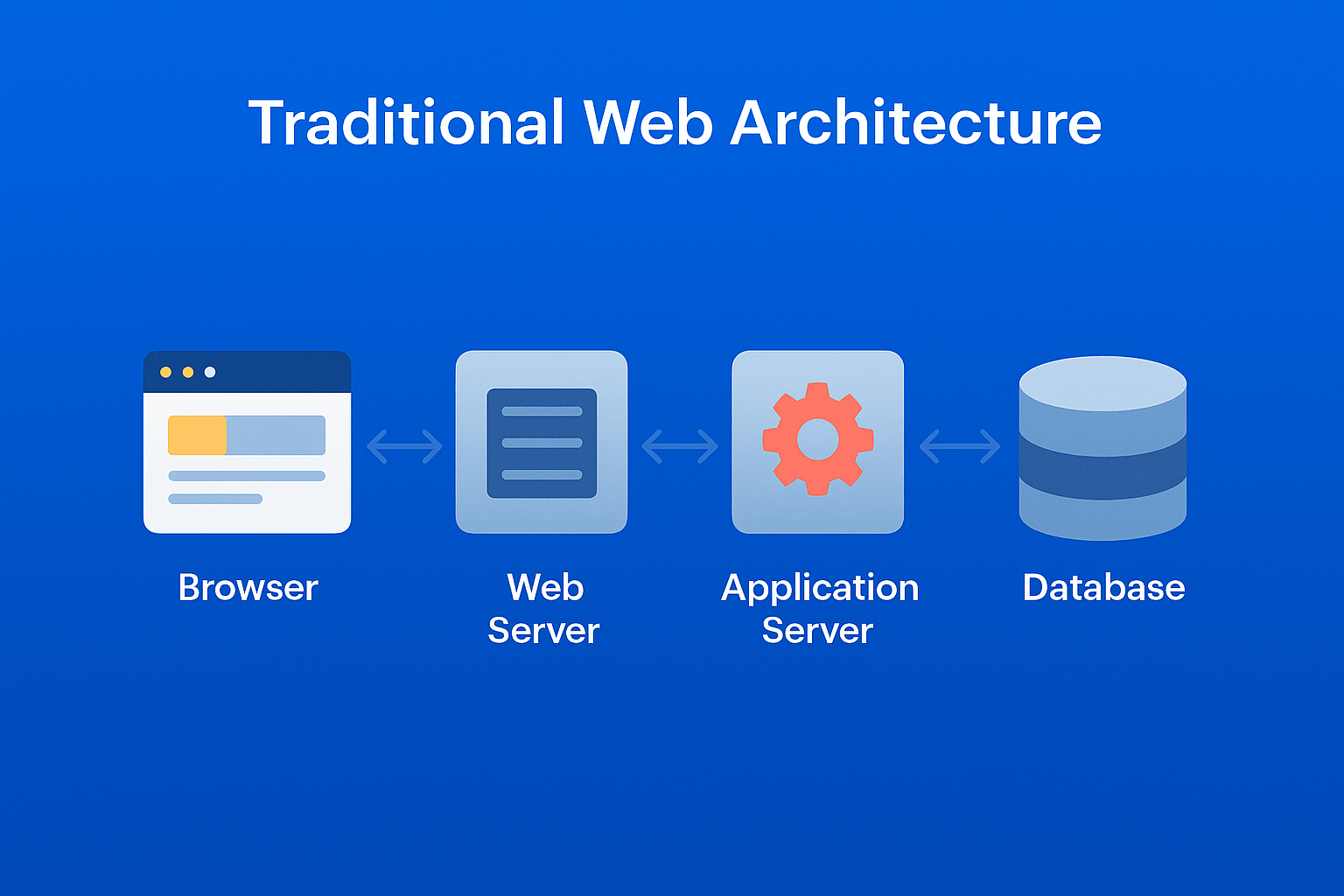
Traditional architecture follows a coupled approach where the frontend and backend are tightly interconnected.
In traditional models like WordPress, Drupal, or Ruby on Rails, the server generates HTML dynamically for each request. When a user visits a page, the server executes application logic, queries databases, and assembles the final HTML before sending it to the browser. This server-side rendering happens in real-time for every visitor, creating potential bottlenecks during traffic spikes. The entire application typically resides on a single server or cluster, with content management and presentation layers deeply intertwined.
Understanding Jamstack Architecture
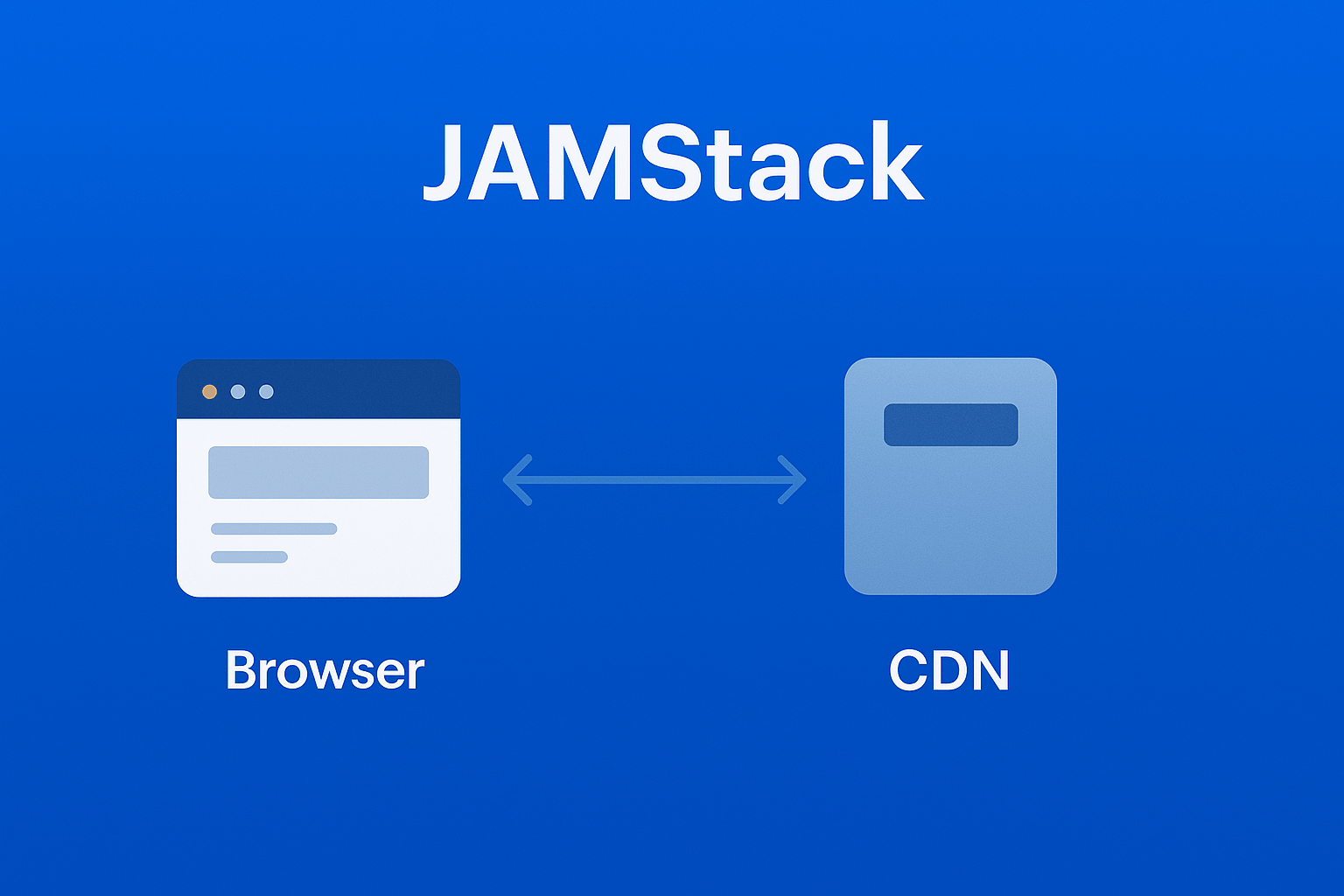
Jamstack stands for JavaScript, APIs, and Markup, representing a decoupled approach to web development.
Jamstack separates the frontend presentation layer from backend services and content management. Websites are pre-built into static HTML, CSS, and JavaScript files during deployment and served directly from a Content Delivery Network (CDN). Dynamic functionality is handled by client-side JavaScript interacting with various APIs. This architecture shifts the work from runtime to build time, resulting in inherently fast, secure, and scalable websites.
Performance and Scalability Comparison
The architectural differences between these approaches lead to significant performance implications.
Jamstack sites deliver exceptional performance because static files are served directly from CDN edge locations worldwide. There is no database querying or server-side processing during user requests, resulting in near-instantaneous load times. Scaling is automatic and cost-effective since CDNs are designed to handle massive traffic spikes without additional configuration.
Traditional architectures face performance challenges under load because each request requires server resources. As traffic increases, databases and application servers can become bottlenecks, requiring complex scaling solutions and infrastructure upgrades. While caching strategies can help, they often require significant configuration and maintenance.
Security and Maintenance Considerations
The separation of concerns in each architecture creates different security profiles and maintenance requirements.
Jamstack significantly reduces security vulnerabilities by minimizing the attack surface. With no direct connection to databases or server-side code execution during runtime, common threats like SQL injection and server exploits are largely eliminated. Maintenance is simplified because the hosting environment only needs to serve static files.
Traditional architectures require ongoing security maintenance since the server, database, and application code are all potential attack vectors. Regular security patches, updates, and monitoring are essential to protect against vulnerabilities. System administration and server maintenance represent ongoing costs and complexity.
Development Workflow and Content Management
The development experience and content management capabilities differ substantially between these approaches.
Jamstack enables modern development workflows where frontend developers can work independently from backend considerations. Content can be managed through headless CMS platforms that provide editing interfaces while delivering content via APIs. The decoupled nature allows teams to choose best-in-class tools for each aspect of the project.
Traditional architectures provide integrated content management within a single platform. While this can simplify initial setup, it often locks teams into specific technology stacks and limits flexibility. Making significant frontend changes may require deep backend knowledge, and the entire system must be updated as a single unit.
Cost Structure and Business Impact
The financial implications of each architecture extend beyond initial development to ongoing operational expenses.
Jamstack typically offers predictable, scalable pricing based on bandwidth and build minutes. Since hosting involves static files, costs remain low even as traffic grows. Development costs may be higher initially due to the need for more specialized expertise and integration work between separate systems.
Traditional architecture costs can be unpredictable, especially for successful projects experiencing rapid growth. Server resources, database performance, and maintenance requirements all contribute to operational expenses that scale with traffic. While initial development might be faster using established platforms, long-term maintenance and scaling costs can accumulate.
Final Thoughts
Choosing between Jamstack and traditional architecture depends on your project requirements, team expertise, and long-term goals.
Select Jamstack for marketing sites, content-focused platforms, and projects where performance, security, and scalability are priorities. It is ideal for teams comfortable with modern development workflows and API integrations. Choose traditional architecture for complex web applications requiring real-time server-side processing, established CMS platforms with extensive plugin ecosystems, or projects where the development team has deep expertise in specific server-side technologies.
Consider a hybrid approach that combines elements of both architectures. Many successful projects use Jamstack for public-facing content while maintaining traditional applications for specific interactive features.
The decision ultimately hinges on your specific needs. Jamstack represents the future of web development for many use cases, offering superior performance and security. Traditional architectures continue to excel for applications requiring complex server-side logic and real-time processing. By understanding the strengths of each approach, you can build a digital presence that meets your current needs while positioning your project for future success.
Feb 11, 2026

Drives the technical vision at Ramotion, uniting engineering excellence with design innovation to deliver scalable, secure, and user-focused digital solutions.