
Everyone fixates on visuals, yet multi-site rebranding lives or dies on internal alignment, local market culture, and site-specific constraints. If your teams do not understand or own the change, the rollout fragments, weakening recognition and trust among customers and other stakeholders.
This article explores strategic steps and scalable solutions to help you implement an impactful rollout—phases, governance, procurement, and cost controls—so your new brand lands consistently everywhere.
What is Multi-site Rebranding?
Multi-site rebranding is the coordinated rollout of a brand’s new identity across many locations. Its success hinges on aligning a core rebranding strategy with local execution, which requires scalable design and systems and clear governance to navigate through rebranding complexities. Only when the brand, agencies, rollout teams, vendors, and on-site staff share the same plan and expectations for the customer experience will a multi-rebrand stick.
How Multi-Site Rebranding Benefits Businesses
Multi-site rebranding has two major business payoffs: consistent customer recognition and trust across markets, and improved operational efficiency with reduced risk. It ensures your brand looks and sounds the same everywhere while establishing scalable systems, processes, and governance that optimize resources and results.
Rebranding as an organizational change driver
Rebranding forces organizations to evolve their entire systems, from redefining their core vision, mission, and values to aligning operations and engaging employees. Think of rebranding as a reset that reshapes both appearance, culture, and practices.
Pre-Launch Considerations for Global Rebrands

Burger King global rebranding launched on social media. Image via The CEO Magazine
Global rebrands most often unravel before they even launch. Consider the following factors to align people, lock procurement, plan the debrand, and choose the right launch strategy.
Engage employees early
Employees shape how customers experience a rebrand. Engage them early to avoid confusion, loss of trust, or uneven execution.
Start with the basics: explain why you’re rebranding, what the new corporate identity and messaging are, and how the rollout will proceed. Equip customer-facing teams with FAQs, guides, and short how-to videos.
Use a cascade model: leadership is briefed first, managers are trained to coach their teams, and frontline staff receive site-level sessions. Schedule a town hall meeting to align expectations and equip them with the right tools and role-specific training.
Align brand, agency, and rollout teams
Clear roles and decision paths prevent costly rework.
Define who owns the multi-site rebranding strategy(brand), creative execution (agency), and on-the-ground delivery (rollout teams). Map workflows and establish feedback loops before rebranding begins.
Identify key decision makers and team managers to ensure seamless communication and execution. Review contracts with external partners and confirm deliverables and change-management processes. Finally, establish a central repository for all the approved new brand assets, messaging, and guidelines to avoid errors across locations.
TIP: Ask for an agency representative who can make design decisions during rollout.
Procurement and supplier strategy
Procurement complicates everything, especially when you’re juggling multiple locations. Secure vendors who meet volume, lead time, and quality requirements by taking these steps:
- Categorize purchases and assign at least one preferred vendor per category or region.
- Ask for proof of capacity. Request past project examples, client references, and evidence of production volume. Favor vendors with strong subcontractor networks.
- Embed the QA process into the contract. Require mid-production checks, photograph evidence before shipment, on-site inspections, and payment milestones tied to approvals.
Debrand before rebrand
Debranding involves scrubbing off the old brand identity—from physical stores to digital channels and other customer touchpoints—to make way for a new one. It begins with a full audit and inventory of existing brand assets across physical and digital touchpoints.
Plan removal in phases to maintain operations and minimize customer confusion. Manage the gap between removal and installation with clear notices and temporary multi-site signage rollout when needed. Track progress by site and inform stakeholders of any delays to prevent mixed-brand exposure.
Phased rollout vs. Big-Bang launch
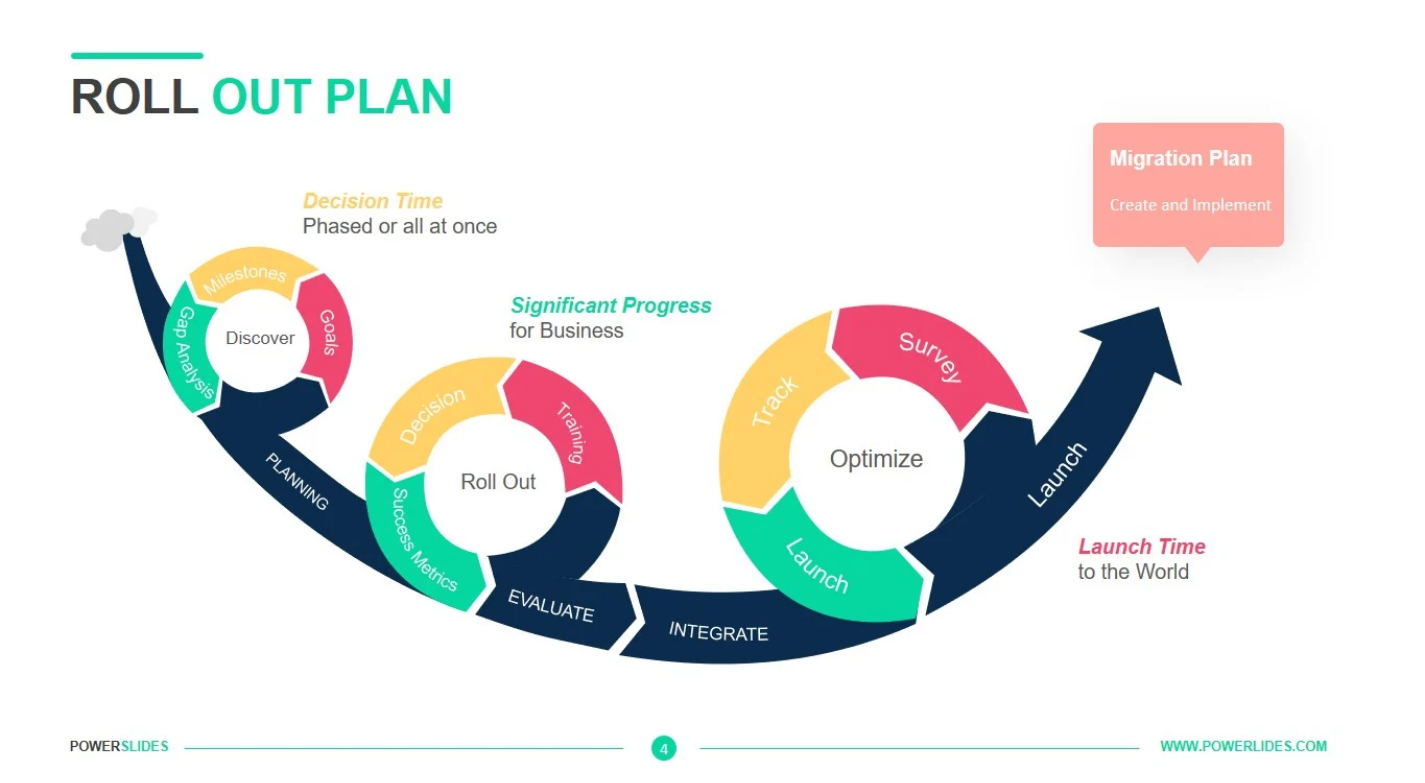
A phased rollout is implemented gradually over several weeks or months. Big-bang launch is when all locations reveal the new brand on the same day. Choose between the two according to complexity and objectives.
For complex operations, franchised systems, or limited budgets, opt for a phased rollout. Move in waves, prioritizing high-impact, low-complexity sites so you can refine process and spread costs. For brands that are mainly digital, when tying a relaunch to an ad campaign, or when inconsistent branding causes high confusion (e.g., financial services), a big-bang launch can be a win. But keep in mind that it requires rigorous planning and capacity assurance.
Whatever you choose, decide based on customer behavior, competitors, internal readiness, and financial capability. Create contingency plans for permit delays, supply disruptions, and other complications.
Multi-Site Rebrand Rollout Steps
Implementing a rebrand varies from one company to another. Different goals, locations, and markets require different treatments. Follow these foundational steps to reduce risk, increase savings during multi-site brand rollout, and ensure a consistent customer experience.
Step 1: brand audit and site assessments
Identify gaps and constraints before investing in rollout.
Before you invest heavily in an overhaul, audit the following aspects:
- Products/services. Confirm product-market fit and whether features or services need updating by region.
- Brand identity system. Inventory logos, color palettes, imagery, and templates. Note inconsistencies and assets with high recall that should remain or change.
- Messaging and voice. Test core narrative and tone for cultural appropriateness and clarity in each market.
- Brand touchpoint. Inspect every physical and digital touchpoint—store exteriors, websites, packaging, and social media pages—for visual and experiential alignment. Record foot traffic, peak times, and competitive advantage.
- Regulations and other constraints. Document permits, timelines, landlord rules, safety codes, language requirements, and other recurring barriers.
At this stage, you should have a solid audit assessment that includes conditions, risks, required work, and estimated lead times.
Step 2: strategy, positioning, and visual system
Secure the one thing you want customers to recognize everywhere and design systems around it.
Here, you should establish positioning and messaging pillars that translate across multiple markets. Your chosen tone of voice should be guided by localization guardrails. And a modular visual system is set in place—core brand elements that never change and flexible components that adapt to local constraints.
For example, Starbucks ensures the siren logo remains a consistent fixture across its branches. Store design can adapt to the location, as seen in their traditional Japanese house branch in Kyoto.

Starbucks Kyoto branch via Condé Nast
TIP: List acceptable local variations and a simple approval matrix so localization stays on-brand without slowing rollout.
Step 3: rebranding rollout planning and sequencing
Sequence launches to maximize visibility, reduce risk, and manage cash flow. High-impact, low-complexity locations are considered early waves, while low-impact, high-complexity locations are considered late waves.
For instance, flagship locations are in high-visibility urban locations. They get priority in the plan as they set the standards. Other regional locations outside the cities follow suit, building momentum before launching rebrands in low-volume rural locations. The final wave is when rebranding on all sites is completed, and the quality audit begins.
When planning the rollout, it’s best to isolate high-complexity sites early and secure whatever is needed—permits, regulatory requirements—for a seamless multi-site launch. Create a master rebranding rollout schedule that includes critical-path items and contingency buffers.
Step 4: coordinated multi-site lunch
Next, real action on the ground takes place. Execute local changes so customers experience the new brand consistently and operations continue to run.
For example, if a restaurant wants to rebrand across 50 locations, the first changes will happen on customer-facing elements—exterior signage, store entrances, the website homepage, social media profiles, etc. This is followed by new menus, uniforms, and merch designs. By the final week, supplies with old designs have been completely outphased and restaurant staff have a solid grasp of the new messaging.
Smooth coordination requires checklists, a central asset repository, seamless approval path, and daily updates during each wave. Training and orientation should be held from leadership down to frontline teams.
Step 5: post-launch measurement and optimization
Run a post-launch audit through random spot checks, mystery shops, and collecting customer feedback. Check for the following:
- Physical and digital compliance. Check if all visuals were installed/updated as intended.
- Customer perception. Measure brand recall metrics—unaided/aided awareness, top-of-mind, brand search volume—and ask for customer feedback given to your frontline team.
- Rebranding impact. Compare actual sales, transactions, value, signups, repeat visits, etc. to your set KPIs. Did the rebrand accomplish your goals?
After gathering key insights, prioritize issues from most to least concerning and address them accordingly. Assign ownership and set deadlines for each task to ensure timely fixes and document them. Update rollout strategies based on these data.
Cost Reduction Strategies in Multi-Site Rebranding

Burberry store redesign in London for a more immersive experience. Image via Show Studio
Modular standardization
Rather than designing each site from scratch, develop modular brand components that fit together across locations. Standardized elements of multi-site rebranding, like a few sign sizes, adaptable templates, and interchangeable graphics, can cut costs and speed up the deployment of assets. Pre-approved modules reduce production errors, simplify approvals, and ensure consistent quality control, while allowing flexibility for local adjustments.
Bulk buying and vendor consolidation
Consolidate vendors by category or region to negotiate volume discounts, simplify supplier management, and improve consistency. With accurate demand forecasting, your central purchasing team can authorize orders in line with the plan. Consolidate shipments to reduce freight costs and handling to lower unit prices and free internal resources for rollout oversight.
Phased rollout for cash flow
Expenses can reach astronomical amounts, especially for multi-site rebranding. Aside from negotiating with your vendors, spread expenses over time to avoid depleting your funds all at once.
Structure phased launch or waves to match cash availability. For instance, wait for revenue from flagship stores to kick in before funding the rollout at other sites. kick in from flagship stores before funding the rollout in other sites. Finally, prioritize site rollouts based on how much they generate.
Choosing the Right Rollout Partner
A multi-site rebrand requires working with specialized partners — website rebranding agency, manufacturers, suppliers, contractors, and other third-party logistics providers. Choose the right one and they can turn complexity into a coordinated program that leads to desired outcomes.
Why partner choice determines success
Consistency and reliability are the core deliverables of a rebrand. You want a partner who treats your brand as an operational system, not a series of one-off jobs. That means maintaining quality across sites, transparent communications, and strategic control so you always know where your brand stands and impending risk.
Look for partners who can be the single point of contact, take ownership of the process, and can deliver service expectations.
End-to-end rollout expertise
Favor partners who can lead the end-to-end program—converting guidelines into technical specs, coordinating procurement and production, and managing logistics to installation. An integrated partner simplifies coordination, reduces handoffs, and speeds problem resolution.
Evaluate their workflows and tools and request concrete evidence of their previous multi-site rebranding projects. Compensation and contract terms should reflect accountability.
Global reach and local execution
Toyota Lexus, a luxury car brand, lost a trademark case against Prolexus, a local shoe brand, due to similarities in their names in Indonesia. This has placed Toyota at an iffy spot, making it look like the brand didn’t do its homework when it comes to legal compliance before launching in the country.
Global rebranding requires local know-how. Regulatory, permitting, and cultural differences are frequent sources of delay and risk. Insist prospective partners to demonstrate their regional capability. They must have vetted local suppliers, experienced regional project managers, and documented compliance knowledge.
They should be able to demonstrate how they handle country-specific pitfalls and how they maintain brand integrity while adapting to local constraints. Finally, require ongoing quality checks and a rapid remediation process so any deviations are caught and fixed quickly, protecting both schedule and brand reputation.
Make Rebranding a Scalable System
A successful multi-site rebranding takes careful planning and brand implementation. It anchors on leadership alignment, modular brand assets, established procurement processes and QA, and empowering local teams with strong governance.
Start with a thorough audit and a pilot rollout to validate assumptions, workflows, and vendor capacity. Capture learnings and modify strategies before scaling in waves with contingency plans in place. This approach ensures consistency, reduces risk and cost, and turns a complex multi-site launch into an executable system you can measure.
Feb 27, 2026

Creates insightful, strategy-driven content that translates complex design and branding concepts into accessible knowledge, supporting Ramotion’s mission to elevate digital experiences.