
Donor fatigue, confusing messaging, and leadership changes make it difficult for nonprofit organizations to retain trust and support. Nonprofit rebranding can address these issues by clarifying the mission and rebuilding the reputation, but it is undoubtedly time-consuming and expensive. It can backfire if rushed, poorly researched, or disconnected from stakeholder sentiment.
Before starting your nonprofit rebranding project, read through our guide and discover practical steps to relaunch with care, minimize risks, and optimize results.
What is Nonprofit Rebranding?
Nonprofit rebranding is a strategic approach for adapting and strengthening identity amid a changing landscape. It helps you earn a second look from lapsed donors in a competitive space.
With nonprofit rebranding, you can create a new identity that conveys a different message and shapes how people perceive your organization. However, it is crucial to retain elements that resonate with your loyal donors and supporters. This prevents confusion and a complete disconnect, which can break the trust you have built.
Nonprofit vs. For-Profit Rebranding: Key Differences
Nonprofit brands function as a promise and a reputation rather than merely a marketing tool, so rebranding has different aims, relationship priorities, and metrics than for-profit work.
While companies often rebrand to boost profits, market share, and sales, nonprofits rebrand to increase mission awareness and deepen social impact. For-profit rebrands shift buyers from one-off transactions to ongoing customers who pay more; nonprofit rebrands build a sustained support network of donors, volunteers, and partners that advance beneficiaries’ outcomes.
Success metrics differ accordingly, too. Businesses focus on building brand value, awareness, website traffic, conversion rates, and sales. Meanwhile, nonprofits prioritize mission awareness and perception, donor acquisition and retention, cost per dollar raised (CPDR), and volunteer engagement.
Why Small Brand Details Matter in Nonprofits
Before redesigning assets, assess the small brand details that preserve trust, consistency, and credibility.
Nonprofits rely on public trust and perceived integrity, so donors expect transparency and measurable outcomes. Because skepticism is common, marketing must consistently signal credibility. Inconsistent visuals or messaging risk being seen as incompetent, alienating supporters, and inviting backlash.
A focused brand audit reveals gaps and guides a responsible rebrand. Review these channels:
- Website: implement analytics (bounce, exit pages) and reputation checks.
- Email: check consistency in tone and performance (open, click-through, and conversion rates) against historical benchmarks.
- Social media: inventory official/unofficial pages.
- Print and signages: compare conformity across current and legacy materials.
- Report and presentations: standardize templates and enforce alignment across voice, data presentation, and impact language.
A concise audit provides the input you need for strategy rollout decisions.
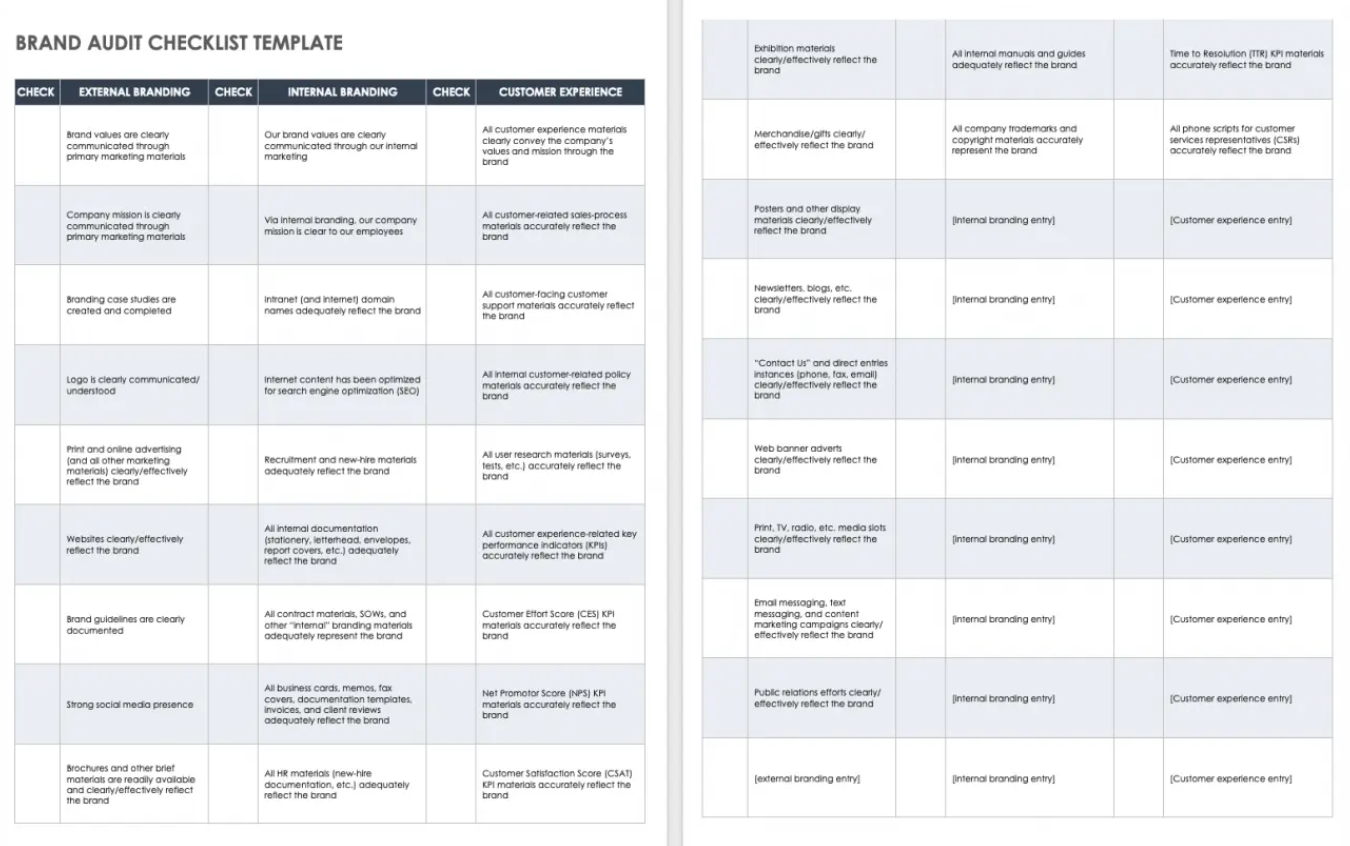
Brand audit checklist example via Smart Sheet
Nonprofit Rebrand Timeline: What to Expect
Nonprofit rebranding is more complex than that of other organizations. If businesses have their chief executives decide on direction and have the final say, nonprofit organizations rely on their internal teams—meaning everyone is involved and must agree on the final decisions.
Nonprofit rebranding also carries higher stakes; if done hastily, it can confuse supporters and unintentionally break existing partnerships. Finally, a huge chunk of resources goes to funding missions. This stretches timelines in addition to governance delays, board cycles, fundraising seasons, and grant reporting.
The rebranding process typically has six phases:
- Discovery. Audit assets and gather stakeholder feedback to identify crucial gaps that a rebrand should address.
- Strategy. Turn discovery insights into measurable goals, target audiences, positioning, and a realistic phased plan.
- Identity. Design the visual branding that reflects the new positioning while retaining heritage elements that preserve donor trust.
- Messaging. Create audience-centered key messages that explain what changed, why it matters, and how they can engage with the new brand.
- Rollout. Introduce the brand gradually so you can monitor issues and address them before a full public reveal, while protecting relationships.
- Implementation and adoption. Staff training, informing partners, and creating guidelines for consistency and clarity.
Who to Involve in a Nonprofit Rebrand
Streamline your core rebranding committee by prioritizing impact and keeping numbers manageable. Key roles to include:
- Board members: govern strategy, budget, and hold final approval authority.
- Senior leadership: executive director or CEO, program directors, and department heads set purpose and ensure cross-team alignment.
- Internal staff and volunteers: combine as operational implementers and frontline ambassadors who execute and test new assets.
- Donors and partners: merged as external stakeholders who offer vital feedback on credibility and market fit.
- External branding experts: provide technical guidance, processes, and deliverables.
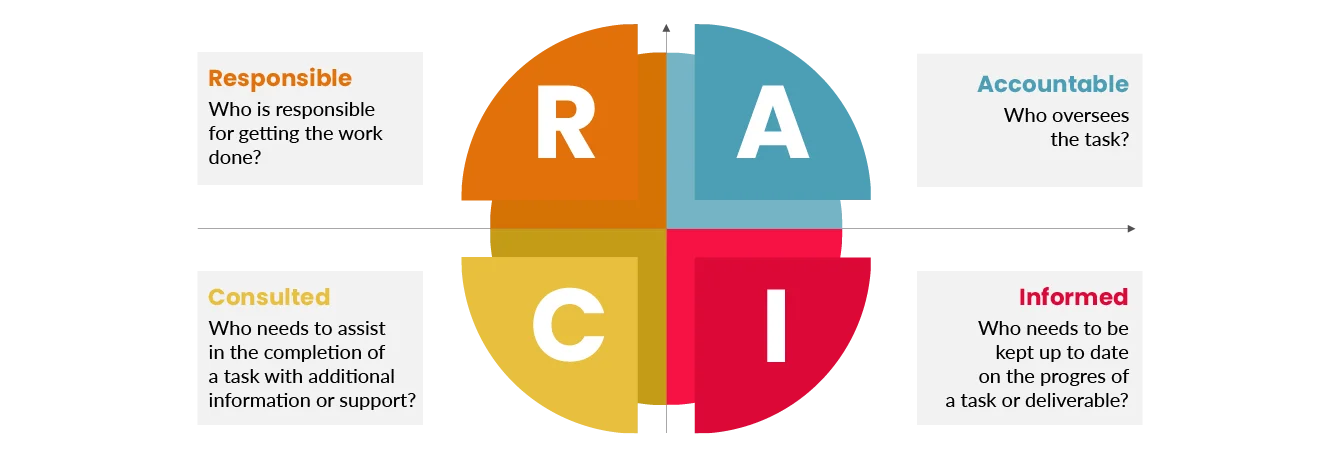
RACI matrix via Opexity

Keep inclusivity without stalling progress by defining decision rights from the get-go. Limit the number of reviewers per stage, structure feedback rounds, and document approval criteria. That balance preserves diverse input while preventing scope creep and missed deadlines.
Before selecting who gets to be a part of your A-team, here’s what you need to know.
Why too many opinions derail brand strategy
Managing a diverse rebrand team is tricky. Differing opinions can stall timelines, affect decisions, and erode morale. So, set clear rules, timelines, and metrics for decisions before you form a task force.
- Feedback Scope Creep. Limit reviewers, structure feedback windows, and assign a coordinator to organize input so revisions don’t drag on.
- Unequal Representation. Rotate facilitators, ensure diverse voices get time, and prevent any group from dominating the conversation.
- Lack of Leadership Backing. Define and assign decision rights, document approval criteria, and define escalation paths to maintain momentum and accountability.
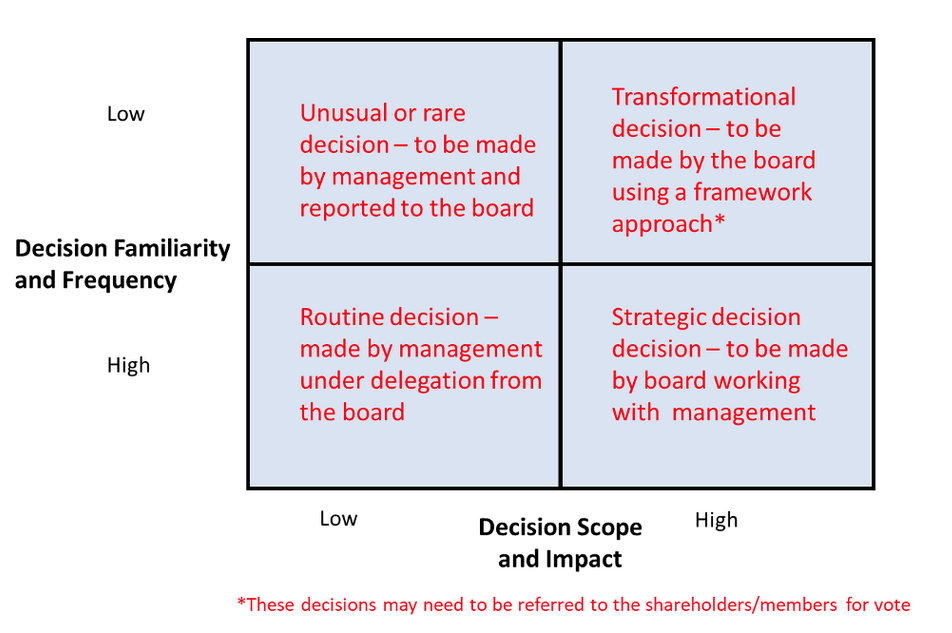
Decision matrix example via BoardPro
Why Nonprofit Rebrands Work Better as a Gradual Rollout
Sudden rebrands can amplify risks for NGOs, leading to long-term setbacks in funding and mission delivery. A gradual rollout enables nonprofits to work out the kinks without full exposure. It manages chaos by limiting the scope of feedback per stage and maintaining momentum. So, what does it look like? A rebranding rollout comes in three phases: rolling out the core messaging, introducing the visual identity, and updating the full ecosystem.
Phase 1: messaging rollout
Unify internal understanding by sharing the new mission, marketing taglines, identity, and key narratives, collecting feedback, and assigning responsibilities.
Duration: 3-6 months
Phase 2: visual identity introduction
Introduce the visual system into low-risk assets (emails, templates, reports), train teams on brand guidelines, and notify major partners and donors to avoid confusion.
Duration: 4-8 months
Phase 3: full ecosystem update
Execute the public launch across high-visibility channels, retire legacy materials on a schedule, and monitor audience response to iterate as needed.
Duration: 5-10 months
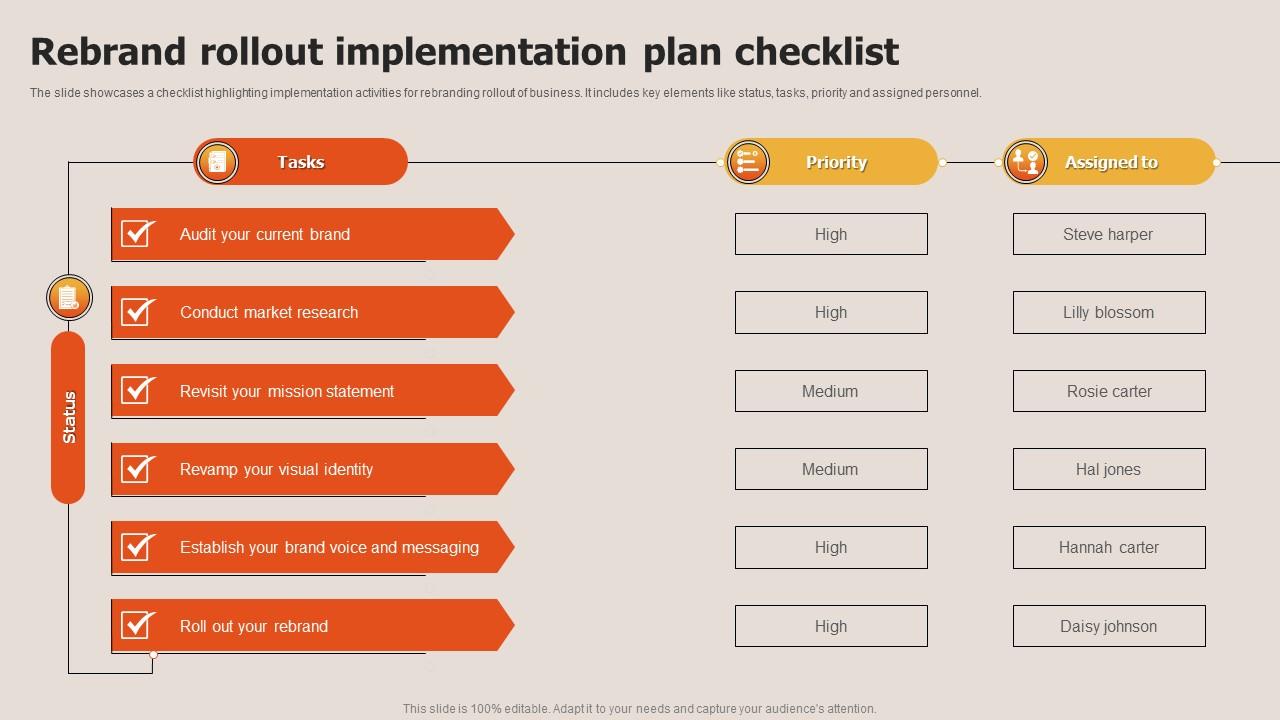
Rebrand rollout implementation checklist example via Slide Team
Keeping the Rebrand Audience-Centered
Avoid losing your core audience—beneficiaries, donors, volunteers, partners, staff, media, community—by ensuring your core messaging and identity still resonate with them.
That said, your rebrand messaging should be tailored to each audience according to their needs. For instance, donors require trust signals, like transparent financial and impact data reporting, while beneficiaries require clarity about services. Speak your audience’s language and avoid jargon for clarity.
If, for example, an environmental nonprofit is seeking donations for a new project, instead of saying “Donate Now”, a better audience-centered CTA would be “Read Our Impact in Our 2026 Report”. It gives donors the proof they need to make a donation. An audience-centered rebrand maintains relevance, boosts engagement, strengthens the organization’s credibility, and increases impact.
Balance Creativity with Real-World Constraint Checklist
Creative ambition is vital to leave a strong impression, but it must clear tests for trust, measurable impact, and practical constraints before you invest.
- Set hard caps and require every idea to meet predefined budget limits, a capped reviewer list, and a mission-fit gate before approval.
- Design for constraints by prioritizing accessible, versatile templates and design systems that work across platforms.
- Filter ideas early with constraint checklists to kill concepts that don’t match and focus on viable solutions that fit your mission and goals.
Why Brand Trends Are Risky for Nonprofits
Trends can deliver quick, low-cost visibility, but nonprofits risk eroding trust if they choose fads that don’t align with mission, donor expectations, or long-term credibility. Creative shortcuts fade fast and can confuse supporters. The key question to ask if you must follow a trend is: Will this still feel credible in three to five years?
Nonprofit Branding Do’s and Don’ts
The do’s: best practices
Lead with a single clear mission and specific impact language.
Having a clear understanding of the reason behind the rebrand and its goals prevents trendy dilutions and helps keep focus on strategies that deliver results.
Speak like your audience and be consistent with your language.
Effectively conveying your organization’s core mission, values, and message requires a language that can emotionally connect with your audience.
Provide proof of trust.
Gain your audience’s trust by publishing outcome reports, credentials, and partner information. Remain transparent across all communications and ensure safeguards are in place to protect your teams, donors, beneficiaries, and other stakeholders.
Design for accessibility and real-world use.
Expand your reach by implementing inclusive practices that cater to everyone, including people with disabilities. At the very least, you should meet the WCAG 2.2 AA Standards, which provide guidelines for ensuring website accessibility.
The don’ts: common branding mistakes that break trust
Inconsistent visuals and voice across channels.
Establishing recognition is hard when your brand looks different across platforms. It signals disorganization, leading to donors dropping out and visibility online tanking.
Overpromising impact or using unverifiable claims.
Yes, it’s hard to sell causes, especially when thousands of other nonprofits are vying for support in your space. But, overpromising impact or lying about it can sabotage not just your brand but the organization itself.
Messaging that centers the organization over its audience.
A rebrand aims to connect with its intended audience to gather the support it needs to implement projects. It’s not meant to please the higher-ups within the organization.
Ignoring internal adoption.
The success of a nonprofit rebrand hinges on how well your teams implement the strategies. Skipping training and failing to establish guidelines and asset control are sure ways to fail before you even roll out publicly.
How to Start a Nonprofit Rebrand the Right Way
So, now that you know key concepts and strategies in nonprofit rebranding, how do you actually apply them to your organization? This is when setting the foundation becomes crucial, which entails internal preparation and finding the right partners.
Prepare your organization for change
- Set your goals. A rebrand is more than just creating trendy visuals that capture attention. Have your mission statement in mind when defining your goals,, and make them measurable—e.g., awareness, trust, conversion, and retention rates.
- Align leadership on scope, budget, timeline, and decision rights. Do this early to avoid miscommunication, scope creep, delays, and overspending.
- Audit current brand assets and identify pain points. Brand assets that do not work as intended and no longer resonate with the organization should go. Changes in the market also affect demand and issues that need addressing.
- Gather audience insights. Conduct surveys and interviews across relevant audiences—internally and externally. Find out what people think of you now and what they hope will change. Audience feedback will inform and guide your rebranding strategies.
- Create a rollout and adoption plan before design begins. It’s easy to get lost in the creative process, so provide guardrails by mapping out everything, from development to design implementation.
Choose the right partners and process
Having the right support can boost a nonprofit’s credibility, expand reach, and achieve rebranding goals. Below are some criteria for finding the right partner, whether that be a rebranding firm or a consultant, and establishing processes.
- Define what you need. Know who to look for by outlining what exactly you need from interested partners—strategy, identity, or campaign implementation support.
- Set requirements. Filter the best partners by being transparent on what you require from them to qualify. That could range from relevant experience in nonprofits and managing complex stakeholders to implementing accessibility and governance practices.
- Set a clear project structure. Your partners need to be able to work within the project structure with strict adherence to phases, deliverables, review cycles, approvals, and asset handoff.
- Use objective selection criteria. Review case studies and client history, assess their values and work styles, and ensure they have the capacity to meet your needs.
- Lock documentation requirements. Ensure your partners are clear about the deliverables to ensure consistency and a smooth rollout. It includes a messaging framework, brand guidelines, templates, and training.
Rebranding as a Mission Strategy
The future of nonprofits will be defined by their transparency, authenticity, and relationship-driven impact. Strategic nonprofit rebranding is no longer about having a new look; it’s a mission- and audience-centered investment that fosters trust and gains sustainable funding.
That said, prioritize accessibility, consistency, and verifiable impact. Use audience insight and sound governance to remain true to who your organization serves. And leverage gradual rollout to protect relationships and avoid missteps as you work your way up.
Finally, find the right support by working with expert partners that have relevant experience in nonprofit rebranding.
Feb 25, 2026

Creates insightful, strategy-driven content that translates complex design and branding concepts into accessible knowledge, supporting Ramotion’s mission to elevate digital experiences.