
Modern businesses operate in an environment defined by rapid change, increasing customer expectations, and constant technological evolution. To stay competitive, organizations must deliver new features faster, integrate with multiple systems, and scale without compromising stability or performance.
Traditional system designs often struggle to keep up with these demands. As applications grow, tightly coupled architectures can slow down innovation and make even small changes complex and risky. This has led many organizations to explore more flexible and modular approaches to building software, such as composable architecture.
In this article, we explore how composable architecture helps organizations build adaptable, scalable, and future-ready systems.
Read along to understand its principles, components, use cases, and how to implement it effectively.
Introduction
Software teams today face constant pressure. Markets shift quickly, and customer expectations change. New integrations, channels, and partners must be added faster than ever. At the same time, businesses are expected to release updates more frequently without compromising stability.
Traditional monolithic architecture often struggles under this pressure. When systems are tightly coupled, even small changes can require large releases. This slows innovation, increases risk, and makes scaling more complex than it should be.
This is where composable architecture offers a different path. By designing systems as modular, loosely connected components, organizations can move faster and adapt more easily. Instead of rebuilding entire platforms, teams can change or replace individual parts without disrupting the whole system.
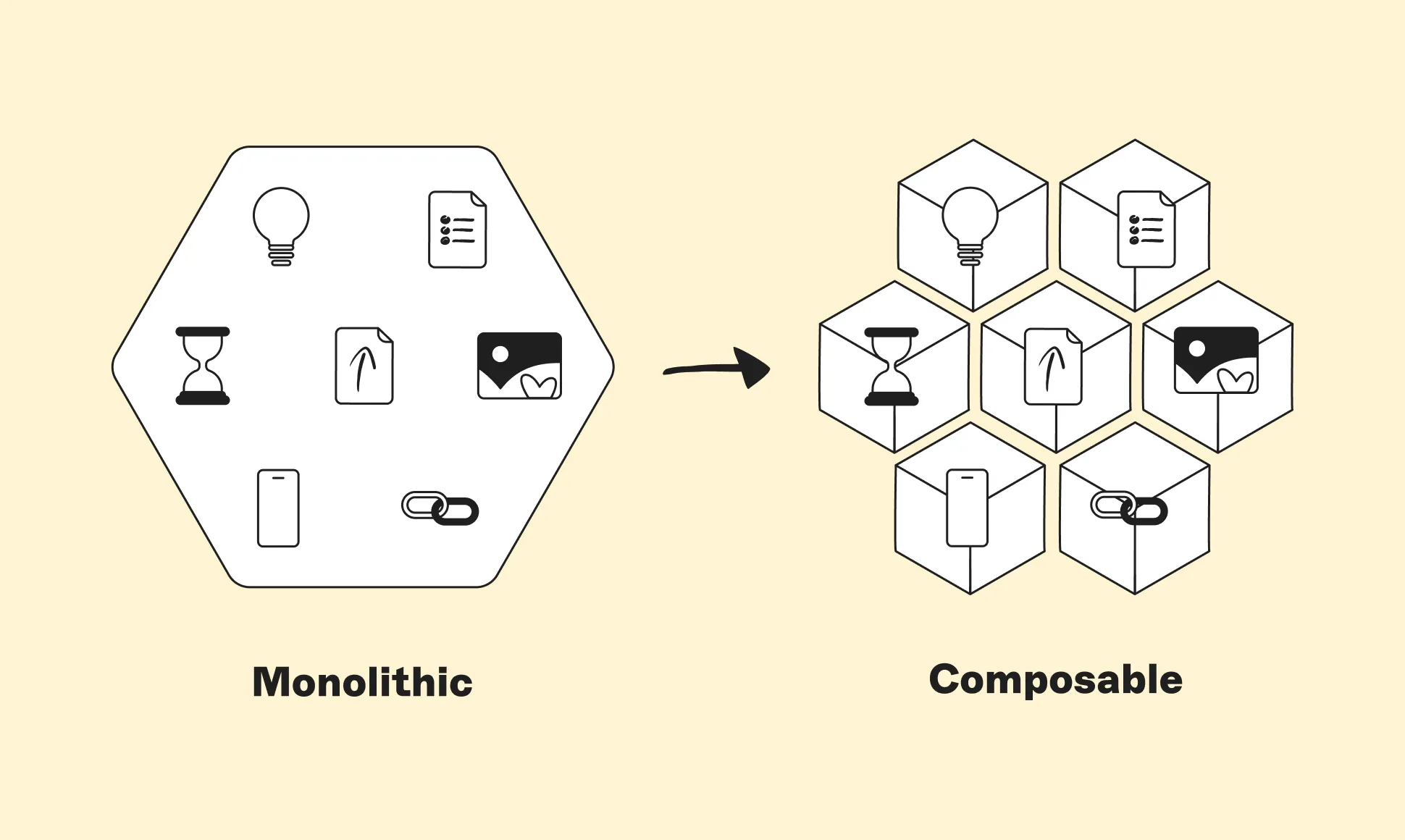
Monolithic and composable architecture at a glance (Storyblok)

Composable Architecture Definition
Composable architecture is a design approach where systems are built as modular, loosely coupled components that communicate through APIs. Each module is independently deployable and aligned to a specific business capability. This structure allows teams to develop, update, and scale parts of the system without affecting the whole.
In composable systems, components interact through clear contracts rather than shared internals. An API-first mindset ensures integration is planned from the start, making connections predictable and manageable. The result is an architecture that supports flexibility without sacrificing control.
What is a composable architecture?
Composable architecture is a modular, API-first approach where loosely coupled components are independently deployable and scalable, enabling faster and more flexible system changes.
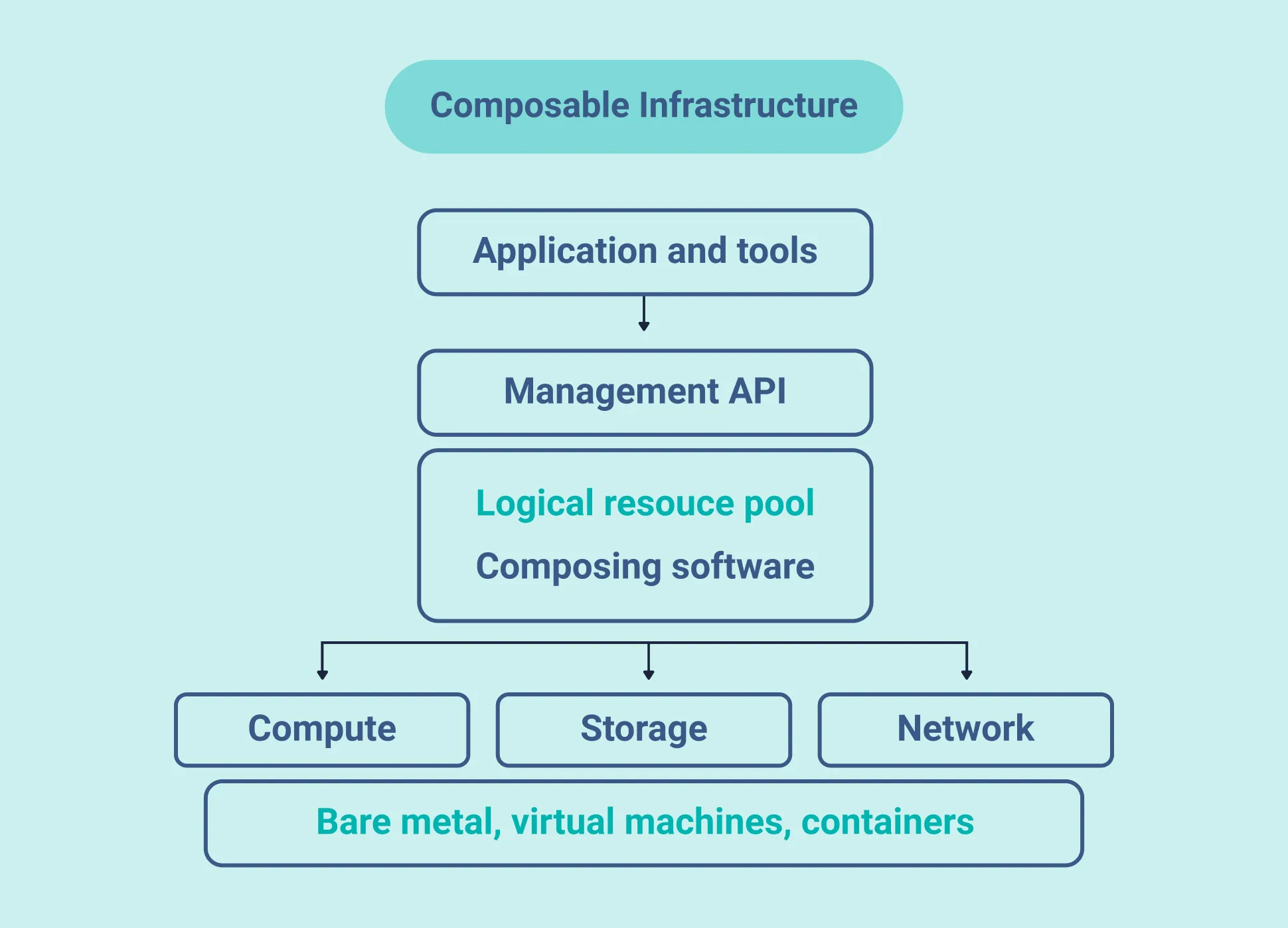
The composable architecture explained (Storyblok)

Key outcomes of composable architecture include:
- Faster delivery: Teams release updates independently and reduce coordination delays
- Scalable growth: Individual modules can scale based on demand
- Easier integration: API-based connections simplify partner and platform integrations
- Safer change: Isolated components reduce the risk of system-wide failures
- Improved adaptability: Businesses can respond quickly to new market needs
Composable vs Monolithic Architecture
Choosing the right architecture model has a direct impact on business outcomes. Speed, scalability, flexibility, and operational risk are all influenced by how systems are designed.
In a monolithic model, all components are tightly connected within a single codebase. This makes development simple at the beginning, but over time, changes become slower and riskier. A small update may require a full system release. Scaling often means scaling the entire application, even if only one feature needs more capacity.
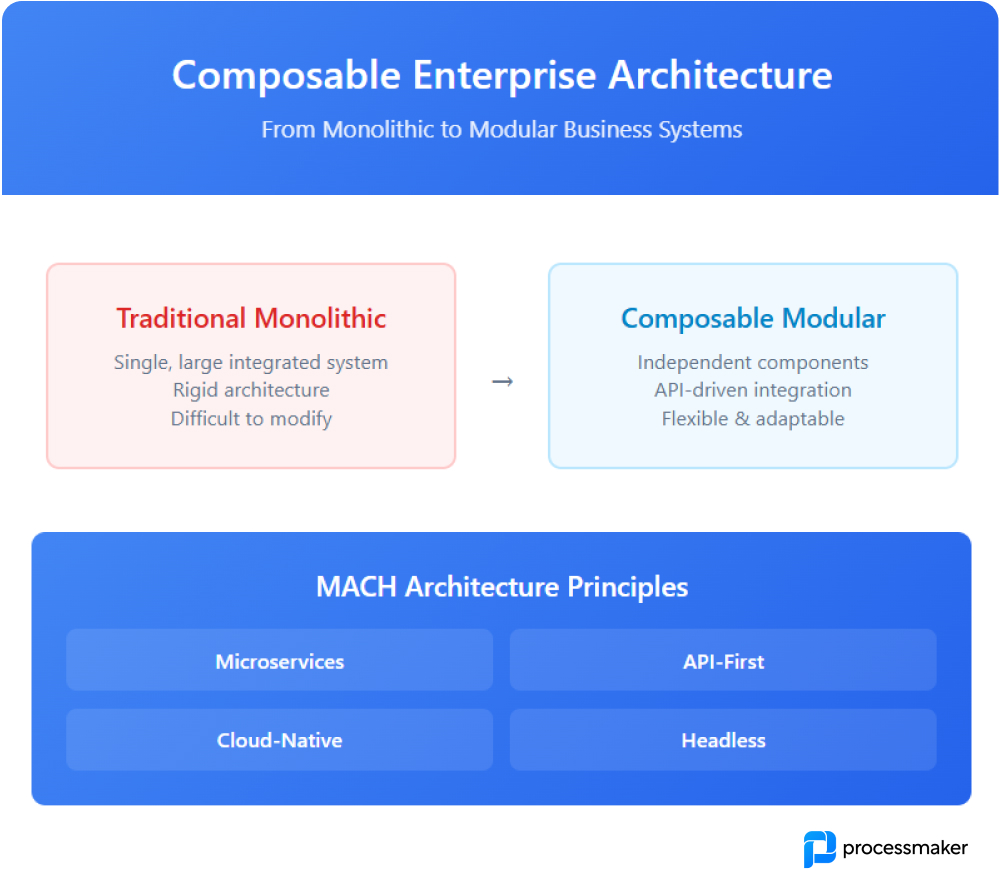
Understanding the transition from monolithic to composable architecture (ProcessMaker)
In contrast, composable architecture breaks the system into independent modules or services. These components can be updated, deployed, and scaled separately. This structure delivers clear benefits, including faster releases, safer changes, and better alignment with business needs.
Many composable systems rely on principles similar to microservices, where services are aligned to specific business capabilities and operate independently. From a business perspective, the differences are clear:
- Speed: Monoliths slow down as they grow. Composable systems allow parallel development and faster iteration.
- Scalability: Monoliths scale as one unit. Composable systems scale only the components that need it.
- Flexibility: Monoliths make technology changes difficult. Composable systems allow selective upgrades.
- Risk: Monolith failures can impact the entire system. Composable systems isolate failures.
- Operational Overhead: Monoliths are simpler to manage early on. Composable systems require stronger governance but offer long-term agility.
| Aspect | Monolithic architecture | Composable architecture |
|---|---|---|
| Releases | Single, large deployments | Independent module releases |
| Scaling | Scale the entire application | Scale individual services |
| Ownership | Shared, centralized teams | Clear domain-based ownership |
| Failures | One failure can affect all | Failures isolated by module |
| Tooling | Unified stack, limited flexibility | Flexible, best-of-breed tools |
In simple terms, monoliths favor early simplicity, while composable architecture favors long-term adaptability. Organizations must weigh short-term convenience against the long-term benefits of speed, resilience, and innovation.
Core Principles of Composable Architecture
Composable architecture works only when clear principles guide how systems are designed and operated. These principles act as practical rules. They ensure that systems remain truly modular, flexible, and scalable instead of becoming fragmented or chaotic. When applied correctly, they make a composable model sustainable in the long term.
Below are the core principles that make composability work in practice.
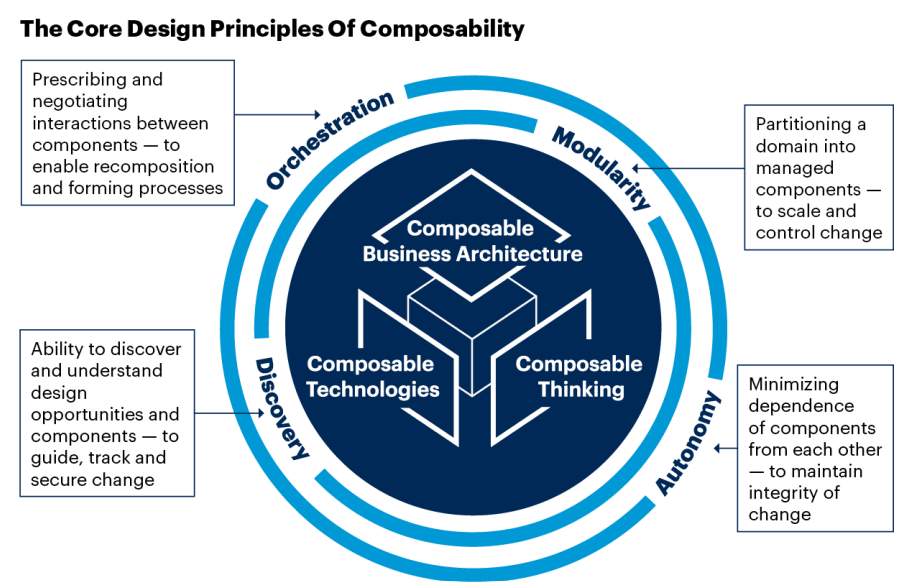
Core design principles of composable architecture at a glance (LinkedIn)
Modular design
Definition: It refers to breaking the system into independent modules aligned to clear business domains.
How to apply: Modular design helps define strong boundaries around business capabilities. It also ensures that each module owns its logic and data.
Common pitfall: To ensure this design, the architecture needs to be split by technical layers rather than by business domains. It results in the creation of hidden dependencies.
Loose coupling
Definition: It ensures components interact through clear contracts and not shared internals.
How to apply: Loose coupling uses APIs or events for communication and avoids direct database or code sharing.
Common pitfall: It can often lead to creating hidden dependencies that require synchronized deployments.
API-First strategy
Definition: It aims to design API contracts before building internal implementation.
How to apply: To implement this, you must define resources, authentication, versioning, and error handling upfront and document them clearly.
Common pitfall: Treating APIs as an afterthought can lead to breaking changes and poor integration.
Component reuse
Definition: It focuses on building reusable services that support multiple products or features.
How to apply: You can identify common business capabilities and standardize them as shared components.
Common pitfall: Overgeneralizing components can make them complex and hard to maintain.
Team autonomy
Definition: It is about enabling teams to own and operate their modules independently.
How to apply: It can be done by assigning clear ownership, allowing independent deployments, and setting shared standards.
Common pitfall: A lack of governance when implementing team autonomy can lead to inconsistent practices and duplication.
These principles ensure that composable architecture delivers real business value. Without them, systems may appear modular but fail to achieve true flexibility and scalability.
Key Components of Composable Architecture
A successful composable architecture is built as a stack of connected capabilities. Each layer supports a different part of the system while remaining modular and independently manageable. Together, these layers create a composable platform that allows teams to scale, update, and integrate services efficiently.
A typical composable stack includes services, APIs, cloud infrastructure, content systems, data layers, user interfaces, and security controls. Each layer contributes to flexibility while maintaining clear boundaries across the system.
For many organizations starting with composable architecture, a basic minimum viable stack may include:
- Microservices for modular business logic
- APIs for service communication
- Cloud infrastructure for deployment and scaling
- Core data services for domain data management
- Security and identity controls
As systems grow, additional capabilities strengthen the architecture. It becomes possible with the following mature composable stack add-ons:
- Headless CMS or content services
- Packaged business capabilities (PBCs)
- Composable frontend frameworks
- Advanced observability and governance tools
- Messaging and event-driven integration
Below are the key components that support composability in practice.
Microservices
Microservices are small, independently deployable services aligned with specific business capabilities. Each service handles a focused responsibility, such as payments, inventory, or user authentication.
They are best used when systems require frequent updates, independent scaling, or domain-based ownership. Teams should be aware that microservices introduce operational complexity, including service coordination, monitoring, and infrastructure management.
APIs as the integration layer
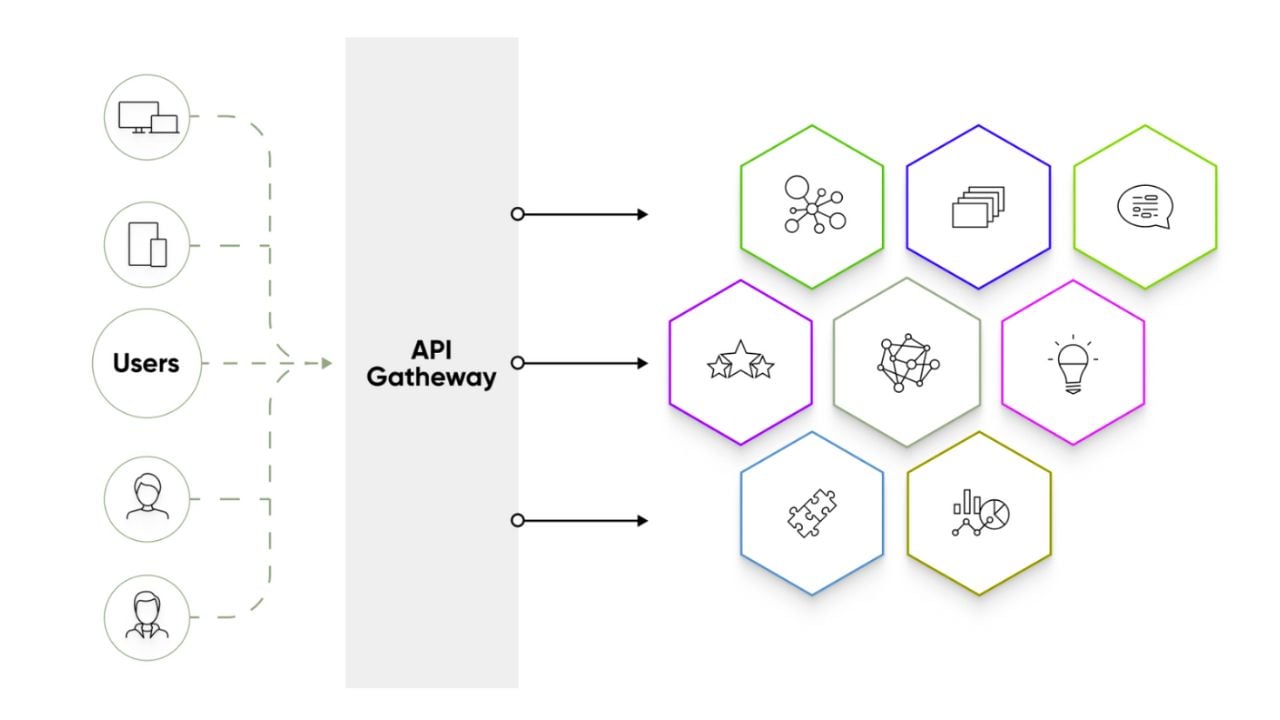
APIs act as the contracts that connect services, partners, and digital channels. In a composable architecture, APIs define how modules interact while keeping internal logic separate.
Key API essentials include:
- API gateways to manage traffic
- Authentication and authorization controls
- Rate limiting to protect services
- Versioning to maintain compatibility
- Monitoring for performance and usage insights
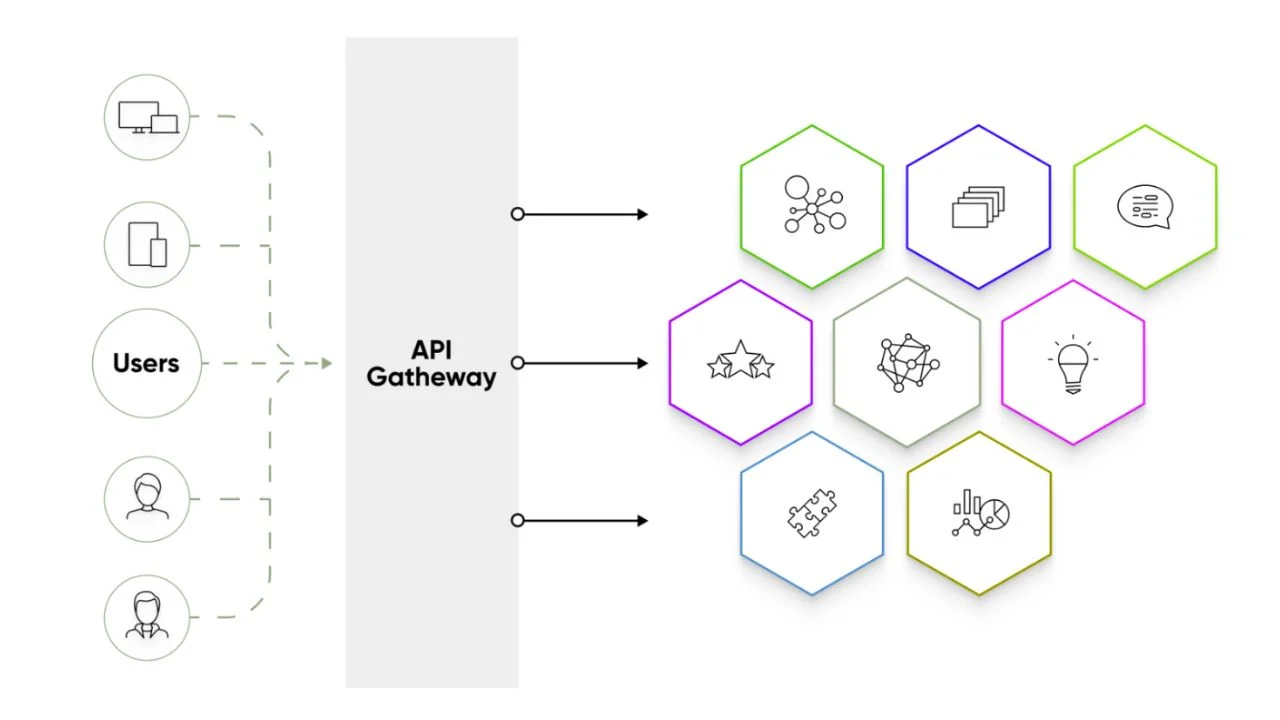
API gateways maintain essential connections (EM360Tech)
Cloud-native foundation
Composable systems rely on a cloud-native foundation that supports elasticity and rapid provisioning. Cloud environments allow services to scale dynamically based on demand.
Key enablers include containerization, serverless computing, infrastructure-as-code (IaC), and managed cloud services. These technologies help teams automate deployments and manage resources efficiently.
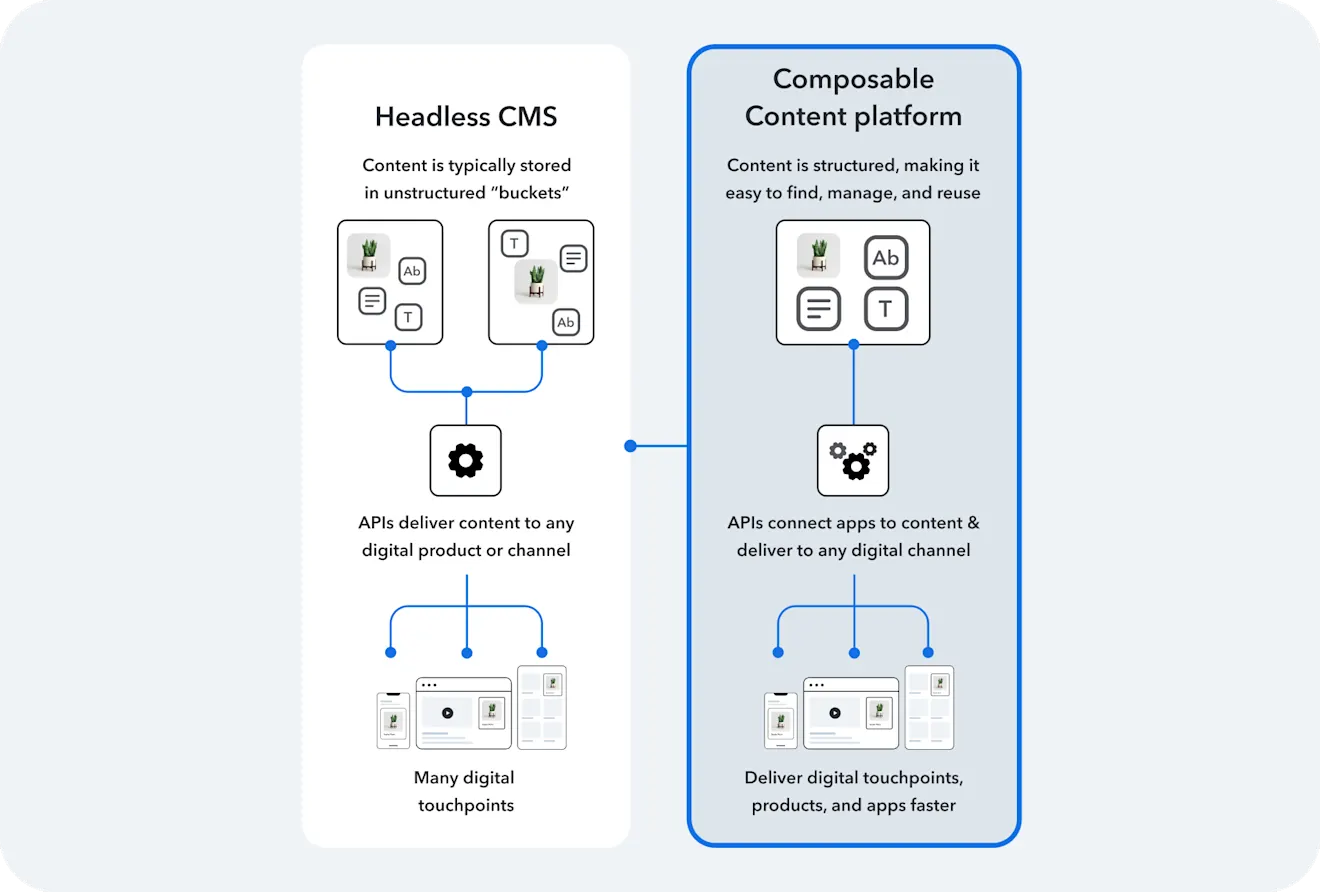
Headless CMS and content services
A headless CMS delivers content through APIs instead of a fixed frontend. This allows content to be reused across multiple channels.
For example, a marketing team can publish content once and distribute it across a website, mobile app, and email campaign. This omnichannel flexibility is a major advantage in a composable environment.
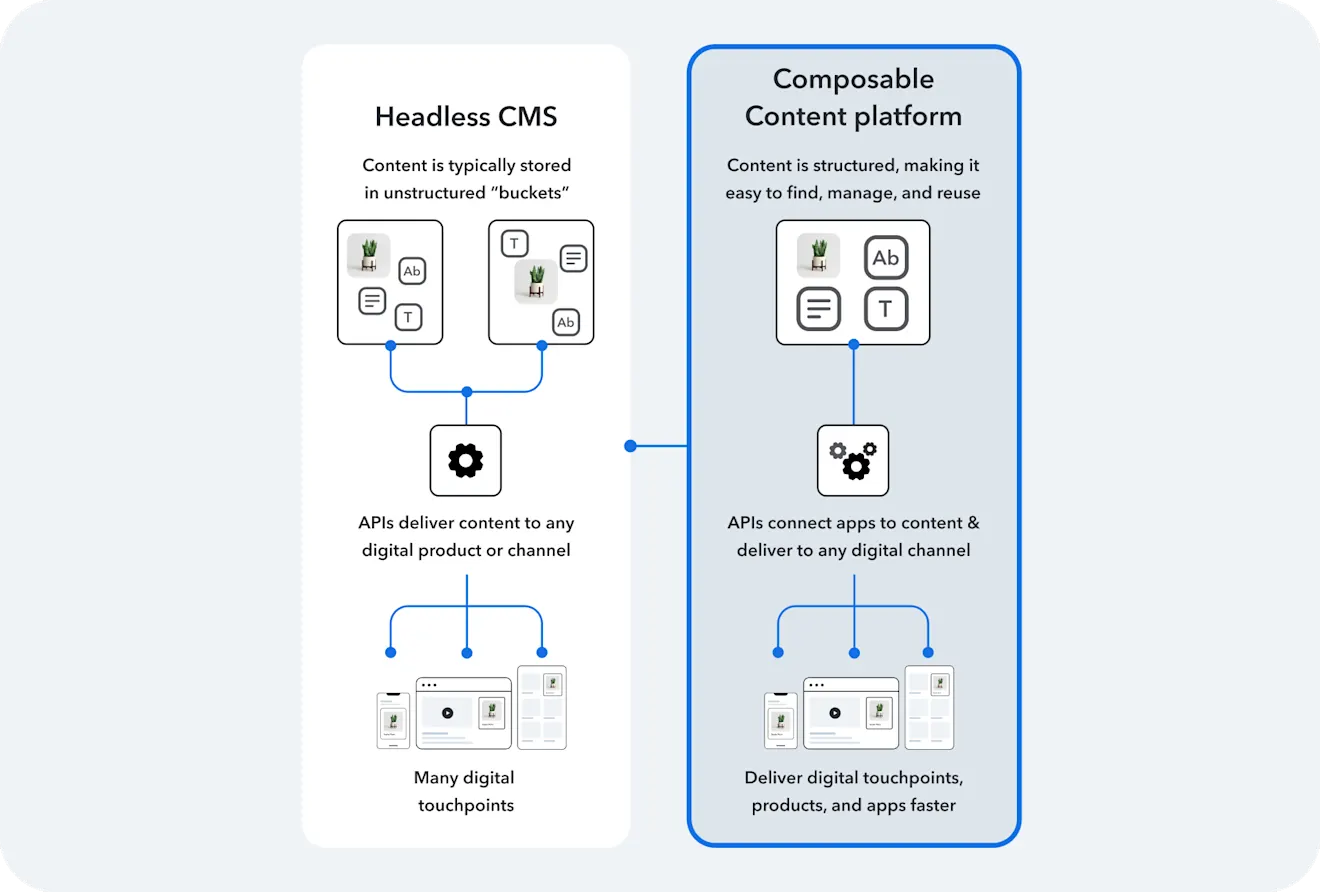
An outlook of content services with a headless CMS and a composable architecture (Contentful)
Packaged business capabilities
Packaged Business Capabilities (PBCs) are reusable modules that represent core business functions. Its examples include pricing engines, promotion systems, and identity management.
PBCs connect technical architecture to business outcomes. They allow teams to update or replace specific business functions without affecting the entire platform.
Data and integration layer
In a composable architecture, each domain owns its data. Data sharing happens through APIs or event streams rather than direct database access.
This approach improves system stability and reduces dependency risks. Teams must carefully manage data consistency, governance, lineage, and observability to maintain trust in shared data.
Composable frontend
The frontend can also follow a composable model. Instead of a single large user interface (UI), teams build modular components or micro-frontends.
This approach allows different teams to develop and release UI features in parallel. A shared design system and consistent UX standards ensure the final experience remains unified for users.
Security and identity services
Security must remain consistent across all components. Centralized identity and authorization services ensure that users and systems access only what they are authorized to access.
Baseline security controls should include secrets management, audit logging, and policy enforcement. These measures protect the system while maintaining the flexibility that composable architecture requires.
These components form the foundation of a scalable and resilient composable architecture. When designed and managed properly, they allow organizations to build flexible systems that evolve quickly without compromising stability or security.
How to Implement Composable Architecture?
Adopting a composable architecture works best as a phased roadmap rather than a full system replacement. A gradual approach helps teams prove value early while reducing migration risk. Instead of rewriting everything at once, organizations can move toward a composable model step by step.
To measure progress, teams should define clear success metrics. Common indicators include lead time for changes, deployment frequency, incident rates, and cost per change. These metrics help validate whether the new architecture improves delivery speed and system stability.
Step 1: Assess current architecture
The first step is to evaluate the current system. Teams should identify key bottlenecks such as slow releases, scaling limitations, integration issues, or recurring outages. Mapping system dependencies is also important.
This analysis helps teams understand which components are tightly coupled and where improvements will have the biggest impact. Once done, teams can set measurable targets for improvement.
Step 2: Choose what to modularize first
The next step is selecting the right domain for the first module. A good pilot area usually has a high rate of change, clear boundaries, and strong business value.
Teams should define ownership for the module, establish clear interfaces, and set exit criteria for the pilot. This ensures the pilot demonstrates how composable architecture works in practice before expanding further.
Step 3: Build an API strategy
APIs are essential for connecting components in a composable system. Teams should define clear standards for API design, versioning, authentication, error handling, and documentation.
Strong governance also matters. Many organizations introduce tools such as API gateways, service catalogs, testing frameworks, and deprecation policies to manage APIs effectively.
Step 4: Select best-of-breed tools
Composable systems often rely on specialized tools that work well together. Key categories may include API management platforms, CI/CD pipelines, observability tools, content services, identity platforms, and messaging systems.
Teams should evaluate tools using a scorecard. Important criteria can include integration compatibility, security features, scalability, vendor lock-in risk, and total cost.
Step 5: Start small and scale
Once the pilot module is ready, teams should deliver it end-to-end and measure the results. Validating the impact through defined metrics helps confirm that the approach is working.
After the pilot succeeds, organizations can expand gradually. A domain-by-domain migration approach allows systems to evolve toward a composable architecture without risky, large-scale rewrites.
Thus, implementing composable architecture is a gradual transformation rather than a single project. By starting small, validating results, and scaling step by step, organizations can build a truly composable platform with lower risk and stronger long-term outcomes.
Real-World Composable Architecture Use Cases
Many organizations adopt a composable architecture to solve practical business challenges. Different industries face pressure to move faster, integrate new capabilities, and scale reliably. In these situations, composability allows teams to modify or extend systems without rebuilding entire platforms.
The following use cases show how composable systems create real business value.
E-Commerce platforms
E-commerce businesses must experiment quickly with features such as checkout flows, search functionality, and promotional campaigns. They also need to scale infrastructure during seasonal peaks like holiday sales. It results in rapid experimentation, flexible integrations, and scalable services.
For instance, for an E-commerce platform, before using a composable architecture, changing a payment provider might require a full platform update. After adopting a composable model, the team can replace the payment service through an API integration without affecting other parts of the platform.
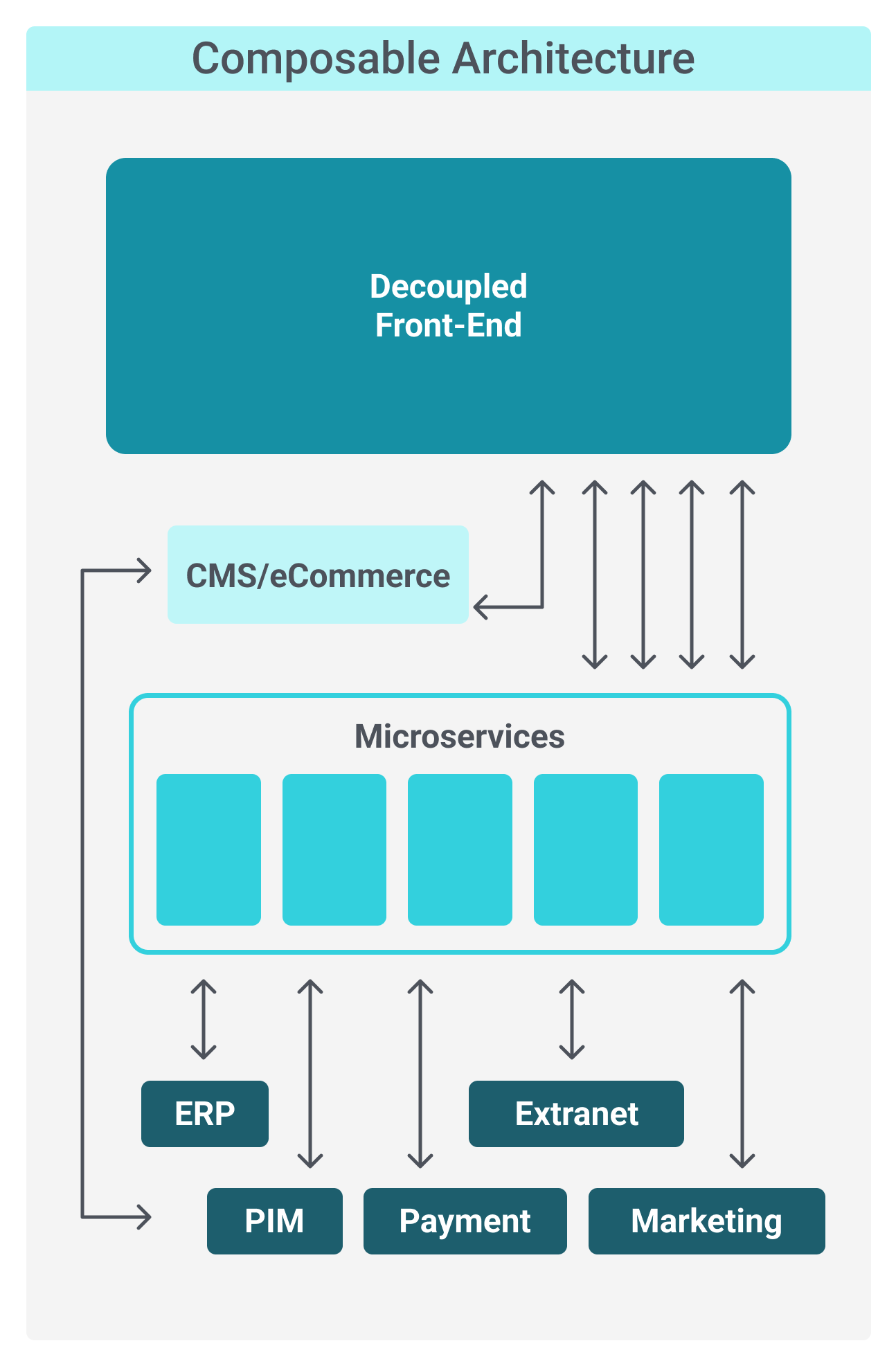
Composable E-commerce at a glance (Crystallize.com)
Enterprise digital transformation
Large enterprises often rely on legacy systems that are difficult to replace all at once. Full system rewrites are costly and risky. Thus, they should rely on gradual modernization and safer system upgrades.
Before modernization, a company could struggle to integrate new digital services with its legacy platform. With composable architecture, the team can wrap legacy systems with APIs and gradually extract one domain at a time into modular services.
SaaS product development
SaaS companies must release new features frequently while maintaining stable multi-tenant environments. Independent teams need the ability to build and deploy updates without slowing others down. It ensures faster iteration, modular product development, and scalable architecture.
For instance, in SaaS companies, releasing a new feature typically requires updating the entire application. With the implementation of composable architecture, the team can launch a new module independently and roll it out gradually to selected customers.
Content and media platforms
Media companies publish content across many channels, including websites, mobile apps, and social platforms. Managing consistent content delivery across all channels can be difficult with traditional systems. Composable architecture provides flexible content management and omnichannel distribution.
Before adopting a composable model, editors had to publish content separately on each platform. With a headless content service integrated into a composable architecture, they can publish content once and distribute it across web, mobile, and social channels automatically.
Fintech and banking solutions
Financial platforms must balance innovation with strict security, compliance, and auditing requirements. At the same time, they often need to integrate new partner services quickly. With composable systems, they can ensure secure integrations, modular risk management, and scalable financial services.
Previously, adding a new fraud detection system required major changes to the core banking platform. With composable architecture, the team can integrate a new fraud monitoring service through APIs without disrupting existing transaction workflows. These real-world use cases show how composable architecture enables organizations to evolve systems gradually while maintaining speed, stability, and flexibility.
Challenges and Risks of Composable Architecture
While composable systems provide flexibility and speed, they also introduce new operational challenges. Organizations must manage these risks carefully to ensure that composable architecture remains sustainable as systems grow.
Below are some common risks teams encounter when adopting composability.
Integration complexity
As the number of services increases, integrations between components can become complex. Multiple APIs, services, and data flows may create coordination challenges. You can avoid this by establishing clear API standards and documentation. You can use API gateways and integration platforms to manage service communication and maintain visibility across the system.
Service sprawl
Composable systems can lead to a large number of small services. Without clear boundaries, teams may create duplicate or unnecessary components.
This can be fixed by defining strong domain boundaries and service ownership. It will include introducing architectural governance to ensure new services follow shared guidelines and avoid duplication.
API lifecycle management
APIs evolve over time. Without proper lifecycle management, breaking changes can disrupt dependent services and integrations.
Effective management requires you to implement versioning policies, maintain backward compatibility, and introduce deprecation processes. API catalogs and monitoring tools also help track usage and dependencies.
Security risks
With many distributed components, security becomes more complex. Each service interaction must be properly authenticated and authorized.
You can adopt centralized identity and access management. Use consistent security controls such as secrets management, encryption, audit logs, and policy enforcement.
Team maturity and coordination
Composable systems require strong collaboration between teams. Without clear ownership and operational practices, teams may struggle with coordination and responsibility.
You can ensure this by defining clear team ownership for services and adopting shared standards. Invest in platform tools, observability systems, and operating model improvements to support cross-team collaboration.
By addressing these risks early, organizations can build a stable and scalable composable ecosystem while maintaining the flexibility that composable architecture promises.
Conclusion
Composable architecture offers a clear advantage in today’s fast-moving digital landscape. It enables greater flexibility, faster delivery, and the ability to adapt systems without large-scale disruptions. This flexibility comes with the need for stronger operational discipline, including clear standards, governance, and team alignment to manage complexity effectively.
To move forward, organizations should start by assessing their current architecture and identifying key bottlenecks. From there, they can select a pilot domain, define API standards, and begin small, measurable implementations. By tracking outcomes and scaling gradually, teams can successfully transition toward a composable model that delivers long-term value.
Mar 25, 2026

Creates insightful, strategy-driven content that translates complex design and branding concepts into accessible knowledge, supporting Ramotion’s mission to elevate digital experiences.