
A small brand can survive on sporadic social posts, the occasional blog update, and few well-timed campaigns just to keep the audience aware. Growth changes that. What was handled by three people now requires dedicated strategy, creative, operations, and analytics teams.
This is where brand automation becomes handy, locking brand rules into workflows so every execution stays on-brand and frees people from repetitive tasks. Read on as we tackle what brand automation is—benefits, core components, and industry best practices.
What is Brand Automation?
Brand automation simplifies repetitive brand workflows and embeds your brand’s principles into systems that execute across channels. It shifts teams from doing every task manually to governing the system while still requiring monitoring, iteration, and human intervention when the system drifts.
Put simply, brand automation elevates routine brand work from mundane to strategic.
Brand automation vs. automated branding
Technology can schedule posts and repurpose assets, but it cannot invent identity or values. Brand automation operationalizes human-defined identity so content and campaigns consistently reflect the brand without constant manual checks.
Brand automation vs. marketing and creative automation
Marketing automation handles delivery and personalization, while creative automation speeds design tasks. Meanwhile, brand automation defines the guardrails those tools must follow, preserving consistency at scale and freeing teams for higher-value strategy.
Why Growing Companies Need Brand Automation
Growth brings complexities that cannot be micro-managed. Below are the following benefits of brand automation you do not want to miss.
1. Accelerated onboarding
New hires can take months to internalize brand guidelines, tone, and usage. Brand automation embeds rules into the tools teams use daily, enforcing standards across outputs. This reduces training time and lets new employees focus on producing work rather than policing it.
For example, Hitachi leverages Skye, an AI-powered assistant, in onboarding new hires across the globe. It offers 24/7 assistance, workflow automation, and cross-company integration, strengthening brand alignment, asset provisioning, and employee advocacy.
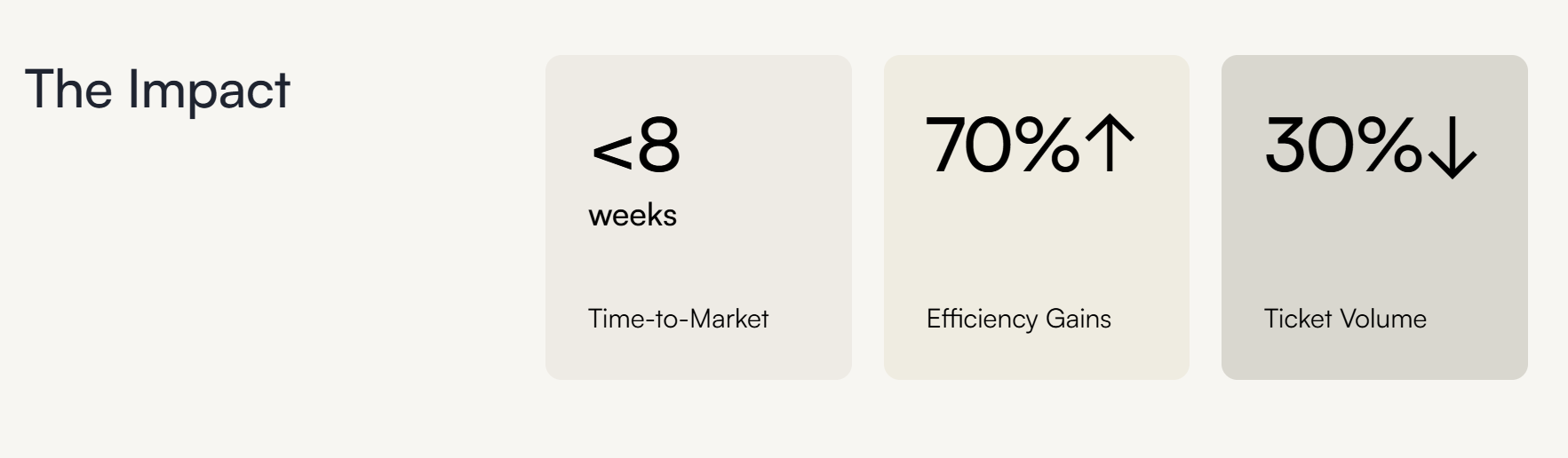
Overall impact of onboarding automation on Hitachi. Image via Ema
2. Consistent branding across channels
Expanding into more channels introduces various execution flows that risk inconsistency and audience confusion. A branding agency can establish the underlying identity and creative direction before those decisions become rules for automated execution. Brand automation ensures every touchpoint, from your socials to web content, adheres to the same tone, visual standards, and messaging boundaries. All while preserving trust as you scale.
3. Faster time-to-market
Approval bottlenecks often delay campaigns. On-brand templates and automated checks reduce manual routine reviews by enforcing brand rules from the get go. As a result, approvals are faster and human attention is reserved for strategic judgment and final sign-offs.
4. Scalable personalization without fragmentation
Personalization at a scale can fragment identity. Teams evaluating branding agencies can ask how prospective partners document brand rules for teams producing personalized content. Brand automation locks core identity and messaging while allowing customizing content for segments. The system maintains coherence as content adapts, preventing dilution while delivering relevance.
Core Components of Brand Automation
1. Centralized brand asset management
Keep your brand elements, media assets, templates, brand style guides, editorial guidelines, access control, and version control in one central system integrated into the tools your team uses.
- Digital Asset Management (DAM) is a secure, searchable repository to organize, tag, manage, and distribute files for better brand management.
- Brand portals are web hubs where users find approved assets, usage rules, and download files without waiting for approval from the bosses.
For instance, Bosch keeps its branding coherent across the globe with the help of a DAM-powered brand portal. DAM stores assets, while the portal pull approved and relevant content.
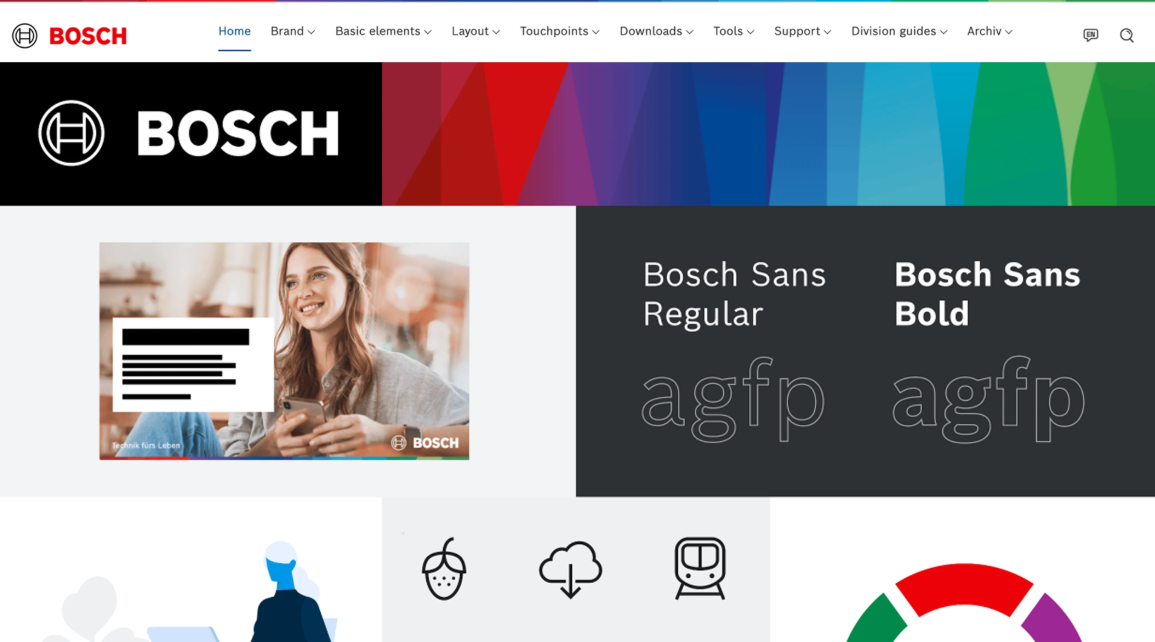
DAM-powered brand portal of Bosch. Via Frontify
2. Dynamic templates and brand rules
Brand rules define what is allowed within the system, and dynamic templates provide the structure within which those rules are enforced. This means when a template is updated, the change happens across all instances in real time, ensuring your team always works with the latest brand assets. Branding outputs go through lesser routine reviews, resulting in speedier implementation and cost reduction.
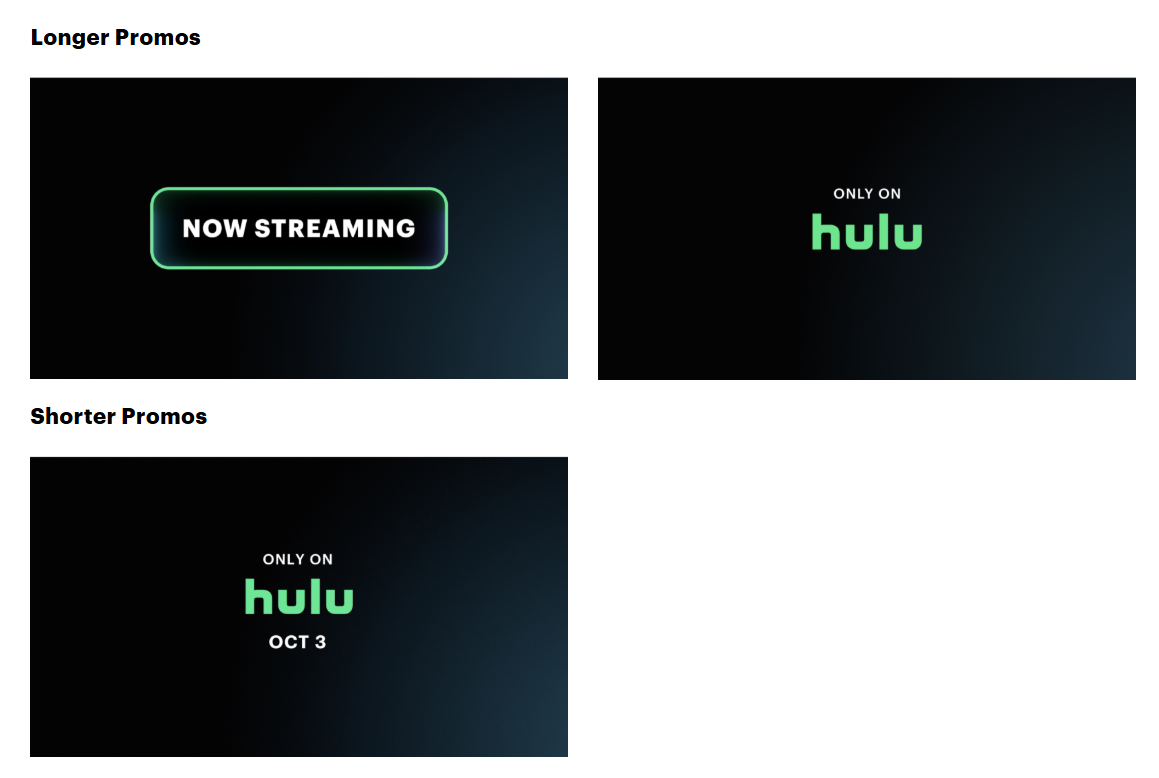
Centralized promo templates for Hulu. Image via Hulu
3. Approvals, permissions, and governance
Approvals are automated workflows that route content based on risk. Permission define who can do what. Governance keeps the system working within established rules.
Brand automation puts all three into your tech stack. For instance, locked templates protect your logo and colors while allowing editable copy and imagery; automated checks validate assets against brand rules; activity logs record action, time, and user for clear accountability.
4. Integrations, AI, and performance data
Tool integrations ingrain brand governance into your tech stack, avoiding siloed workflows. AI routes the right information to the right person at the right time and automates repetitive tasks. It also pulls customer data from connected systems to personalize messaging while preserving brand voice.
Performance data closes the loop, feeding results back to refine strategy and update brand rules based on what works.
What Tasks Can Brand Automation Do and Not Do
Brand automation, when optimized, can be a powerful all-around-tool. But despite its endless capabilities, there should be a clear line on what an organization allows it to do and not do.
Brand tasks you can automate:
- Content adaptation and resizing: Generate multiple creative variations and resize assets for different channels and formats.
- Routine customer communications: Send automated responses for refund decisions, review replies, and standard inquiries using brand-trained models that follow your decision trees and tone guidelines.
- A/B test variation generation: Create marketing variations for performance testing while the system validates that all variants stay on-brand.
- Lead data management: Automate data normalization and field standardization across your marketing database.
- Compliance and asset validation: Scan assets for brand violations before final approval.
Brand tasks that should stay human-led:
- Core brand strategy and positioning: Only human judgment can define why your brand exists, who you serve, and how you get ahead of the competition.
- Creative direction: Creative thinking come from human curiosity and lived experience.
- High-stakes customer communication: Crisis responses and sensitive customer conversations are better received when they come from real people, not AI.
- Brand meaning and identity decisions: Deciding what a brand should mean to people requires human understanding of values, culture, and emotional truths.
Brand Automation Risks and Limitations
Powerful automation brings subtle trade-offs, so you must design governance that anticipates the following risks and limitations.
Brand homogenization
Brand homogenization occurs when brands sound and look identical. This is often brought by standardized marketing or AI that defaults to the average.
How to avoid: Return to your brand roots and the values that people relate with. Empower teams to apply judgment rather than rely solely n AI or algorithms to call the shots.
Loss of brand agility
Automation can make brands rigid. In effect, updating templates across thousands of users can be slow, turning control into a bottleneck crises.
How to avoid: Use modular templates with fixed core elements and editable components. Create an expedited workflow that bypasses routine queues to get urgent approvals to human decision-makers.
Data privacy and security exposure
Centralizing customer data makes systems attractive targets; breaches can enable malicious campaigns and harm customers.
How to avoid: Run regular access audits, enforce least-privilege permissions, and maintain compliance and incident-response processes. Regular review preserves distinctive voice while keeping controls intact.
How to Implement Brand Automation
Step 1: Run an asset inventory
Assess what works and what doesn’t by going through all your brand assets. An audit exposes repetitive tasks and inconsistent outputs that need optimizing. It helps paint the picture of where your brand is and what the ultimate goal for the brand automation will be.
Step 2: Codify brand rules
Convert guidelines into enforceable rules for color, typography, and tone. Prioritize rules with the greatest brand or compliance risk and roll out guidelines in phases to build confidence. Gather feedback and iterate before scaling, and regularly measure outcomes.
Step 3: Build on-brand templates
Design templates with locked elements (logos, colors, fonts) and editable zones for copy, imagery, and local adaptations. Focus on high-use types—emails, social posts, newsletters, infographics—and make templates simple to use and understand.
Step 4: Set up roles, permissions, and approval workflows
Tech-automated process are blind to context. It follows its programming, rendering it incapable of making human decisions.
Implement role-based access control for tools and AI features. Establish a governance team to block unauthorized access and enforce guardrails against data leaks.
Step 5: Connect to your existing tools
Integrate tools—email, DAM, CRM, design apps— into your brand automation platform. Choose a solution that offers integrations for your existing stack. And prioritize systems with frequent compliance errors so automation prevents costly mistakes.
Step 6: Launch, train, and scale
Pilot with one high-output team (marketing teams or a regional office), and train users on workflows. Gather feedback and run the pilot at least a month with weekly check-ins to assess issues and performance data.
Iterate templates, rules, and approvals before expanding. Scale gradually by adding teams and assets only when the iteration stabilizes. Expect each rollout to move faster as you refine the system.
How to Choose Brand Automation Software
A company typically requires several software for effective brand automation: brand asset management to centralize approved brand assets; social media automation to schedule and publish content; marketing automation to execute campaigns across different channels; and brand monitoring and compliance tools to scan for violations post-publishing.
When choosing software, prioritize:
- Governance and rule enforcement - Enforce brand rules at creation and flag violations in real time.
- Integrations - Prioritize platforms with pre-built connectors to your current tech stack.
- Transparency - Clear audit trails explaining why assets were flagged, approved, or rejected.
- Total cost of ownership - Assess if the subscription price justifies the implementation, customization, training, and ongoing maintenance costs.
- User adoption and interface - Non-technical users must find the interface intuitive enough to use consistently.
- Scalability and flexibility - It should accommodate more channels, markets, and asset types as the brand grows.
Finding the right mix for your brand ensures governance, speed, and consistency while fitting your budget and workflows. Among the most commonly used tools are Frontify, Buffer, MailChimp, and Sprout Social.
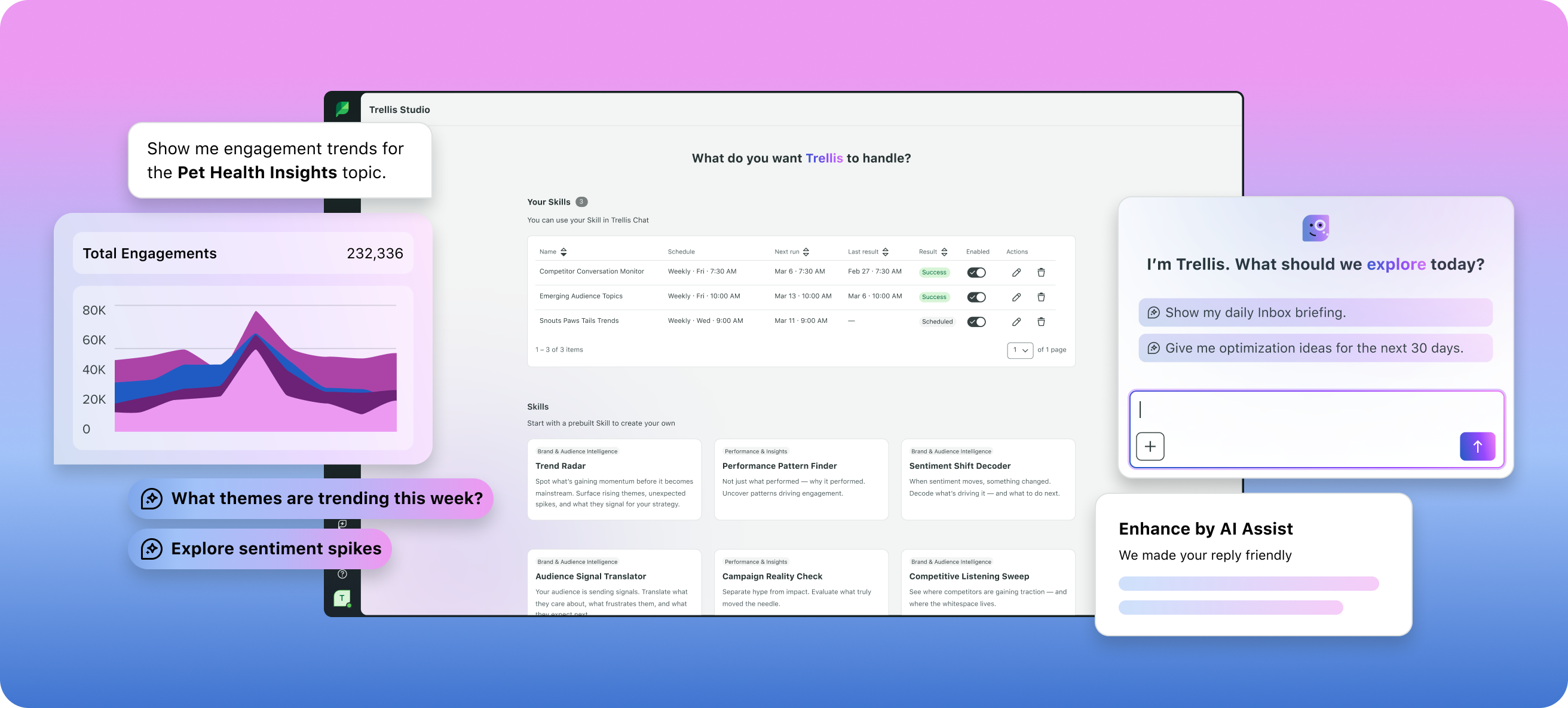
AI Automation via Sprout Social
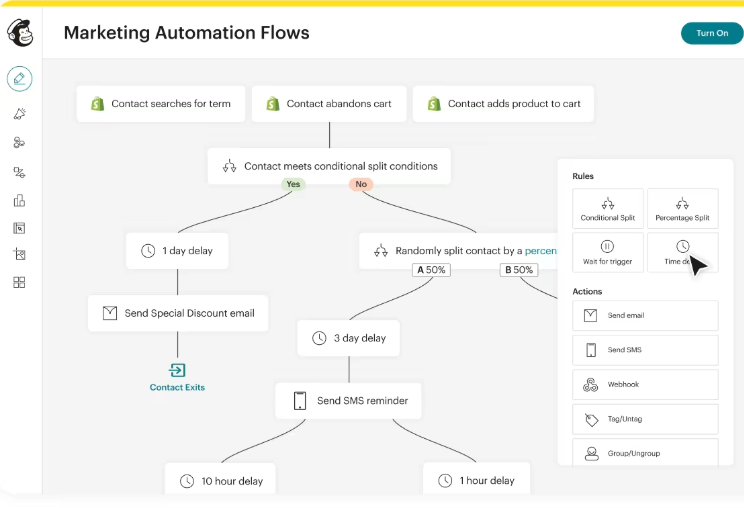
Automation flow via MailChimp
Measuring Brand Automation: Is It Effective?
measure to know whether yours is working.
- Time-to-market: time from brief to launch. Shorter means fewer process barriers.
- Approval cycle time: average review time per content. Faster cycles show governance is working.
- Brand compliance rate: percent of assets meeting rules at creation.
- Adoption and usage: measures active versus one-time users. High adoption shows system fit with workflows.
Together, these metrics show whether automation speeds delivery, enforces consistency, and is embraced by teams.
Automate Brand Success
Brand automation transformed from good-to-have into must-have. By weaving in rules, templates, governance, and data into everyday tools and workflows, companies maintain consistency, speed, and personalization at scale. This optimizes how teams work, focusing on making strategic decisions and innovative solutions.
Done well, brand automation safeguards brand integrity and paves the way for growth. It keeps you competitive in fast-moving markets, especially in saturated industries. Take the next step and work with the experts for an effective brand automation.

Creates insightful, strategy-driven content that translates complex design and branding concepts into accessible knowledge, supporting Ramotion’s mission to elevate digital experiences.