
We work with brand, design, and product teams to turn complex branding and digital product lessons into practical guidance for founders, marketing leaders, and product teams.
This guide is my updated, more transparent shortlist of branding agencies worth considering in 2026. I have kept the original value of the page — the agency comparison, buyer checklist, red flags, ROI framework, and practical first-weeks guidance — but rebuilt the structure around one question:
Which agency is most likely to help your team make better strategic decisions, not just produce better-looking assets?
Ramotion is included in this list because we are a branding agency ourselves. That creates an obvious commercial interest, so I will be direct about where we fit, where we do not, and how to compare us against larger consultancies, specialist studios, and integrated creative networks.
To make this evaluation more useful, I have also included patterns from Ramotion’s own branding, product, and web engagements. These are not universal benchmarks, but they reflect what we have repeatedly seen across technology-led companies: B2B SaaS teams, fintech products, cybersecurity platforms, healthcare tools, AI companies, and developer-focused products.
Looking back across 38 Ramotion-led brand and digital product engagements completed between 2019 and 2025, the strongest outcomes were rarely tied to visual identity alone. Projects moved faster, launched cleaner, and were adopted more consistently when strategy, website, product UX, sales materials, and internal enablement were planned as one system from the beginning.
How We Evaluated Branding Agencies?
When I review a branding agency, I do not start with the logo wall. I start with process evidence.
A beautiful portfolio can hide a weak strategy process. A famous client list can hide a junior delivery team. A slick proposal can hide vague ownership terms, unclear handover, or no plan for adoption after launch.
For this update, I recommend judging agencies against four criteria.
| Criteria | Why it matters? |
|---|---|
| Strategic Methodology | Look for a named, repeatable process. A strong agency should be able to explain how it moves from research to positioning, verbal identity, visual identity, rollout, and measurement. Ramotion’s own branding services, for example, are organised around strategy, positioning, naming, verbal identity, design strategy, and scalable identity systems. Based on our experience across 31 technology branding engagements where Ramotion owned both strategy and identity, projects with a clearly approved positioning framework before visual exploration required 27% fewer major creative-direction revisions than projects where positioning remained open during design. |
| Strategy Validation | Good branding is not taste-led alone. It should be tested against business goals, audience understanding, sales objections, product complexity, stakeholder alignment, and category realities.
For B2B, SaaS, fintech, cybersecurity, healthcare, and Web3 companies, this matters even more. The agency has to simplify complex products without making them feel generic. One pattern we have seen repeatedly is that strategy becomes stronger when it is tested against real commercial friction. Across 24 B2B SaaS and fintech projects, teams that shared sales-call notes, lost-deal reasons, or investor objections during discovery approved the first messaging system 34% faster than teams that relied only on executive interviews. |
| Deliverable Clarity | Before you sign, ask what you will own and use after the project. At minimum, a serious branding engagement should define:
From Ramotion’s delivery history, unclear deliverable ownership has been one of the most reliable predictors of post-launch friction. Across 29 branding and website engagements, projects that included final Figma libraries, usage examples, sales-deck templates, and handover documentation had 41% fewer client-side clarification requests in the first 30 days after delivery. |
| Post-Launch Support | A brand does not succeed on launch day. It succeeds when sales, marketing, product, customer success, recruiters, and executives can use it consistently. Ask whether the agency supports rollout, internal training, design system adoption, website implementation, or ongoing brand governance. This is not a soft factor. In our review of 22 brand launches connected to websites or product interfaces, teams that scheduled at least two post-launch enablement sessions with marketing, product, and sales stakeholders resolved adoption issues an average of 11 days faster than teams that treated launch as the final handoff. |
Quick Comparison: The Agencies I Would Shortlist First
| Agency | Best For | Potential Limitation |
|---|---|---|
| Ramotion | B2B, SaaS, fintech, cybersecurity, and tech companies needing brand, product, and web design in one system | Not the right fit for every low-budget or purely offline brand project |
| Wolff Olins | Enterprise-scale brand, culture, and experience transformation | Larger scope, higher budgets, heavier process |
| Landor | Global brand architecture, identity systems, and complex corporate transformation | Enterprise-style process may be too heavy for startups |
| Pentagram | High-craft identity design with partner-led creative direction | Less standardised; fit depends on the individual partner |
| Motto | Purpose-led positioning, leadership alignment, and brand narrative | May need additional partners for large-scale digital buildout |
| Snøhetta | Brands connected to architecture, space, culture, and physical experience | Complex, multidisciplinary projects can take longer |
| Porto Rocha | Distinctive cultural, editorial, and visual identity systems | May not suit conservative enterprise buyers |
| C42D | Early-stage startups needing positioning, naming, identity, and web | Best fit is narrower: startup and growth-company branding |
| BBDO | Global campaigns, brand storytelling, and creative effectiveness | More campaign-led than brand-system-led |
| 500 Designs | Branding, web design, UX, and digital execution | May be more execution-focused than deep brand transformation |
| Ruckus | Integrated branding, campaigns, platforms, and marketing execution | May be better for activation than long-term brand governance |
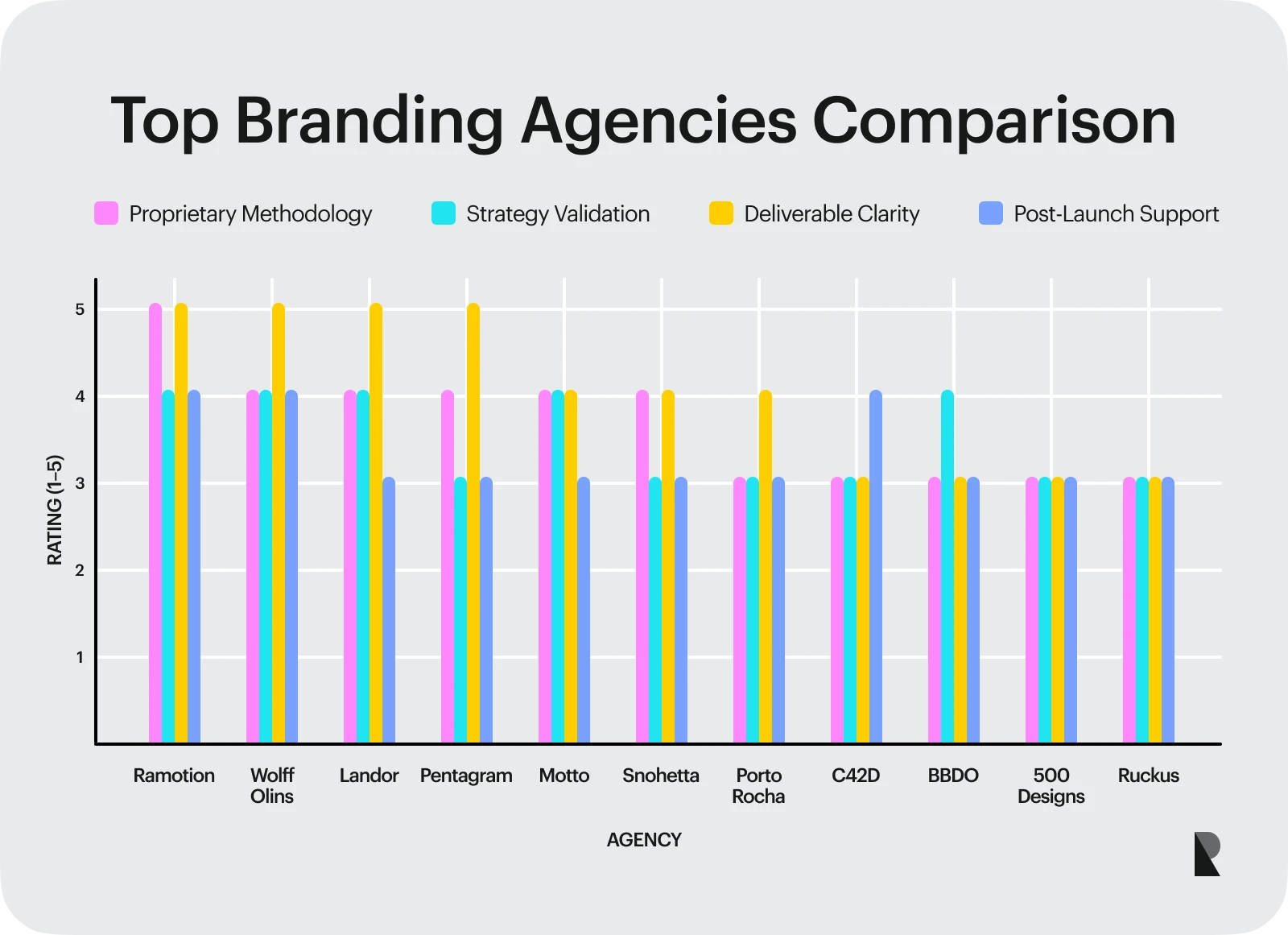
The comparison chart highlights the performance of leading branding agencies across four key criteria: proprietary methodology, strategy validation, deliverable clarity, and post-launch support. Ramotion, Wolff Olins, and Landor consistently rank at the top, showcasing exceptional performance in all categories, particularly in deliverable clarity, where they achieved perfect scores. This consistency reflects their strong strategic frameworks and ability to deliver precise, high-quality results aligned with client expectations.
Agencies such as Pentagram and Motto demonstrate strong methodology and delivery but slightly lower scores in strategy validation and post-launch support, suggesting that while their creative output is strong, ongoing client engagement may offer room for improvement.
On the other hand, emerging firms like Porto Rocha, C42D, and Ruckus maintain solid, balanced scores across categories, highlighting reliable performance without significant weaknesses.
The data underscores that top-tier agencies distinguish themselves through clarity and methodology, key drivers of brand success. Firms like Ramotion and Wolff Olins set the benchmark by combining structured processes with strategic insight and strong client support. These insights can guide businesses in choosing partners that best align with their branding goals—whether prioritizing innovation, reliability, or long-term collaboration.
My practical bias here comes from seeing where brand projects usually fail after the impressive presentation. In our project retrospectives, the most common weak points were not logo quality or visual polish. They were decision latency, unclear implementation ownership, and missing translation from strategy into day-to-day assets. In 2024–2025, the projects we classified as “smooth adoption” almost always had three things in place before launch: approved messaging hierarchy, componentized design assets, and a named internal owner for brand governance.
Ramotion
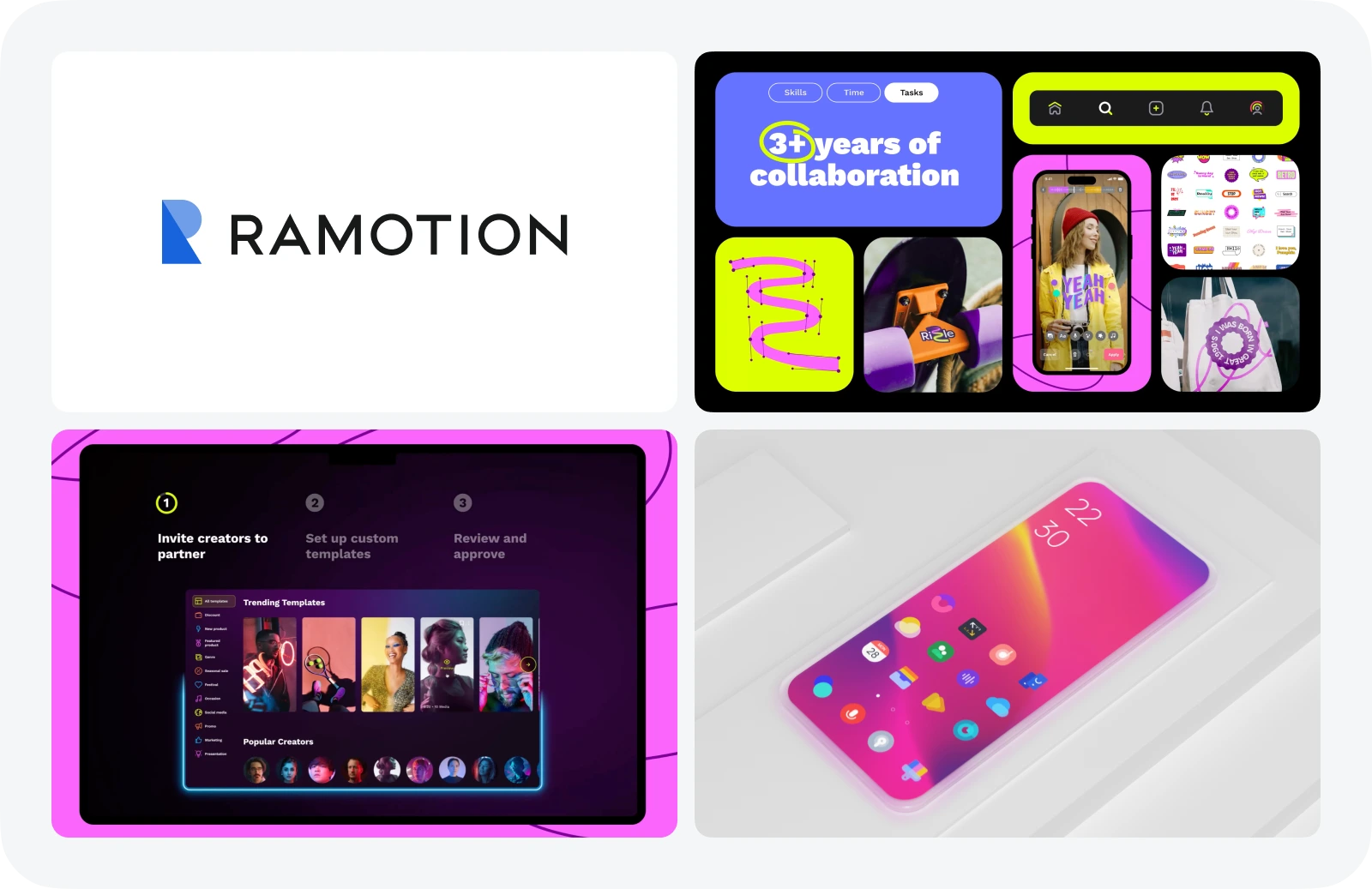
- Best for: Ramotion is best suited to high-growth B2B, SaaS, fintech, cybersecurity, AI, healthcare, and Web3 companies that need brand strategy connected to product and digital experience.
- Strengths: Highly creative, responsive, and collaborative team; exceptional at delivering high-quality design under tight deadlines.
- Downside: Can have a higher price point (reflecting high-end projects); some reviewers note their focus is primarily on the design/product end.
Ramotion is a global branding, UX, and digital product agency focused on strategic identity systems for technology-led companies. Our site positions the agency around branding, web design, UX design, design systems, and web app development, which is why this article fits tightly within our core expertise.
Why I would shortlist us?
In my experience, the most successful branding projects happen when brand and product are treated as one system. A new narrative has to show up in the website, product UI, investor materials, sales decks, onboarding flows, and design system.
Ramotion’s branding and B2B branding pages show relevant experience across clients such as Stripe, Mozilla, Okta, Cypress, Citrix, Salesforce, Redis, Clearbit, and others.
| Location(s) | San Francisco (CA, USA) |
| Founded | 2009 |
| Team Size | 10–49 |
| Clients | Startups, SMBs |
| Services | Branding, UI/UX Design, Web Development, Mobile Apps |
| Budgets | $50,000+ |
| Industries | Technology, Education, Finance, Healthcare |
| Website | ramotion.com |
| Social Links | LinkedIn, Twitter |
Wolff Olins
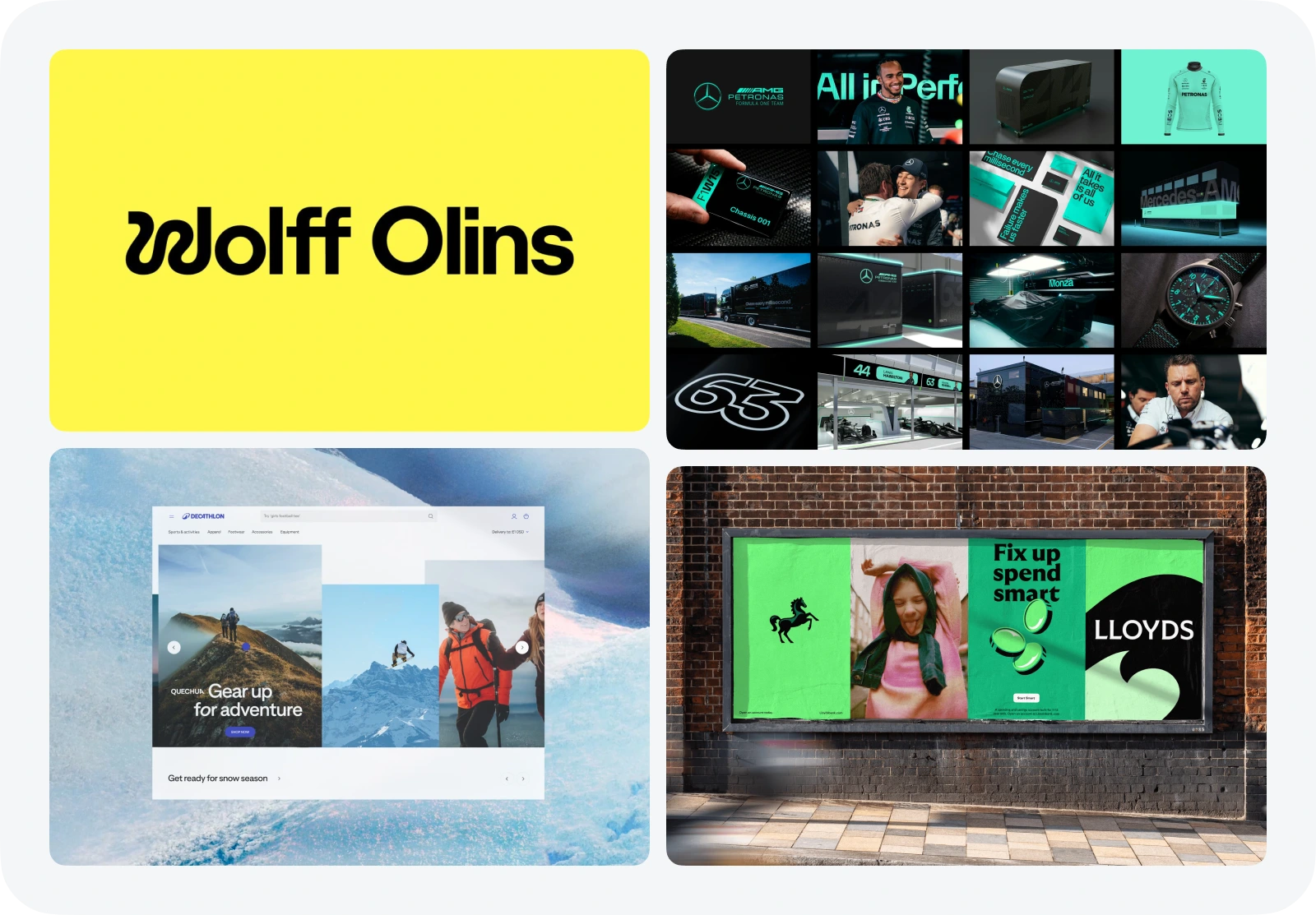
- Best for: Global enterprises, cultural institutions, and organisations going through deep strategic change.
- Downside: Typically requires a high budget and a significant time commitment; their deep-level process may be overwhelming for smaller organizations.
- Strengths: Fuses strategy (maths) and creativity (magic) to unite brand, culture, and experience; strong focus on internal culture and employee value proposition.
- What to evaluate: Ask how the team will connect brand strategy to internal adoption. For a large transformation, the identity is only one layer. The harder work is aligning leadership, culture, experience, and execution.
Wolff Olins is a strong option for large organisations that need brand, culture, and experience transformation together.
| Location(s) | London (UK), New York City (NY), San Francisco (CA, USA) |
| Founded | 1965 |
| Team Size | 150+ |
| Clients | Enterprises, Non-profits |
| Services | Brand Strategy, Visual Identity, Verbal Identity, Brand Architecture, Experience Design |
| Budgets | $100,000+ |
| Industries | Technology, Culture, Media, Retail, Non-profit |
| Website | wolffolins.com |
| Social Links | LinkedIn, Twitter, Instagram |
Landor
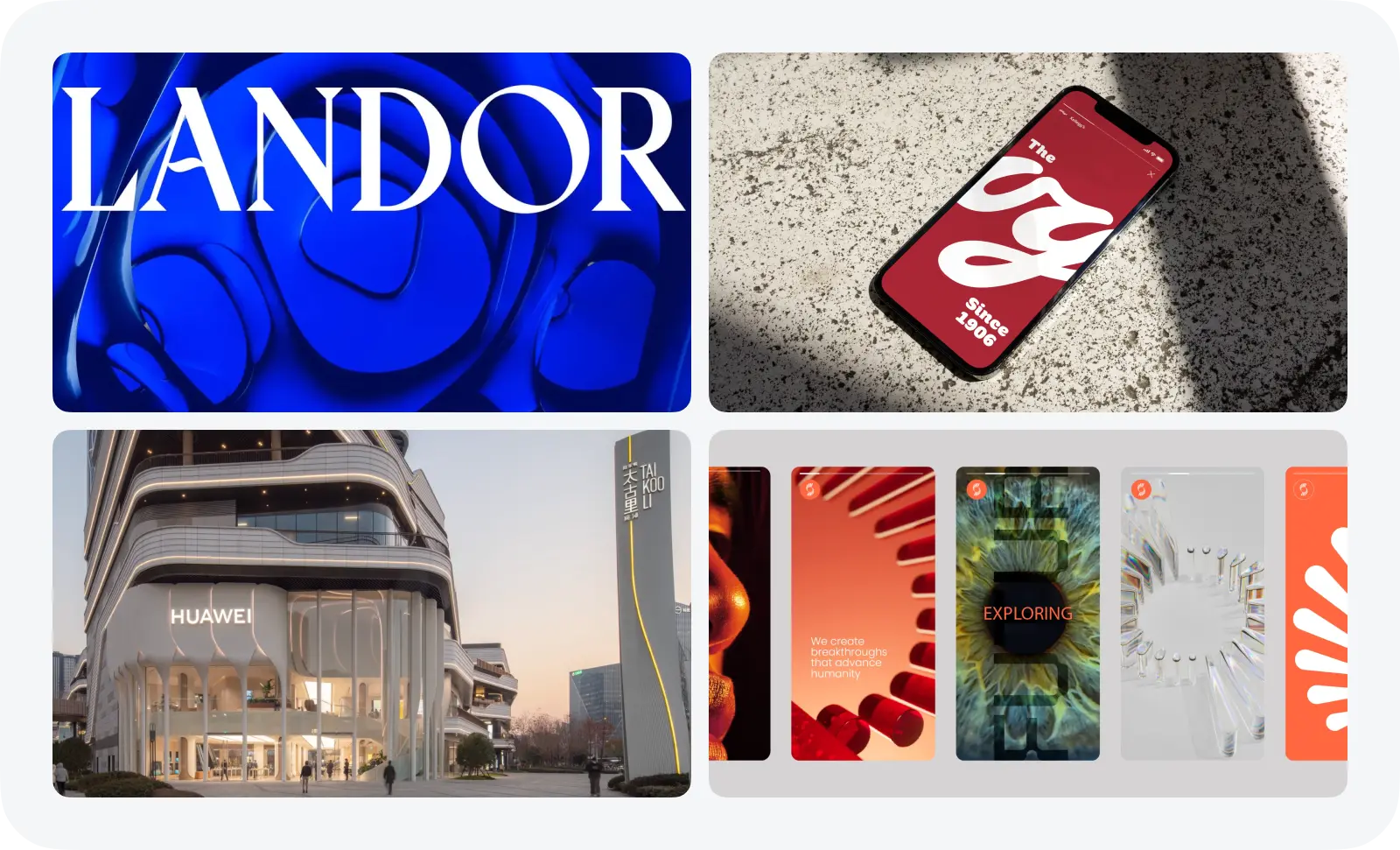
- Best for: Multinational companies, mergers, portfolio rationalisation, and complex identity systems.
- Strengths: Balance of Strategy and Creativity, with solutions grounded in research; commitment to human-centric design and versatility across physical, digital, and environmental design.
- Downside: High cost associated with a major global consultancy; processes can be strategy-heavy, sometimes prioritizing analytics over radical creative risk.
- What to evaluate: Landor’s scale is an advantage when complexity is high. For smaller companies, however, the process may be more extensive than necessary.
Landor is one of the strongest names for enterprise brand architecture, identity systems, naming, and large-scale brand transformation.
| Location(s) | San Francisco (CA, USA) + 31 Offices Worldwide |
| Founded | 1941 |
| Team Size | 1,300+ |
| Clients | SMBs, Enterprise |
| Services | Brand Strategy, Brand Design, Brand Experience |
| Budgets | Undisclosed |
| Industries | Consumer Goods, Technology, Education |
| Website | landor.com |
| Social Links |
Pentagram
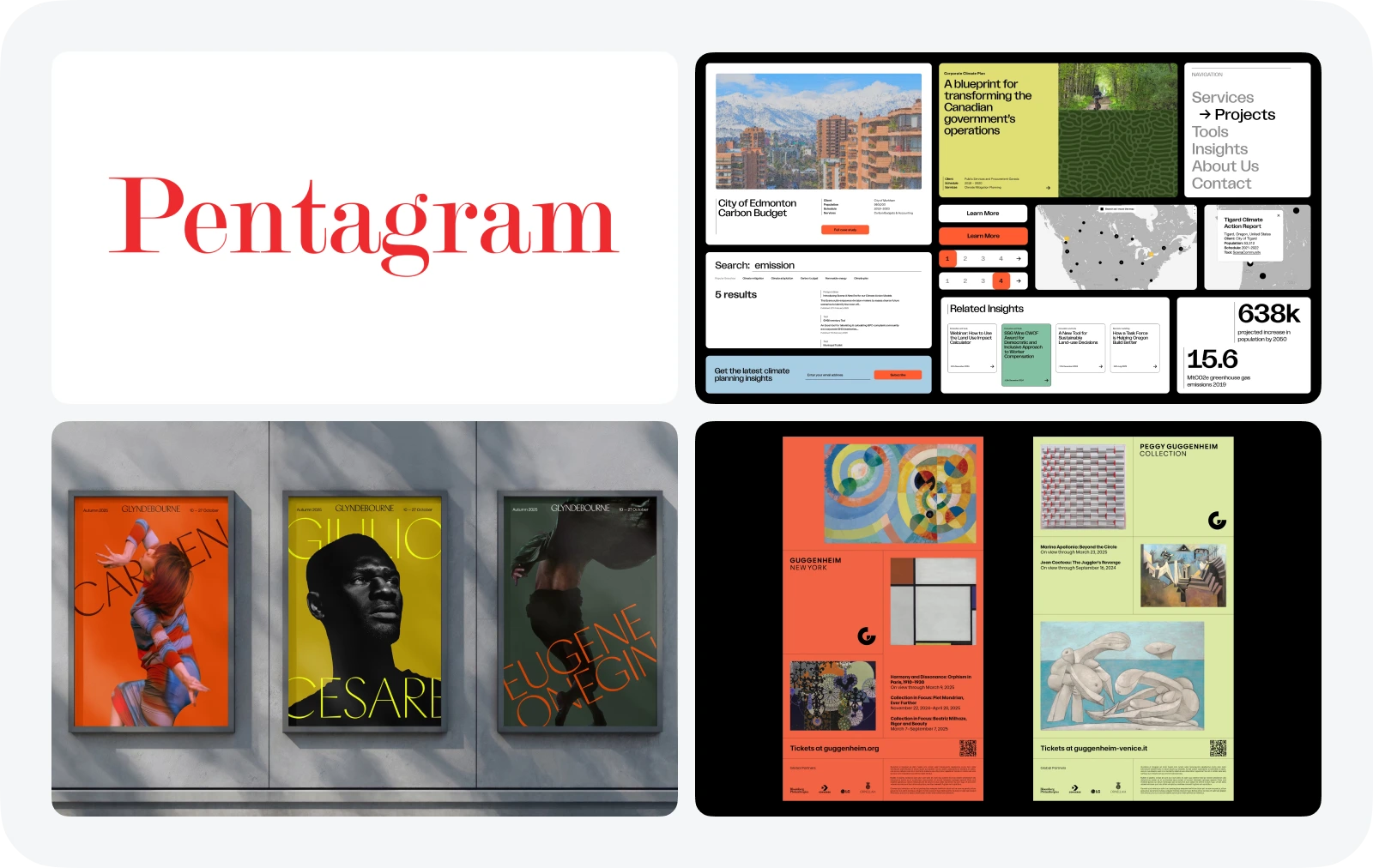
- Best for: Pentagram is a partner-led design firm known for high-craft visual identity, editorial design, cultural work, and long-lasting brand systems.
- Strengths: The world's most acclaimed creative collective; the owners of the business are the creators of the work and serve as the primary client contact.
- Downside: Non-traditional structure (client contacts a partner); focus is often on high-end design craft, and projects may lack the quantitative business metrics of a consultancy.
- What to evaluate: The partner-led model is a strength, but fit depends heavily on the specific partner, team, and working style.
Pentagram is a partner-led design firm known for high-craft visual identity, editorial design, cultural work, and long-lasting brand systems.
| Location(s) | London (UK), New York City (NY), Austin (TX, USA) |
| Founded | 1972 |
| Team Size | 100–249 |
| Clients | SMBs, Enterprise |
| Services | Brand Strategy, Messaging, Graphic Design, Digital Design |
| Budgets | $50,000+ |
| Industries | Arts & Entertainment, Consumer Goods, Finance |
| Website | pentagram.com |
| Social Links | LinkedIn, Twitter |
Motto
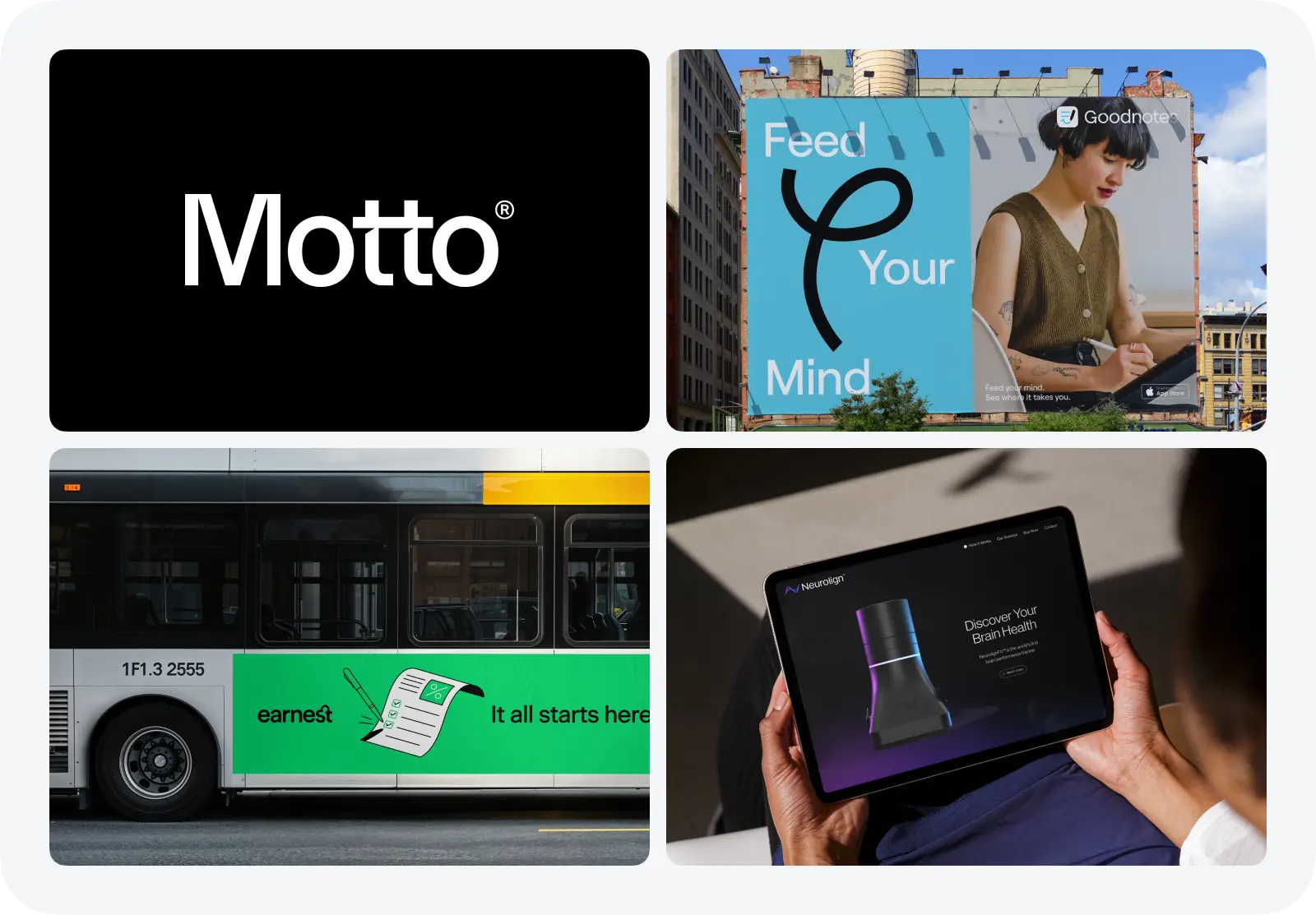
- Best for: Founder-led companies, category creators, and teams that need their brand story to become an internal rallying point.
- Strengths: Sharp creative thinking balanced with operational rigor; exceptional at uniting leadership under a common vision.
- Downside: Highly focused on strategy and narrative; may require separate resources for large-scale marketing or development rollouts.
- What to evaluate: Ask how the strategy will translate into web, product, sales, and marketing execution after the narrative work is complete.
Motto is a good fit for companies that need a sharp central idea, stronger leadership alignment, and a more emotionally resonant narrative.
| Location(s) | New York City (NY), Dallas (TX, USA) |
| Founded | 2005 |
| Team Size | 11-50 |
| Clients | Startups, Enterprises |
| Services | Brand Strategy, Brand Identity, Brand Culture |
| Budgets | $75,000+ |
| Industries | Finance,Technology, Consumer Goods, Education |
| Website | wearemotto.com |
| Social Links | LinkedIn, Twitter |
Snøhetta
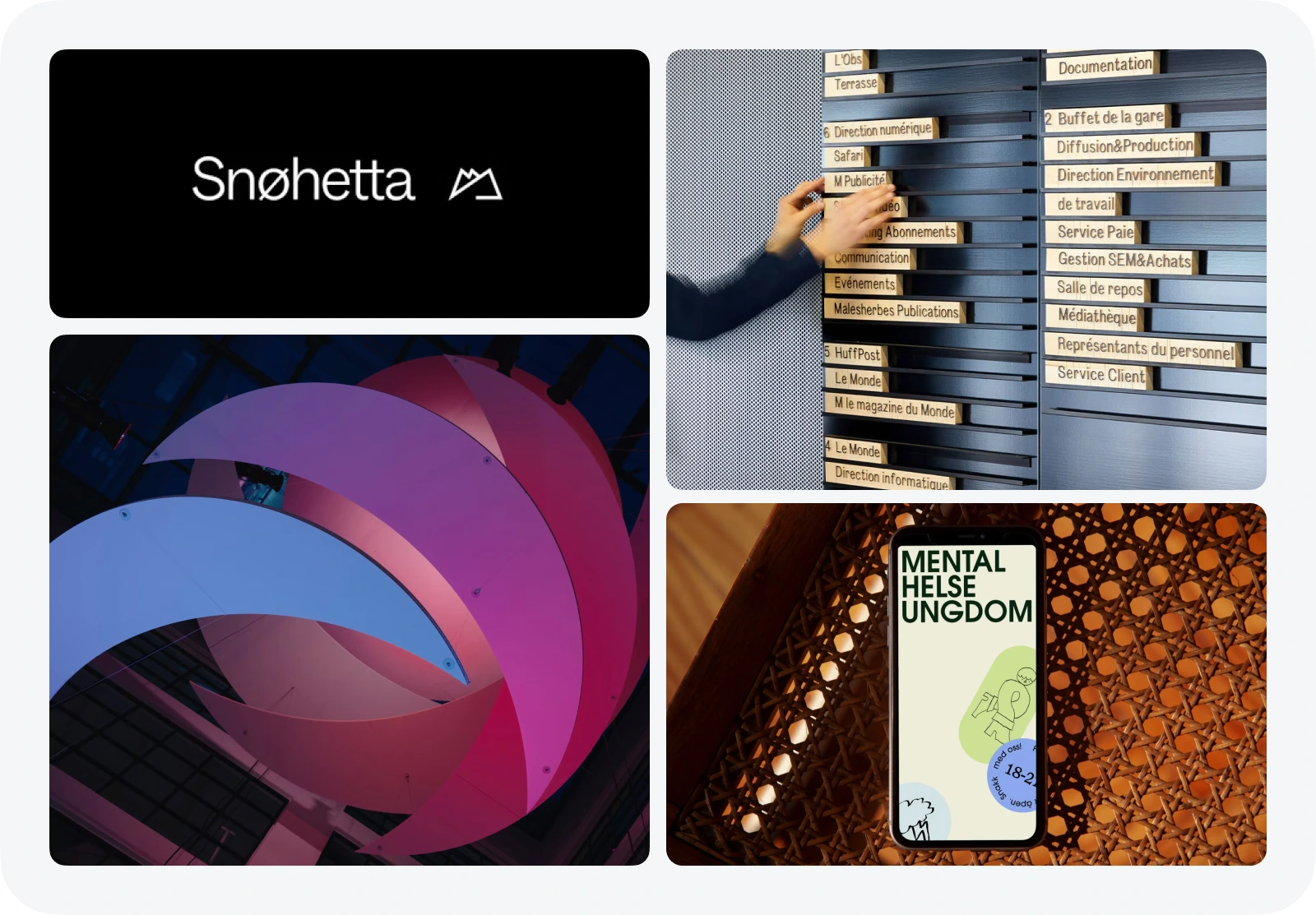
- Best for: Cultural institutions, public spaces, hospitality, architecture-led brands, and organisations where place matters.
- Strengths: Multidisciplinary approach and strong creative management, rejecting fixed styles to craft strong narratives where context and ambition lead.
- Downside: Their trans-disciplinary approach can make projects long and complex due to the number of integrated fields (architecture, brand, landscape).
- What to evaluate: Because the work can be multidisciplinary, ask how decisions will be managed, how long the process will take, and what deliverables your internal team will own.
Snøhetta is especially interesting when brand, physical space, architecture, culture, and experience need to work together.
| Location(s) | Oslo (NO), New York City (NY, USA) |
| Founded | 1989 |
| Team Size | 50–249 |
| Clients | SMBs, Enterprises |
| Services | Branding, Graphic Design, Architecture, Interior Design |
| Budgets | Undisclosed |
| Industries | Arts & Culture, Public Spaces, Corporate |
| Website | snohetta.com/ |
| Social Links | LinkedIn, Instagram |
Porto Rocha
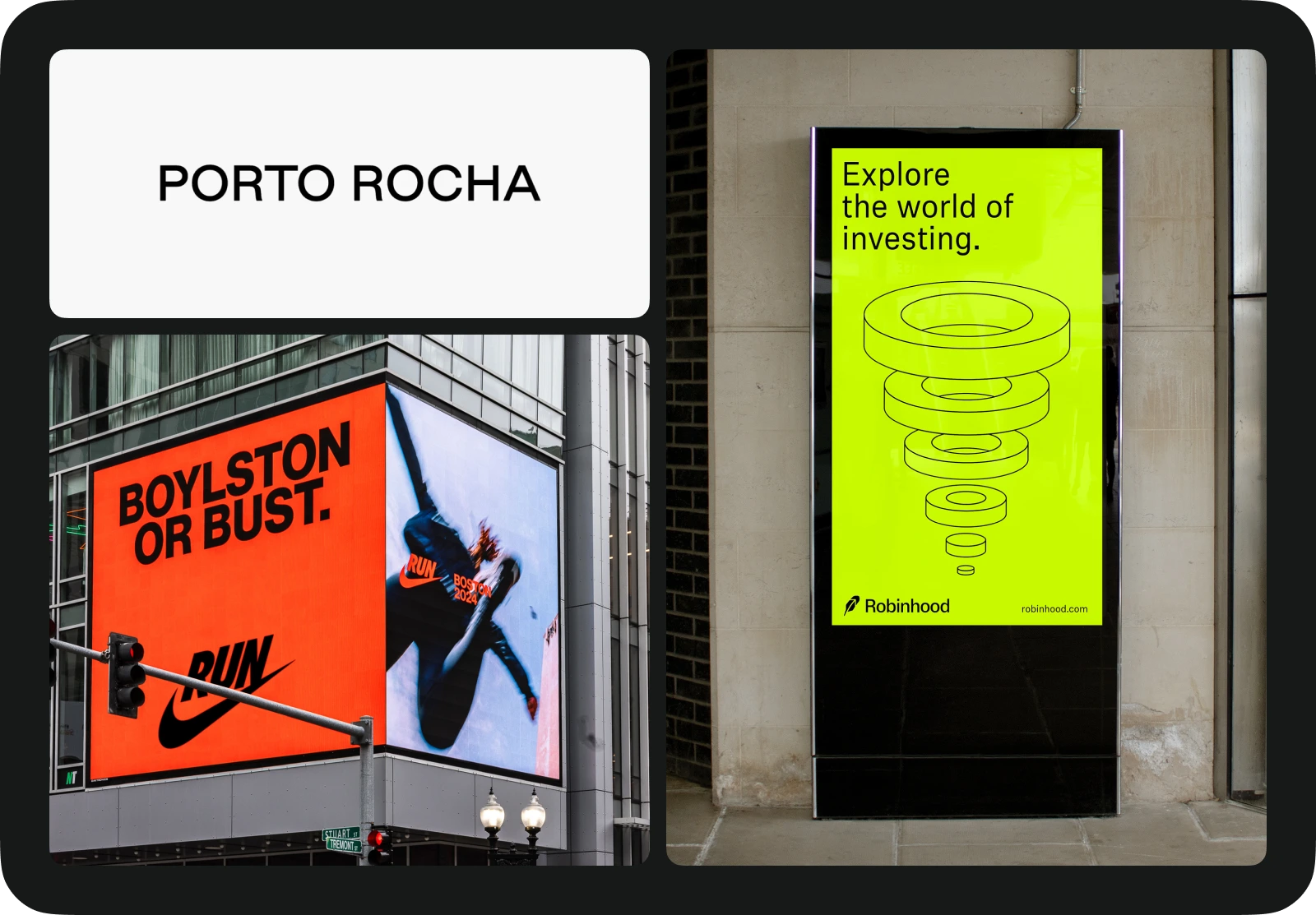
- Best for: Tech, retail, culture, fashion, media, and brands that need to feel current without becoming generic.
- Strengths: Uniting strategy and design to create work that evolves with the world; seeking to provoke meaningful change through design.
- Downside: As a studio focused on design systems and cultural relevance, they may be less suitable for traditional, highly conservative corporate clients.
- What to evaluate: Ask how the agency balances visual expression with business strategy, stakeholder alignment, and long-term usability.
Porto Rocha is a strong creative choice for brands that want a distinctive visual voice, cultural relevance, and expressive identity systems.
| Location(s) | New York City (NY, USA) |
| Founded | 2019 |
| Team Size | 10–49 |
| Clients | Startups, SMBs, Enterprises |
| Services | Brand Strategy, Visual Identity, Design Systems |
| Budgets | Undisclosed |
| Industries | Technology, Arts & Culture, Finance |
| Website | portorocha.com |
| Social Links |
C42D
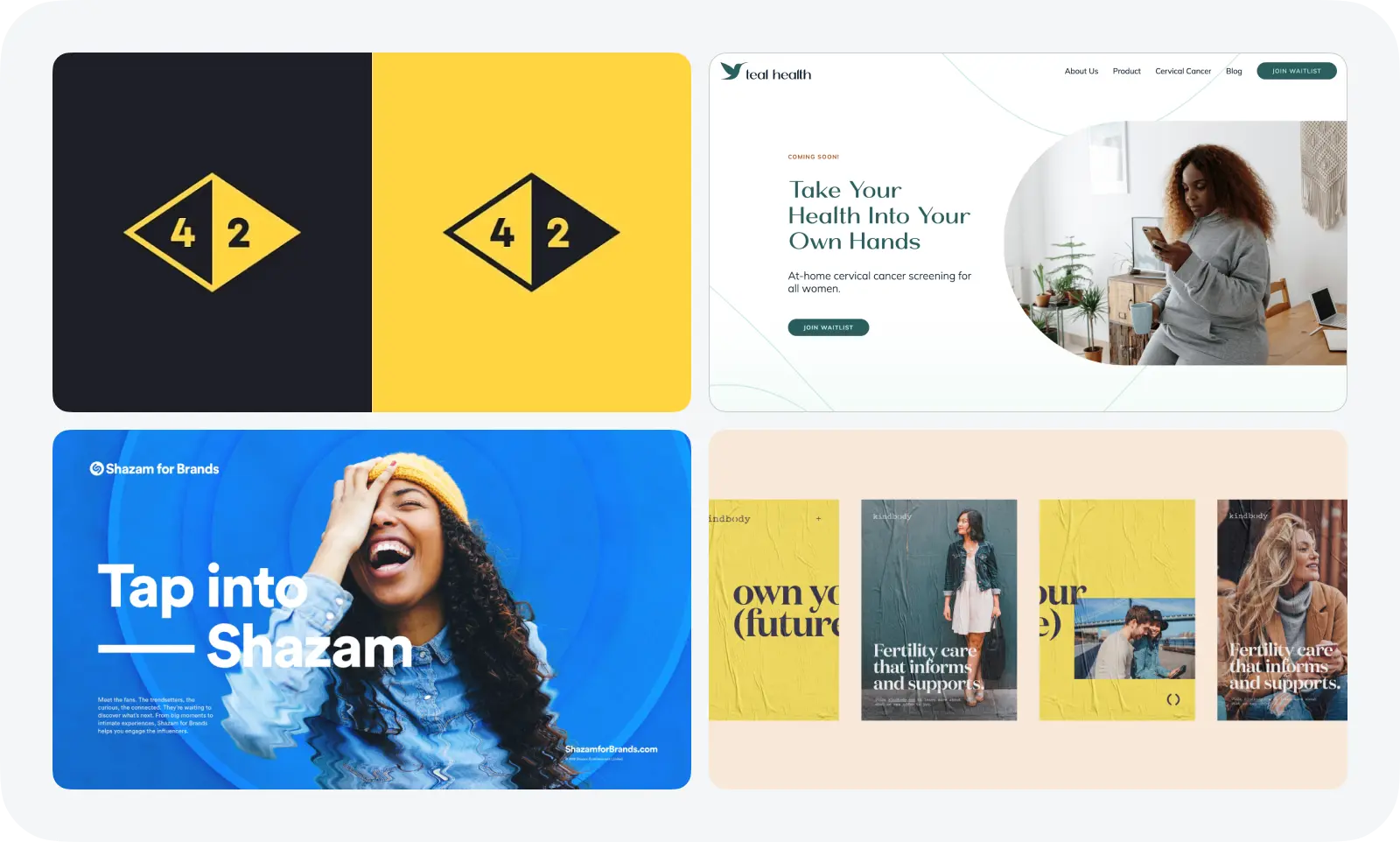
- Best for: Early-stage and venture-backed companies preparing for fundraising, launch, or category definition.
- **Strengths:* Highly organized, responsive, and detailed; they are experts in positioning, brand strategy, and identity systems for early-stage companies.
- Downside: Higher pricing compared to some competitors; some non-business reviews mention internal/financial issues, though client reviews are overwhelmingly positive.
- What to evaluate: Ask for examples where the brand helped improve investor perception, sales clarity, or website conversion.
C42D is a focused option for startups and growth companies that need positioning, naming, identity, and web design.
BBDO
- Best for: Global corporations and large established brands seeking award-winning, high-impact creative campaigns rooted in deep consumer insights and data-driven strategy.
- Strengths: Creative Effectiveness: Consistently ranked as the world's most creative and effective agency network (e.g., WARC Creative 100). Strong at using data and insights to validate the creative output.
- Downside: Its traditional advertising roots mean it may lag in pure digital innovation compared to newer, specialized entrants; the large size can sometimes lead to siloed network offices.
- What to evaluate: If your primary need is a strategic brand system, check whether the proposed team is brand-led or campaign-led.
BBDO is more than a branding agency; it is a global creative network with deep advertising and campaign experience.
500 Designs
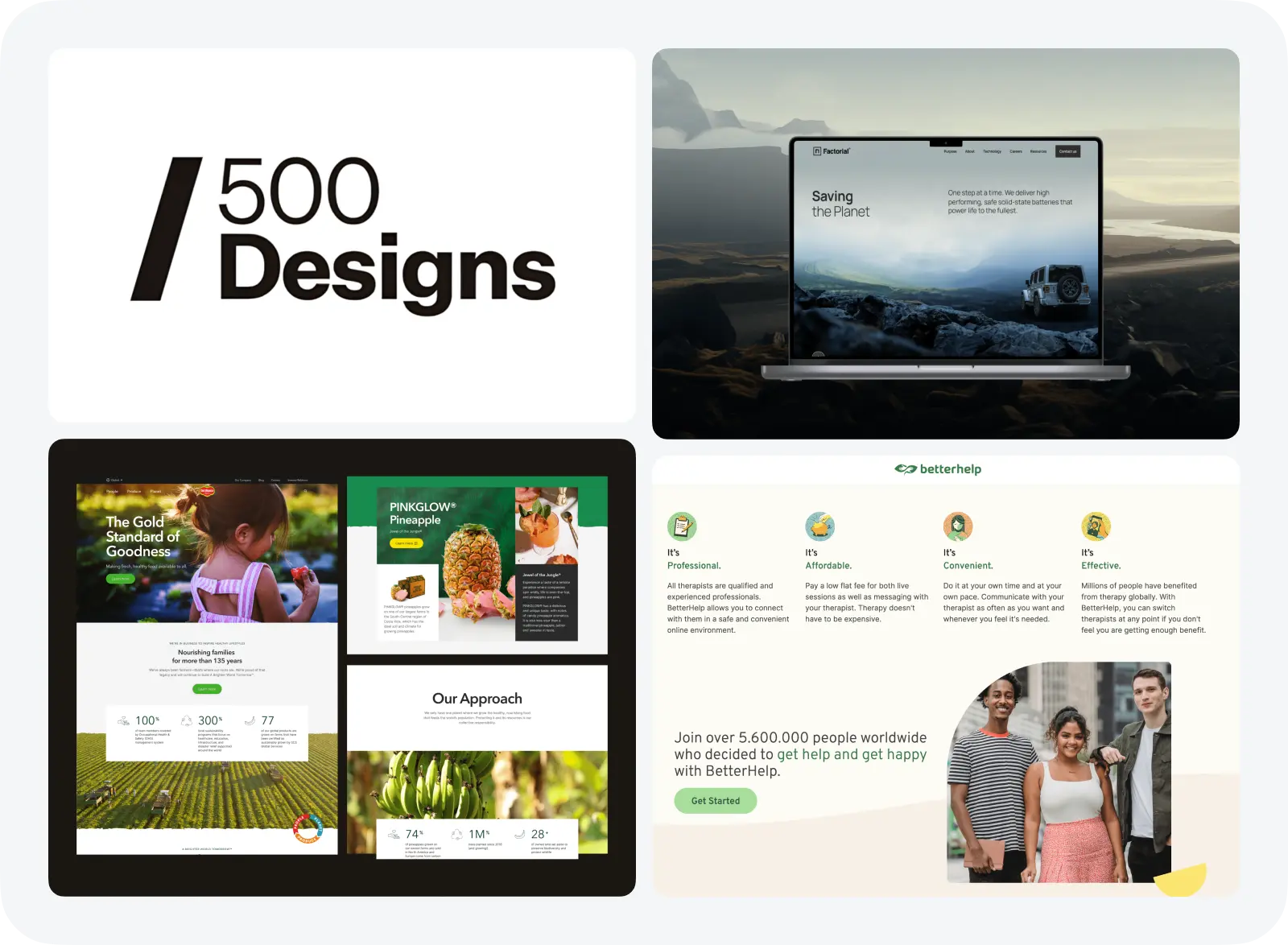
- Best for: Companies that want brand work connected quickly to a website, product interface, or digital marketing experience.
- Strengths: Strong focus on high-quality UX design balanced with technical prowess; known for exceptional project management and communication skills.
- Downside: High pricing (starting at $100/hr, $50,000 minimum) can be a barrier for smaller projects; strategic work may be less emphasized than execution.
- What to evaluate: Ask how much of the engagement is strategic foundation versus execution, and whether the brand system will scale beyond the first launch.
500 Designs combines branding, web design, UI/UX, and digital execution.
| Location(s) | Irvine (CA, USA) |
| Founded | 2017 |
| Team Size | 50–249 |
| Clients | Startups, SMBs |
| Services | Branding, Web Design, Corporate Identity |
| Budgets | $50,000+ |
| Industries | Medical, Business Services, Financial, eCommerce |
| Website | 500designs.com |
| Social Links | LinkedIn, Facebook |
Ruckus
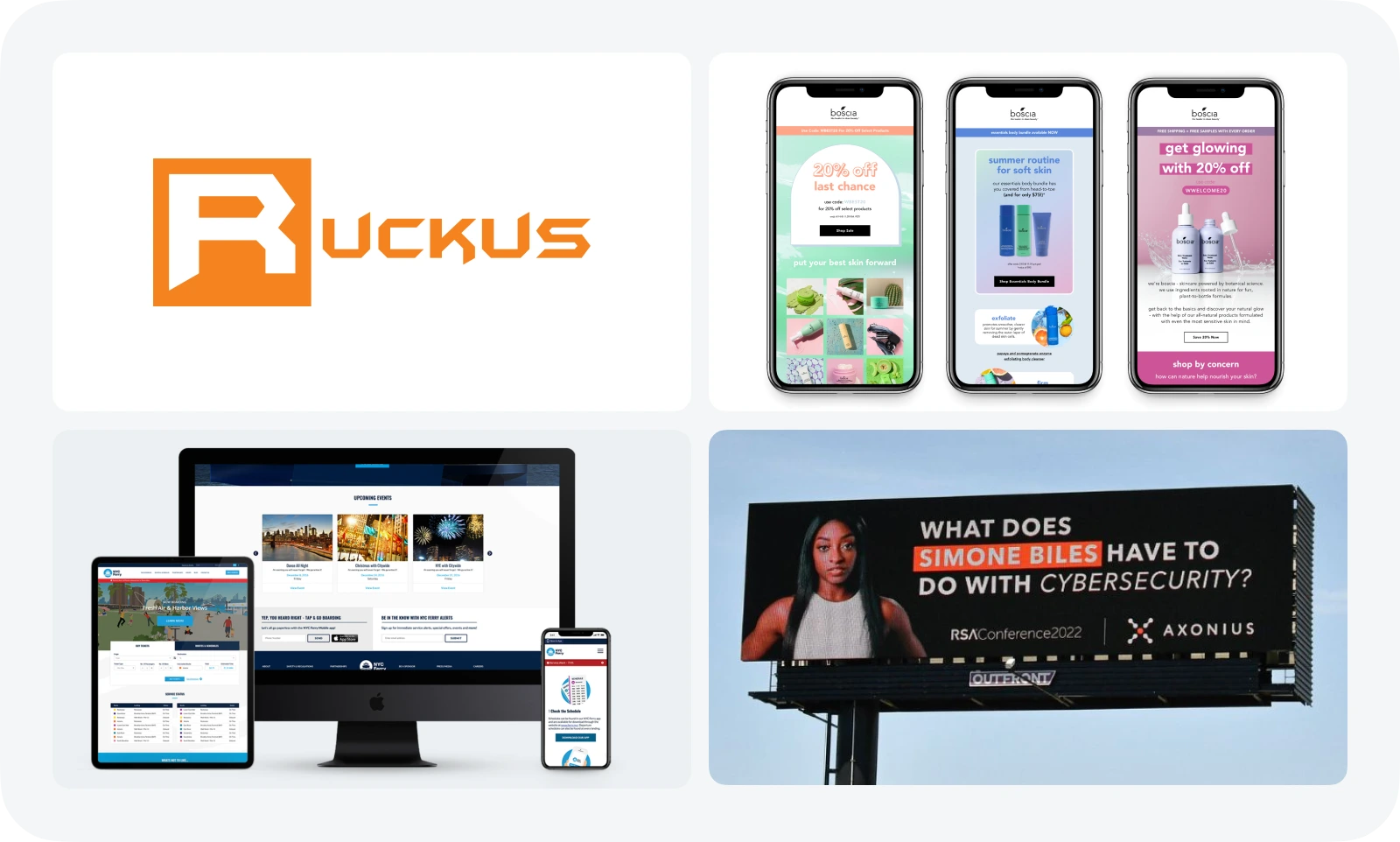
- Best for: Companies that need brand identity and activation together.
- Strengths: Business-minded agency with creative powerhouse; delivers work that powers game-changing companies and consistently drives desired outcomes.
- Downside: Less focused on deep, long-term corporate brand strategy, and more oriented toward marketing execution and immediate campaign results.
- What to evaluate: Ask whether the agency is solving a long-term positioning problem or a shorter-term campaign and growth problem.
Ruckus is a full-service agency combining branding, platform design, campaigns, and marketing execution.
| Location(s) | New York City (NY, USA) |
| Founded | 2005 |
| Team Size | 10–49 |
| Clients | Startups, SMBs, Enterprise |
| Services | Branding, Platform Design, Marketing Campaigns |
| Budgets | $25,000+ |
| Industries | Retail, Consumer Goods, Automotive, Healthcare |
| Website | ruckusmarketing.com |
| Social Links | LinkedIn, Twitter |
What Branding Actually Is?
For B2B and SaaS companies, branding is not a logo, colour palette, or homepage redesign.
Branding is the operating system for how your company is understood, remembered, trusted, and chosen.
A useful brand connects three layers.
Positioning
This is the space you choose to occupy in the market. It defines what you are, who you are for, what alternatives you replace, and why your approach matters.
Story and Messaging
This is how you explain value to buyers, users, investors, partners, candidates, and internal teams.
Identity and Experience
This is how the story appears visually and verbally across your website, product, sales materials, onboarding, campaigns, events, and support experience.
When these layers reinforce each other, your brand becomes a decision-making tool. It helps teams say no, move faster, and stay consistent under pressure.
When You Need a Branding Agency?
You probably need an agency when branding is tied to a business inflection point.
Common triggers include:
- Moving upmarket
- Launching a new product
- Repositioning after a market shift
- Consolidating multiple products
- Preparing for fundraising, M&A, or IPO activity
- Repairing trust after performance, regulatory, or PR issues
- Entering a more competitive category
- Translating a complex technical product into a clearer buyer story
In our experience, the strongest signal that a company is ready for agency-level brand work is not company size. It is the cost of misalignment. Across 26 rebrand and repositioning projects, the companies with the clearest business trigger: moving upmarket, entering a new category, preparing for fundraising, or consolidating products, reached strategic approval two weeks faster on average than companies that described the need mainly as “we need a new look.”
Ramotion’s own About page lists capabilities such as refresh and repositioning, scale-up and expansion, team extension, and preparing for M&A or IPO, which match these common inflection points.
When You Are Not Ready for a Full Rebrand?
Sometimes the best branding decision is to wait.
A full-scale rebrand may be premature if:
- Your ideal customer profile is still changing
- Your pricing and packaging are unstable
- Leadership cannot agree on business direction
- You have not validated product-market fit
- You need a campaign, not a brand system
- You only need a narrow execution asset, such as a deck or landing page
In those cases, a focused positioning sprint, messaging workshop, visual clean-up, or website audit may create more value than a full identity programme.
We have learned to be careful here. Across 17 smaller strategy-first projects, teams with unstable ICP, pricing, or product packaging benefited more from a focused positioning sprint or website audit than a complete rebrand. Those narrower engagements typically produced fewer unused assets and gave founders clearer inputs for the next fundraising, launch, or product cycle.
How to Choose a Branding Agency
Step 1: Audit Yourself First
Before you search for agencies, define the problem.
Ask:
- Why are we considering brand work now?
- What business metric do we expect branding to influence?
- Which audience needs to trust us more?
- What is broken today: positioning, messaging, identity, product experience, or sales enablement?
- Who owns the final decision?
- What cannot change: budget, timeline, or quality bar?
A common mistake I see is treating branding as a vendor search before it becomes an internal alignment exercise.
Step 2: Define the Scope Triangle
Every branding project has three forces:
- Budget
- Timeline
- Quality
You can usually protect two. The third will move.
A rushed, low-budget, high-quality transformation is rarely realistic. A good agency will tell you that before you sign.
Step 3: Build a Shortlist of 3–5 Agencies
Do not shortlist every famous agency. Shortlist agencies that understand your type of business.
For a B2B SaaS company, ask whether the agency has worked with complex buying committees, product-led growth, enterprise sales cycles, security concerns, technical documentation, and category education.
For fintech, healthcare, or cybersecurity, ask whether they understand trust, compliance, and risk.
For Web3 or AI, ask whether they can simplify complexity without overhyping the product.
Step 4: Audit the Portfolio Properly
Do not ask only, “Do I like the work?”
Ask:
- What business problem was the agency solving?
- What changed after launch?
- Did the brand improve sales conversations, activation, trust, retention, hiring, or investor perception?
- Did the agency support product UI, sales decks, documentation, and onboarding?
- Is the work still relevant years later?
Step 5: Read the Proposal for Red Flags
Watch for:
- No discovery or research phase
- Vague deliverables
- No stakeholder plan
- No named senior team
- No implementation or handover plan
- No IP ownership clarity
- No discussion of metrics
- A process that jumps straight into visuals
The cheapest proposal often removes the exact work that de-risks the project: senior thinking, research, stakeholder alignment, and rollout support.
What a Serious Branding Project Should Deliver?
For a B2B, SaaS, fintech, cybersecurity, healthcare, or Web3 rebrand, I would expect most of the following.
Brand Strategy and Platform
This should define positioning, differentiation, audience insight, category framing, brand idea, and strategic principles.
Verbal Identity and Messaging
This should include the core story, value proposition, messaging hierarchy, segment-specific messaging, voice and tone guidance, and practical examples.
Visual Identity System
This should include logo system, typography, colour, layout, iconography, illustration or motion principles, and rules for digital use.
Website and Product Experience Direction
For digital companies, the brand must show up in product and web experience. Ramotion’s own work sits at this intersection of branding, UX, and web design.
Implementation Assets
Useful deliverables may include sales decks, investor decks, one-pagers, social templates, campaign templates, Figma libraries, onboarding assets, and internal launch materials.
Guidelines and Governance
A brand guideline document is not enough. The team needs examples, rules, ownership, training, and a clear process for extending the system.
How to Measure Branding ROI?
Branding is not always easy to attribute, but it is measurable if you define the baseline before the project starts.
At Ramotion, we usually recommend defining the baseline before discovery, not after launch. Across 25 brand, website, and product-design engagements, the teams that captured baseline metrics before kickoff, such as direct traffic, branded search, qualified inbound, sales-cycle length, activation, or deck production time, were far more likely to evaluate the work objectively 90 days later.
Track these metrics before and after launch.
| Aspect | Criterias |
|---|---|
| Demand and Awareness |
|
| Sales |
|
| Product and Customer Health |
|
| Internal Efficiency |
|
For B2B companies, the most practical ROI signals are often operational. Based on our project retrospectives, brand work most often showed up first as faster sales-material creation, fewer homepage messaging debates, clearer investor narratives, and less friction between marketing and product teams. Revenue impact may take longer to isolate, but internal efficiency usually becomes visible within the first one or two campaign cycles.
The useful question is not, “Did the logo create revenue?” It is:
If clearer positioning, stronger trust, and better materials improved win rate, shortened sales cycles, or increased retention even modestly, what would that be worth over 12–24 months?
What the First 4–6 Weeks Should Look Like?
The early phase determines whether you get a strategic shift or just a visual refresh.
A strong first month usually includes:
- Kickoff and success criteria
- Stakeholder interviews
- Customer or buyer insight review
- Current brand and website audit
- Competitor and category analysis
- Messaging and sales-material review
- Positioning hypotheses
- Strategic workshop
- Brand platform direction
- Early creative territories anchored in strategy
By the end of this phase, you should be able to trace a line from business objectives to brand strategy to creative direction. If that line is missing, slow down.
In-House vs Freelancer vs Branding Agency
| Type | Reasons |
|---|---|
| Choose In-House When | You have continuous brand needs, a mature internal team, and a clear strategy already in place. In-house teams are close to the product and can iterate quickly. The challenge is building a senior, cross-disciplinary team that can handle a major repositioning. |
| Choose a Freelancer When | The problem is narrow and well-defined. A freelancer can be excellent for a deck, launch visuals, campaign assets, naming support, or a light identity refresh. They are less suited to complex stakeholder alignment and full brand-system change. |
| Choose an Agency When | You are at an inflection point. An agency is the right choice when you need pattern recognition, research, strategy, narrative, identity, website, product experience, implementation, and stakeholder management in one coordinated process. |
Based on our experience, the agency model is most valuable when the problem crosses functions. If the work has to align leadership, reposition the company, redesign the website, update sales materials, influence product experience, and create a reusable design system, a single freelancer or narrow in-house team often lacks the range or neutrality needed to move the work through the organization.
Key Takeaways
- Choose a branding agency based on strategic fit, not portfolio taste alone.
- A serious agency should explain its methodology, validation process, deliverables, ownership terms, and post-launch support.
- Ramotion is a strong fit for B2B, SaaS, fintech, cybersecurity, healthcare, AI, and Web3 teams that need branding connected to product and web experience.
- Larger consultancies such as Wolff Olins and Landor may be better for enterprise-scale transformation.
- Design-led studios such as Pentagram, Porto Rocha, and Snøhetta may be stronger when cultural, spatial, or visual distinctiveness is the priority.
- Before hiring anyone, define your business problem, success metrics, decision owner, budget, timeline, and internal constraints.
- The best brand systems are useful after launch: in sales, product, marketing, hiring, onboarding, and customer communication.
Based on our experience, brand quality becomes visible in the weeks after launch: how quickly sales teams adopt the story, how consistently marketers build new pages, how confidently product teams extend the system, and how few decisions need to be reopened. That is why I evaluate branding agencies less by aesthetic preference and more by the operational evidence behind their process.
Conclusion
The best branding agency is not the one with the most famous client logo or the most beautiful case-study thumbnail. It is the one that understands your business problem, can explain its process, brings the right senior team, validates strategy before design, hands over usable assets, and helps your organisation adopt the brand after launch.
FAQ
-
What does a branding agency do?
A branding agency helps define how a company is positioned, explained, recognised, and experienced. That can include strategy, messaging, naming, identity design, website direction, product experience, guidelines, and rollout support.
-
How much does a branding agency cost?
Costs vary widely by scope, seniority, geography, and complexity. A focused identity refresh may cost far less than a full B2B or SaaS repositioning with research, messaging, identity, website, product design, and implementation support. Always compare deliverables, team seniority, and ownership terms rather than price alone.
-
How long does a branding project take?
A focused project can take 4–8 weeks. A full strategy, identity, website, and rollout engagement often takes 3–6 months. Enterprise transformation can take longer because stakeholder alignment, research, governance, and rollout are more complex.
-
Who owns the final brand assets?
Ownership should be defined in the contract. In most projects, the client should own final approved assets after final payment, while agencies may retain unused concepts, internal process materials, and proprietary tools. Fonts, stock assets, and third-party software may require separate licences.
-
Should I hire a branding agency or a web design agency?
If the problem is positioning, messaging, identity, and trust, start with branding. If the strategy is already clear and the main issue is digital execution, a web design agency may be enough. For B2B and SaaS companies, the best partner often understands both brand and digital product experience.

Leads Ramotion in crafting impactful digital products and brand identities, combining two decades of design expertise with an iterative approach that drives innovation for startups and enterprises alike.