
You can find a dozen products with the same specs and price, yet why do some brands become the top choice? What makes people say a brand is the one?
Certainly, the popularity of a brand name plays a significant role, but that popularity stems from a cultivated brand preference. Understanding what, why, and how can unlock many doors for growth and make your brand irresistible and unforgettable. The article also covers different methods for measuring brand preference, so you know where you stand.
Defining Brand Preference
Brand preference occurs when customers choose one brand over others based on a combination of factors, like price, product quality, marketing, popularity, availability, and experience.
When brand preference is high, you can expect more referrals and positive feedback, as well as higher sales. It can also breed brand loyalty, with customers willing to buy from you regardless of price.
But achieving brand preference requires ongoing effort. It entails understanding the customer journey and optimizing each touchpoint, from building brand awareness in the minds of consumers to encouraging brand choice, repeat purchase, and ultimately, brand advocacy.
Key Factors Influencing Brand Preference
Building brand preference hinges on a combination of factors, and finding the right mix can tip the scales in your favor.
1. Price and quality
Consumers with high price sensitivity are less likely to buy from premium brands. But if the quality is bad, even a cheap product won't be worth it. Understanding these dynamics helps businesses position pricing strategies that will balance price and quality.
2. Brand reputation and trust
Brand reputation can command trust, even from casual or non-buyers. When a brand has a good reputation, its products and services meet consumer standards, leading people to choose it over competitors. Conversely, a bad reputation can gravely impact a brand's market share and sales.
3. Emotions and social influence
People are often ruled by emotions when making decisions. When a brand evokes strong emotions—such as happiness, nostalgia, or excitement — they are more likely to buy from that brand again due to these brand associations.
Social influence also affects brand preference. Say a friend asks you out to go shopping for clothes, you are more likely to influence each other when it comes to choosing which brand to buy from.
4. Experience and availability
Memorable experiences are a guaranteed way to bag a loyal customer. These experiences spark trust and emotional connection, leading them to buy again and even recommend the brand to their friends and family.
A 2022 survey backs this, finding that almost half of respondents stopped purchasing from brands that delivered a poor customer experience. Doubledown with wide availability—the brand is easy to find—and it can convince them even more to choose that brand. This is why it is vital to stay competitive and make products widely available to brand consumers.
5. Digital touchpoints
Digital touchpoints, such as social media ads, emails, websites, and shopping apps, can significantly influence how consumers perceive a brand. And each digital interaction is an opportunity to get to know customers, track their behavior, build trust and loyalty, or lose them.
Brands that manage these touchpoints effectively deliver a well-rounded customer experience, which can earn them a competitive advantage over their competitors.
The Role of Emotions in Influencing Consumer Psychology
A brand that can connect emotionally with its audience can influence perceptions and, ultimately, purchasing decisions. Let's go over the psychology behind building brand preference.
Consumer cognitive biases
Psychologically, brand preference is shaped by perceptions and other cognitive biases. These elements create emotional and psychological attachments.
- Confirmation bias: This occurs when consumers seek out brands they believe are good, while disregarding contrary evidence. It is often brought by past experiences, reading positive reviews from other customers or people they trust, and selective search.
- Loss aversion: The fear of missing out on opportunities, like discounts, limited-edition items, and other rewards, can be a strong motivator for consumers to choose a brand over others.
- Mere exposure effect: Constant exposure to a brand fosters familiarity, which in turn increases brand preference.
- Halo effect: A brand known for its superior product tends to make people think their other products are just as good. First impressions, celebrity endorsements, innovative designs, and other factors drive the halo effect.
- Bandwagon effect: Consumers are likely to support a brand that they see the majority of people around them patronize.
- Compromise effect: When choosing proves complicated, some consumers go for the brand that offers the best of both worlds. They would rather compromise than choose extreme options.
Achieving higher mental penetration leads to stronger connections with consumers and fosters brand loyalty. This is why measuring customer reactions and gathering feedback becomes beneficial when refining strategies to enhance brand preference.
Storytelling and symbolism
Compelling storytelling weaves visual elements, values, and beliefs to motivate and emotionally connect with your audience. Symbolism that resonates deeply strengthens brand preference.
Take GoPro, for example. Its adventure stories capture thrilling moments that attract thrill-seekers and creatives. Another similar brand is McDonald's, which centers its narrative on family, happiness, and memorable dining experiences. The joy symbolized by its mascots resonates with a diverse global audience, reinforcing its status as a top fast-food choice.

GoPro integrates thrill and adventure to convey brand message and stay memorable. Image via Instagram

McDonald’s leverages feel-good marketing to establish brand preference. Image via Ads of the World
Emotional triggers and heuristics
Emotional connections can reach and influence subconscious minds, often through triggers and heuristics.
Emotional triggers evoke strong feelings that deepen brand connections, like a sense of belonging, nostalgia, joy, and excitement. Heuristics enable quick decisions based on gut feelings, visual appeal, peer recommendations, and brand familiarity.
These factors make cohesive messaging, visuals, and design crucial for reinforcing brand preference.
For example, Harley-Davidson's rebellious image appeals to those who value freedom. Meanwhile, Muji's focus on minimalism and consistency enables consumers to associate the brand with simplicity, quality, and sustainability, thereby reducing the need for extensive advertising to convey these values.

Harley-Davidson connects with people who value their freedom. Image via Ads of the World
Understanding the psyche of consumers requires assessing mental market share relative to competitors. And increasing mental availability can be a driving force for brand recognition and recall during the buying process.
Measuring Brand Preference
So, how do you track and measure something intangible, like brand preference? Let's review key methods for measuring brand preference.
Traditional research methods
Surveys, focus group discussions, interviews, and other traditional research methods provide a solid foundation for understanding your target audience and measuring brand preference.
Surveys allow you to explore responses from a diverse audience and find patterns. They are also easy to conduct. However, since surveys are designed within the bounds of specific questions, they can limit responses and lack flexibility, resulting in missed insights.
FGDs entail facilitating a small group of participants to uncover key drivers behind brand preference. This method allows you to narrow your sample size for more in-depth insights. Meanwhile, one-on-one interviews delve into individual experiences, allowing you to explore the nuances of their brand preferences. Both methods can be time-consuming, as they require extra effort to organize and find participants.
It is crucial to craft insightful questions for the above methods and have a highly trained moderator to facilitate discussions and interviews. Other traditional research methods to consider are competitive analysis and field trials or experiments.
Digital metrics and behavioral data
Tracking digital metrics and behavioral data enables you to zoom in on quantitative data that measures the effectiveness of your brand strategy in shaping brand preference in real time.
For instance, periodic sales reports and conversion rates show the brand's demand development before and after the campaign launch. Social media engagement, click-through rates, sentiment analysis, and web traffic can provide quantifiable data on your audience's popularity and general opinion toward your brand.
For behavioral data, you can track browsing patterns, purchase history, churn rate, and abandoned cart rate to understand the thought process behind customer preferences and purchase decisions.
Choosing between traditional and modern research tools is not an either-or. In fact, leveraging both can provide well-rounded data that guides you in identifying entry points and implementing the right strategies to yield excellent brand performance.
Brand preference index
The brand preference index gives you solid data on how your brand compares to others in the same category. It helps us understand what makes people tick by examining factors such as brand trust, brand perception, emotional connection, and brand experience.
The Brand Preference Index is measured by asking people which brand they prefer the most and comparing the results across brands. The higher the brand preference index, the more consumers choose it over others.
5 Practical Steps to Build Brand Preference
Step 1: Identify your unique value proposition
A unique value proposition is a feature or set of features that sets you apart from your competitors. For instance, Apple's unique value proposition focuses on delivering a seamless experience across its innovative and state-of-the-art products.
When you can identify your unique value proposition/s, you can anchor your strategies and highlight them in your campaigns to entice consumers.
Step 2: Ensure consistency across messaging and customer experience
The next step is to make good on your brand promise by ensuring that your messaging aligns with the customer experience you deliver.
For example, a hotel brand dedicated to offering comfortable and eco-friendly experiences must clearly communicate this commitment and deliver an authentic customer experience that aligns with these values. Every interaction should reinforce comfort and sustainability, including the use of eco-friendly amenities and transparency about the hotel's environmental efforts.
Step 3: Personalize and reinforce emotional branding
Create feelings, such as happiness, excitement, or safety, when people use your brand by incorporating related words and images. Share stories about your brand or customers and demonstrate your understanding of them to foster genuine connections. Finally, be consistent with your brand look and feel to make people remember you.
Step 4: Include corporate social responsibility campaigns that reflect values
Corporate Social Responsibility (CSR) campaigns enable brands to give back to their communities. These could be philanthropic efforts, environmental campaigns, and economic responsibility.
But CSRs don't simply mean brands choosing activities that show they are doing good things. CSR efforts should reflect how brands honor their promises and align with their values. This helps customers see your brand as honest and trustworthy.
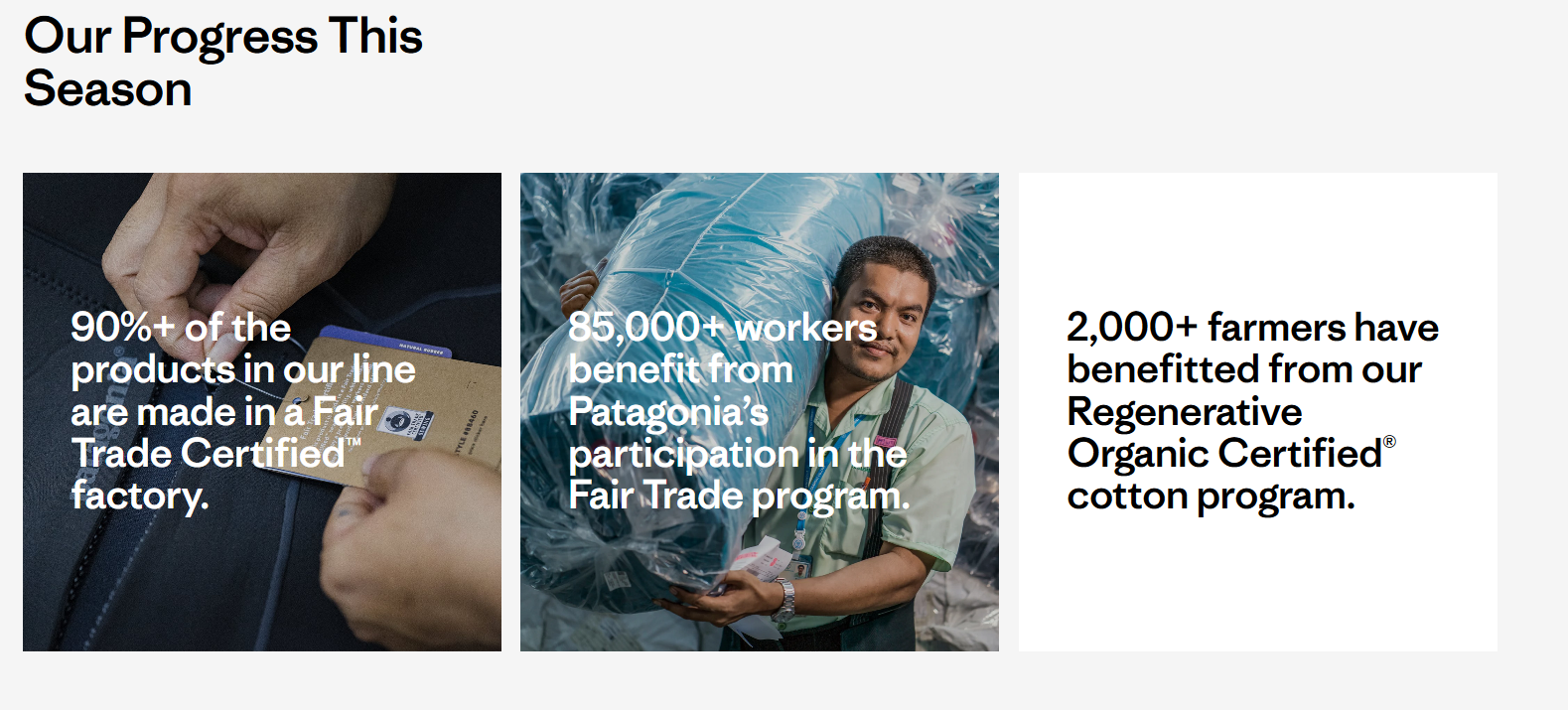
Corporate social responsibility through ethical and sustainable practices, as demonstrated by Patagonia
When you invest in actions that genuinely help people and address what they care about, your customers are more likely to take notice of you. They also help keep employees happy and loyal, and they take pride in being part of your brand, which in turn results in a better customer experience.
Step 5: Measure and iterate strategies
It is essential to select metrics that align with your business goals and the areas you want to improve. Track these metrics regularly and look for changes—both positive and negative—that can signal whether to refine or adjust strategies.
For example, if fewer people remember your brand, it may be time to go for a different approach and launch new ads. If loyal customers drop, improve your product or service. Finally, keep your metrics simple and clear, and implement a holistic approach to cover all your bases, increase brand value, and keep you ahead of the game.
Work with one of the top branding companies to guide you through these steps and help achieve brand success.
Challenges and Risks in Maintaining Brand Preference
Several challenges can arise when establishing brand preference. Let's explore some of these obstacles and discuss effective strategies to overcome them.
Changing customer trends
The shift in customer trends can influence what customers need, their expectations, and how they interact with brands. Some examples are new digital integration, changing values, and economic downturns.
In response, brands should remain steadfast in adapting by embracing the change. For instance, as more consumers favor brands that promote and practice sustainability, brands can revisit their production processes, packaging, and supply chain to reflect these values.
Threats to brand trust
Brand trust takes time to establish, but it can be easily broken.
If a product breaks easily or doesn't deliver as promised, it can be a significant turn-off for customers and lead them to switch to competitors. Lack of transparency—hidden fees, unclear terms, etc.—can also cast doubt in the minds of consumers.
Unresolved complaints and slow response to queries can make customers feel undervalued. Privacy and security threats can lead people to believe that their safety is not a priority, resulting in a loss of confidence in the brand.
Transparency should be a core tenet of businesses, providing clear information about their prices, products, and policies. Ensure products meet high standards and expectations, and encourage customers to provide honest feedback.
And finally, strengthening trust needs work from the inside out. In other words, employees should understand the importance of security and privacy, as well as how to resolve issues promptly.
Competitive pressure
When your competitors offer lower prices or features that your products don't provide, they can influence potential customers to choose their brand over yours. And this becomes even more challenging when you are already in a highly competitive market.
Hence, it's important to know when to ride the trend or hold your ground. For instance, you can focus on short-term tactical elements, like periodic promotions or minor feature adjustments, to remain competit
Build a Strong Brand Preference
The road to establishing brand preference in the minds of consumers begins with creating brand awareness and shaping perception. Once awareness and interest are there, you can reinforce why they should choose your brand over others. Over time, trust, loyalty, and improved brand equity are achieved.
But while prices and product features can influence consumers, it's the emotional connection that seals the deal and establishes brand preference. It's the creation of that bond that triggers all the good things—feelings and memories—that make it difficult for your competitors to break.
That said, adaptability is crucial. Aside from tracking brand health, a brand that is on top of changes in the industry and knows how to evolve without losing its core identity has the power to protect and uphold that hard-won brand preference.
Ready to take the next step? Hire a professional brand strategy firm to help your organization establish a strong brand preference.
Nov 27, 2025

Creates insightful, strategy-driven content that translates complex design and branding concepts into accessible knowledge, supporting Ramotion’s mission to elevate digital experiences.