
The corporate rebranding process calls for a structural recalibration. It rewires how a company talks, looks, and operates. It also demands legal clearance, cultural adoption, and strategic clarity, especially if a corporation has a presence across different markets. This is why a corporate rebrand stretches from months into years because perception and habit change slowly.
If this feels overwhelming, you’re not alone. Read on as we look into how a corporate rebranding process gets done, what tends to go wrong, and how to tell whether it worked. But before any of that, do you really need to rebrand?
Does Your Company Need a Rebrand?
An occasional dip in sales or a weak recall doesn’t automatically call for a total corporate rebranding. For something that requires massive effort and resources, it’s worth running a qualification check if you really need one.
Here are some signs to look for.
- Your reputation has been damaged beyond repair. Every time someone mentions your brand, they automatically associate you with your past failures.
- You underwent a structural change that no longer reflects the brand. A merger or an acquisition often leads to resetting the foundation of the brand in order to fit into the portfolio of the parent company.
- Your visual identity is outdated, and messaging is confusing. People have a hard time recognizing you apart from your competitors, or do not understand why you exist.
- You rely on constant quick fixes. When problems keep returning despite minor tweaks, it might be time to rebrand the whole corporation.
- You are entering a new market. Sometimes, the existing name may carry the wrong meaning in the new market. Company rebranding helps you get accepted and understood as a local player, not a foreign entrant.
If you’re ready for a rebrand, partner with one of the best rebranding agencies to guide you through the whole process.
Rebranding vs. Refresh and Other Minor Changes
A refresh entails a surface-level change in visual assets—logo, typography, design templates, etc. —and carries a low risk because the rest of the brand elements remain intact, keeping the brand highly recognizable. It is often driven by the desire to stay visually current.
A rebrand, by contrast, overhauls the entire framework of a corporation from its core values, mission, and vision to its name, identity, and the way it speaks to its audience. It requires the sustained attention of leadership, legal, operations, HR, and marketing teams.
Defining the Company Rebranding Goals and Scope
A successful corporate rebranding process starts with clear goals and a defined scope. Adhere to SMART criteria—specific, measurable, attainable, relevant, and time-bound—to set objectives.
A rebranding goal for a local corporation that wants to go global could be: establish the parent brand as credible in three new regions within 23 months, achieve aided awareness above 40%, and secure at least five deals attributed to the new corporate identity.
Next, define scope to set boundaries so work has a finite end. In this case, scope covers the parent brand’s visual identity across the three target regions while deferring sub-brand changes. Document agreed goals and scope as a single source of truth to keep the project aligned even as new stakeholders arrive mid-project.
How a Corporate Rebrand Actually Gets Done
Phase 1: Conduct a Brand Audit
A corporate brand audit assesses three things: internal alignment (do leadership, sales, and frontline staff tell the same story?), market perception (what customers, partners, and investors believe the company stands for), and competitive position (where the brand leads, lags, or blends in).
Successful audits use multi-modal research:
- Surveys and interviews: Anonymous employee surveys, one-on-one interviews with leadership, sales, and frontline staff, and alignment sessions with different departments to describe the brand in their own words.
- Market analysis: Win-loss analysis, third-party sentiment tracking, and perception surveys with customers and investors.
- Competitive analysis: Positioning maps, share-of-voice analysis, and pricing perception comparisons.
- Legal and operational: Trademark ownership review and customer experience audits to see if operations can deliver the brand promise.
Phase 2: Define Corporate Brand Strategy and Positioning
Corporate brand strategy defines who you serve and why customers should choose you. These answers determine the positioning or the market space you intend to own. Keep in mind that positioning must work across sub-brands, so decide which brand architecture best relates to your portfolio moving forward:
- Branded house architecture: All sub-brands operate under a parent brand.
- House of brands architecture: Sub-brands remain distinct and independent even if they’re under one parent brand.
- Endorsed architecture: Sub-brands maintain identity independence but with visible attachment to the parent brand to act as a quality guarantee.
- Hybrid architecture: It combines multiple brand architectures across its product lines or portfolio.
Phase 3: Develop a New Name
Reintroducing a corporation under a new name is always a big deal. People ask why the name changed, whether the products and services will change with it, and whether the change is good or bad. On the business side, leaders wonder if entering the market will be harder, and whether the customers will trust them again.
Your name should carry the weight of everything the strategy decided. It has to align with what the company does and be flexible enough to adapt across markets and product lines. Go for something distinct enough to be legally defensible and memorable.
Once a name has been decided, test for the following:
- Legal availability across every market you operate in.
- Linguistically and culturally acceptable.
- Easy to verbalize and remember.
Phase 4: Define Brand Identity and Build the Visual Identity System
The next phase is creating an identity for the name—logo, typography, color palette, imagery, and the overall look and feel across applications. These elements should form a cohesive visual identity system, which entails the following:
- Establish the creative direction. Anchor the direction in brand positioning to guide decisions before anyone debates specific logo options.
- Design the core elements. Create the logo, typography, color palette, and imagery style cohesively so they look like they belong together.
- Extend into a family of assets. Build out the supporting elements so the identity remains adaptable across formats without losing its essence.
Phase 5: Test the Brand System
Testing the brand system evaluates recognition, emotional alignment, and flags specific concerns arising from the rebrand. This process should verify cultural validity across regions and include internal audiences.
For example, when a B2B software firm shifts from technical to lifestyle branding, testing ensures the change isn’t perceived as a loss of competence. Remember that missteps can compound and are costly to fix.
Here’s a checklist of tests you should run before implementing your brand system:
- Name and logo test: Tests for appeal, recall, and brand fit.
- Brand architecture stress test: Determines if the chosen architecture works operationally.
- Brand positioning differentiation test: Tests the distinguishability of the new brand against competitors.
- Internal perception test: Verifies understanding of the rebrand among employees and partners.
- Objection mapping: Scans for potential issues from company rebranding.
Phase 6: Create Brand Guidelines and Governance
The visual identity system is not only used by your marketing team, but also by other departments, which makes brand guidelines and governance important.
Brand guidelines are rules that prevent misuse of assets and include templates, asset libraries, training materials, and practical do’s-and-don’ts with examples accessible to non-designers. Brand governance ensures teams and regional offices apply the rules consistently, with defined approval paths and explicit access controls.
Without governance, guidelines are ignored.
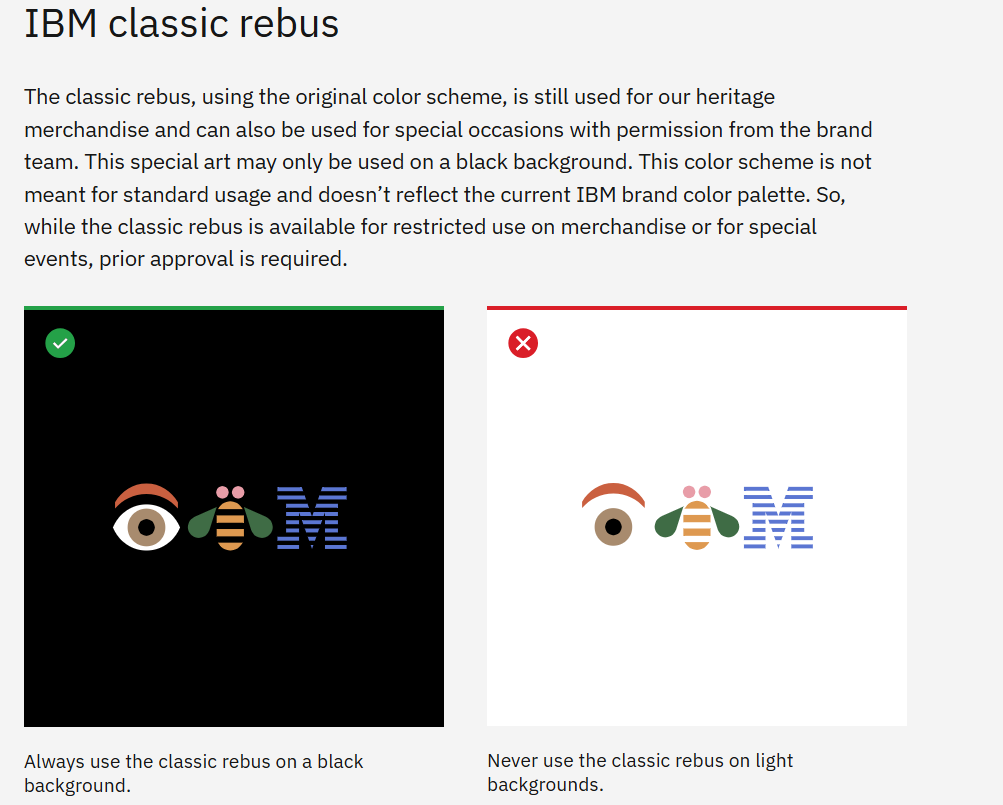
Brand guideline via IBM
That said, while brand and marketing lead guideline development, they still need to incorporate insights from legal, digital, product, and business unit leads. There should be a designated person with authority across business units to monitor compliance, maintain the guidelines, and iterate as the corporation evolves.
Phase 7: Prioritize Brand Touchpoints
Before rolling out your new brand, map where and how it appears so you don’t miss critical touchpoints or create inconsistency. Inventory every customer contact before, during, and after purchase. Evaluate them for customer impact, degree of misalignment with the new brand, cost, and feasibility of change.
For example, a 400-store coffee franchise might update its mobile app first because transactions occur there, while store signage and other collateral that need extra time and effort follow.
Sequence rollout to prioritize high-conversion touchpoints, and assign clear owners, deadlines, and budgets to ensure consistent and measurable implementation. Also account for regional differences, roll out major changes, and set clear success metrics as early as this stage.
Phase 8: Prepare the Organization
How a company prepares its people determines the rebrand’s success. If employees do not understand the rationale behind a rebrand, they will quietly undermine it, and customers will feel it, too.
That’s why it’s crucial to involve staff from conception through implementation so they gain ownership and contribute insights proactively. They don’t need the full strategy deck; just clear guidance for each role on what will change in their daily work and how to help the transition.
Run workshops and orientations repeatedly before launch until employees can apply the brand confidently. Solicit feedback, especially from customer-facing members, and communicate follow-through to maintain alignment and measure adoption consistently.
Phase 9: Launch, Migrate the Rebrand, and Measure Results
Once internal alignment is achieved, move the rebrand externally by activating high-impact customer touchpoints first—website, social media, sales materials, and direct customer communications. The launch announcement should explain the why, with coordinated regional timing so markets experience one coherent change.
After launch, migrate lower-impact items on a measured schedule. Retire the old brand cleanly, enforce consistency long term through governance and monitoring, and maintain rollback procedures to address emergent issues.
Corporate Rebranding Roadmap
So, how do the nine phases of the corporate rebranding process translate in real life?
Say a European automotive group owns four brands that cater to mass-market, premium, commercial, and electric vehicle audiences. Each operates with its own identity, dealer network, and marketing budget. But the group has committed to full electrification by 2033, and the portfolio no longer reflects that change in its public corporate identity. A corporate rebrand is inevitable.
Below is a matrix of the rebrand sequencing according to the phases with deliverables, timelines, owners, and milestones.
| Phase | Timeline | Deliverables | Owner | Dependency | Milestone |
|---|---|---|---|---|---|
| Brand Audit | Months 1-2 | Audit report on brand equity, perception, market gaps, trademark ownership, and competitor position | Corporate brand strategy lead and market research team | Leadership sign-off on scope | Go/no-go decision confirmed |
| Strategy, Positioning, and Brand Architecture | Months 3-4 | Strategy platform, positioning statement, architecture recommendation | CEO, marketing and strategy team | Audit findings | Board (or leadership) approves architecture and positioning |
| Naming and Corporate Identity Development | Months 5-6 | Name and creative scope | Brand design lead and external creative agency (if any) | Approved strategy and architecture | Leadership selects final naming and direction |
| Build the Visual Identity System | Months 6-7 | Logo, typography, color palette, imagery style, and supporting assets | Brand design lead and external creative agency (if any) | Approved naming and direction | Identity system ready for testing |
| Testing | Month 8 | Validate if new branding reports positively in recognition, emotional alignment, objection mapping, and legal clearance | Research lead and legal team | Identity system ready for external launch | Refinements locked; no unresolved legal risks |
| Brand Guidelines and Governance | Month 9 | Brand guidelines, asset library, governance charter naming a brand owner | Brand team with legal, digital, and business unit head input | Final brand identity system | Guidelines published and approved across business functions |
| Touchpoint Prioritization | Month 10 | Touchpoint inventory and sequenced migration plan with owners and timelines | Brand operations lead and regional/business unit leads | Brand guidelines | Priority list of touchpoints named and scheduled |
| Organizational Preparation | Month 10-11 | Training materials, department orientations, feedback channel, internal pulse surveys | Internal communications and HR department | Strategy and guidelines | Employees briefed before external launch |
| Launch and Migration | Month 12-18 | Live external brand on high-impact touchpoints, phased conversion of secondary assets. | CMO and regional leads | Prepared organization and migration plan | Old brand retired across priority touchpoints |
Depending on the size of the corporation, a full rebrand can take at least one year with multiple markets and other factors to consider.
Measure Rebranding Success
It will take years of tweaking your strategy and communicating changes before your new corporate brand is accepted by your audiences. Hence the need for consistent monitoring and measurement of results.
Track and measure the following metrics and adjust your approach accordingly:
- Aided and Unaided Brand Awareness: Can your customers name your brand with or without prompts? Use brand tracking surveys and search volume data to assess.
- Brand Sentiment: Find out how people feel about your brand through customer reviews, social mentions, press, etc. Overall positive sentiment means the rebrand aligns with them emotionally.
- Net Promoter Score (NPS): Ask customers how likely they are to recommend your brand to others. High NPS means you earned their trust.
- Customer Retention Rate: Measure how many of your existing customers stay after the rebrand.
- Conversion Rate: Track whether prospects who encounter the new brand actually buy. If they do, the rebrand is improving consideration.
- Market Share: Periodically measure your market position relative to competitors after the rebrand launch.
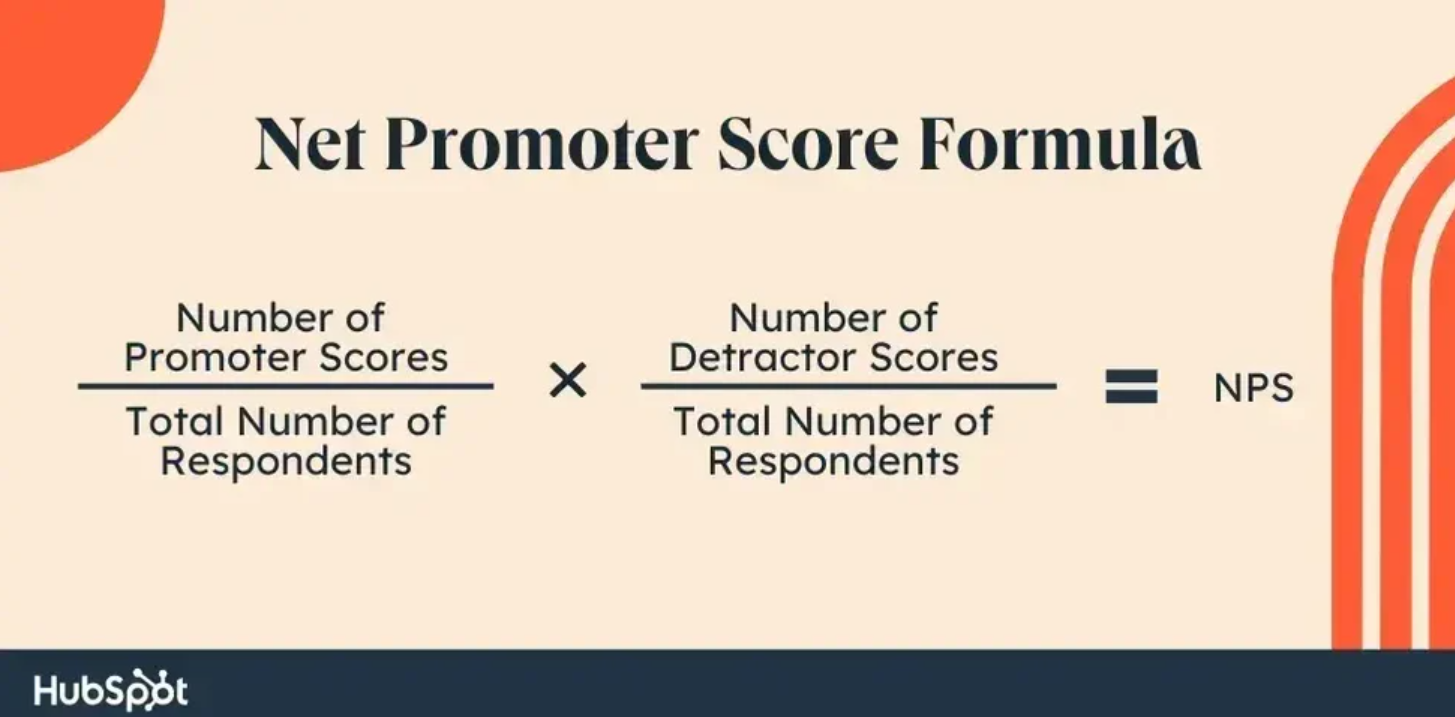
NPS formula via HubSpot
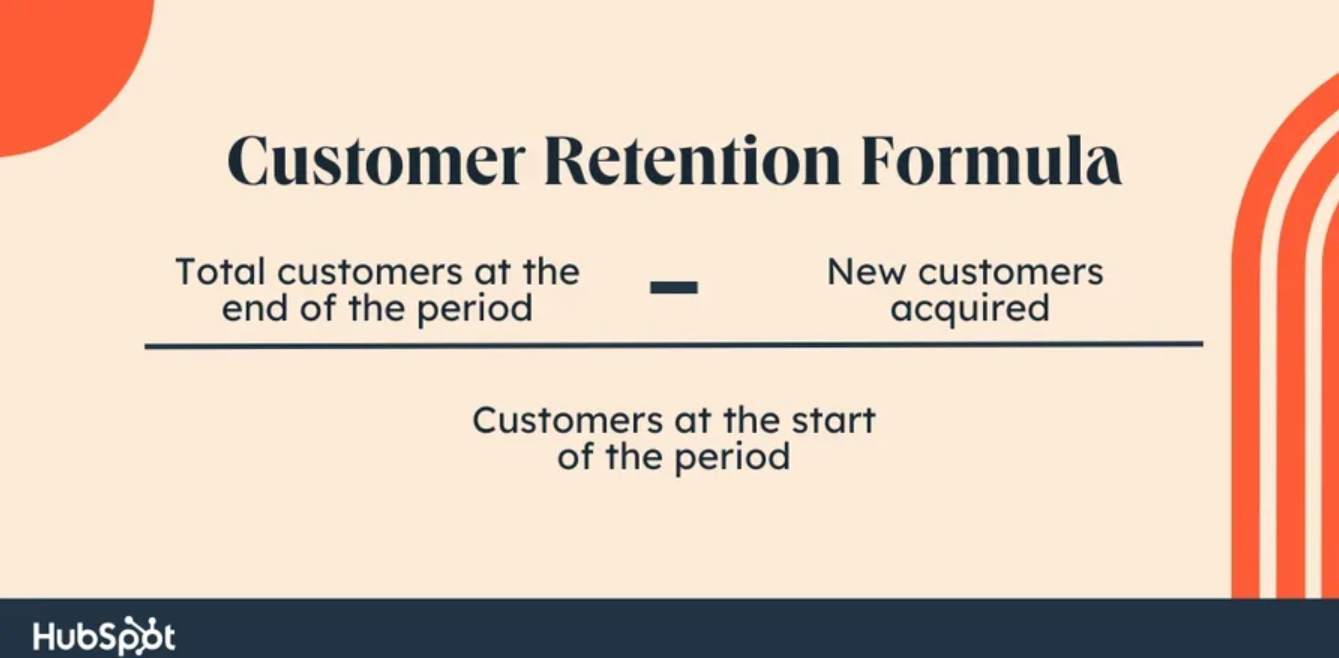
Customer Retention formula via HubSpot
Common Rebranding Mistakes
Below are common rebranding mistakes you have to be mindful of because even established corporations are not immune to making them. Confusing a refresh with a rebrand.
1. Confusing the two cuts both ways.
Treating a strategic problem as needing just a simple tweak wastes resources and leaves issues unresolved. Treating a refresh as a full rebrand causes unnecessary operational disruption and cost.
TIP: Return to the qualification checklist before committing to either. If the entity, strategy, or reputation has genuinely shifted, it’s a rebrand.
2. Letting governance dissolve after rebrand launch.
Governance often fades as urgency to maintain consistency wanes. New hires miss brand onboarding, regional teams apply inconsistent interpretations, and months of work to rebrand unravel.
TIP: Appoint a brand owner with complete authority over all business units, and embed brand training into onboarding.
3. Trying to please every stakeholder.
Corporate rebrands require broad input from different departments, but accommodating every preference dilutes distinctiveness. When the brand identity design becomes a compromise of competing narratives, the brand loses clarity and impact.
TIP: Treat the brand positioning as a non-negotiable and allow flexibility only in execution. This ensures the goal of the rebrand is protected and stays on track.
The Ultimate Goal of a Corporate Rebrand
A corporate rebranding process is a lengthy endeavour that requires meticulous planning, implementation, and tracking over a year or so. Understanding what happens before, during, and after a rebrand lets leaders make choices that protect existing brand equity while building what’s next.
Treat the nine phases as interdependent; skipping a phase or two invites gaps, inconsistencies, or total failure. Keep in mind that corporate rebranding is not just about marketing; it impacts different business functions and systems. When executed correctly, it can restore customer trust, unlock new markets, and empower employees.
Ready to take the next step? Assemble an A-team across the organization to own the work from audit through launch, or partner with an expert rebranding agency to carry the heavy load.

Creates insightful, strategy-driven content that translates complex design and branding concepts into accessible knowledge, supporting Ramotion’s mission to elevate digital experiences.