
Companies pour billions into marketing, but marketing can only be as good as what the product delivers. The difference between a product that launches and one that lasts is innovation that adapts to technology and changing user expectations.
From heavy vacuum to bagless, cordless cleaners; from ordinary plastic bottles to self-cleaning, sustainable materials; from wired earphones to wireless earbuds. Innovation isn’t hiring an overseas manufacturer to add sleek curves or patents; it’s refining features until the solution feels inevitable.
That said, an innovative product design is transparent, serves real pain points, and builds a community of loyal users. But, how do we get there?
If you’re ready to level up your products, read on as we tackle what it takes to create an innovative product design.
What is Innovative Product Design
Innovative product design is the creation of functional, sustainable, and simple products through an iterative and research-driven process. It uses current technology and a disciplined execution.
Here are some reasons why you should invest in an innovative product design:
- It differentiates your product from competitors.
- It elevates product experience and increases customer satisfaction.
- It lowers manufacturing costs.
- It fosters customer loyalty.
- It ensures consistency in product quality.
- It encourages sustainable practices and intuitive designs.
These benefits reduce risk, improve market fit, and enable scalability.
The Innovative Product Design Process
Innovative product design is a systematic approach that requires in-depth research to understand what people need and want, and integrates structured methods to mitigate risks. Here’s how.
Phase 1: User research and problem discovery
Product design starts by understanding the problem you’re solving and who you’re solving it for. This phase uncovers the unmet user needs and gathers insights into their behaviors, motivations, frustrations, and the competitive landscape.
These insights then become decision anchors, ensuring the product aligns with real behaviors and cultural contexts. For example, the rise of ergonomic chairs is a direct response to user complaints about back pain—research exposed a real need and shaped the solution.
The main decision at this stage is selecting the scope and depth of the research. It depends on your stage, budget, risk tolerance, and how novel the product idea is.
Below are reliable research methods you can mix and match to fit your needs, budget, and timeline.
- Ethnographic fieldwork: Observe users in their natural settings to see how they actually behave, instead of relying on what they say in interviews. For a product aimed at healthier eating, researchers might visit the kitchens of users to observe how they shop, store, and prepare food. These visits reveal habits and workarounds that participants often forget or misreport in a formal interview.
- Diary studies: Ask participants to record activities, thoughts, or reactions over days or weeks. This method is great for understanding patterns that unfold over time, like gaming habits between older adults and younger adults.
- In-depth interviews: Use one-on-one or focus-group interviews to dig into motivations, emotions, and stories that numbers can’t capture. Open-ended questions help discover why people make certain choices, what trade-offs they accept, and what language they use to describe their problems.
- Market analysis: Examines your market size, existing competitors, trends, and business viability. It involves using tools like the SWOT analysis, industry reports, perceptual mapping, and trend analysis.
TIP: Track pain points and assess each one based on context and severity. This reveals which problems should be prioritized based on real evidence, not just opinions.
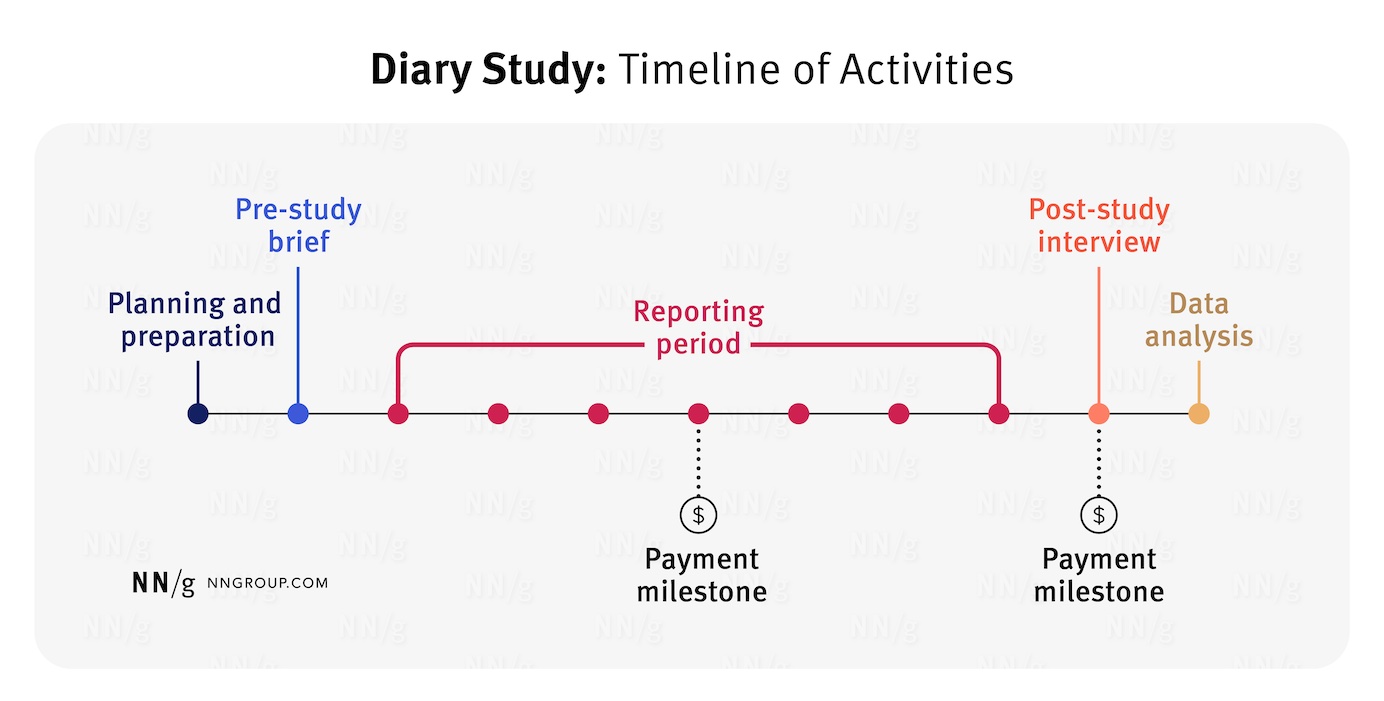
Diary study timeline via Nielsen Norman Group
Phase 2: Product vision definition
After research, define what success looks like. The product vision guides decisions across design, engineering, and marketing. It keeps teams aligned and decisions moving quickly.
Structure the product vision around three elements:
- Core idea: Why should this product exist? What makes it different?
- Target outcome: What will users be able to do? What “job” is the user hiring the product to do?
- Market differentiation: Why will users choose this innovative design over other options? Or over doing nothing?
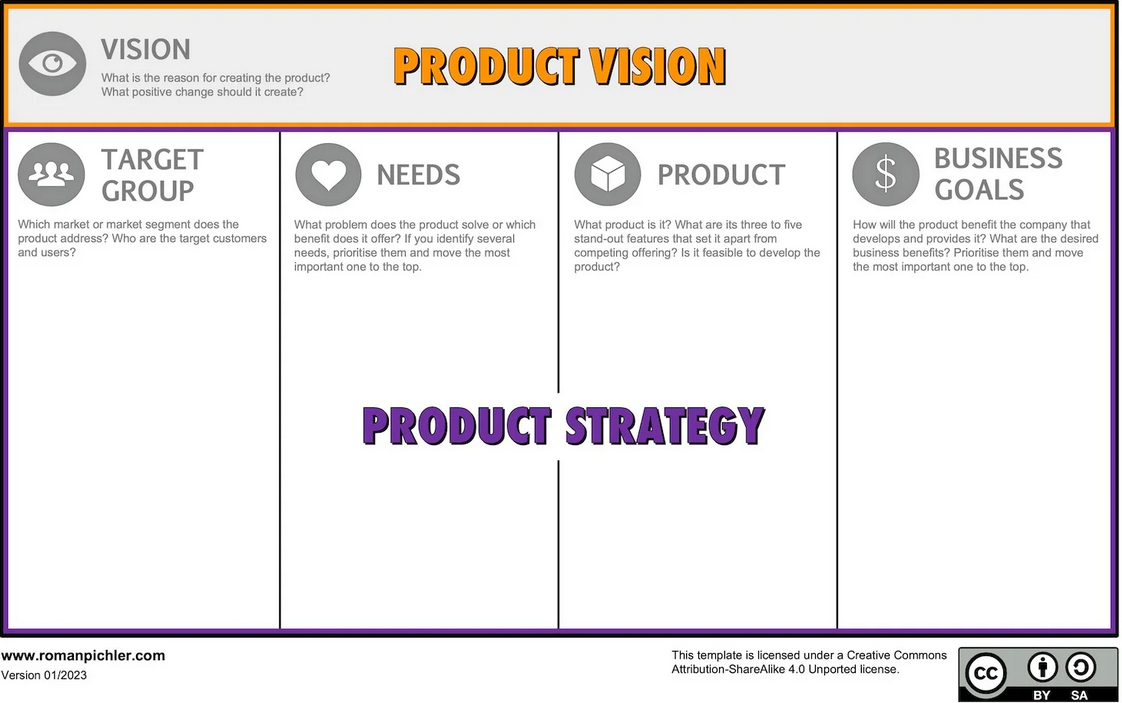
Product vision board via Roman Pichler
Build personas and scenario stories to make the vision concrete. Try writing a short press release announcing the new product’s success. This forces clarity about the core benefits. Ask teams to define ideal solutions first, then list the constraints that prevent them from achieving those solutions. Design the compromises that can be built within the product now while keeping the core product vision in sight.
TIP: Focus on one critical function your product must perform. For a home security camera, the product design can center on maintaining a stable connection throughout the day. Every time a new feature is suggested, ask: *Does this help or hurt the one function the product must be able to do? *
Phase 3: Ideation and concept development
Focus on generating a pool of new, practical concepts to solve the defined problem, then filter them by their relative promise. Keep the focus on the core problem so creativity doesn’t “wander.”
The ideation process follows a simple path: observation, insight, and concept. Below are some useful methods to guide your process.
- Start from specific pain points and turn them into questions. If you’re ideating for a recipe app, address questions like:
- How might we remind users of recipes they love when they are most likely to cook?
- How might we make the decision feel automatic?
Revisit research and review improvised solutions because the product had failed them. These ideas can serve as the foundation for innovative product design.
A customer or user journey map may prove useful at this stage, too! Identify the points where users experienced challenges or confusion and treat them as opportunities for your product to shine.
This process can be tedious, so work with one of the best UX design agencies to guide you and offer expert advice.
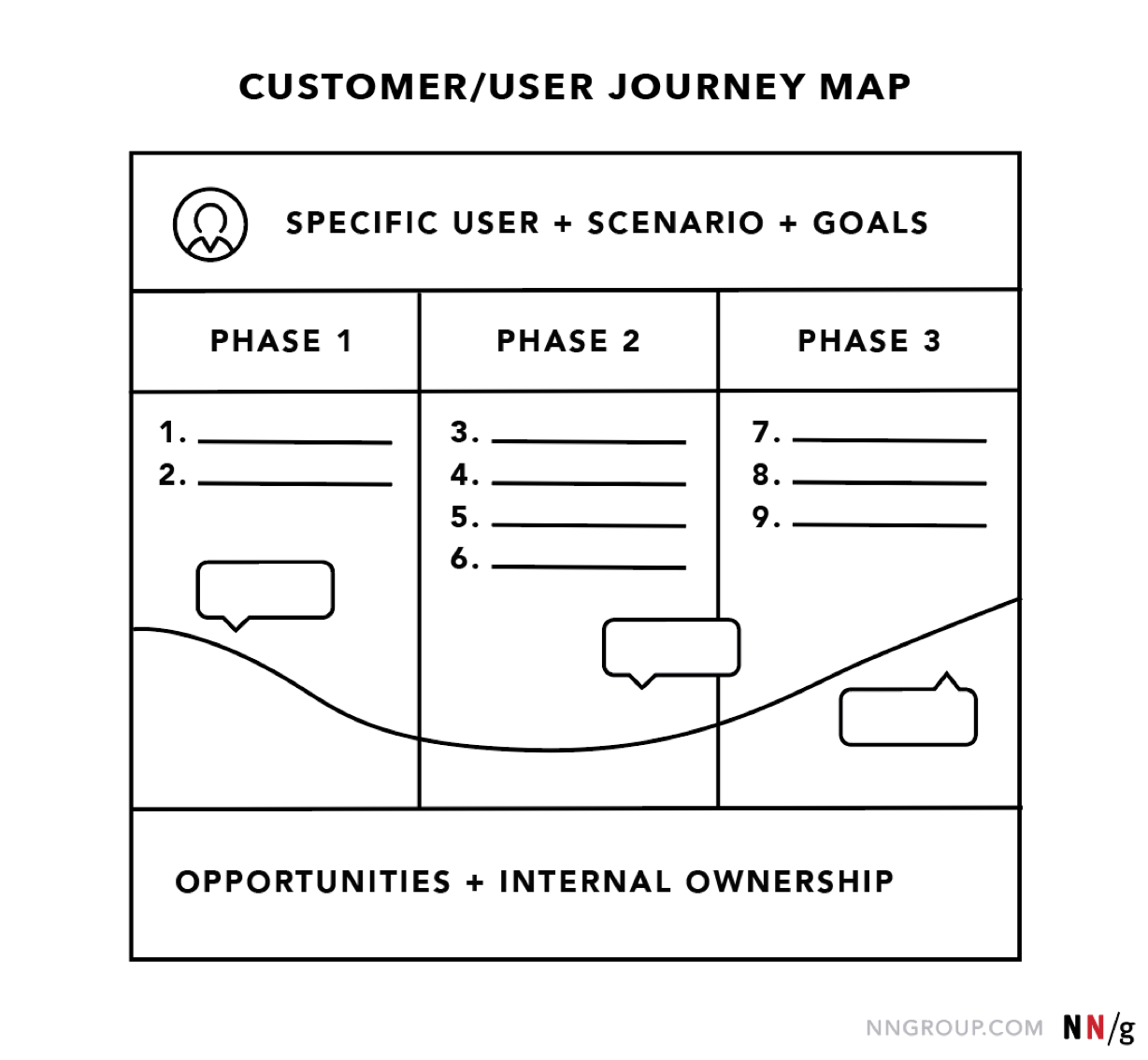
User journey map template via Nielsen Norman Group
A good example is Nike Flyknit. Nike saw that heavy, layered shoes slowed runners. Focusing on this core problem led to Flyknit, which reduced weight by using knitted materials while preserving support.
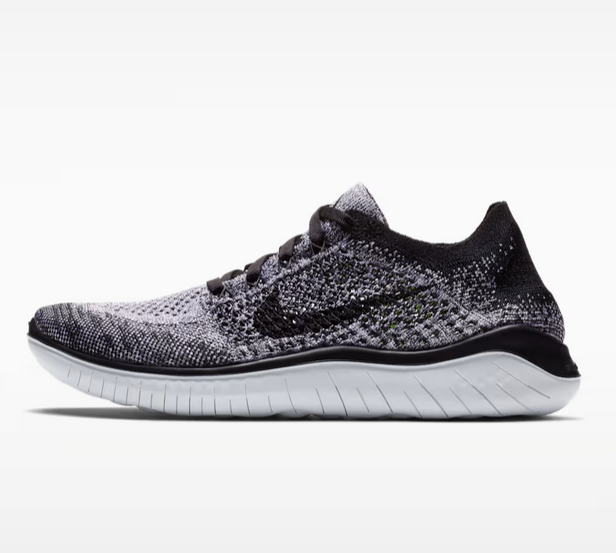
The Nike Flyknit was designed to provide a light, barefoot-like feel. Image via Nike
TIP: Bring users and stakeholders directly into the brainstorming process. Doing so pushes you to develop product and service concepts you know they will certainly need and love.
Phase 4: Prototyping and testing
Turn top concepts into prototypes to learn which ones will work in the real world. At this stage, the key is to prototype at the right level of fidelity, validate assumptions or hypotheses, and identify usability issues before investing significant money in development.
- Low-fidelity (lo-fi) prototypes: Sketches, paper mockups, or cardboard models. Use these for fast feedback on structure and flow.
- High-fidelity (hi-fi) prototype: Visually accurate and polished representations of the final product. Use these to test visual design and detailed interactions.
Aside from choosing the right prototype method, it’s important to consider the testing environment. Testing a mobile app on an iPhone when your audience uses Android will give misleading results.
Tools: Figma, Sketch, and Adobe XD. For physical prototypes, many companies print 3D or leverage clay.
TIP: Give users specific tasks during the test and observe where they succeed, hesitate, or fail. Treat prototypes as learning tools.
Phase 5: Iteration and refinement
Testing produces insights you use to iterate and refine, systematically eliminating flaws and enhancing usability. This cycle continues until the product meets the set standards before official launch.
So, how do you decide what to iterate on?
Feedback is crucial at this stage, focusing on user insights and specific metrics tied to the overarching goal. Iteration should also be implemented incrementally, with adjustments made as you go to avoid major problems.
Let’s look into different iterative methods in product design:
- Agile iterative product design testing: Tackle one or two elements per cycle to reduce risk and keep momentum.
- A/B testing: Compare two versions with real users to see which performs better. Make the winner the new baseline for the next iteration.
- Task analysis: Measure completion rates, errors, and assistance needed to track real improvements.
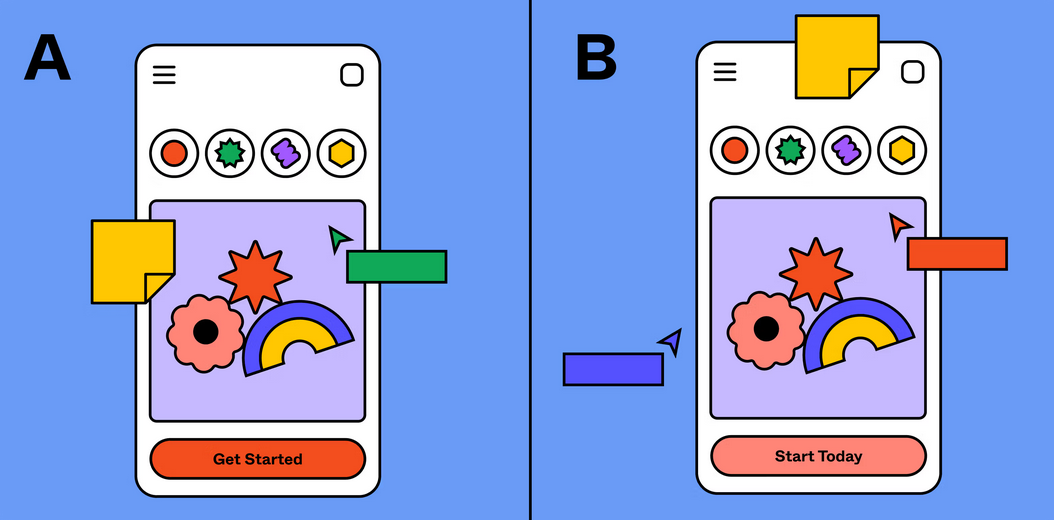
A/B or split test example for an app via Figma
Technology in Innovative Product Design
Technology fuels innovative product designs by enhancing functionality, accelerating prototyping, and providing AI-driven insights, while streamlining production processes, enhancing collaboration, and creating a unique product experience.
Optimizing product design
Instead of committing to a single direction based on gut feel, technology allows you to generate and refine dozens of variations. It also enables advanced features that improve user experience.
Augmented reality (AR) and virtual reality (VR)
Product designers can review models at full scale in real-world environments before sending them out for production. For instance, before furniture is made, designers can use AR and VR to catch proportion issues that are invisible on a monitor.
Generative design
Generative design streamlines the design process by generating possible solutions that your team may have missed. You can then pick the best one that meets your goals.
For example, if you are creating a new bicycle frame design, instead of manually tinkering with each piece, you can input how you want the parts to work, the maximum weight it can support, and the materials you want to use. Generative AI will then provide a ton of options that meet your design team’s criteria.
Validating product design
It can be costly to answer the question, “Will this product design work?” With the help of technology, you get the answer you need based on physical testing and real consumer behavior.
3D printing for functional testing
In automotive validation, we have seen car brands test components under real conditions with large-format 3D printers. These printers can produce complete sets of car parts, like the seats, enabling direct functional testing. Technology speeds up the validation process and provides engineers and design teams with data that other physical models could never provide.
Big data consumer insights
Instead of conducting multiple small, focused group discussions, big data draws information from millions of existing insights. For instance, a retail company could get predictive answers from data on 200 million consumers to determine the optimal price for a specific product you’re about to sell in the UK market.
Scaling product design
Leveraging technology to scale product design ensures that once a design is validated, it can be manufactured cost-effectively, consistently, and at volume without sacrificing quality standards.
Design for manufacturing and assembly software
Software specifically used in manufacturing and assembly provides quantitative metrics on what a product should realistically cost, not just what vendors quote. It analyzes every product part and alternative materials to save costs while making the product easier to build.
Part consolidation and assembly reduction
Advanced technology can help redesign products to be made with fewer parts without compromising functionality or safety. And with additive manufacturing (3D printing), extreme part consolidation becomes possible.
Say, you’re creating a new wireless earbud case. A typical earbud case consists of multiple, complex parts—the outer shell, the inner chassis that holds the earbuds, the battery, the charging circuit board, etc. Each part comes from different suppliers, assembled by machines or workers, and must pass quality control.
Through part consolidation and 3D printing, the case can be printed as a single piece with only the primary components. It still functions and looks as intended, but with fewer parts at a lower manufacturing cost.
Innovative Product Design as a Strategy
Product design continues to blend with powerful technologies—AI, generative design, and big data testing—to create smarter, more sustainable, and innovative products. Companies that invest in innovative product design now future-proof their offerings by building adaptability, reducing long-term costs, and earning lasting customer loyalty through user-focused designs.
When you treat innovative design as a strategic move, you’ll be ready for shifting markets, new opportunities, and beyond. That said, innovation isn’t just following current trends and using the latest technology just to be cool. It’s a discipline that powers design thinking, resulting in products that sustain and scale your company for years to come.
Mar 17, 2026

Creates insightful, strategy-driven content that translates complex design and branding concepts into accessible knowledge, supporting Ramotion’s mission to elevate digital experiences.