
Brand authenticity cannot be bought or faked. Those who tried have failed. Take H&M, a fast-fashion brand that has been accused of greenwashing for making deceptive eco-friendly claims. Its “Conscious Choice” line in 2011 was later challenged by environmentalists who found the sustainability claims unsupported.
Brand authenticity is earned through proof, not marketing. When consumers peel back the label and find only more plastic, the deception damages not just one campaign but the brand’s reputation.
What is Brand Authenticity?
Brand authenticity is when what your brand says, does, and delivers aligns. It’s not defined by viral campaigns or follower counts, nor by flowery copy. It’s felt by customers who repeatedly experience consistency, which cements trust and a positive reputation.
Why Brand Authenticity Matters
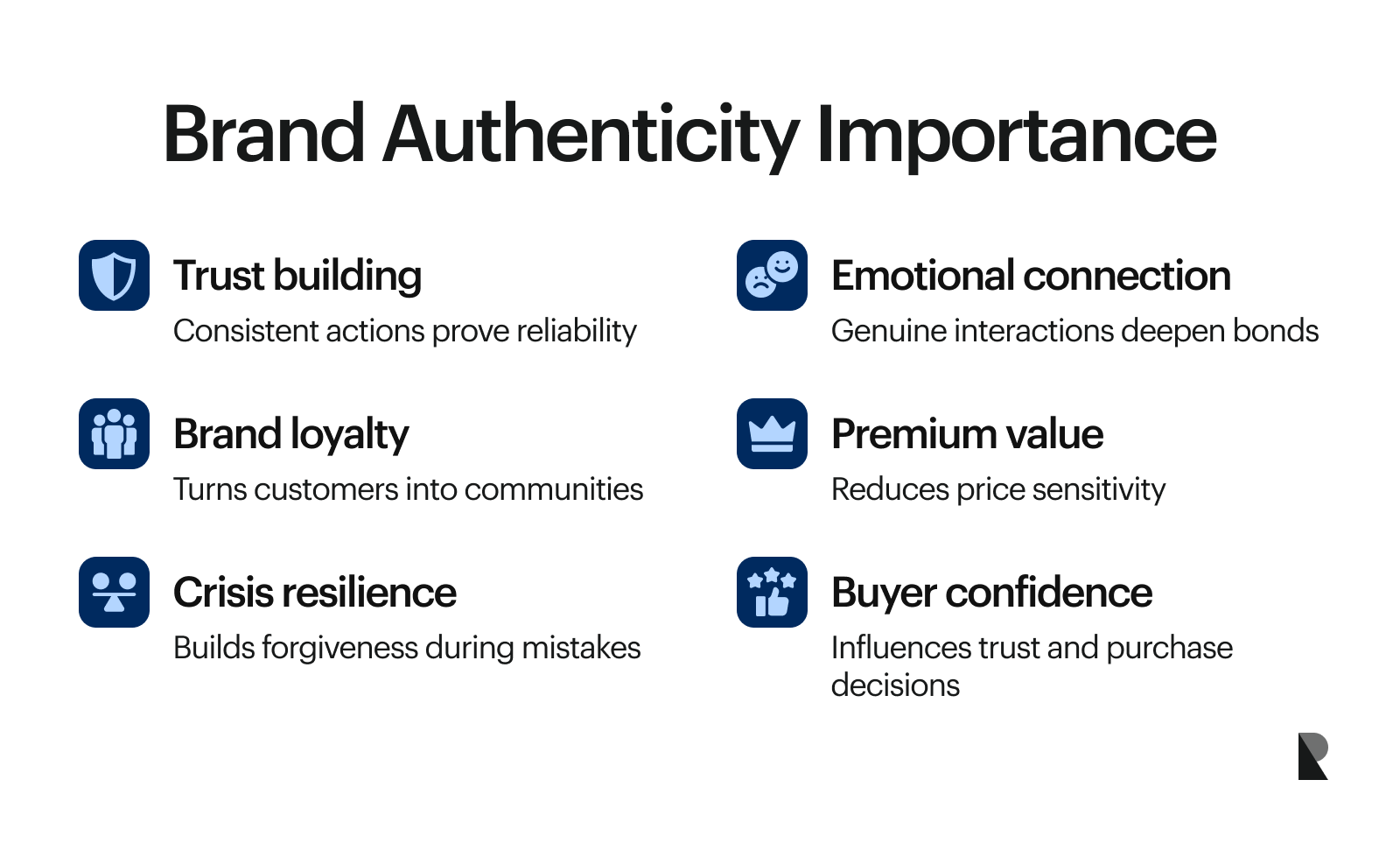
Authenticity makes a brand last. It can’t be copied or manufactured; it’s earned through consistent decisions that align words with actions. With brand authenticity in place, companies reap the following benefits, setting them up for success.
- It nurtures trust: Consistent delivery conveys reliability, which earns trust.
- It deepens emotional connection: Repeated, authentic interactions build brand equity and bonds competitors can’t break.
- It strengthens brand loyalty: Authentic brands create communities, not just one-off customers.
- It lowers price sensitivity: Consumers are willing to pay a premium for brands they trust.
- It makes your brand crisis-resilient: A track record of authenticity makes customers more forgiving when things go wrong.
If you’re still on the fence, here’s a fact: brand authenticity is a major factor in buyers’ decisions. A study across the US, UK, and Australia found 86% of respondents trust and support brands they consider authentic.
What Makes a Brand Feel Authentic?
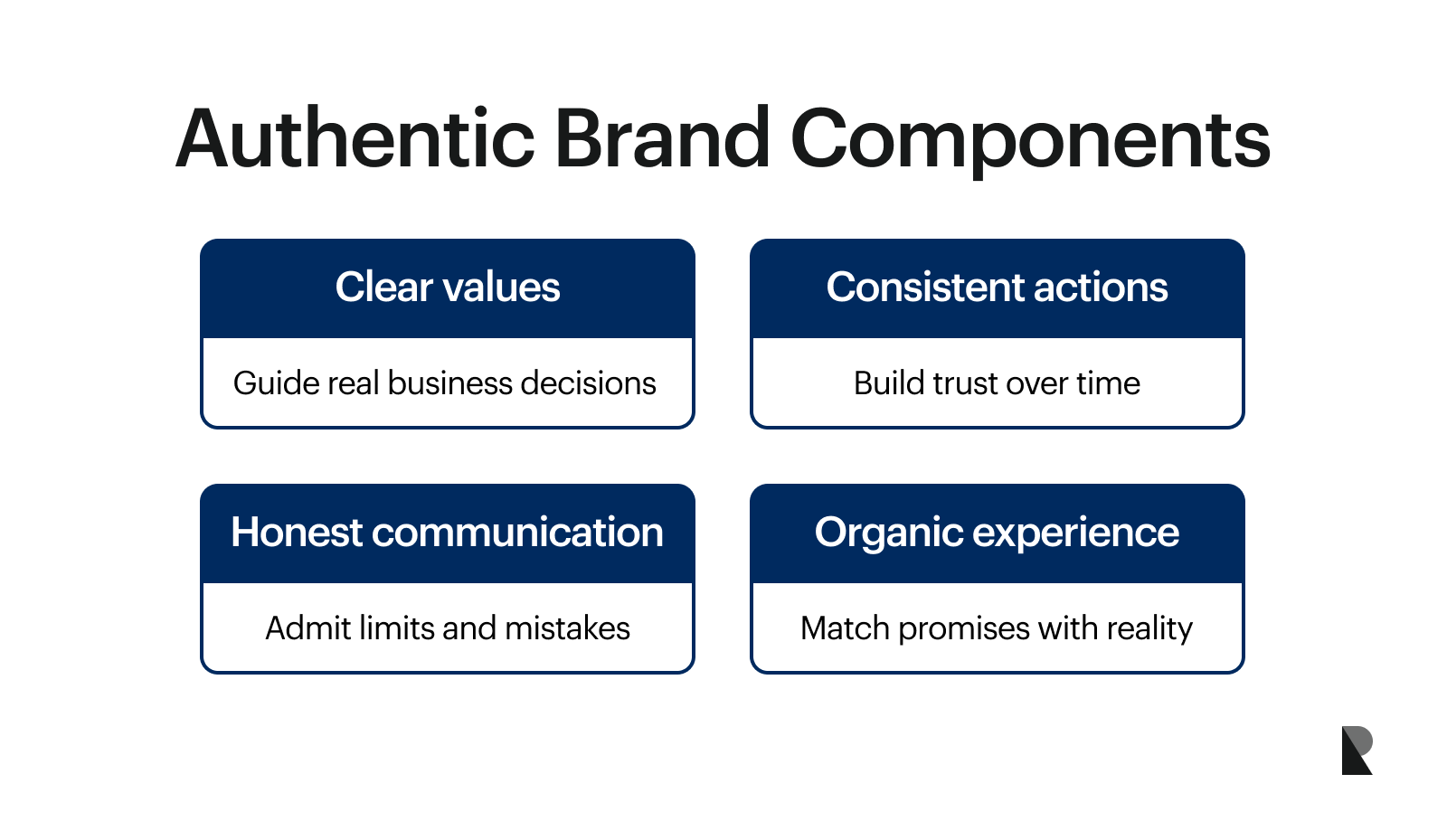
There is no single formula for creating an authentic brand. But establishing the following foundational elements can strengthen brand authenticity.
1. Clear Values Values should guide operational decisions. When a brand claims to prioritize its customers, that value shows up in terms of return policies, loyalty programs, and efficient customer support that goes above and beyond. Staying true can be hard and expensive when cheaper alternatives are available, but it builds authenticity.
2. Consistency Brand authenticity compounds over time through repeated actions that are values-driven. Consistency shapes expectations and builds trust.
3. Honest Communication Transparency about limitations, mistakes, or uncertainty leads to forgiveness and credibility when things go wrong. Customers prefer honest failures over being lied to.
4. Organic Experience An organic customer experience cannot be faked. It is simply what happens before, during, and after a purchase that shows if the brand is being truthful in its claims. Design the customer journey to match your promises.
How Brand Authenticity Shows Up
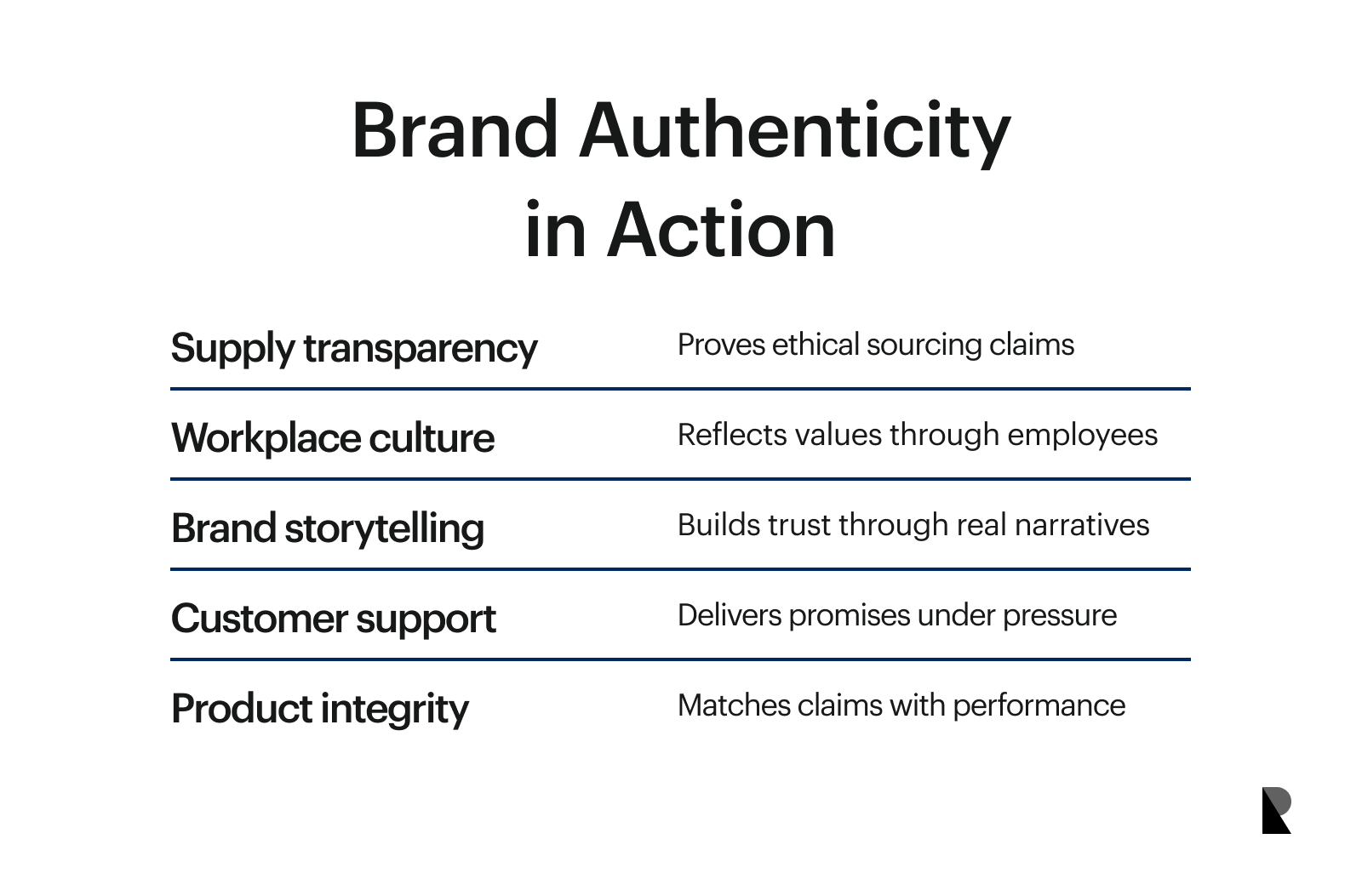
Authenticity appears across operations: product design, customer engagement, and community care. Here’s how they manifest in real life.
Visible supply chains
Transparency allows customers to verify ethical claims. Research indicates 65% of people are willing to support brands that are honest about their sourcing and production. Visible supply chains force accountability and reduce the gap between claims and reality.
Gildan, a manufacturer of everyday apparel, publishes where its textiles and sewing are done to show confidence in its fair practices.
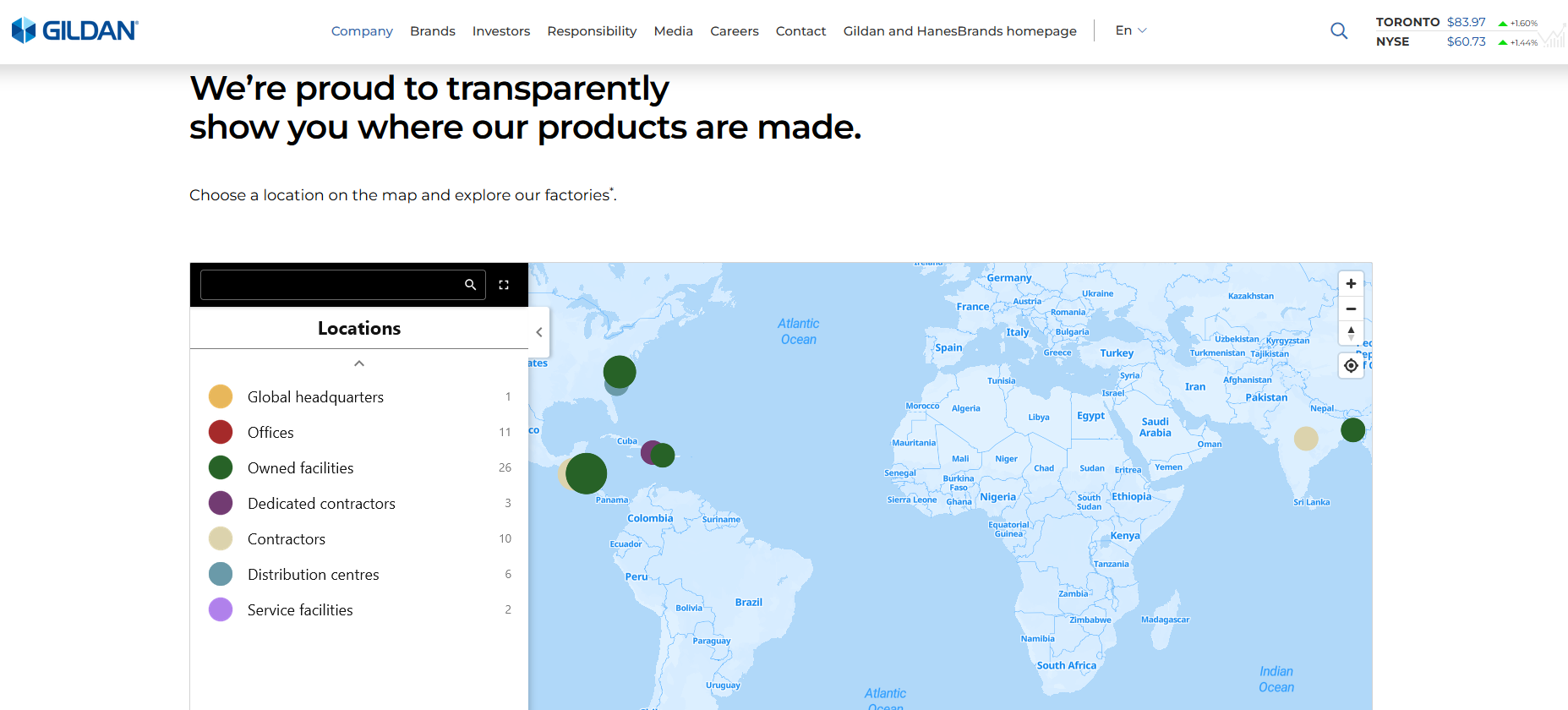
Gildan lets customers track its textile and sewing operations on its website. Image via Gildan
Workplace culture
Employees witness whether values are real. Authentic cultures treat staff as investments, welcome diverse voices, and support growth. These efforts lower burnout and improve customer representation.
Pestana Hotel Group’s focus on meaningful connections and career development has earned recognition as an employer people love. The result? Happy employees making customers happier.
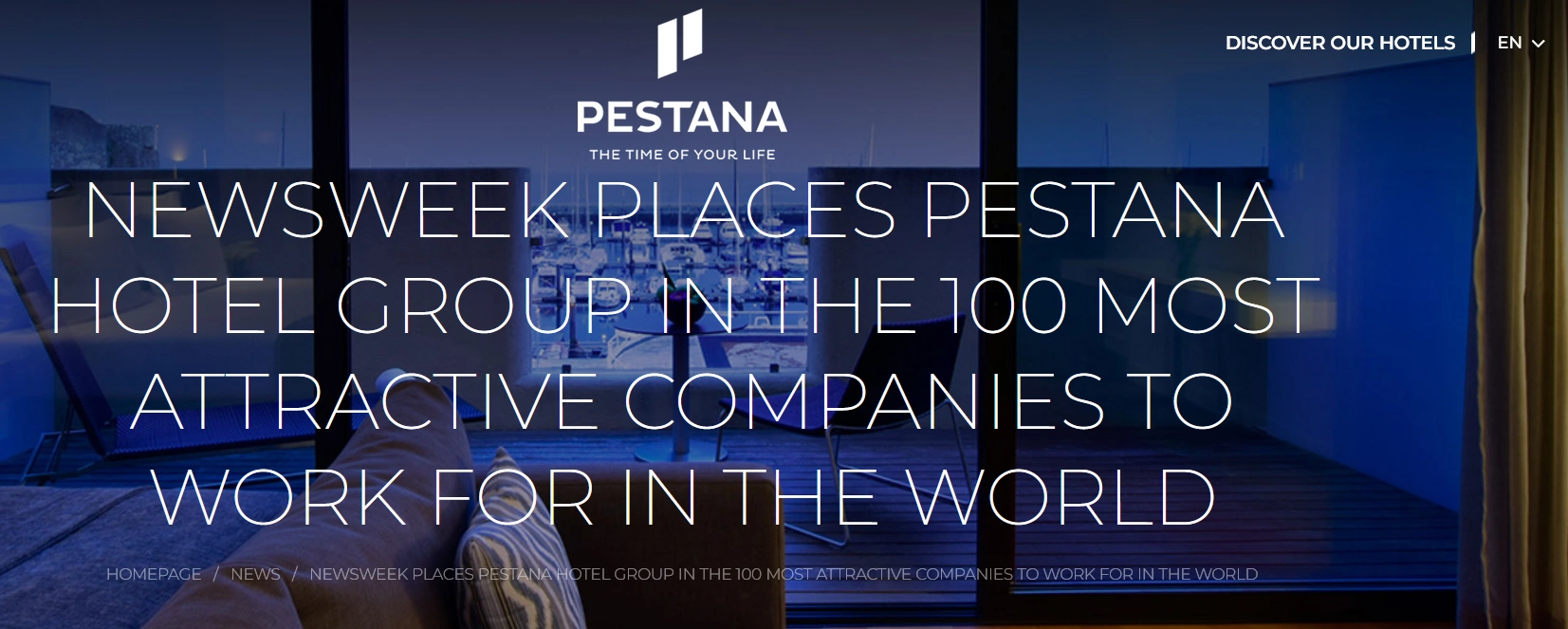
Newsweek recognizes the Pestana Hotel Group among the most loved companies by employees in the world. Image via Pestana
Brand story
Stanford University research reveals that stories are more persuasive than facts alone. Stories that inspire and motivate move people to take action. When people share the same experiences with the brand, the bond grows stronger, too.
An authentic brand story hinges on real experiences and beliefs and remains consistent across channels. Avon’s “Avon Lady” model exemplifies a story that aligns business model and values, empowering everyday sellers—mothers, housewives, and independent women— and fostering trust.
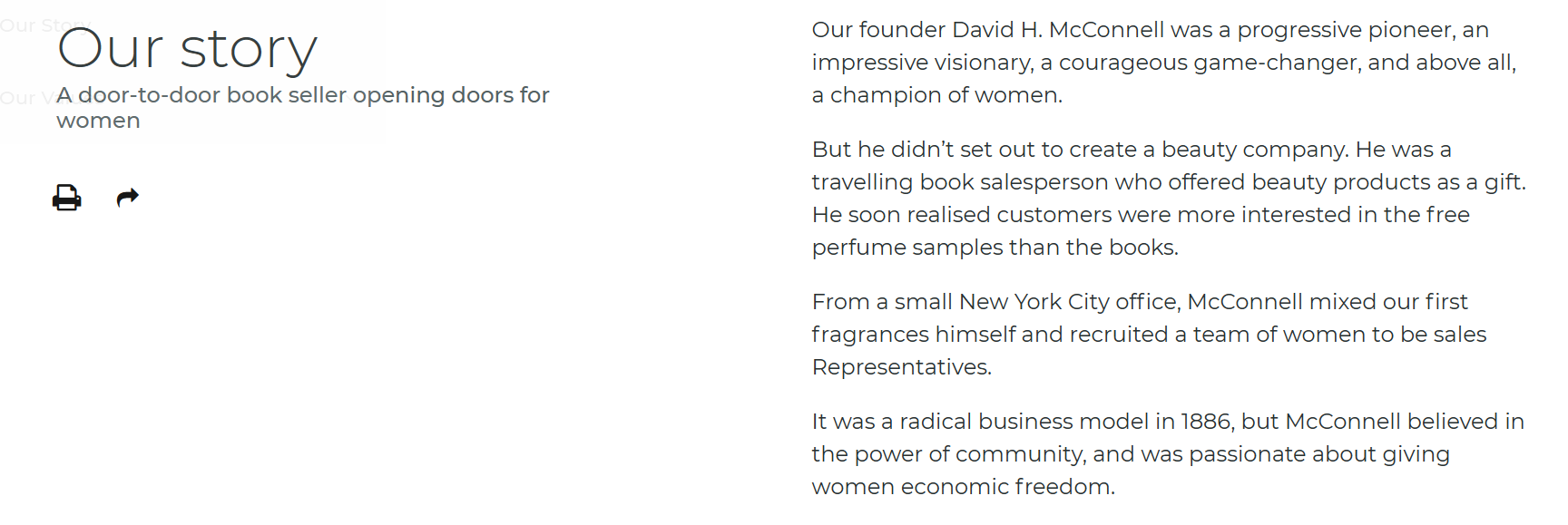
Brand story via Avon
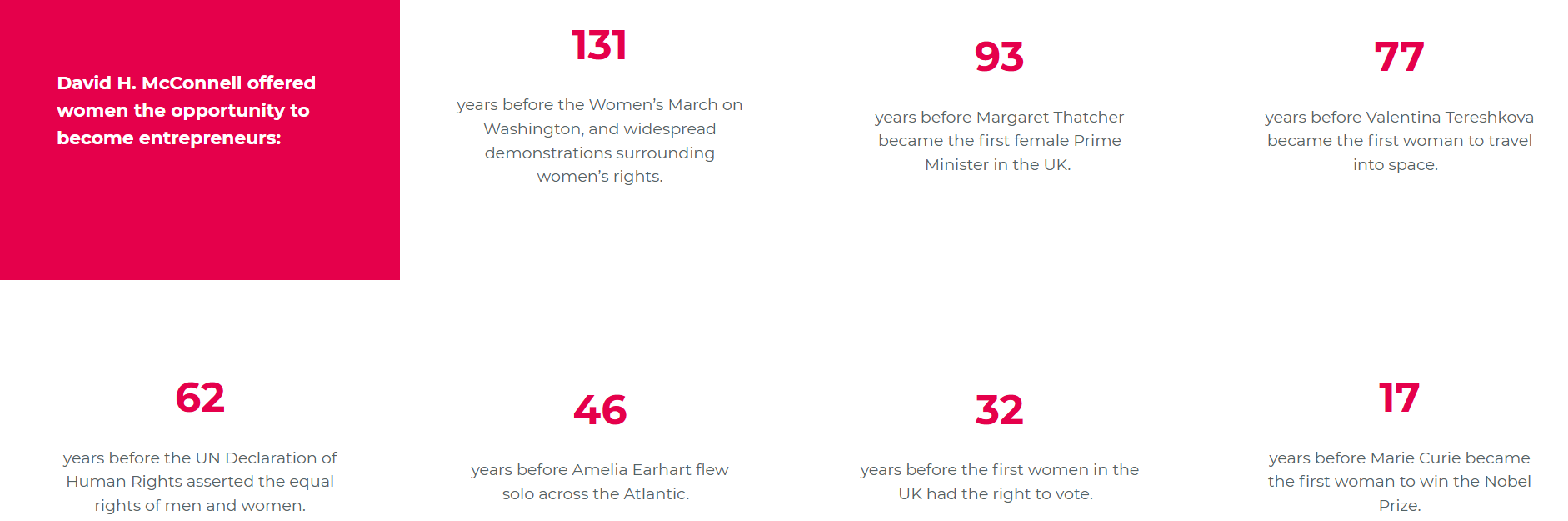
The brand story establishes how far back Avon has been advocating for women. Image via Avon
Customer Support
Support conversations are a high-stakes test of brand promises. They don’t focus on scripted conversations; rather, it’s empowered teams who reflect company values in real-time.
The Ritz-Carlton’s policy of empowering employees with discretionary funds (up to $2,000 per guest per incident) to resolve issues and amplify the experience exemplifies aligning support practice with a service-first philosophy. This policy aligns with The Ritz-Carlton’s foundation and famous motto: “We are Ladies and Gentlemen serving Ladies and Gentlemen.”
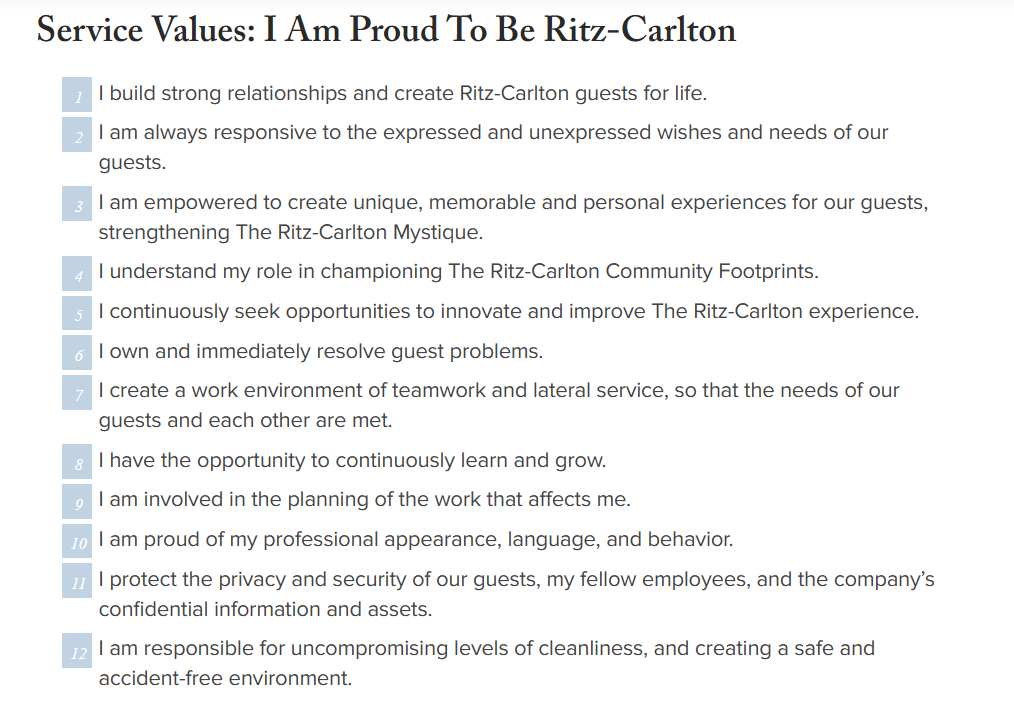
Service values via The Ritz-Carlton Leadership Center
Product
The product determines whether the brand genuinely understands its customers.
Does it do what you said it would do? Is it made from what you claimed it was made from? And does it last as long as the brand identity implies? Authentic products meet real customer needs and consistently deliver on core promises—often more impactful than “premium” materials alone.
How Brands Build Authenticity
Authenticity starts from within. A brand must first convince itself by identifying genuine strengths and shaping a realistic promise that addresses real customer pain points.
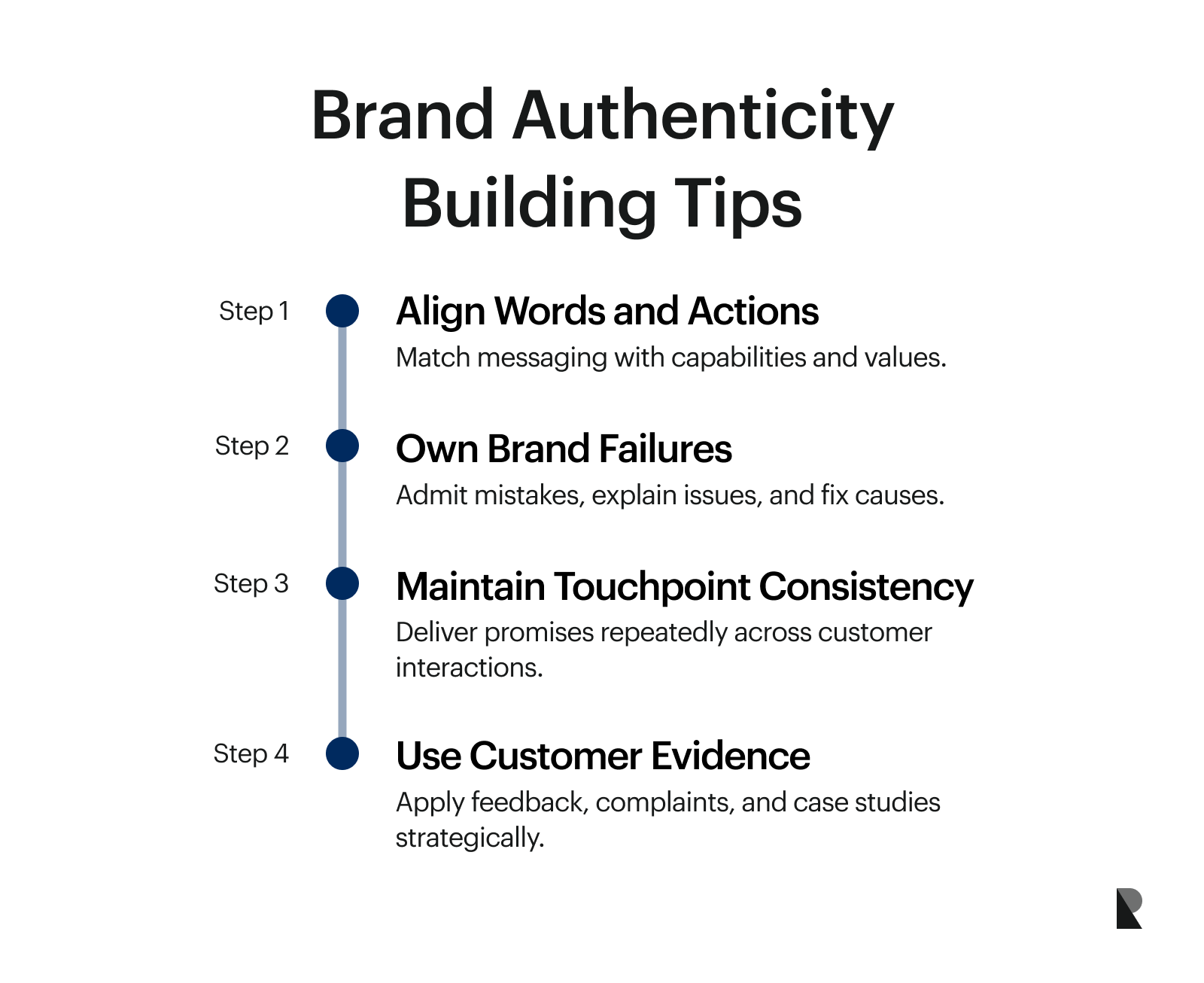
1. Align what you say with what you do.
Marketing can bring attention, but overpromising damages reputation. So, make sure your messaging backs up what you can do.
It helps to establish a core team to ensure whatever is communicated externally aligns with your capabilities and values. For instance, your operational team—supply chain manager, quality assurance, and customer support head—can vet marketing campaigns and avoid claims that operational realities cannot back up. Then audit gaps, rank them by severity, and address them accordingly.
For decades, Toyota has made a name for itself in the industry as the overall most reliable consumer car in the market. It promises cars that are reliable, durable, and low-cost for every aspiring car owner, and Toyota did just that.
The brand has ranked third in the J.D. Power Vehicle Dependability Study 2026. Consumer Reports gives Toyota the spot for the most reliable brand in its Annual Auto Reliability Survey. In fact, one of its models, the Toyota Camry, is so reliable that its resale value is about 55% of its original value. This is comparable to the industry average of 35-45% according to Kelley Blue Book.
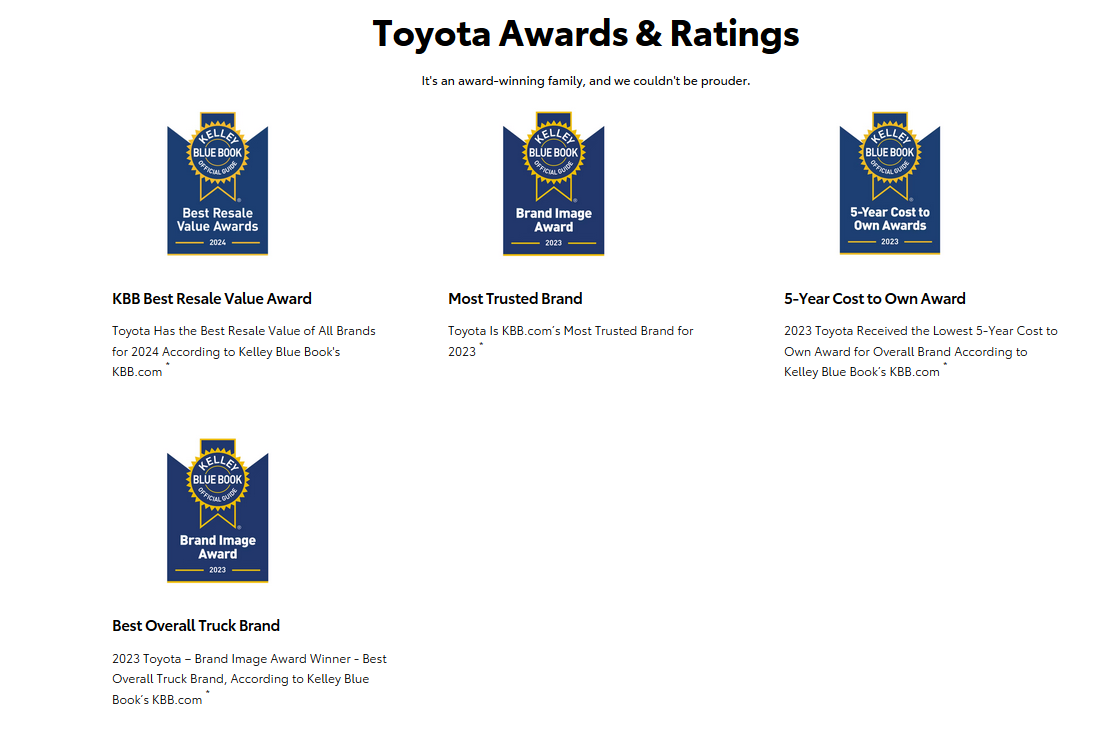
List of awards proving the reliability of the brand. Image via Toyota
2. Be transparent and take accountability for failures.
When things go wrong, authenticity requires owning up, explaining what happened, compensating fairly, and fixing the root cause. By turning towards transparency and accountability, they transform a reputational crisis into a moment that actually deepens customer trust.
In 2018, KFC switched logistics providers in charge of managing its complex supply chain. However, the new provider was not able to deliver fresh chicken to KFC's UK and Ireland branches. Within days, over 900 stores had to close due to a stock shortage. For a brand that primarily sells fried chicken, this was a nightmare.
Instead of putting the blame solely on the company’s logistics provider, KFC took accountability and apologized to the public. It released an apology through a humorous ad that acknowledged the gap in their service and how ridiculous the situation was. It also reached out individually to angry customers and released a video of how it will fix the problem.
The ad went viral, and the public sentiment flipped from anger to laughter. Stores have reopened within weeks and foot traffic was higher before the crisis.
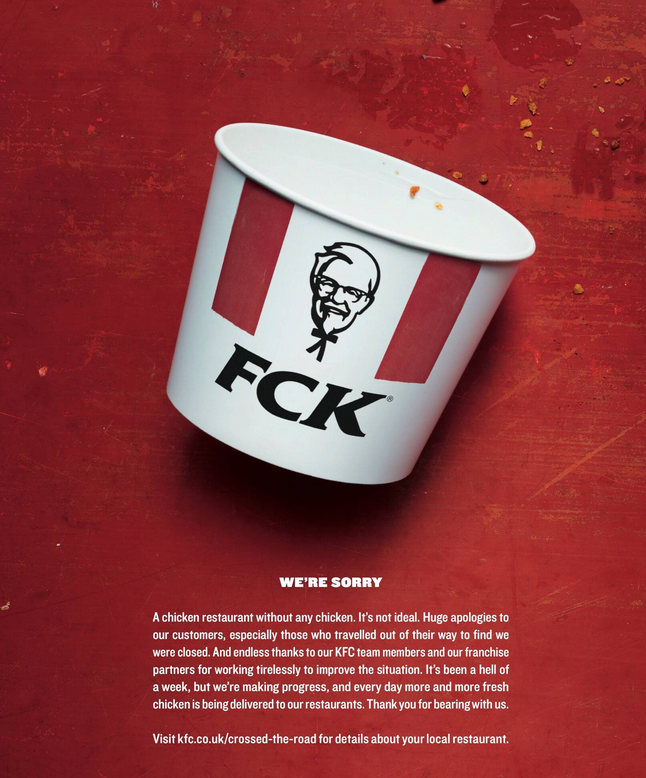
KFC’s public apology ad over chicken shortage via Ads of the World
3. Strengthen consistency across touchpoints.
Authenticity is not built overnight. It’s a conscious decision made every single day to deliver genuine service and uphold promises again and again. This repetition becomes a pattern that eventually becomes a part of the brand’s DNA.
That said, it’s important to train your employees, especially your customer-facing team. Empower them to uphold the brand’s promise and values and be consistent when doing so.
Over time, people recognize this pattern. Their brains, wired to detect consistency as safety, begin to equate your brand with trust and quality. The customer’s brain relaxes; they stop assessing you at every point and become receptive to what you offer.
Of course, change is inevitable. Brands must evolve to new markets, new technologies, and new cultural contexts. But despite these factors, authentic brands stay true to their original promise. Customers still get what they expect without the brand losing its identity.
4. Be guided by real customer feedback, case studies, and evidence.
If you’re looking for an honest indicator of how your brand is doing, then look into what your customers are saying through feedback and case studies. Authenticity is felt on the ground by the very people you cater to. So, it’s important to implement a system that collects feedback and use them strategically to fix what is broken.
Reviews, testimonials, complaints, and ratings are not mere judgments passed on brands. Harnessed properly, they can turn into an engine that shapes and strengthens your organization’s brand authenticity. When you acknowledge mistakes, apologize without excuses, and implement solutions, the brand experience levels up and the customers feel valued. The feedback loop transforms complaints into collaboration that creates better products.

Fan-generated LEGO designs can become real LEGO sets. Image via LEGO Ideas
LEGO launched LEGO Ideas, a crowdsourcing hub where global fans can submit their designs, which are voted on by the community. The winning design is then made into a real LEGO set that is then mass-produced.
This move has catapulted LEGO as one of the most powerful and culturally relevant brands in the world, as it shifted its business model from guessing what the customers want to executing exactly what they demand. It also aligns with the customer-focused values of the brand by respecting the capabilities of its audience.
Are you ready to improve your brand reputation? Hire one of the best brand design companies to realize your goals.
Tell-Tale Signs of an Inauthentic Brand
Today’s customers are smarter. They can smell inauthenticity from miles away—whether that’s a feeling of unease, inconsistency, or that something is “off.” Below are tell-tale signs of an inauthentic brand, plus examples!
Unexplained identity change
A sudden change in how people originally recognize you breaks trust and signals inauthenticity. Authentic brands evolve gradually and keep their customers involved in the changes.
A good example of this is fashion brand Gap’s logo change in 2010. The brand replaced its iconic logo with something so far removed from its original logo. Gap failed to prepare the public. This has resulted in online backlash that pushed the brand to return its original logo.
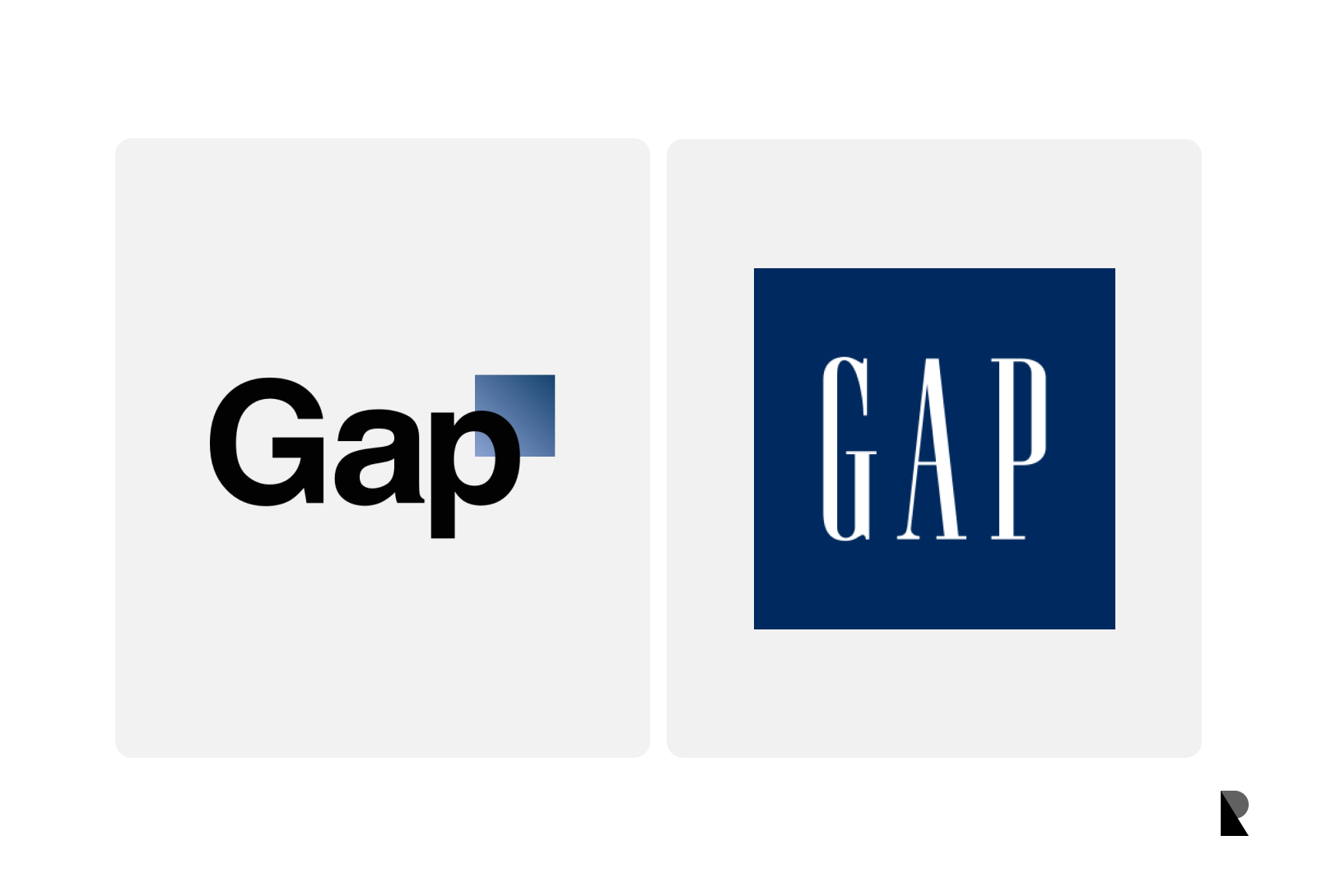
Logo rebrand (left) vs. original logo (right)
Vague origin stories
Inauthentic origin stories are easy to spot. They are often filled with vague and sentimental stories that sound good but lack substance. They also cannot be proven to be true. This is common among brands that leverage heritage marketing, like creating products based on a centuries-old recipe that has been passed down from generation to generation.
For instance, Quaker Oats Company has told customers that Aunt Jemima was named after a beloved, real-life Black woman who made delicious pancakes. They banked on celebrating Black womanhood.
But during the height of Black Lives Matter, it was revealed that the character was a racist caricature of a slave who only existed to serve white families. The brand’s origin story deliberately erased the dark part of the narrative and replaced it with sentimental fiction. As a consequence, the brand has been discontinued.
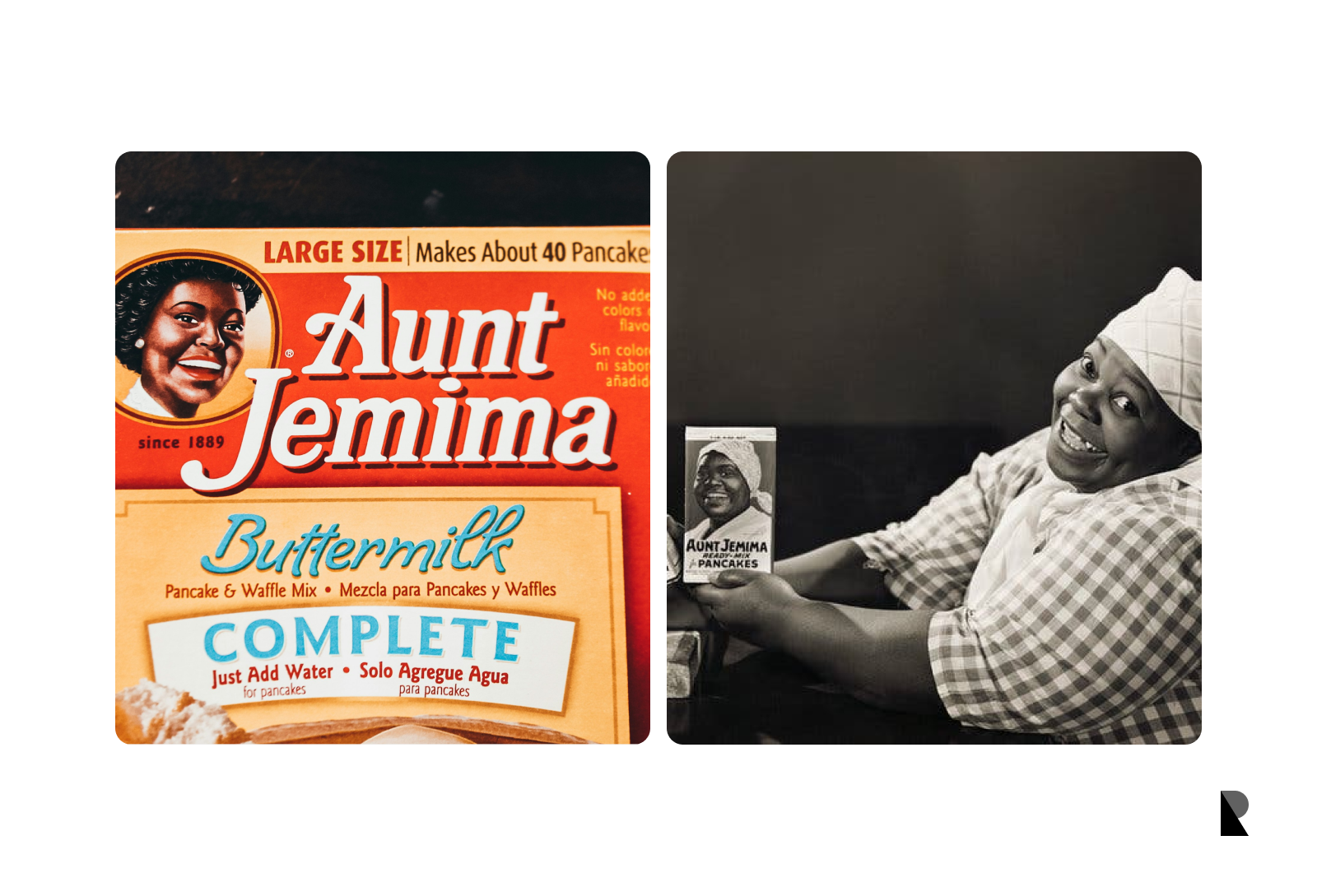
Aunt Jemima packaging
Over-reliance on influencers who do not align with them
Influencer marketing is an effective strategy because it partners with people who represent everyday customers and understand real problems. Consumers can relate to these influencers, driving organic conversions for brands. But this has been abused by brands that leverage popular influencers for the clout, ignoring the disconnect between their core values.
Beauty brand Bioré, popular for its nose strips, partnered with a school shooting survivor to promote pore strips for Mental Awareness Month. The influencer’s TikTok video directly linked her trauma from a campus shooting to the brand’s campaign slogan, “strip away the stigma of anxiety.”
The backlash was loud and instant, with many accusing the brand of exploiting trauma and violence to promote skincare. Bioré admitted to providing minimal oversight of their partner influencers for the campaign, but the damage to their reputation has been done.

Nose strip by Bioré
Authenticity Comes from Truth and Consistency
Brand authenticity demands clear values, consistent behavior across touchpoints, honest communication, visible practices, and products and services that match your claims. It requires investing in workplace culture that reflects your brand, empowering customer-facing teams, listening and acting on customer feedback, and owning up to mistakes with transparency and accountability.
These practices build trust, deepen emotional connection, reduce price sensitivity, and strengthen crisis resilience—benefits that no marketing campaign can replicate. So, it’s crucial to audit gaps between promise and practice. Prioritize solutions that reinforce your core strengths and make transparency a daily habit across your operations.
With brand authenticity in mind, you can create a brand that your customers can rely on for centuries.

Creates insightful, strategy-driven content that translates complex design and branding concepts into accessible knowledge, supporting Ramotion’s mission to elevate digital experiences.