
Maintaining a unified identity can be tricky for businesses that grow beyond a single founder or a few team members. This is especially true across digital channels catering to different audiences. Designers interpret brand elements like the logo differently. Every salesperson writes emails in tones that may not align with the brand.
Fortunately, these issues can be addressed by a brand book, ensuring a consistent appearance across thousands of touchpoints, from packaging to advertising to office stationery. If you’re thinking of creating one, here’s everything you need to know about brand books—what they’re for, how they differ from related documents, and what they contain.
What is a Brand Book?
A brand book is a comprehensive presentation of your brand that explains why it exists. It covers the brand’s origin story but it focuses more on the ideologies and the values underpinning its brand identity, visuals, voice, and channel use. This helps ensure everyone understands and presents your brand consistently, from your marketing team to third-party partners.
Why Brands Need a Brand Book
A brand book is essential because it guides the organization’s decisions. It’s a reliable reference that ensures visual and verbal consistency across touchpoints and aligns decisions with core values and business goals. It also reduces confusion and ambiguity among users.
Beyond day-to-day operations, a brand book is an invaluable onboarding tool. It contains everything new employees and stakeholders need to understand quickly, not just what the brand looks like, but what it stands for, how it communicates, and why it matters.
You don’t need to be as big as Coca-Cola to create a brand book. In fact, it’s a strategic asset startups and small businesses should have to prevent costly branding mistakes before they happen.
Brand Book vs. Brand Guidelines vs. Style Guide
Brand book, brand guidelines, and style guide are three terms often used interchangeably, but each serves distinct purposes.
The brand book defines why you exist (mission, strategy, and personality). It includes brand guidelines that explain how to express it with rules for visuals and voice. The style guide dives into specifics (hex codes, grammar, and measurements).
What to Include in a Brand Book
A small retail shop needs fewer inclusions in a brand book than a corporation with dozens of employees and multiple products. But core elements apply universally, regardless of scale.
1. Brand foundation
Before deciding on logos or colors, define what your brand represents. These elements guide every decision:
- Mission and vision: They define your long-term purpose beyond profit.
- Brand values: A set of principles that shape decisions, drawn from what your organization and its customers value most.
- Brand positioning: This is the space you occupy in the market. For example, an apparel brand can position itself as the only company in the market to use food waste to make its clothes.
- Brand promise: A deliverable customer expectation that should be achievable; otherwise, you risk damaging their trust.
- Brand personality: Your human-like character (casual or formal, serious or witty), which informs voice and visuals.
2. Visual identity rules
Consistency builds recognition. Set visual identity rules your team can adhere to to ensure cohesive branding.
Below are some general rules for each visual element:
- Logo: Define clear space, minimum size, and color variations. Show correct and incorrect usages.
- Color Palette: Identify primary and secondary colors, specify acceptable combinations, and explain when to use each.
- Typography: Specify fonts, weights, sizes, and hierarchy to guide readers’ eyes.
- Imagery: Define style and editing treatments with illustrative examples.
- Icons: Ensure they feel like they belong to the same family by setting the stroke weight, corner radius, and detail level.
- Layout and Spacing: Define grid systems, spacing increments, and white space requirements.
Balance text and visual examples to reduce interpretation errors. And remember, rules evolve as your brand grows, so you don’t need to finalize everything immediately.
3. Voice, tone, and messaging
The voice, tone, and messaging—all intrinsic elements of a language—used by a brand determines whether it is approachable, serious, or trustworthy.
Voice reflects your personality, while tone adapts to context. An authoritative voice uses declarative sentences; a friendly one uses contractions and speaks directly to readers. The messaging comprises core statements every customer should understand, directly answering “What makes us different?” and “Why choose us?”
When these elements are cohesive, your copy becomes instantly recognizable as yours.
Best Practices: How to Start a Brand Book
With the elements defined, the real work begins. Below are three best practices to help you get started in creating a brand book that meets expectations.
1. Conduct an audit to determine where your brand stands.
An audit provides the big picture of your brand’s current state (where it is and where it should be), helping you avoid wasting time and resources. Review every brand asset, customer communication, and perception among employees and customers. The goal is to identify inconsistencies and gaps to inform the brand book's goals.
2. Loop in stakeholders early
A brand book is a collaboration between key stakeholders—founders, sales and marketing teams, customer service team, designers, and external partners (agencies, contractors, etc.). Anchoring your brand book on diverse insights and perspectives from them results in a brand book that benefits everyone.
3. Start with strategy before design.
Strategy before design means defining who you are before deciding how you look. It entails establishing the brand foundation (mission, vision, values, etc.), serving as a filter for every design decision.
When choosing official brand colors, refer to the brand foundation rather than what’s trending on social media or what top executives prefer. The strategy should dictate the design to produce assets, content, and other materials that can effectively communicate your brand.
Hiring one of the best brand identity design agencies can help bring the strategic depth needed to build a brand book that works.
Putting the Brand Book to Work: 7 Examples to Learn From
Coca-Cola’s product packaging design
Coca-Cola’s branding rests on three pillars: scale, color, and restraint. Its iconic red is globally recognizable, the wordmark commands attention through scale, and restraint keeps everything clean. On packaging, these principles come alive with the wordmark sitting prominently at the top, red anchoring the design, and nothing distracting from it.
The result is distinctively Coca-Cola.
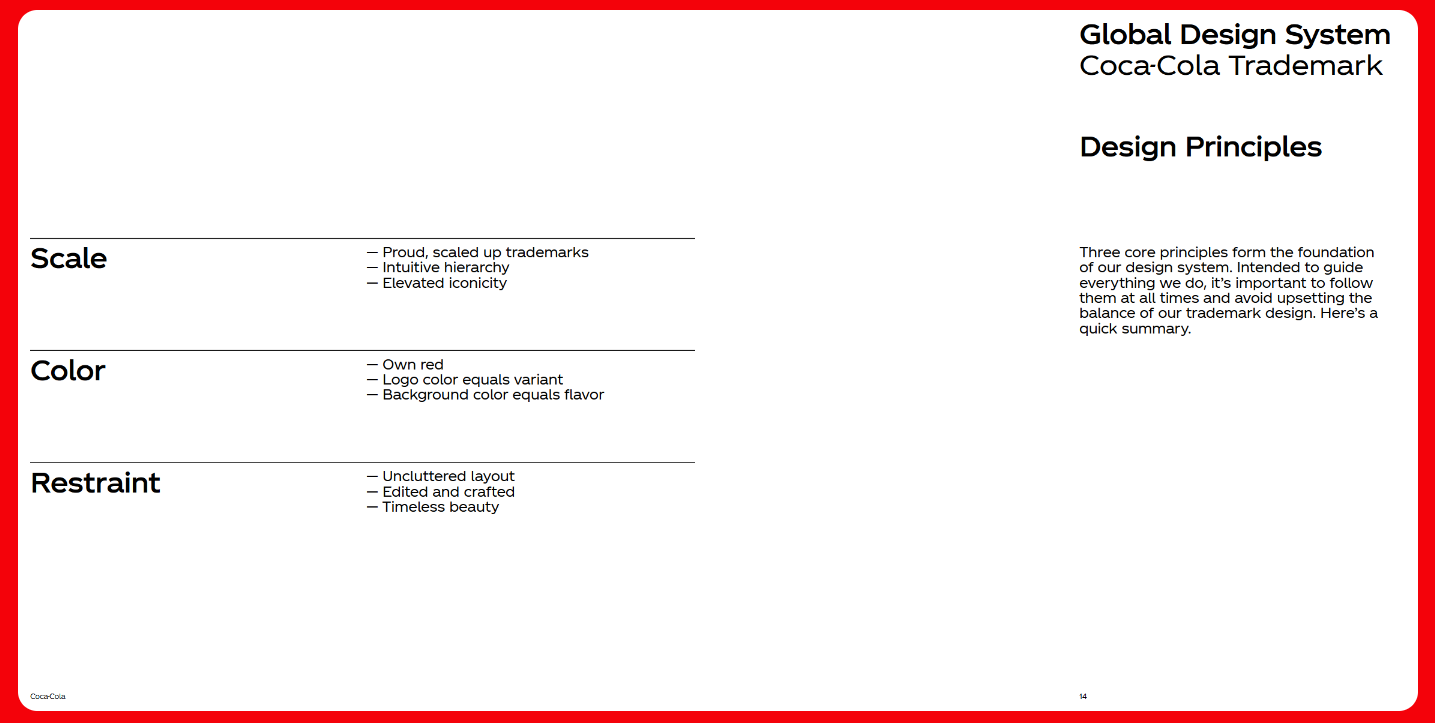
Coca-Cola design principles via Relayto
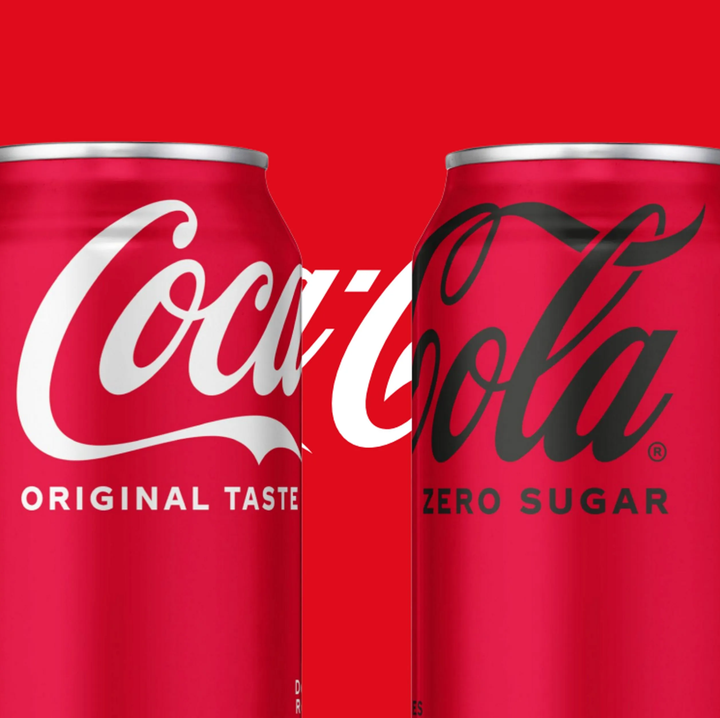
Product packaging design via D&AD
Aesop’s web design
Aesop’s brand book explains its avoidance of images showing people’s faces. It believes that there is no single standard of beauty, so the brand removes the human face from its visual language. When representation cannot be avoided, the brand focuses on distinct physical features.
Product imagery dominates the visual experience on its website, not people. When figures do appear, they are often shown from behind or cropped to isolate a specific detail. This intentional framing allows every visitor to see themselves in the brand without the distraction of a predetermined model.
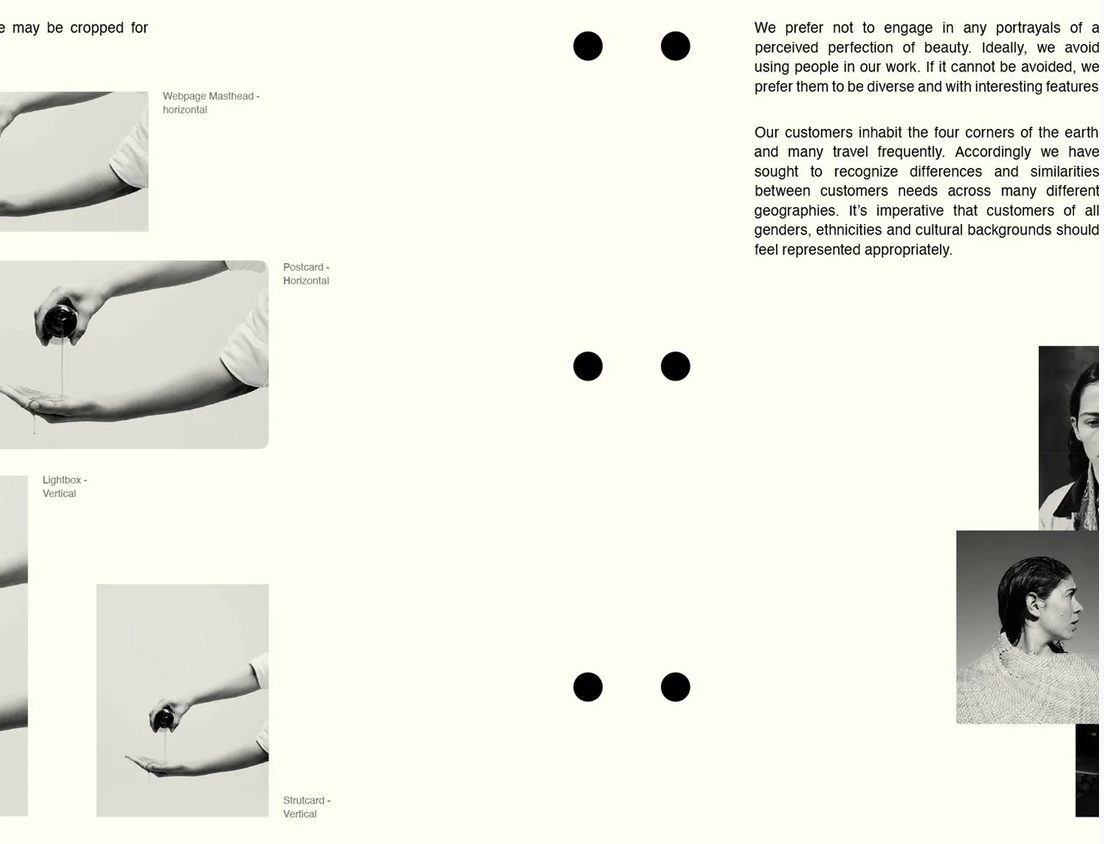
Aesop’s imagery guideline via Ward

Skin care product page via Aesop
Uniqlo advertisements
Unlike the usual fashion ads from other brands, Uniqlo’s print advertising reflects its core philosophy: LifeWear. This philosophy positions clothing as a tool for improving daily life, designing them to be simple, high-quality, and functional. The ads focus on the products and their roles in the wearer’s routine, not glossy, aspirational lifestyles or seasonal trends. It’s consistent in its use of clean typography, the iconic red square logo, and a focus on material and fit.
Every ad conveys how good design should make life simpler and more fulfilling.

Uniqlo’s global ad campaign via D&AD
e.l.f. Cosmetics social media
e.l.f. has built its brand on four commitments: eco-friendly practices, inclusivity, high-quality formulas, and budget-friendly prices. These commitments are principles that guide everything the brand does. For e.l.f., social media is a primary vehicle for democratizing beauty, making these principles visible and accessible to its millennial and Gen Z audience.
e.l.f.’s social feeds showcase women from all walks of life (artists, influencers, business leaders, athletes), featuring real people with different skin tones, ages, and backgrounds. The tone is playful, confident, and approachable, matching the brand’s personality that is bold, unapologetic, and for everyone.
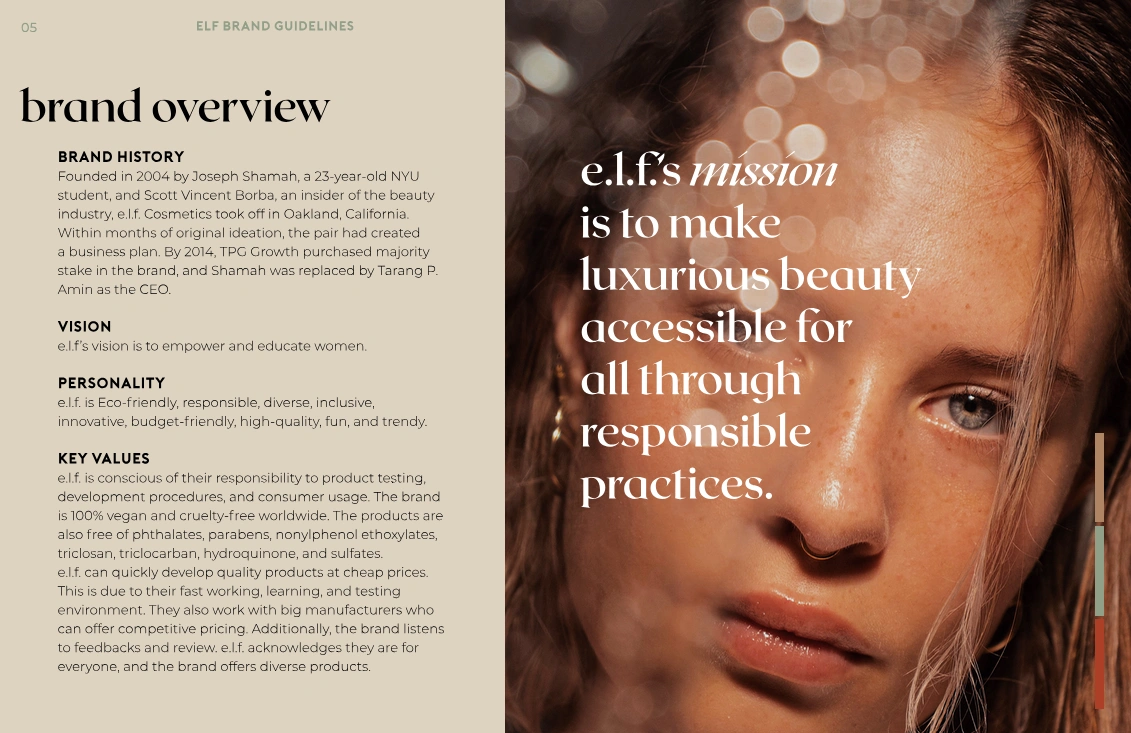
e.l.f.’s brand foundation via Adobe
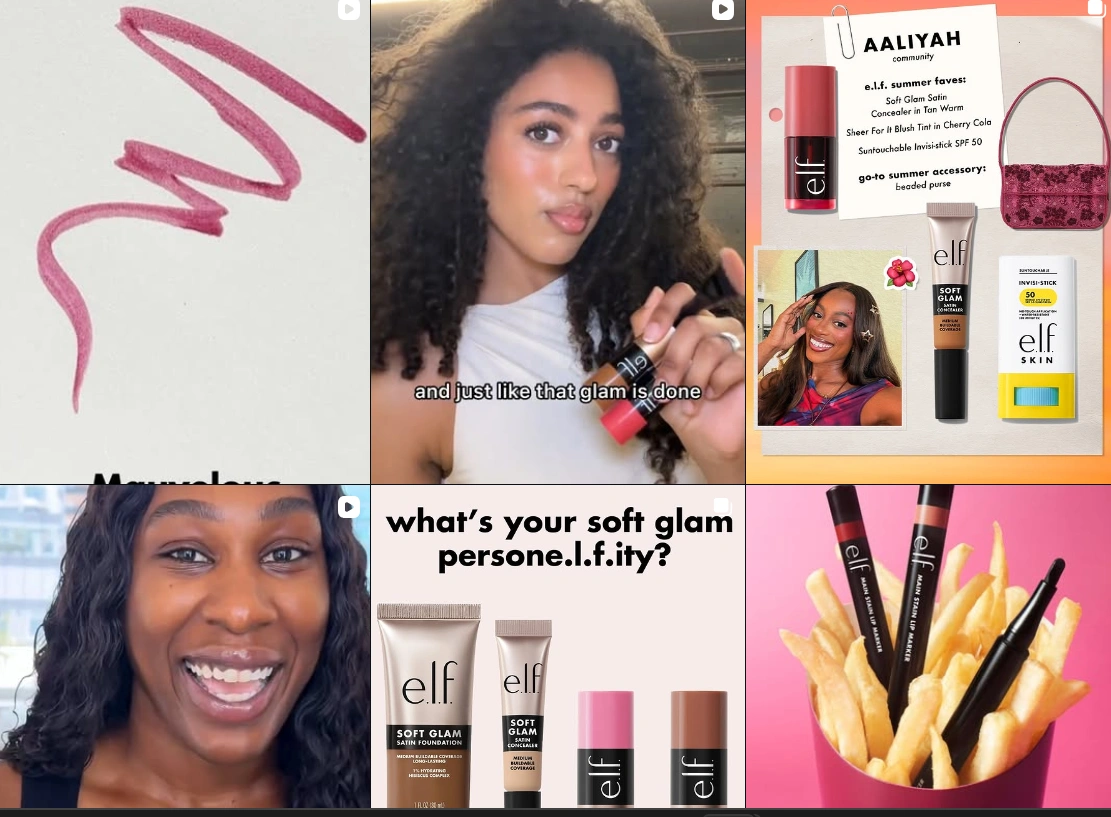
e.l.f.’s social media feed via Instagram
Boston consulting group’s digital and print stationery
The consultancy firm, in an effort to unify its visual identity across regions, uses a distinctive green logo that sets it apart from the navy blue commonly used by competitors. A branded typeface was also created to achieve consistency.
Given this emphasis, Boston Consulting Group’s stationery design is simple yet deliberate. The BCG wordmark is highly prominent, with the brand’s official green color crisp against white paper. The design is clear, authoritative, and purposeful, just like the brand.
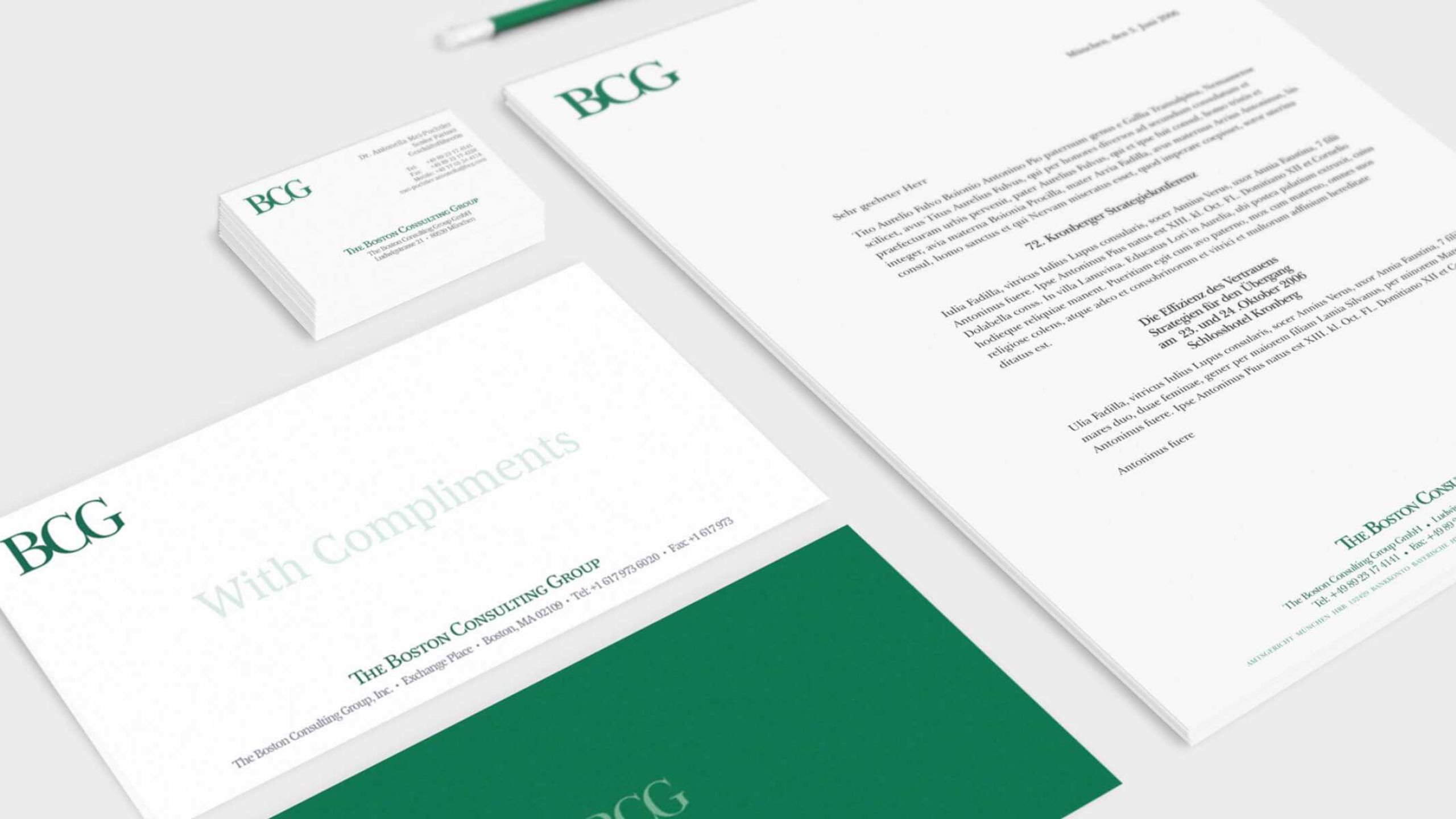
BCG’s print stationery design via Meta Design
GoTo inclusive work culture
GoTo’s brand book emphasizes policies that champion diversity and inclusivity. For instance, the “Be Real” core value inspires employees to show up authentically, creating a culture of respectful daily interactions. The brand also provides upward mobility through various corporate responsibility frameworks, like Thrive, which focuses on mental and physical health—including quarterly Self Care days and a rewards package that covers family planning and career development.
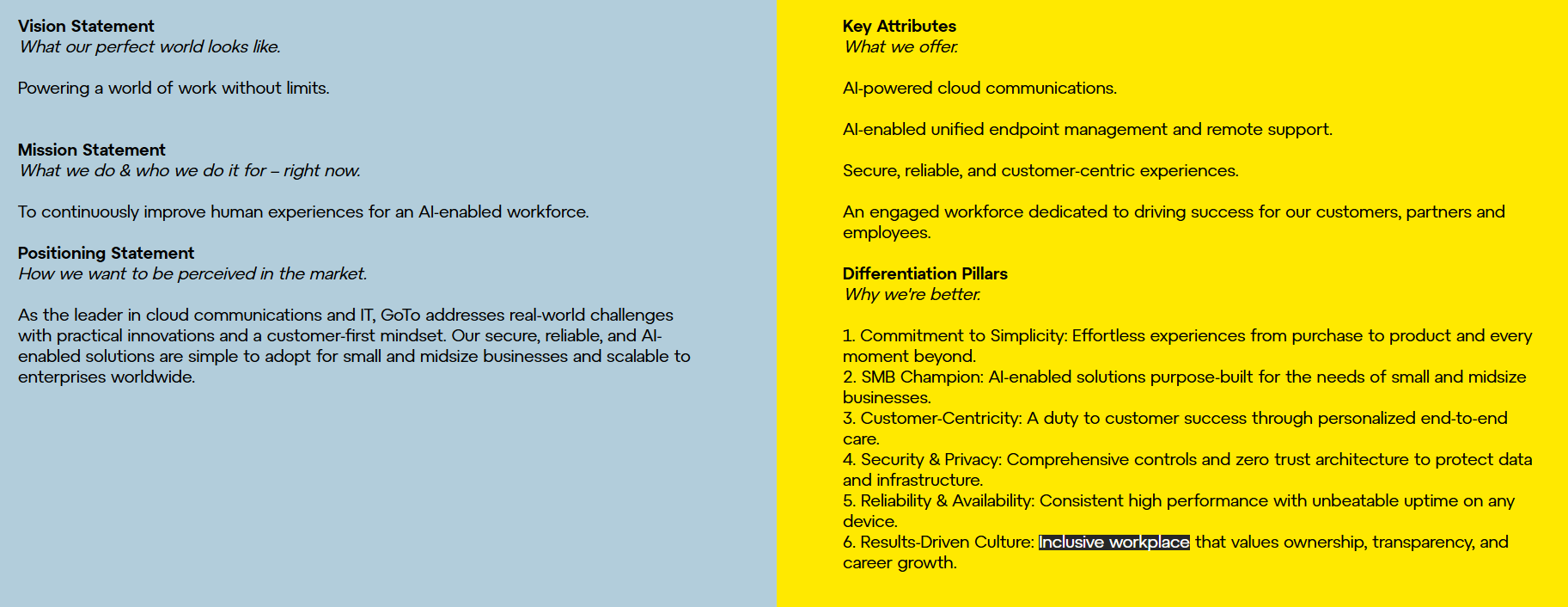
Differentiation pillars that guide every aspect of GoTo’s business, including HR. Image via Brandpad

GoTo has a dedicated wellness program for its employees called ‘Thrive’. Image via GoTo
Salesforce partner guidelines
Salesforce’s partner guidelines state that partners may leverage Salesforce’s brand value, but only under strictly defined circumstances to prevent confusion and misrepresentation. The partner badge system provides official assets that visually convey partnership without granting partners access to the corporate logo or product icons.
Marketing templates are provided, but partners must tailor them to make their own brand a focal point, ensuring consistency across co-marketing efforts while keeping each partner’s identity distinct.
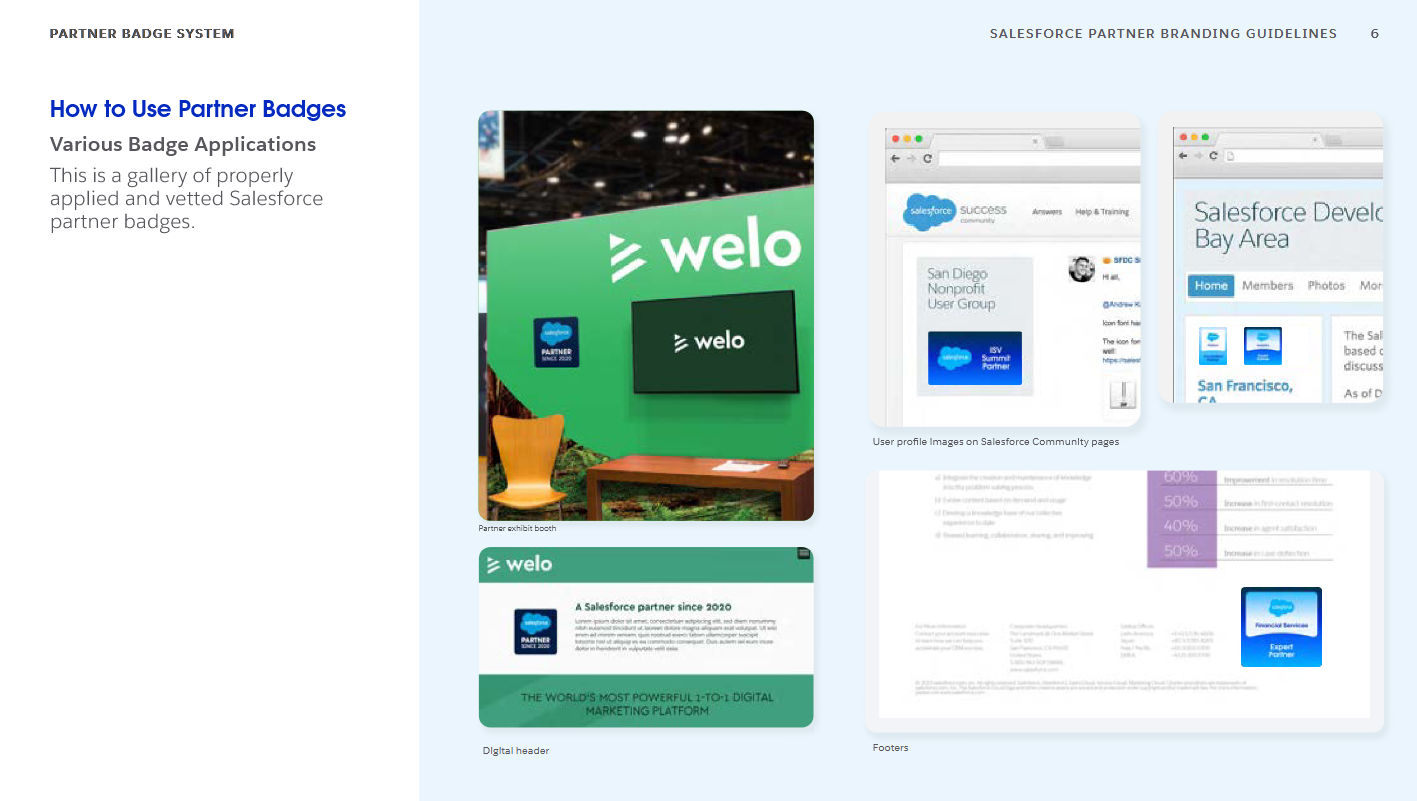
Actual examples of how to use Salesforce’s partner badges. Image via Salesforce
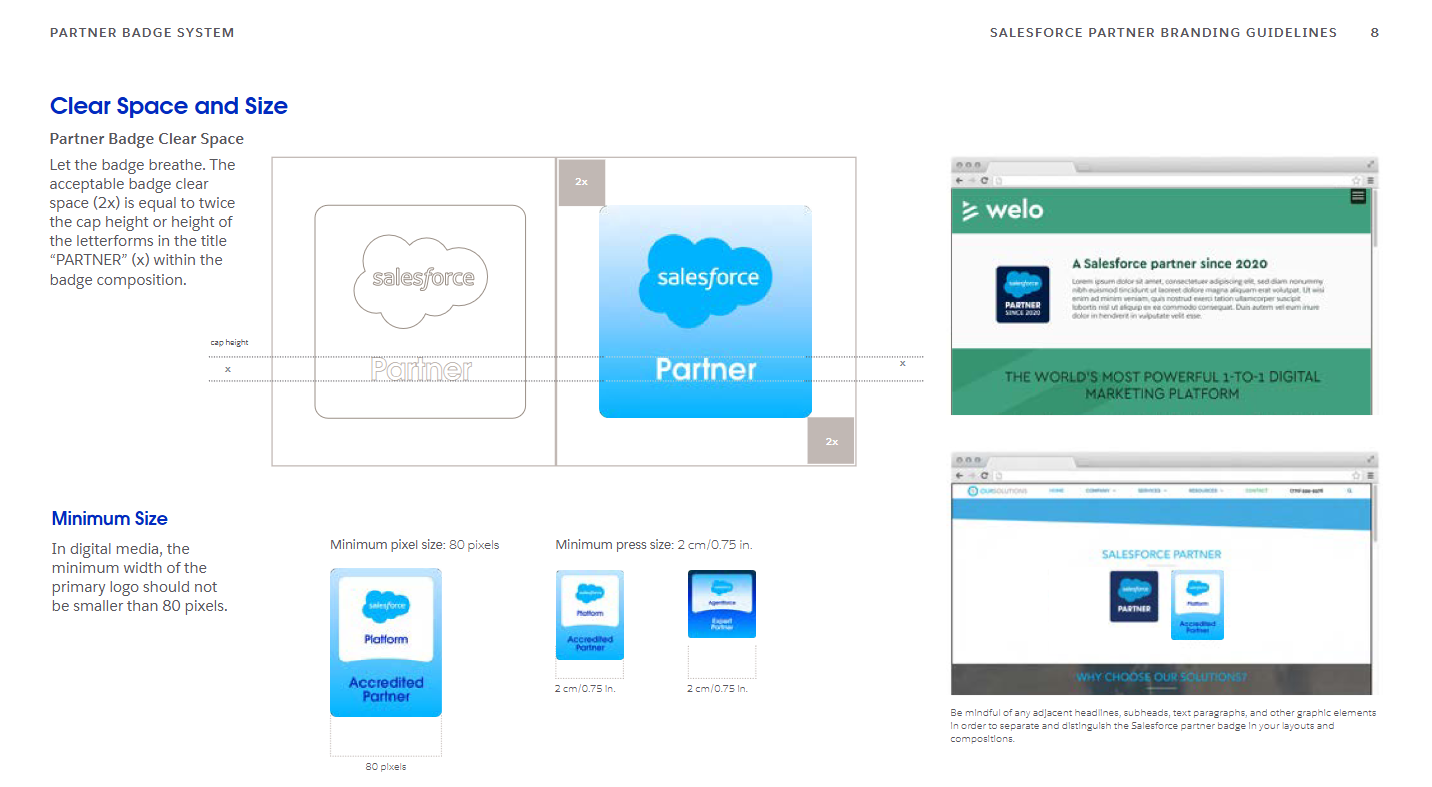
Partner badge usage on third-party websites. Image via Salesforce
How to Keep a Brand Book Useful: Tips and Strategies
A brand book isn’t something you spend months on and then abandon. It’s a living document that evolves alongside your business. Here’s how you can keep it relevant and functional.
Appoint a dedicated brand book “keeper”
Assign a brand book keeper or a person in charge of developing, maintaining, and enforcing guidelines. This role fields all brand questions and ensures consistent use.
Tap your brand manager, senior marketer, or creative lead. You need someone who is detail-oriented, collaborative, authoritative, and has a deep understanding of your brand. In larger organizations, a dedicated team typically handles governance.
Match “what” with “how”
Articulating the “what” isn’t enough. Without showing the “how”, you risk interpretation errors. Keep in mind that users don’t read the brand book cover to cover. They search for what they need and move on. Not every user is a designer, too.
Pair rules with illustrations, images, or videos that bridge strategy and execution. Doing so ensures the brand book is applied as intended.
Iterate, iterate, iterate
A brand book evolves with your organization and the market. Keeping it current ensures consistency, increases efficiency, and empowers teams.
Two primary triggers prompt an iteration:
- Strategic shifts: When your brand’s mission, vision, and values change.
- Executional adaptations: When there’s a need for the visual and verbal identity to adapt to new channels, products, or user feedback.
Brand Book Mistakes to Avoid
A brand book can fail in several ways. Learn the most common mistakes even big brands commit so you can avoid them.
1. Designed for aesthetics, not usability.
Decorative visuals without application rules leave users guessing. This happens when designers work in isolation or misunderstand the document’s purpose.
Balance beauty with functionality by adding actionable strategies and clear examples. A table of contents is a simple but effective safeguard, allowing creators to review the document at a glance and spot gaps.
2. Overlooking accessibility
Some brand books treat accessibility as an afterthought, leading to incomplete or missing accessibility features. Integrate accessibility from the start by following WCAG guidelines, including alt text guidance, and testing the brand book with real users.
3. Vague rules
Flowery directives like “be bold, innovative, and human-centered” mean different things to different people. Be specific to eliminate guesswork and replace it with “Use the active voice. Avoid passive constructions. Use ‘you’ and ‘we’ in all customer-facing copy, and replace industry jargon with plain English.”
Excessive length
Brand books that are too long can result in cognitive overload. Start with the essentials—brand foundation, visual identity rules, voice, tone, and messaging—and, if you must add additional sections, ask yourself these questions:
- Will someone on your team use this weekly?
- Does this rule apply across multiple channels?
- Does this section include examples or just the description?
- Is this information already documented elsewhere?
- Can this rule be simplified?
The brand book should be as short as possible without sacrificing efficiency in answering questions from users.
Brand Books Build Consistency
A brand book is your go-to guide for making sure every brand material looks and feels right. It keeps your visuals and messaging consistent so people instantly recognize your brand wherever they see it.
The brand book ensures it goes beyond aesthetics. It helps brands create lasting impact that earns trust. When everyone follows the same rules and principles, your brand stands out for the right reasons.
If you want results and a brand people connect with, a reliable brand book makes all the difference!

Creates insightful, strategy-driven content that translates complex design and branding concepts into accessible knowledge, supporting Ramotion’s mission to elevate digital experiences.