
For business leaders, the relevant question is not merely how much they earn each quarter, but whether they remain trustworthy in the eyes of the people who matter. Brand stewardship helps achieve this by making sure what you promise matches what you deliver. It matters more than short-term profit because it is the mechanism that builds, protects, and renews trust.
Brand stewardship keeps a brand aligned with its moral and ethical standards, ensuring the values in your marketing materials are the values you practice. Do this well and sustainable profit follows.
Before we dive into what stewardship entails and how to enforce it, let’s start with the basics—what brand stewardship is and why it matters.
What is Brand Stewardship?
Brand stewardship is the daily discipline of ensuring every decision serves your customer promise. It means protecting what the brand stands for while navigating growth, competition, and market shifts, all without losing sight of the core identity.
If a mission statement defines long-term purpose, stewardship is the ongoing effort to keep the brand honest. It prevents the brand from drifting away from its core, which happens when teams prioritize short-term wins that compromise values.
Don’t simplify brand stewardship as corporate social responsibility (CSR). While CSR is part of it, it is more of a mindset shared across the organization.
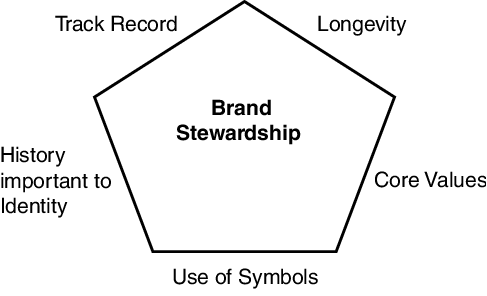
The elements of brand stewardship via ResearchGate
Why brand stewardship matters
1. Reduced customer churn
When a brand consistently fulfills its promise, customers stay. Brand stewardship increases the chance you meet or exceed expectations, reducing churn and stabilizing revenue.
2. Lower customer acquisition costs
A trusted brand spends less convincing potential customers. Satisfied customers refer others, amplifying acquisition through word-of-mouth and lowering paid marketing costs.
3. Higher revenue and profit margins
Trust lets a brand command premium because customers will pay more for a brand they believe in, even when cheaper alternatives exist. Brand stewardship protects that advantage by ensuring the brand remains true to its promises, mission, and values.
4. Resilience during crises
When reputational issues arise, brands with strong stewardship recover faster. Customers grant the benefit of the doubt to organizations that have a track record of consistent delivery. Stewardship paves the way for that credibility.
Hire one of the best branding companies to help you build and implement brand stewardship.
What Brand Stewardship Protects
Brand identity and assets
Brand stewardship ensures that brand assets are consistently applied and protected from misuse. This includes governing team access to official logos, fonts, colors, and templates. Practical controls, like locked templates, versioned assets, and approval workflows, prevent unintentional alterations.
Stewardship also protects trademarks, copyrights, and proprietary content through monitoring and registration. Without stewardship, the identity breaks down, with content that may carry the company name but look like they came from different sources. Over time, inconsistent execution erodes recognition and trust.
Brand voice and messaging
Brand stewardship enforces consistency in how the brand speaks. Copywriters, social media managers, support agents, and sales teams must share a common voice. Protecting voice means documenting core traits, auditing content for alignment, training teams, and monitoring customer communications for drift. When a voice is neglected, messaging becomes confusing.
Brand purpose and values
Brand stewardship protects the brand’s reason for existing and the principles it believes in. This prevents the company from stating purpose and values only for marketing. For instance, a brand that claims sustainability as a core value must have stewardship frameworks that ensure they only source materials from suppliers that practice the same.
Trust, reputation, and customer expectations
Brand stewardship aligns internal operations with external messaging. It holds the brand accountable for delivering high-quality products and services, treating customers fairly, and being transparent and honest in every process.
Without brand stewardship, a company can become complacent in maintaining its promise and observing its values, leading to a decrease in trust. Low-trust brands become more vulnerable to higher employee churn rates, reputational risks, and higher customer acquisition costs.
Brand equity
Brand stewardship calls for decision makers to consider the company’s long-term asset values. This prevents leaders from making short-term decisions that may harm the brand equity.
Say one of the stewardship measurements includes monitoring trust indicators over time, tracking brand valuation metrics, and evaluating decisions if they can strengthen or weaken the brand within a decade.
Employee brand alignment
Brand stewardship mechanisms include feedback loops that ask employees whether they perceive alignment between brand promises and actual delivery. Internal communications reinforce the brand story and reward employees who embody it. Employees who do not believe in the brand cannot effectively deliver the brand promise convincingly. They become disengaged, and customers can sense this, too.
Brand Stewardship vs. Brand Management: What’s the Difference?
Brand management and brand stewardship cover related grounds but differ in scope and long-term goals.
Brand management focuses on the day-to-day operation of executing the brand strategy, like campaign launches, collaborating with ad agencies, and ensuring tactical consistency. Meanwhile, brand stewardship is the long-term guardianship of the brand’s integrity, promise, and reputation.
In context, a brand manager can launch a campaign flawlessly, but still weaken the brand if they prioritize short-term goals over protecting its integrity. But a brand steward can overrule a perfectly executed brand campaign because it conveys a promise beyond the capabilities of the company.
This distinction matters because organizations often equate operational competence with brand health. Visibility without trust can make a brand vulnerable. Stewardship requires a long-term mindset and authority to override short-term tactics that conflict with brand promises.
Brand Stewardship Across Teams: Custodians, Tools, and Metrics
Brand stewards
Brand stewardship is not owned by a single function. Rather, it is distributed across the entire organization, so it is embedded in decisions, from the executive level to marketing, operations, product, customer service, and even HR.
Executive level
The CEO and the senior leadership team authorize brand stewardship. These brand stewards set priorities by rewarding long-term behavior and modeling values. Visible backing from the top also ensures mandates are taken seriously and resourced appropriately.
Brand and marketing
Creative and communications teams protect the brand’s external expression—visual identity, tone, positioning, and messaging. These brand stewards evaluate campaigns not only for immediate ROI but also for alignment with promises, values, and the brand experience.
Operations, customer service, product development
While a brand steward at the marketing level can promise reliability, the supply chain, product development, and quality assurance teams are the ones who deliver it. Similarly, HR is a steward of the internal brand, making sure employees experience the same values that are being sold to customers.
Brand stewardship tools
Frameworks, documents, and processes are crucial tools for implementing brand stewardship efficiently.
- Brand Style Guide: It includes visual rules, editorial standards, and messaging principles. The guide should be actionable and accessible to all teams that touch the brand.
- Brand Training Programs: Teach employees about the brand’s history, identity, mission, and customer expectations, especially at onboarding and in cross-functional refreshers.
- Internal and External Feedback Loop Protocol: Regular internal reviews, leadership audits, customer surveys, and sentiment tracking provide insights and warning signals that flag misalignment early.
- Brand Health Audit: A periodic evaluation of market position, performance, and perception. Audits identify gaps, set baselines, allocate resources, and surface risks before they escalate.
Measuring brand stewardship
Repeat customer rate
The repeat customer rate measures the percentage of customers who buy from your brand more than once within a specific period. If your brand delivers on its promise, people are likely to come back. This makes repeat customer rate a reliable metric to determine if brand stewardship is observed or not.
How to measure:
(Number of returning customers / total customers in the period) x 100
Complaint resolution rate
The complaint resolution rate measures how many issues raised were resolved within 24 hours. It tests the efficiency of your operating system in providing fixes to your inventory, delivery, or payment refund issues. Faster overall resolution means you take your promises seriously, which can be a convincing factor for customers to keep supporting your brand.
How to measure:
(Number of returning customers / total customers in the period) x 100
Product return rate
A rising return rate is usually the first sign that there is a problem with the quality of your products. That said, if your return rate trends up, expect brand stewardship to trend down.
How to measure:
(Number of returns / total units sold) x 100
Employee turnover rate
Your employee turnover rate is reflective of the brand’s health, cultural integrity, and leadership quality. High voluntary resignations can be a symptom of an unaddressed gap between the brand values and actual management practices. It also hints at existing disengagement among workers who do not feel connected to the company’s long-term goals.
How to measure:
(Number of separations / average headcount) x 100
How to Stay Consistent Without Becoming Rigid
Consistency is essential to effective stewardship, but excessive rigidity stifles progress. Brand stewardship must balance discipline with flexibility so the brand can evolve while remaining authentic.
1. Reflect brand stewardship in every business decision
Make stewardship a decision filter by asking, “Will this strengthen or weaken the brand promise?” Require decision-makers to document stewardship implications for major choices. That visibility helps align short-term tactics with long-term goals.
2. Appoint brand stewardship leaders across teams
Designate leaders responsible for stewardship in core functions—product, operations, customer service, sales, HR, and marketing. These brand stewards should have influence to stop or adjust initiatives that threaten the brand. Choose communicators who can explain stewardship trade-offs and defend long-term value over immediate gains.
3. Regularly check in with customer-facing teams
Customer-facing teams are your direct access to what customers really say about your brand. They know where the brand overpromises and underdelivers. That said, stewardship fails when their insights are disregarded.
To avoid this, schedule regular meetings to discuss what customers think. Shadow customer interactions by listening to support calls and hearing the brand through customer voices. Finally, invite a customer service manager or sales lead to quarterly planning sessions and make their input a part of the discussion.
Brands with Strong Stewardship
Patagonia stewards for Earth protection
Patagonia does not cut corners when it comes to creating sustainable products. The brand maintains transparency across its supply chain, using recycled materials and organic cotton sourced ethically. The company also provides an “Ironclad Guarantee,” where it replaces and repairs products for free as part of its commitment to customer satisfaction.
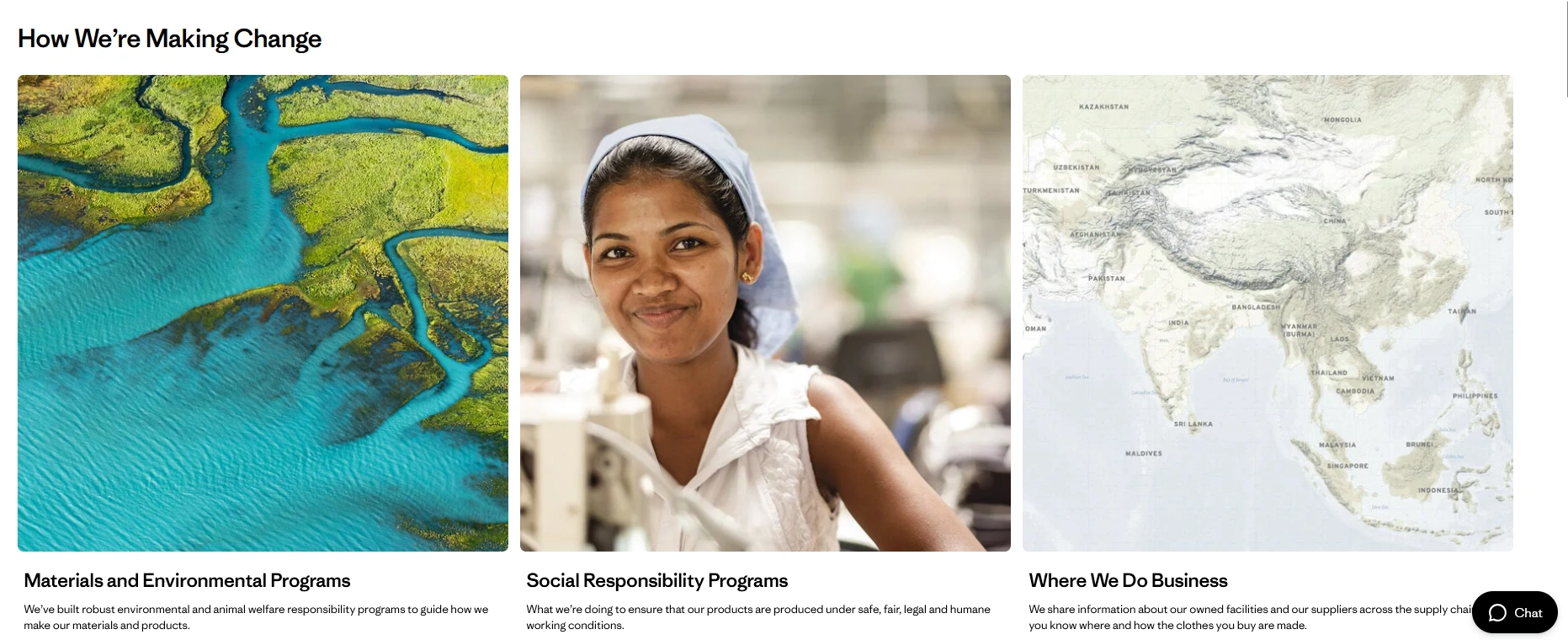
Transparency across every customer and product touchpoint. Image via Patagonia
Steaz’ renewed direction
Steaz started as an organic tea brand with a mission to inspire positive change. But after years of growth, the brand drifted under new leadership. Instead of blaming external factors, it has admitted the gap between what the brand was and what it has become.
Stewardship here is about honesty and course-correction. The brand invited its original creators and reformulated its tea to reflect its former essence. Steaz joined the 1% for the Planet, giving a portion of its revenue to agriculture and community programs. It is transparent about what it has achieved and what it is still working toward.
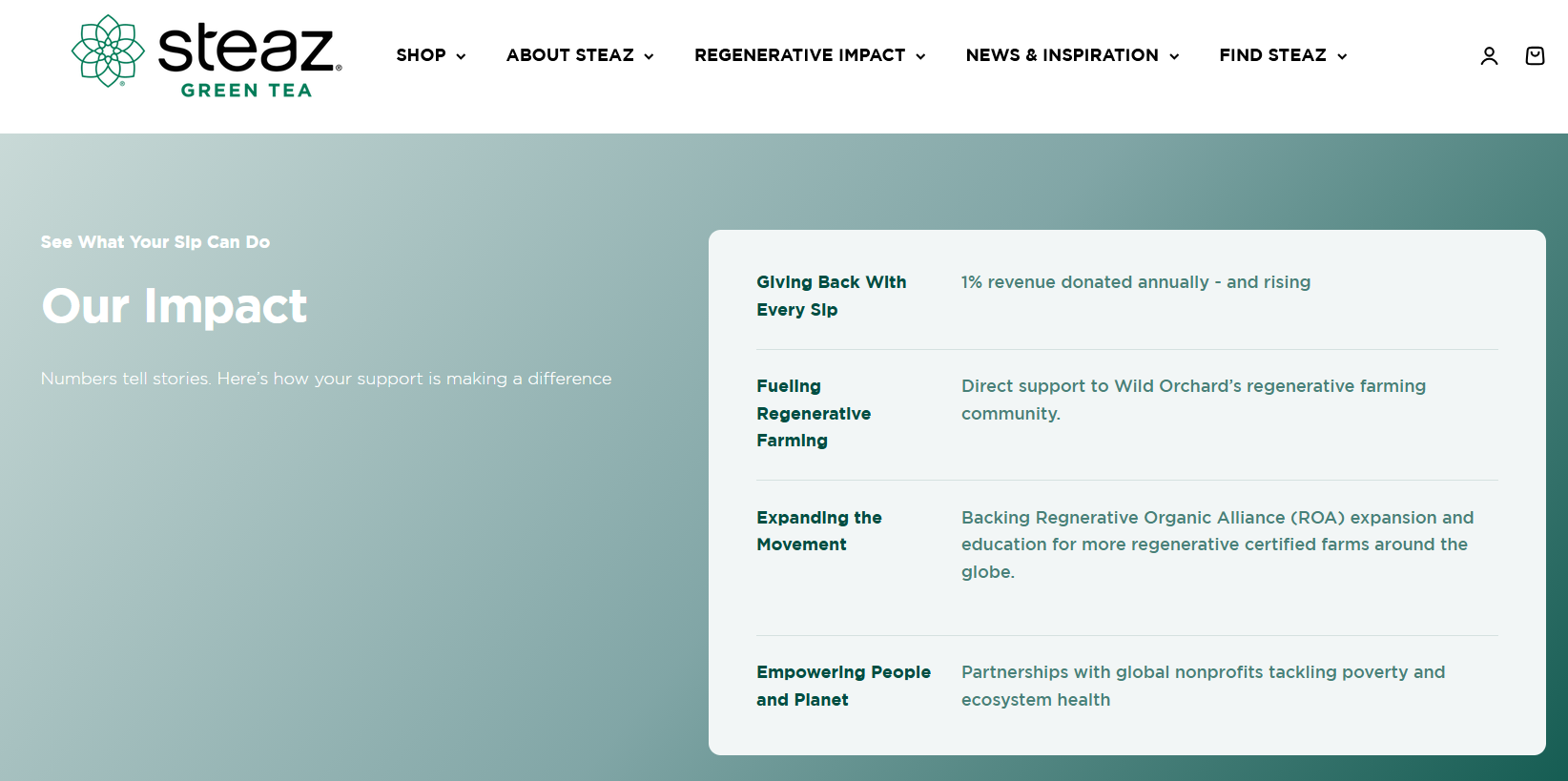
Impactful global movement via Steaz
What Weakens Brand Stewardship
Brand stewardship erodes not from a big setback, but from cutting corners. Spotting and addressing these subtle failures early prevents irreversible damage to brand trust.
Small compromises slowly eroding trust
Using slightly cheaper materials, approving vague marketing claims, and skipping quality checks to speed things up—these may be small, immaterial compromises, but can deter brand trust. But when these become repetitive, bad patterns form, and the brand becomes unpredictable. Customers no longer know if they can rely on you or not, which can create doubt.
Rewarding revenue only over reputation
A revenue-oriented incentive system teaches employees that results matter more than how they are achieved. This can be a slippery slope for them to step out of line to meet their KPIs. That said, it is important to measure and compensate stewardship.
Assuming trust is permanent
Past success creates a false sense of security, and trust built over years cannot be undone quickly. But this is a dangerous mindset that can lead to complacency. Leaders stop investing in boosting brand health, and they let small compromises slide.
Keep in mind that trust requires continuous maintenance. It takes years of consistent delivery for trust to last, but only one visible failure to erode it.
Brand Stewardship Makes Strong Brands
A strong brand is visible and trusted, and brand stewardship gets you there. It is an ongoing effort across multiple functions that preserves trust. It also anchors on how leaders and teams decide, act, and measure with the brand’s long-term integrity in mind.
With conscious, consistent practice, brand stewardship protects meaning, recognition, trust, and flexibility. It is shaped around three principles: defining core non-negotiables, building tiered governance, and measuring and iterating regularly. Embed stewardship into daily work and protect the brand while leaving room for growth.

Creates insightful, strategy-driven content that translates complex design and branding concepts into accessible knowledge, supporting Ramotion’s mission to elevate digital experiences.