
How can we build brand loyalty, which is crucial to reinforcing the company's market position during the current turbulent times and growing economic crisis? There are many solutions, but one of the most effective and surprisingly underrated is brand transformation.
Do you know that 3 out of 4 companies on the S&P 100 list have undergone brand transformation in their first 7 years, yielding benefits such as revenue lift and premium value1. According to studies, brand adaptation to a new realm has helped those companies across niches meet audience expectations, increase trust and credibility through shared values, and, most importantly, stay afloat as they move towards their ultimate goal.
Brand transformation goes beyond a logo update or a style refresh. When working with the best digital design brand strategy agencies, it involves transforming the entire brand system into a strategic shift that fuels business growth, reinforces market position, and builds a loyal fan base.
In our practical guide, we will walk you through this multistep process and uncover some subtle yet vital nuances.
What Is Brand Transformation?
Brand transformation is the core strategy that navigates a company through its lifecycle. It is not a rebranding or redesign; it is a business initiative that embraces all the key elements of its existence, presentation, and operations in the market and community. It affects all areas, from client-facing functions such as advertising and customer support to employee-level functions such as management and workplace culture.
Brand transformation is a multistep process that shapes how the company is perceived by its audience, competitors, and staff. It involves various measures, including repositioning and operational changes, as well as cultural and social adaptations, while preserving the company's core values, such as mission, personality, and archetype.
The goal of this process is to strengthen the company's market position, keep up with ever-changing customer demands, expectations, and preferences, while staying true to its roots. It also helps realign the company's activities, market presence, and work culture with new goals or fundamental changes in its structure, such as a merger.

Apple is the bright representative of the S&P 100 list (image: apple official website)
Why Brand Transformation Matters?
As a strategic process that fuels a company's evolution, growth, and resilience amid market changes, brand transformation is highly important.
First and foremost, it is the best way to meet customers' constantly changing expectations, needs, and preferences. Hitting the mark ensures the company provides value to the audience and fulfills its purpose and mission.
Second, staying relevant to current changes builds trust and loyalty among the target audience and community, thereby reinforcing the company's position in the community and competitive advantages in the arena.
Third, it is a surefire way to minimize the effects of past events that damaged the company's reputation or customer relationships.
Fourth, it helps reach new demographics and expand the company's influence, thereby generating more connections and fans.
Finally, brand transformation is directly connected to the company's successful growth, strong positioning, and high competitiveness. When omitted, stale brands risk outdated perceptions, missed opportunities, and unnecessary conflicts. Losing relevance shrinks the customer base, erodes credibility, and reduces revenue.
Brand transformation is crucial to a company's success and the achievement of its goals; therefore, it should not be taken lightly or undertaken without purpose.
Several triggers indicate the importance of brand transformation, including shifts in audience expectations or needs, economic crises, the adoption of new business models, mergers, increased competition, and internal strategic changes.
Types of Brand Transformation
Brand transformation is a complex, multistep process that spans the company's lifecycle to ensure its relevance, validity, credibility, and value. It reinforces its market position, increases its competitive advantages, improves its connection with customers, and provides a solid foundation for growth and self-realization while staying true to its core. It can be broken down into several broad categories, intended to help the company achieve its goal and maintain its marketing strategy effectively.
Visual rebranding
This is the simplest form designed to modernize the appearance and client communication to keep up with mainstream and make the company relevant. As a rule, it includes minor changes that do not affect the core values.
Brand repositioning
This form of brand transformation entails changes to core elements, such as mission or positioning, to extend the target audience. However, it remains a simple form that typically affects a single unit of identity.
Merge-related rebranding
It could be a total overhaul of the company's personality, or a partial one, when the two businesses create a harmonious symbiosis of their identities. Alternatively, it could be dominance by one brand or a parent-child relationship.
Full rebranding
This is the comprehensive form that leads to a complete overhaul of the brand's identity from various perspectives. It creates a whole new picture and identity for the company, affecting its core values.
It is crucial to note that the types of brand transformation should not be treated in isolation. As practices show, the best companies' adaptation to the current landscape requires a harmonious symbiosis of several types of transformations that improve the company's position and presence from different angles and satisfy the diverse expectations and requirements of the audience.
They go much deeper into the company's identity and personality, affecting its existence and operations at all levels. For instance, they might influence working culture and customer communication not only through digital means but also in brick-and-mortar stores.
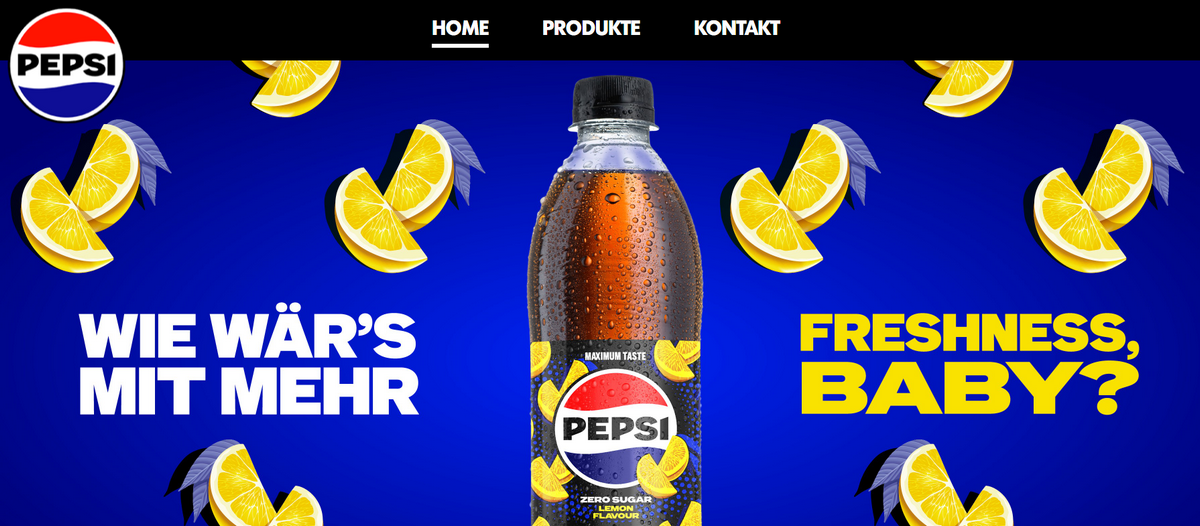
Pepsi does regular brand transformations to meet the audience’s expectations (image: Pepsi official website)
Brand Transformation vs. Rebranding
Brand transformation and rebranding are closely related yet still distinct terms that are often confused. To make the most of them, it is essential to understand their differences and correlations.
The brand transformation is the process of altering a company's personality at different levels. It is a general term that encompasses various types of metamorphosis that can occur within the company. It could be as simple as refreshing the appearance to align with the customer's changed expectations, or a complete revamp that results in a new identity, triggering revisions to the strategy, work culture, management, advertising, operations, customer experience, and even core values.
Rebranding, in turn, involves primarily external changes to a business's appearance, behavior, and market communications. It might affect personality, but only at a superficial level (like refreshing the logotype, slogan, voice, name, messaging, packaging, or positioning).
Another difference between transformation and rebranding lies in their triggers. The main drivers of brand transformation are business growth and evolution, market repositioning, changes in core values, acquisitions and mergers, new ownership, geographical expansion, or poorly executed events that have damaged the company's reputation.
Basically, there are multiple reasons to conduct a brand transformation, ranging from the simplest desire to refresh the company's look to the most complex overhaul of the brand's personality. Whatever the reason, in practice, it involves internal shifts in operations, work culture, personality, behavior, or presence to some degree.
Whereas rebranding is usually driven by superficial factors such as changes in audience expectations, the emergence of new mainstreams, reputation management, competitive differentiation, or expansion into new markets.
To sum up, brand transformation is an umbrella term that encompasses rebranding, including all changes in a company's appearance, communication, and behavior in the market and the community, ranging from a simple refresh to a complete overhaul. The same triggers also drive it, yet often require companies to combine several types of metamorphosis to get the best outcome.

Nike is famous for brand transformations across generations (image: Nike official website)
What Changes in Brand Transformation?
From a superficial refresh of the brand's appearance to a fundamental shift in identity and strategy, brand transformation takes many forms to achieve the company's ultimate goal. It provides them with versatile instruments to stay afloat, keep up with ever-changing marketing trends, and eventually grow and evolve to reach their true potential.
Even when it is conducted in its simplest form, it affects not just one asset but, at some point, the brand system. It is crucial to understand what might change to ensure control over the situation, minimize the risk of poor decisions, and achieve the intended result. Here is the breakdown of which critical pillar brand transformation may alter.
Messaging
Messaging is perhaps one of the most popular pillars affected by the brand transformation, even in its simplest form. Companies can easily redefine their fundamental "why" and "how they benefit a client" to comply with new expectations or adapt to new economic realities.
Digital experience
Digital experience is one of the most popular identity pillars affected by the brand transformation. As the world of social and digital media constantly evolves, many businesses try to keep up with the mainstream and update their communication and connections across multiple touchpoints to stay relevant to their audience.
Working culture
Working culture is one of the hidden aspects influenced by brand transformation, even though it often occurs, as any change in messaging, digital experience, strategy, customer journey, identity, or presentation requires realigning staff to put everyone on the same page and present the company coherently.
Strategy
Complex brand transformations driven by expansion into new markets, acquisitions, or mergers, for instance, often influence strategy, causing changes in architecture, messaging, market positioning, value, communication, and the ultimate goal. It might also affect different aspects of the brand's personality.
Identity
Identity alterations occur when a brand transformation requires a fundamental overhaul of its personality. It might affect every core value from mission to value proposition to archetype. The main drivers of this type of alteration are mergers, new leadership, global expansion, crisis management, or competitive differentiation.

HBO has recently undergone a brand transformation (image: HBO Max official website)
Brand Transformation Framework
The brand transformation framework is a systematic methodology that provides a structured roadmap for achieving brand transformation goals. It guides companies through their realignment and helps them make the right decisions, minimizing the risk of failure or chaotic redesign. It has several basic steps.
Step 1: Audit the current brand
As an essential diagnostic step, brand audit is the starting point for many companies' cardinal decisions, and brand transformation is no exception. Here, it underlies a solid foundation for decision-making, strategy adaptation, and identity shifting. It provides companies with the necessary knowledge to understand the core and value of the business and channel their efforts in the right direction at minimum cost.
During this stage, brand agencies inspect the brand from various perspectives. They assess their target audience's perceptions, market positioning, competition, the effectiveness of communication across touchpoints, and the efficacy of their brand identity. This information identifies gaps that must be addressed or inconsistencies that must be eliminated to achieve the goal.
Step 2: Define the reason for change
Understanding the reason behind the change is a crucial step in brand transformation, as it helps decide on the right type of metamorphosis, define value, align expectations, get everyone on the same page, and avoid change for change's sake.
First and foremost, brand agencies define why the current brand needs to be transformed. There are many drivers. It could be an expansion into a new market segment, increased competition, a merger, or the adoption of new technologies. Based on the trigger, professionals set the right goals and deadlines.
Step 3: Rebuild the brand strategy
Brand strategy is the core of a brand's successful existence in the market. It is a roadmap that must be adapted as goals change to ensure the company stays on the right path in its decisions. It provides a foundation for various departments (content creators, designers, marketers, advertisers, and customer-facing employees) to stay aligned.
During brand transformation, the brand strategy is carefully and thoughtfully rebuilt to accommodate the new pace. The professional brand agencies revisit the company's core values, such as vision, purpose, value proposition, and key message. They combine this data with information from the previous stage to make the shift clear and understandable, laying a strong foundation for execution.

Twitter has undergone a total overhaul, turning into X (image: X official website)
Step 4: Turn strategy into brand expression
With the brand transformation strategy devised and approved by the stakeholders, it is still not time for execution. There is one more crucial step to take - a tiny yet critical nuance that you should not miss. It is here that brand agencies translate their plan into an actionable roadmap that leads to updated identity, tone of voice, messaging, and marketing campaigns. This visual outline enhances effectiveness by helping preserve consistency across multiple touchpoints and communication channels and by reinforcing the work culture.
During this step, agencies also provide examples of how the new brand should look, sound, and behave, offering stakeholders, staff, and focus groups a glimpse of its image, expression, and positioning.
Step 5: Align teams and culture
Workplace culture is increasingly important for successful brand transformation, as it drives effective internal adaptation and external consistency. It is the link between the company's vision and the staff who bring it to the target audience. Well-aligned internal communication and a clear understanding of the ultimate goal generate much-needed engagement, motivation, and retention.
During this step, brand agencies translate values into everyday operations, prepare training, create templates, run workshops, and provide tools for management and problem-solving. They also conduct assessments to identify gaps in performance and alignment.
Step 6: Launch the new brand system
After bringing everyone to the same page and aligning efforts in the right direction across all departments, especially those who interact with customers through communication channels and in the brick-and-mortar stores, the time has come to launch the new brand system.
The official rollout occurs across touchpoints, products, markets, and channels handpicked by the brand agency in line with the approved marketing and advertising goals. As a rule, it is a well-planned, thoroughly governed multistep process designed to control quality, improve efficiency, ensure consistency, reduce adverse reactions, and avoid alienating the target audience.
The brand agency starts with a series of teasers that warm up the ground, build anticipation, and drive early engagement. Then, the professional team launches campaigns across targeted communication channels and explains the rationale for the transformation. They amplify impact with marketing and advertising tricks. Finally, they maximize on customer experience and storytelling, pushing the company closer to the goal.
Step 7: Measure and govern the brand
Successful brand transformation requires one more step: measuring progress. It is not just a post-launch formality – it is an ongoing discipline that effectively surfaces gaps and weaknesses, to optimize processes, eliminate inconsistencies, and adjust strategy in time. Closely tracking campaigns and analyzing key factors such as awareness, perception, customer response, employee satisfaction, market entry, conversions, returns, fan base growth, and revenue provides a solid foundation and data-driven insights for next moves.
For instance, if customers still have an outdated experience, employee guidelines, tools, onboarding, and workshops must be revisited. If digital campaigns are underperforming, marketing analytics, social media audits, SEO, and content specialists should be closely involved.
During this stage, professional brand agencies track metrics, measure productivity, assess customer retention, monitor employee morale, and examine societal impact. Based on the data, they offer solutions to overcome newly emerged challenges and ensure sustainable growth.
Conclusion
Brand transformation is a strategic shift in a company's personality, presence, communication, behavior, and operations. It is a multistep process that might affect not just a single asset or unit of the brand identity but the entire system. While this shift has the power to impact every aspect of the system, it generally leaves the core values untouched, allowing the company to preserve its persona.
Brand transformation takes different forms, and the choice depends on the trigger. The latter could be the target audience's shifting demands or expectations, acquisitions, mergers, new leadership, market changes, economic crises, global expansion, reputation management, increased competition, and new trends and mainstream developments.
When done professionally, brand transformation sets the company on the intended course, helps achieve the new goal, puts everyone (stakeholders and departments) on the same page, channels efforts in the right direction, and keeps up with the audience's expectations and needs. It also benefits the company in many other ways, making the business relevant, competitive, valuable, meaningful, and profitable.

Creates insightful, strategy-driven content that translates complex design and branding concepts into accessible knowledge, supporting Ramotion’s mission to elevate digital experiences.