
Is your brand struggling to connect with your audience? Perhaps customers seem confused about what your brand stands for. Or your growth has stalled, leaving your brand feeling generic and invisible. If these sound familiar, it may be time to take a step back and revisit your brand foundations through a brand workshop.
Develop a deep understanding of your brand as you rediscover what makes it unique, clarify your messaging, and ignite new strategies to strengthen your relationship with your audience. Read on to learn how brand workshops can benefit you.
Defining Brand Workshop
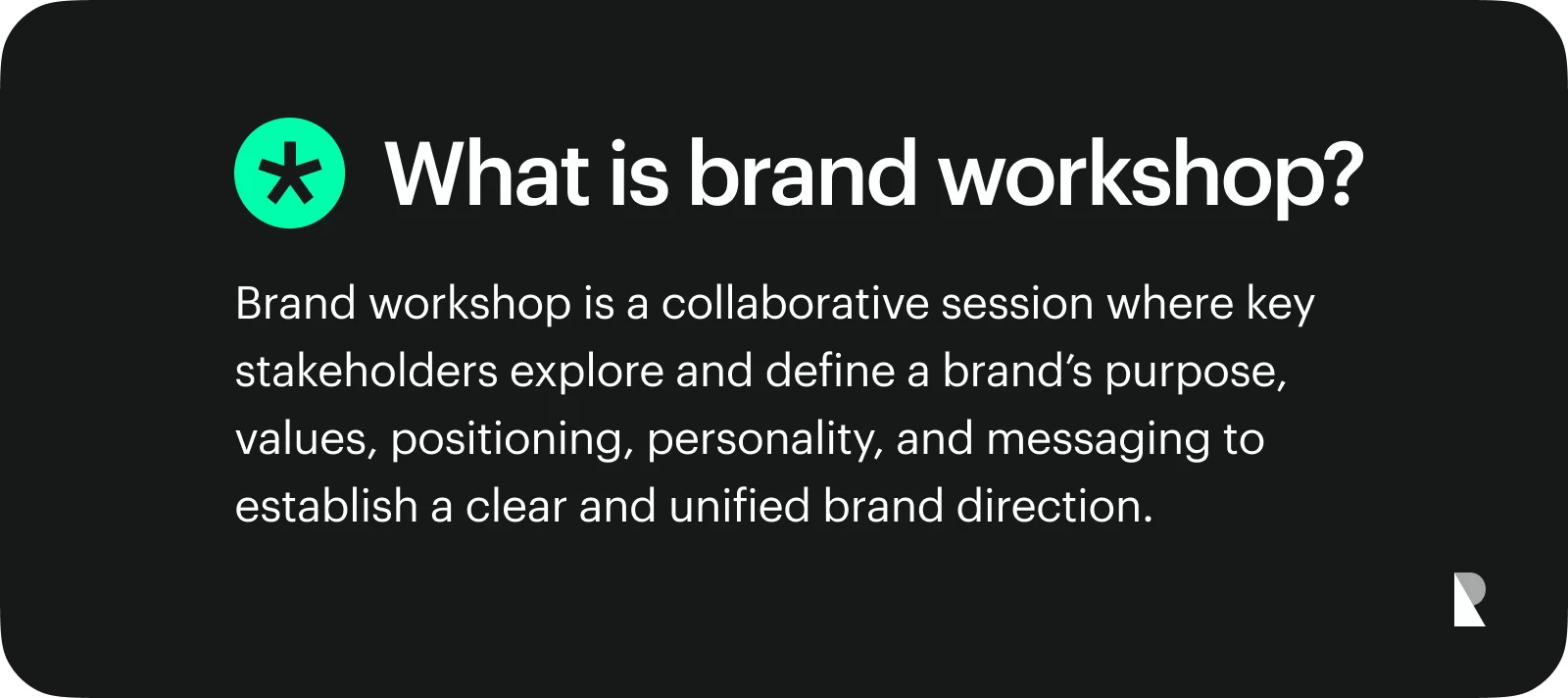
A brand workshop is a meeting of minds, where ideas are shared on what makes a brand—its purpose, uniqueness, target audience, and desired perception. It's like a team huddle to realign and keep things in check, ensuring everyone is working towards the same goal. But a little more intricate.
It comprises structured exercises and discussions to help participants create a strong, clear, and consistent brand that resonates with its target audience.
Brand workshop participants: who should attend?
A brand workshop is not only for your brand and marketing teams. It is an opportunity for key decision-makers and other individuals from various departments to join and share their perspectives and feedback. With a diverse group of participants, you are more likely to cover all bases and derive creative and innovative solutions to current pain points.
Here's a checklist of who should attend your brand workshop:
- CEOs, VPs, and Board Members
- Brand and Marketing Teams
- Sales and After-Sales Teams
- Product Development Team
- Designers and Content Creators
- Human Resources
- Branding Agency (third party, if applicable)
Signs You Need a Brand Workshop
Signs your brand needs a workshop may be difficult to detect. But it's important to catch them early for timely intervention. Let's explore common scenarios that call for one.
Internal confusion about brand purpose
Internal confusion can occur even in well-established brands. The marketing team might say the brand is all about championing products made from local materials. Still, the product team focuses solely on making the most cost-efficient products without verifying that all materials are sourced locally. This damages the brand's reputation and creates doubt in the minds of consumers.
A brand strategy workshop can be the solution you're looking for, as it provides the opportunity to clarify and establish a cohesive brand purpose that aligns with different teams.
Brand identity needs a refresh (but not a rebrand)
The identity is there, but the presentation seems stale. It could be an outdated visual identity, inconsistent visuals, or a mismatch with evolving business goals.
Running a brand workshop can be a chance to help understand evolving expectations and strategize on the best ways to revitalize your brand identity.
Inconsistent customer experience
Unfulfilled brand promises, conflicting information, or gaps in communication with customers—these can diminish brand trust and lead to confusion. Align your internal teams on the brand's values, promises, and customer engagement through a brand strategy workshop. It can help identify damaging factors, allowing you to protect your brand's reputation.
Differing messaging framework
A messaging framework ensures the brand communicates with its audience as intended. It means figuring out the tone, words, and ideas that best convey the brand's essence. This leads to more effective marketing and branding efforts.
Organizing an Effective Brand Workshop: Where and How in Five Steps
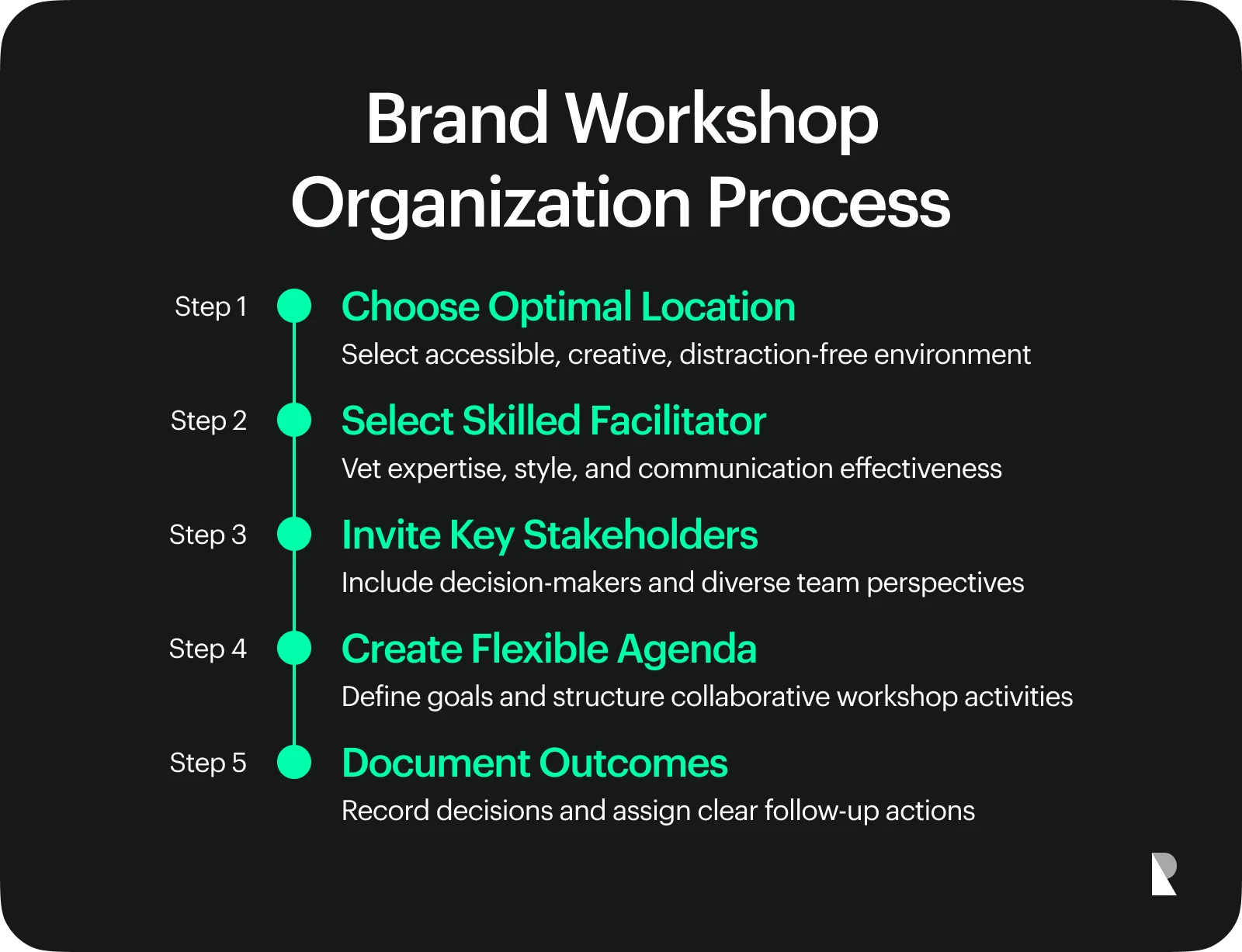
Brand strategy workshops need careful planning and consideration of your location, facilitator, participants, and activities.
Step 1: Choose the best location for focus and creativity
A good brand workshop venue provides a comfortable environment that encourages creativity. It should be spacious enough, private, and free from distractions.
Some suitable options include conference rooms, museums, art galleries, or other creative spaces, as well as outdoor settings such as gardens and parks. If the outdoors appeals to you, schedule your time when the weather is pleasant.
Ensure you conduct an in-person inspection before booking and consider your budget. Consider spaces that are easily accessible, especially for those relying on public transportation. Finding the right location can contribute to the success of running a brand workshop.
Step 2: Select a skilled workshop facilitator
Next, find a workshop facilitator. You want someone who knows what they are doing and can teach effectively to participants of all levels, including total beginners in branding.
That said, vet carefully by considering their experience, facilitating style, and communication skills. You want someone who also delivers results and can prove it.
Connect with industry leaders and marketing consultants. Or consider hiring a branding agency that specializes in running a brand workshop for businesses like yours. Take time to assess your candidates and review their portfolios to ensure a successful workshop.
Step 3: Select and invite key stakeholders
Your chosen participants can impact the outcome of your brand workshop. That said, invite decision-makers, creatives, and customer-facing team members. This could be your branding and marketing teams, salespeople, customer service, and the CEO. You can also invite an external stakeholder to participate in your brand workshop.
Keep the number of participants small, but don't limit it to just the managers. Also, ask junior team members, as they can offer fresh ideas from unique perspectives. Be sure to invite everyone in advance and explain why their participation is crucial to the workshop's success.
Step 4: Create a clear and flexible workshop agenda
Every brand strategy workshop needs a clear target and a step-by-step plan. Start by defining a couple of goals based on the current brand challenges. For example, you may be facing an outdated branding in which the goal could be redefining the brand style to meet the expectations of your younger audience.
Next, create a detailed agenda that breaks down each goal into smaller milestones. If your goal is to redesign a logo, the agenda could include an icebreaker to make everyone feel comfortable, a group discussion to generate ideas, a creative sprint to turn those ideas into designs, and a voting poll to determine the best new brand design.
Step 5: Document outcomes and plan next steps
The brand workshop doesn't just end once the session is concluded. It's essential to take notes during a workshop, jotting down approvals, suggestions, and assigning responsibilities to each member. Create a summary that highlights key decisions and sets deadlines for deliverables.
Track the completion of tasks and measure results once new strategies are implemented. You can also ask participants for feedback, which can help improve future brand workshops.
More Tips for Facilitating a Brand Workshop
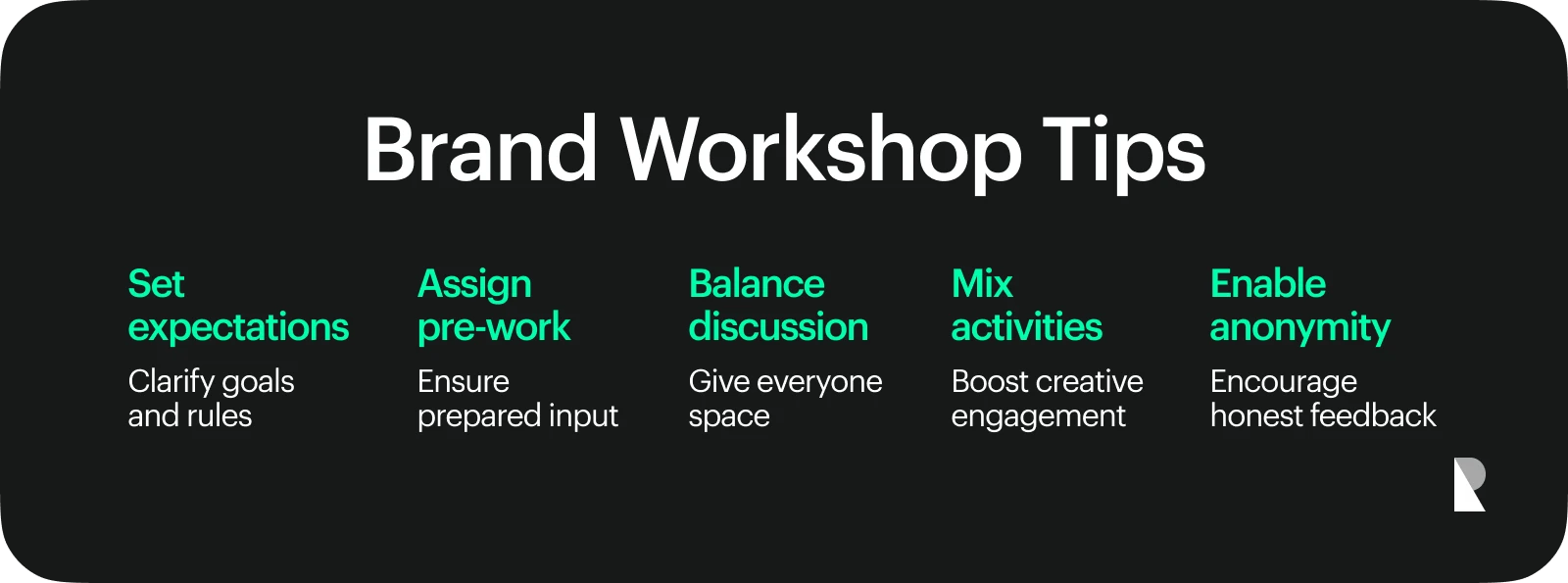
Facilitators play a crucial role in setting the right tone, managing discussions, and achieving the desired outcome when running a brand workshop. Below are practical tips from branding experts to help you maximize engagement and achieve the best results.
Start strong by setting expectations and ground rules
It's crucial to begin a brand strategy workshop with a positive outlook. Therefore, you must check how everyone feels about the workshop, raise challenges upfront, and lighten the mood with some icebreaker activities.
It also helps to highlight the workshop's goal and state what is expected from each participant. This gives them a solid understanding of why they were called and helps maintain their interest in the workshop.
Additionally, discussions can become heated, so it's essential to establish ground rules to prevent chaos. Examples include:
- Only one person talks at a time.
- Everyone is encouraged to share their ideas without fear of judgment.
- Turn off all unnecessary devices, such as phones, to prevent distractions.
Assigning pre-work before the workshop
Assigning homework to participating members ensures they come prepared. This saves time and results in better ideas when the session begins. It also allows shy people to prepare and present their ideas before they get dominated by loud extroverts.
Create a balanced discussion
The facilitator is responsible for creating a balanced discussion by remaining neutral. No one dominates, the quiet ones are included, and the discussion stays on track.
There are several ways to maintain a fair and neutral workshop, including setting a timer for responses, redirecting participants who tend to interrupt, and rotating group roles to ensure everyone remains engaged and focused. As a facilitator, it is helpful to ask open-ended questions that invite more comprehensive input from everyone, rather than just yes/no answers.
Throughout the workshop, be sure to check in every 20 minutes or so, allowing you to course-correct early if the discussion veers off track.
Mix up activities
Create a dynamic experience by experimenting with various activity formats. For example, you can make them role-play what the brand would look and sound like if it were a person. How about creating different customer personas and seeing who gets it right? You can also form groups and let them compete to make the most creative brand jingle that is memorable and aligns with the core identity, values, and messaging.
Other examples include:
- Elevator pitch challenge: Create a spiel that tells what your brand is about and hooks your customers within 20 seconds or less.
- Brand archetype quest: Explore different archetypes and see what stories your brand can tell in each of them. This helps discover which archetype best fits your branding.
- Newspaper headlines: Ask your participants to come up with different headlines about your brand five years from now. This activity helps your team envision the long-term goals of your company.
Allow anonymous participation
Some people are not comfortable in a group setting, but that doesn't mean they don't have brilliant ideas to share. Consider adding polls, surveys, or quizzes that allow respondents to remain anonymous. They are more likely to be honest, preventing animosity and awkwardness between senior and junior members.
Effective Brand Workshop Exercises
Brand workshop exercises help identify opportunities the brand can leverage. Below are some of the most effective activities you can integrate.
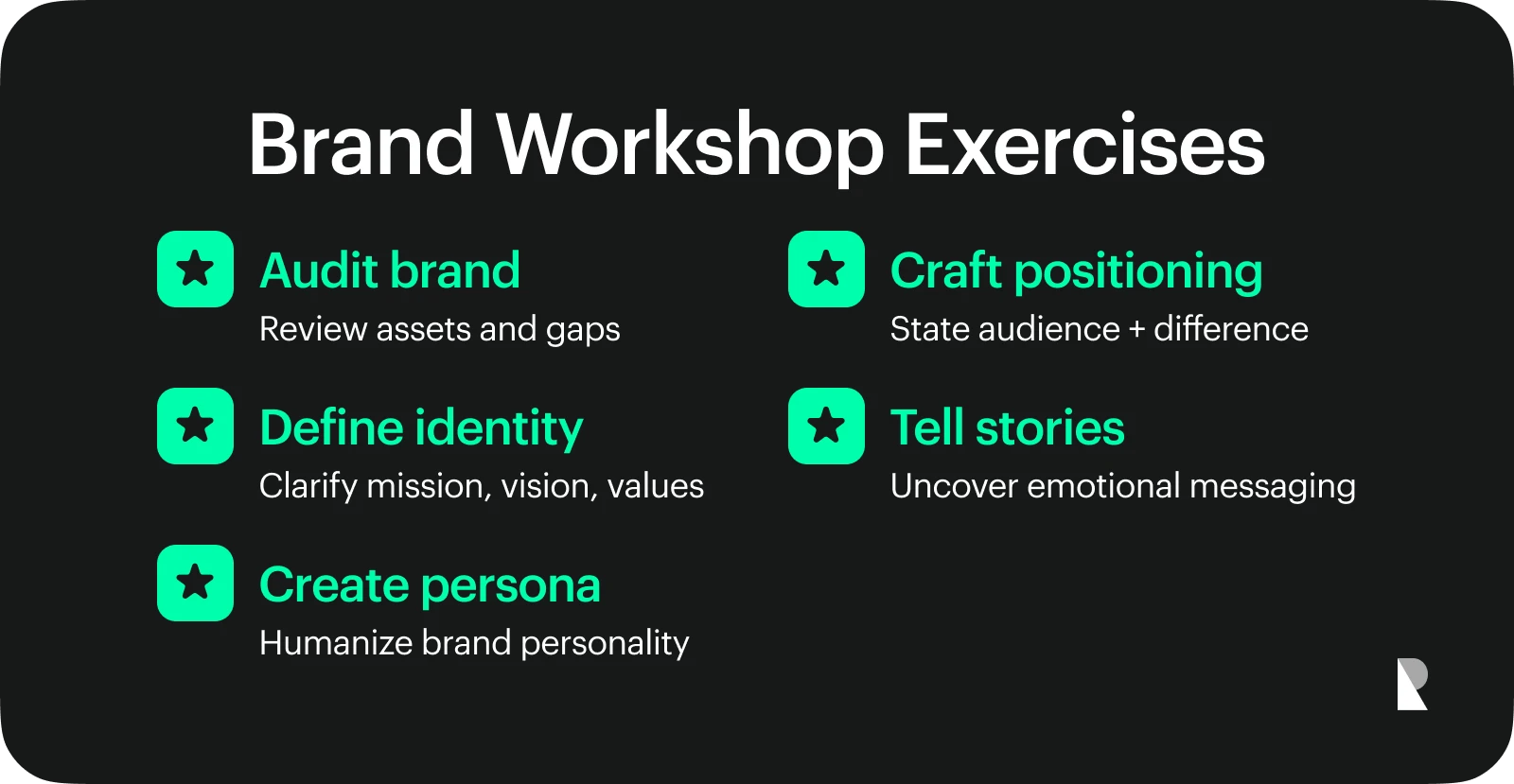
Run a brand audit
The brand audit exercise allows participants to assess the current state of your brand. Participants will conduct a comprehensive analysis, evaluating the brand's strengths, weaknesses, opportunities, and threats.
The team will also conduct a historical review of the brand's assets, including the logo, tagline, and visual identity, to determine if these brand elements require a refresh. Some activities you can include are a SWOT analysis, a competitor matrix, and a brand timeline.
Define brand identity: mission, vision, and values
Defining the brand's mission, vision, and values can bring much-needed clarity and direction. Some branding exercises that can help you include:
- Brand mission statement exercise: Let participants work in groups and craft mission statements that capture the brand's core purpose. Focus on why the brand exists, the problems it solves, and its unique value proposition.
- Brand vision board: This is a great start in creating a visual representation of the ideal brand look. Participants can search for images, words, symbols, fonts, and other visual elements that best represent the brand's vision and identity.
- Brand values brainstorm: Lead a group discussion to identify the core values that should guide the brand's behavior and decision-making.
Build a brand persona with target audience in mind
A brand persona is a fictional and humanized representation of your brand, which makes it easier to connect with your audience. For instance, Nike's brand persona is a dedicated and confident athlete who motivates and inspires others to push their limits.
During this exercise, participants will have to brainstorm brand personality traits that shape the look and behavior of your company. Ask yourselves, what kind of friend would the brand be? How would it dress? What are its interests?
Write a compelling positioning statement
Challenge your participants to craft the perfect brand positioning statement that encapsulates the brand's target audience, its offerings, and what sets it apart from competitors. The facilitator can provide a fill-in-the-blanks template for a position statement.
Once participants have crafted their positioning statements, have them present to everyone. Lead a discussion where participants provide feedback and vote for the best output. The collective ownership resulting from this exercise compels the participants to be more proactive in ensuring the brand positioning is achieved and sustained.
Tell an emotional brand story
This brand workshop exercise is designed to help a team connect deeply to the brand. It encourages participants to uncover the emotional core of the brand and share made-up stories that convey the message, making it more relatable and memorable.
The facilitator can provide prompts anchored on different emotions connected to the brand. From these stories, record common emotional themes and phrases and translate them into brand messaging. You can always partner with a reliable brand strategy company to help you get started. Here's a list of brand agencies you can hire for your next brand workshop.
Brand Workshop for Brand Success
Every company can benefit from a branding workshop, including well-established ones. It is a strategic exercise that allows you to keep your brand relatable, memorable, and effective by bringing a diverse group of participants with different perspectives, expertise, and ideas for opportunities for improvement.
So, don't wait til your brand is struggling before running a brand workshop. Schedule periodic brand workshops for key members and collectively refine and fortify the foundation of your brand. Workshops also create a collaborative environment that encourages creative and innovative solutions.
Run a brand workshop and stay ahead of the competition!
Nov 10, 2025

Creates insightful, strategy-driven content that translates complex design and branding concepts into accessible knowledge, supporting Ramotion’s mission to elevate digital experiences.