
Modern businesses rely heavily on digital content to engage users across websites, mobile apps, and emerging channels. As customer expectations continue to rise, organizations must deliver consistent and personalized experiences while managing increasing volumes of content and integrations.
Traditional CMS platforms often struggle to keep up with these demands. Rigid structures and limited flexibility make it difficult to scale, adapt, or integrate with evolving technologies. This has led to the emergence of more modular and adaptable solutions, such as composable CMS, allowing teams to build flexible content ecosystems tailored to their needs.
In this article, we explore how a composable CMS is reshaping content management for modern digital platforms.
Read along to understand its architecture, components, benefits, and real-world applications.
Introduction
A composable CMS represents the next evolution of content management systems. Instead of relying on a single, tightly coupled platform, it uses a modular approach where different services work together as a composable ecosystem. This shift enables more flexible and scalable composable content management that adapts to changing business needs.
The demand for composable CMS solutions is driven by the need for omnichannel content delivery, seamless integrations, and greater flexibility. Modern organizations must deliver content across websites, mobile apps, and other digital touchpoints while integrating with tools like analytics, e-commerce platforms, and customer systems. Traditional systems often limit this flexibility, while a composable approach makes it easier to connect and scale services.
A composable CMS is especially relevant in digital experience platforms, e-commerce environments, and SaaS products. These industries require rapid updates, personalized experiences, and the ability to integrate multiple tools. By enabling modular and API-driven workflows, composable content management helps teams build and deliver consistent, high-quality digital experiences more efficiently.
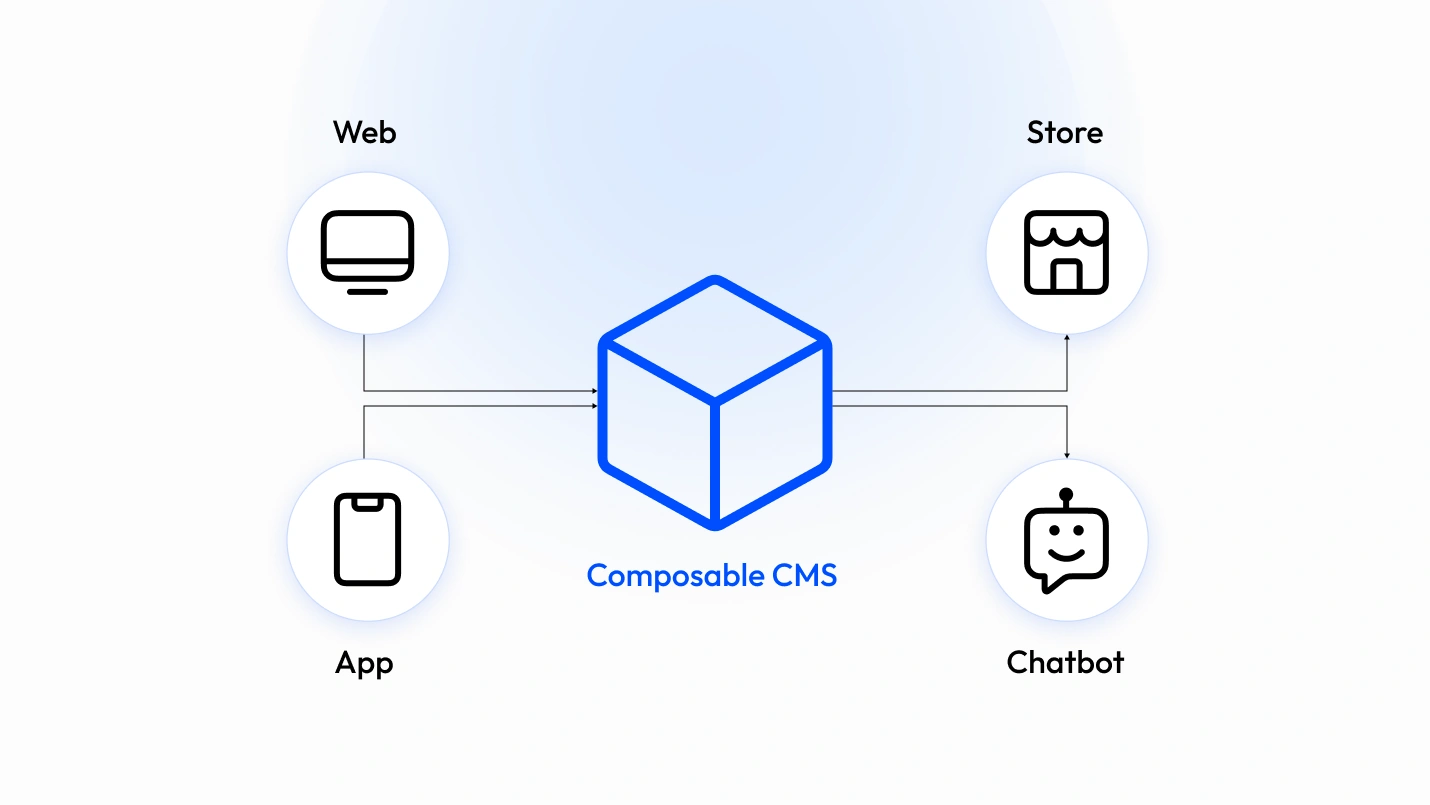
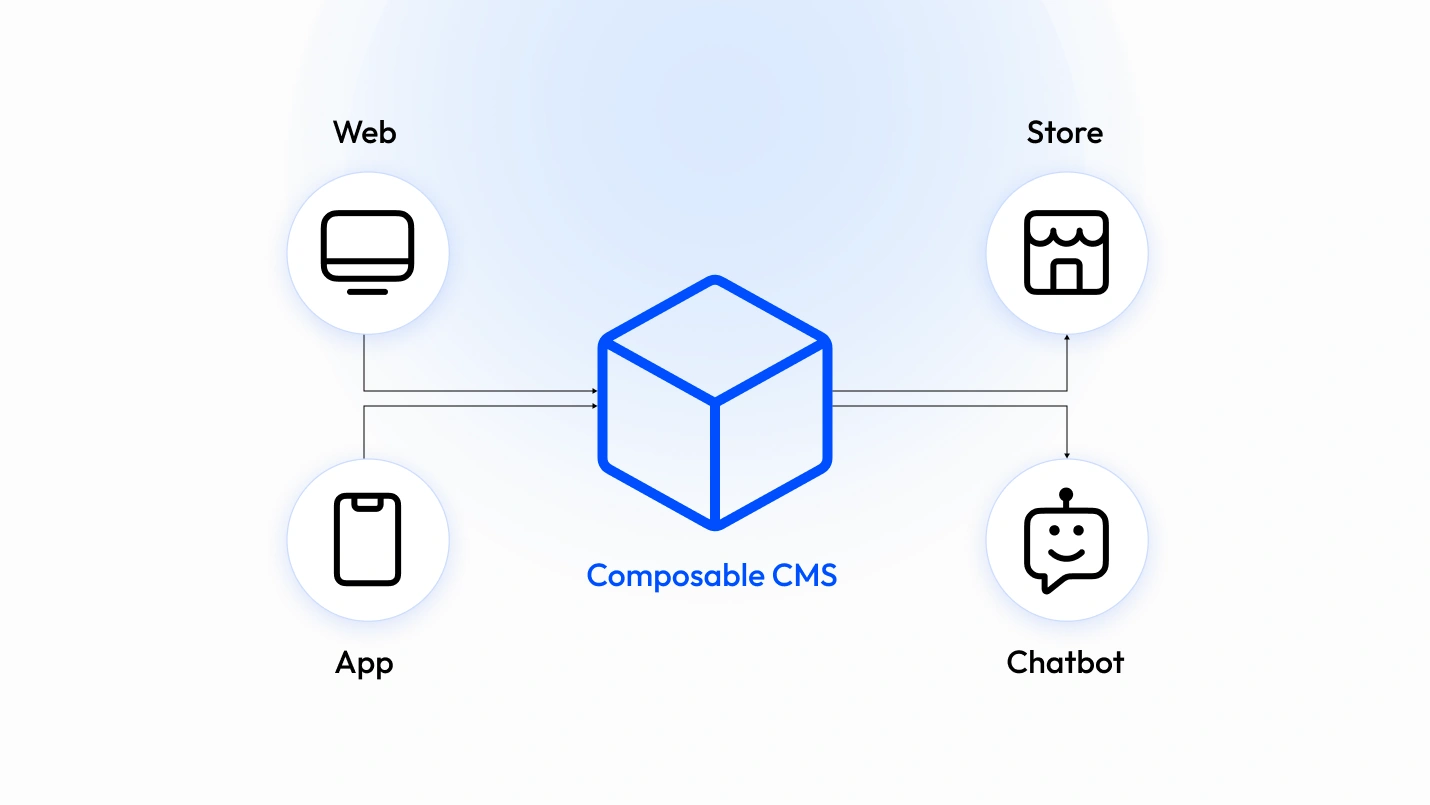
Composable CMS and channels linked to it (Net Solutions)
Defining Composable CMS
It is a content management system built on the principle of composability in IT, where systems are modular and made up of interchangeable components. Each part of the system can be selected, replaced, or updated independently based on specific needs.
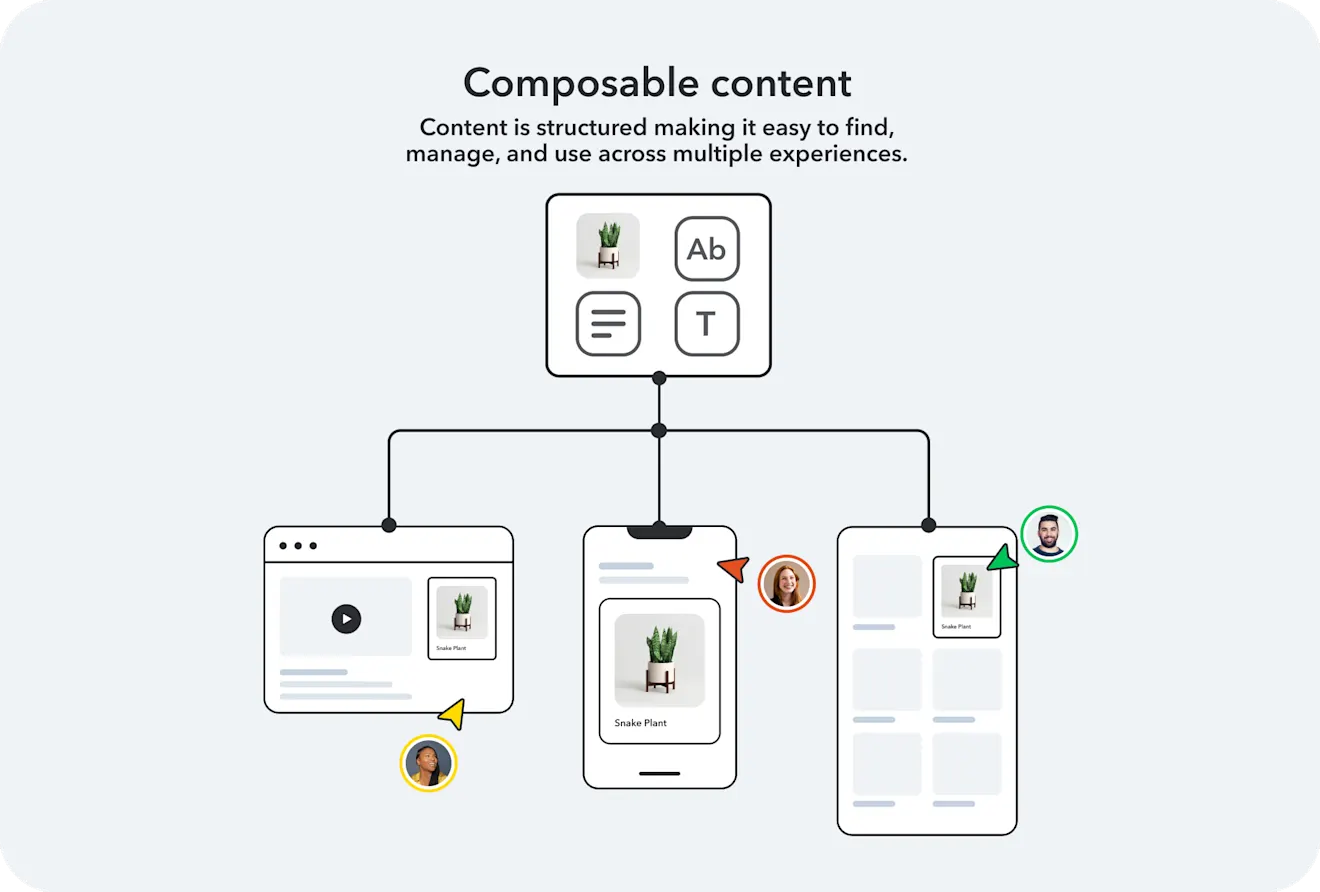
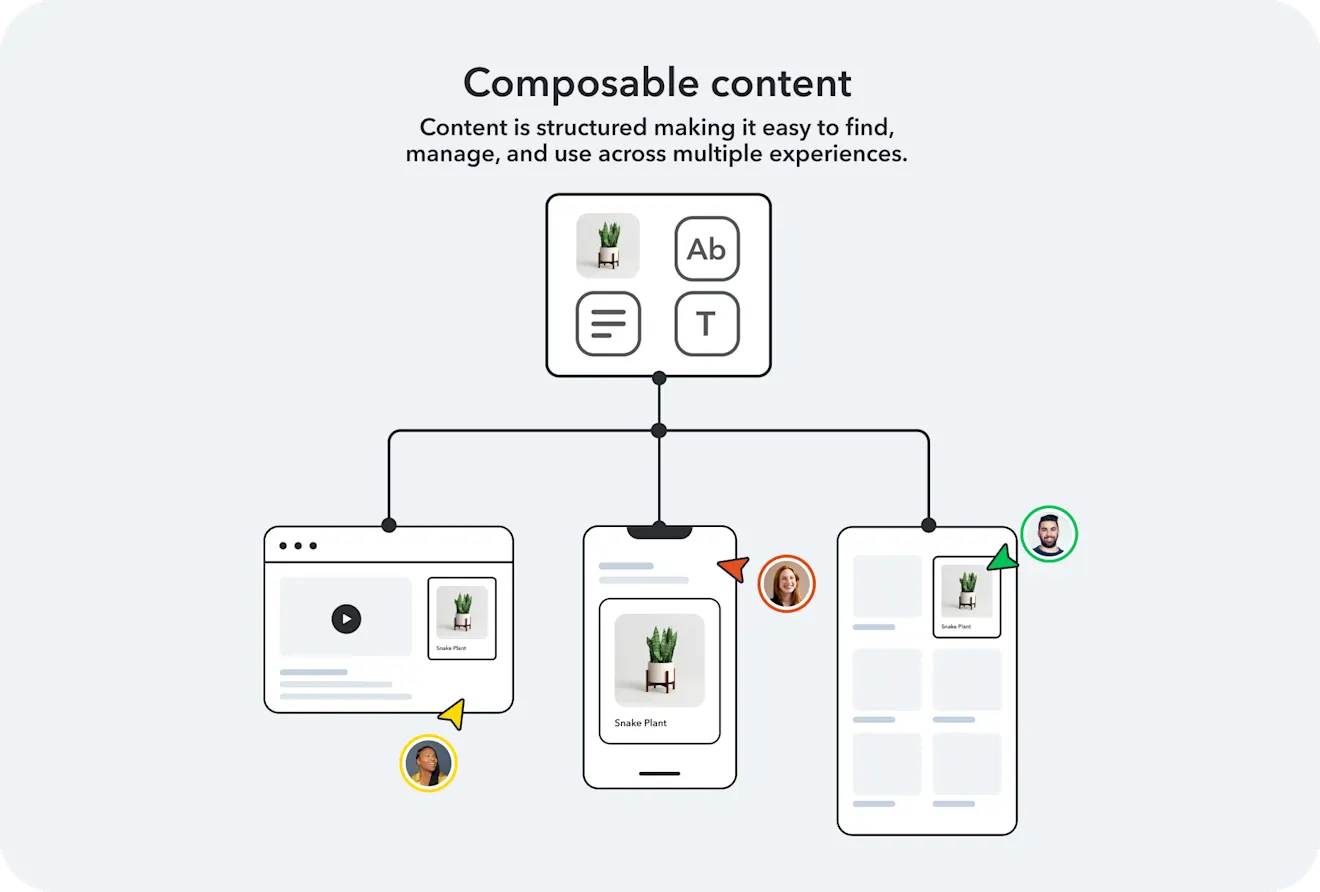
An overview to understand composable content management (Contentful)
In a CMS context, composability means moving away from a single, fixed platform to a flexible architecture. Instead of relying on one system to handle everything, teams build their CMS using multiple specialized services connected through APIs.
This approach allows organizations to customize their content workflows and adapt quickly as requirements evolve. Adopting a composable CMS enables teams to create more scalable and integration-friendly content ecosystems.
What is a Composable CMS?
Composable CMS is a modular, API-first content management system built from independent components that can be integrated, scaled, and updated separately for flexible digital experiences.
A composable CMS is different from traditional and headless CMS models. The difference can be explained as follows:
- Traditional CMS platforms are tightly coupled, with content and presentation managed together, which limits flexibility.
- Headless CMS separates content from the frontend but still operates as a single system.
- A composable CMS goes further by breaking the system into multiple independent services, offering greater control, flexibility, and scalability.
Core Components of a Composable CMS
A composable CMS is built using independent, specialized building blocks that work together as a system. This modular approach allows each part of the content management process to function separately while still contributing to a unified experience.
By separating concerns across the content lifecycle, teams can manage creation, storage, delivery, and presentation more efficiently. This structure is aligned with composable architecture, where flexibility and scalability come from loosely connected components.
The result is a CMS that can evolve over time without requiring full system changes, offering clear benefits in speed, adaptability, and integration. Below are the core components that make up a composable CMS.
Content modeling
Content modeling is the foundation of a composable CMS. It focuses on structuring content into reusable, well-defined elements rather than fixed page layouts.
This structured approach allows content to be created once and reused across multiple channels such as websites, mobile apps, and email. It ensures consistency in messaging while making it easier to scale content operations as business needs grow.
Modular architecture
A strong modular architecture ensures that each component operates independently within the system. This allows teams to update, replace, or scale individual services without impacting the rest of the platform.
Such independence reduces the risk of system-wide disruptions and provides the flexibility to adopt new tools or technologies as requirements evolve. It also supports faster innovation by enabling teams to work on different components in parallel.
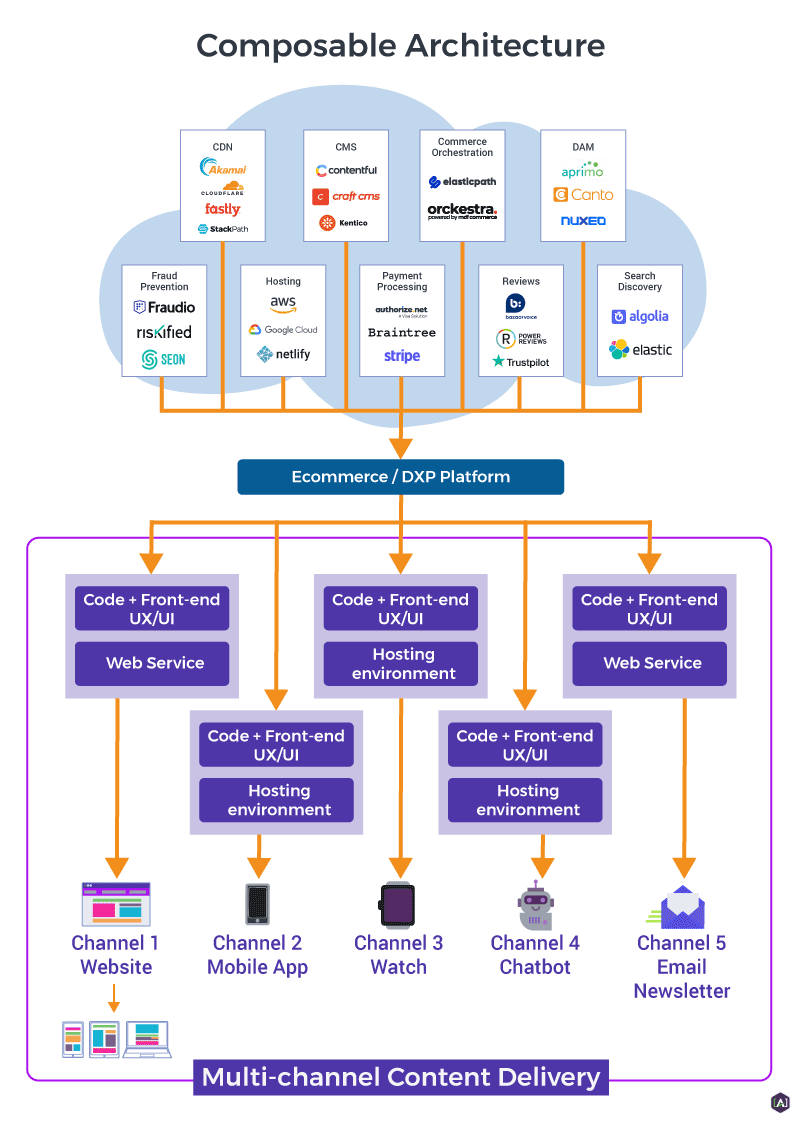
Understanding the composable architecture (SimpleA)
API-First integrations
API-first design forms the backbone of integration in a composable CMS. All components communicate through clearly defined APIs, ensuring consistent and reliable data exchange.
This approach makes it easier to connect with external systems such as Digital Asset Management (DAM), Product Information Management (PIM), Customer Relationship Management (CRM), and analytics tools. As a result, organizations can expand functionality without tightly coupling systems together.
Microservices & Cloud infrastructure
Microservices break the system into smaller, focused services that can scale independently. This improves system resilience and allows teams to manage workloads more effectively.
Cloud infrastructure supports this model by providing elasticity and fault tolerance. It enables systems to scale on demand and maintain performance even during high traffic periods.
Orchestration layer
The orchestration layer coordinates how different services interact within the system. It ensures that content flows smoothly between components and reaches the end user in a consistent way. This layer plays a key role in maintaining a unified experience across channels, even when multiple services are involved behind the scenes.
These core components of a composable CMS work together to create a flexible and scalable content ecosystem. Each layer plays a distinct role while staying loosely connected. This structure enables the CMS to adapt quickly to changing business needs and future technologies.
Benefits of a Composable CMS
Enterprises are increasingly adopting composable architecture to meet the growing demand for speed, flexibility, and innovation. A modern CMS platform built on composability allows organizations to respond quickly to changing business needs while maintaining strong performance and reliability.
This approach directly supports business agility and long-term scalability, making it a strategic choice for digital growth. Below are the key benefits of using a composable CMS for businesses today.
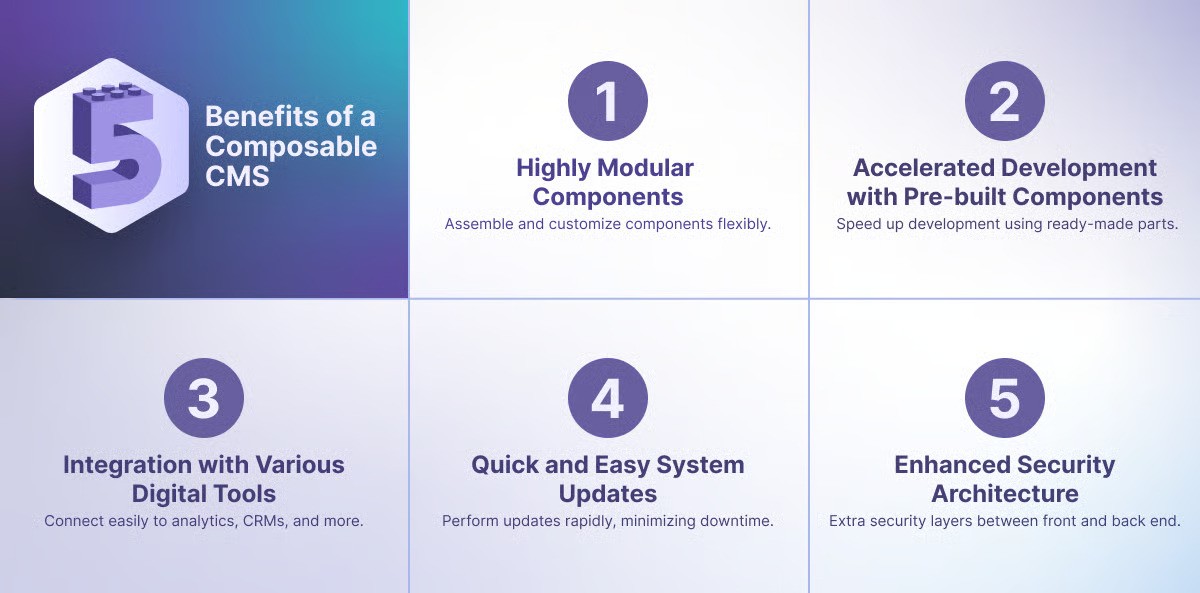
An overview of the advantages of composable CMS (Octahedroid)
Flexibility & customization
A composable CMS enables organizations to select best-of-breed tools for each function rather than relying on a single, all-in-one solution. This allows teams to build a tailored tech stack that aligns closely with specific business goals and workflows.
More importantly, individual components can be replaced, upgraded, or reconfigured without impacting the entire system. This level of flexibility makes it easier to adapt to changing requirements, integrate new technologies, and continuously improve digital experiences.
Scalability
With composability, each component of the system can scale independently based on demand. For instance, content delivery services can handle traffic spikes without requiring the entire system to scale simultaneously.
This targeted scaling approach ensures efficient resource utilization and better cost management. It also allows businesses to maintain performance and reliability as they grow, making scalability both practical and sustainable.
Faster time to market
Composable systems support parallel development workflows. Different teams can work on separate components at the same time without waiting for a full system release. This speeds up the launch of new features, channels, and updates, helping businesses respond quickly to market changes.
Improved developer experience
A composable CMS gives developers the freedom to choose tools, frameworks, and technologies that best fit their needs. This flexibility reduces limitations and simplifies development workflows.
With fewer constraints, developers can build, test, and deploy more efficiently. This not only improves productivity but also leads to higher-quality outputs and a more streamlined development process.
Future-proof digital stack
A composable CMS makes it easier to adopt new tools and technologies as they emerge. Organizations are not locked into a single system or vendor. Thus, reducing the need for large-scale replatforming in the future that ensures the digital stack remains adaptable and up to date.
Hence, a composable CMS empowers teams to build and evolve digital experiences without being constrained by rigid systems. These benefits make it a strong foundation for modern and progressive digital ecosystems.
Composable CMS Challenges
While a composable CMS offers flexibility and scalability, it also comes with trade-offs. The shift to a modular system introduces implementation complexity and requires careful planning. Adopting a composable architecture is a gradual transformation and not a quick change.
Organizations must set realistic expectations to ensure proper implementation. Let’s explore some challenges that enterprises can face when working to implement a composable CMS.
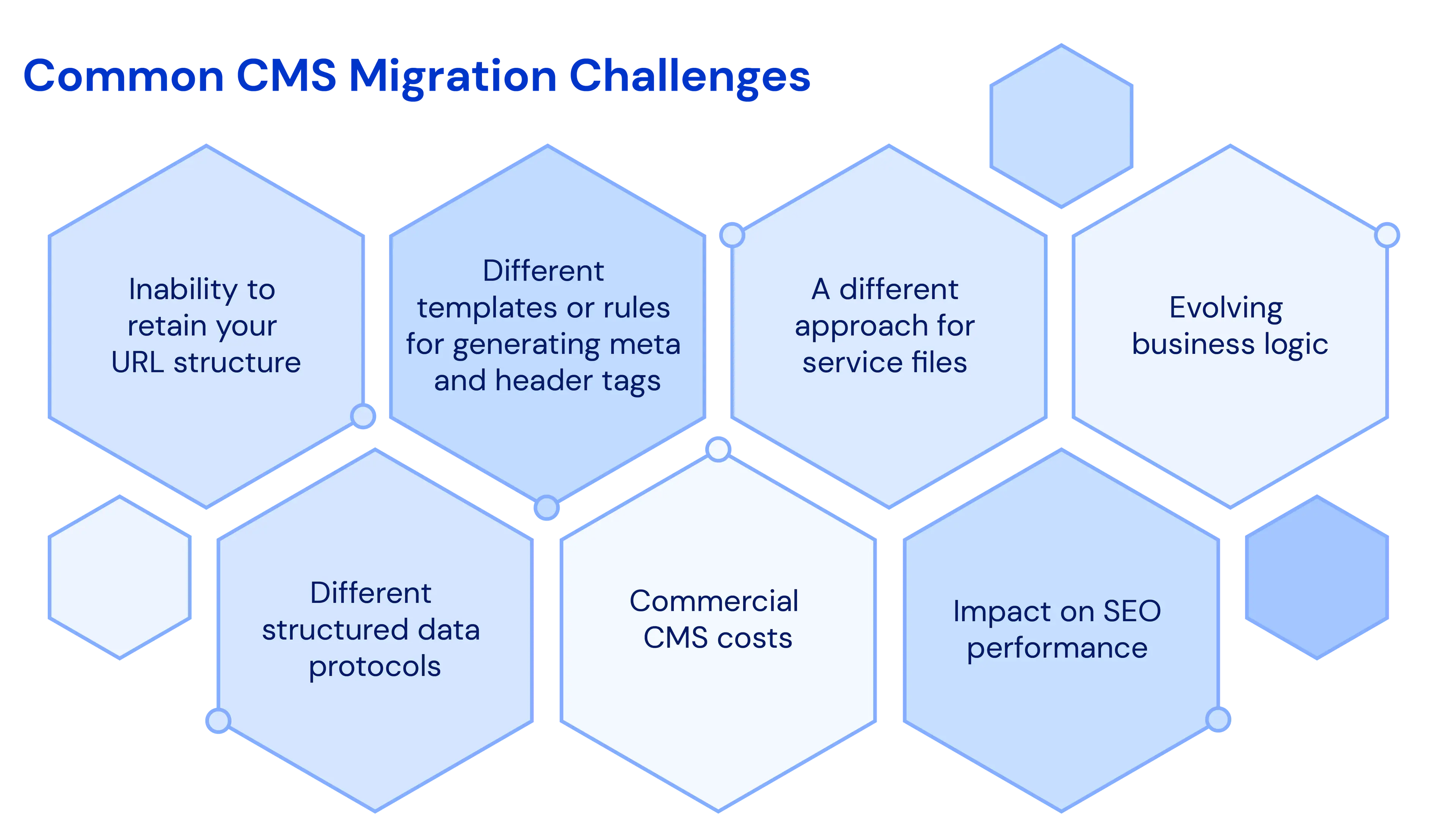
Possible challenges to composable CMS (Uniform.dev)

Architectural complexity
A composable CMS relies on multiple independent services working together, which naturally increases architectural complexity. Each component must be designed with clear boundaries and defined responsibilities to avoid overlap and confusion.
Managing dependencies between services becomes critical. Without proper structure, integrations can become fragile and difficult to maintain. Strong system design, clear documentation, and well-defined service contracts are essential to keep the architecture stable and scalable.
Governance & Integration management
As the number of services and integrations grows, governance becomes a key requirement. APIs must be consistently designed, versioned, and documented to ensure reliable communication between components.
Organizations also need structured integration management practices. This includes monitoring service performance, maintaining API catalogs, and enforcing standardization across teams. Without proper governance, the system can quickly become fragmented and hard to control.
Cost & Skill requirements
Implementing a composable CMS often requires advanced technical expertise. Teams need a strong understanding of APIs, cloud infrastructure, and distributed systems to manage and scale the platform effectively.
Managing multiple tools and services can also increase operational costs. While the initial investment may be higher, these costs are often balanced by the long-term gains in flexibility, scalability, and reduced dependency on monolithic systems.
Organizations must carefully manage the complexity of a composable CMS. Success depends on strong governance, skilled teams, and thoughtful architectural design.
With the right approach, these challenges can be effectively addressed to unlock long-term value.
Composable CMS use cases
A composable CMS delivers real value when applied to practical business scenarios. It supports modern digital experience needs by enabling faster content delivery, seamless integrations, and scalable systems.
The use cases below highlight how organizations use composable CMS to improve efficiency, enhance flexibility, and support long-term scalability.
Enterprise websites
Large enterprises often operate multiple websites across regions, brands, and languages. Managing this complexity with traditional systems can be time-consuming and difficult to scale. A composable CMS simplifies multi-site and multi-language management by centralizing content while allowing localized customization.
This enables global teams to maintain consistency in branding and messaging while giving regional teams the flexibility to adapt content for local audiences. As a result, organizations can scale their digital presence efficiently, reduce duplication of effort, and support global operations without increasing system complexity.
E-Commerce & Composable commerce
E-commerce businesses require dynamic, personalized, and highly responsive shopping experiences. A composable CMS integrates seamlessly with commerce platforms, payment systems, and product information systems, enabling a flexible and modular commerce ecosystem.
This allows teams to update product content, launch promotions, and experiment with user experiences without relying on full system releases. Businesses can quickly adapt to customer behavior, market trends, and seasonal demands, resulting in faster innovation and improved conversion rates.
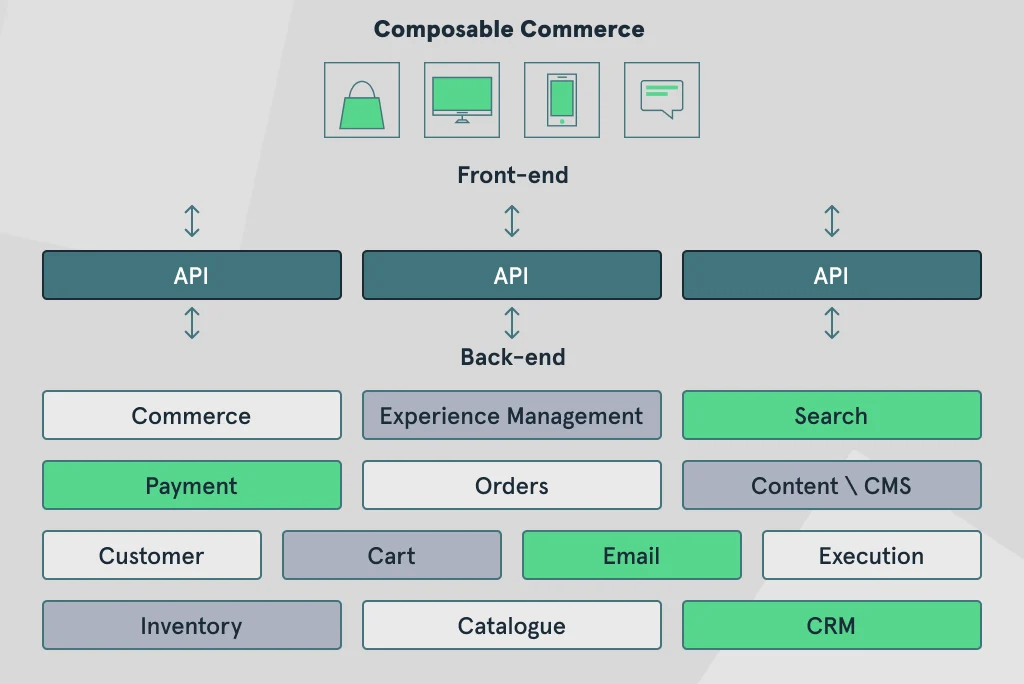
A possible example of an E-commerce composable architecture (GoMage)
Omnichannel content delivery
Today’s users engage with brands across multiple touchpoints, including websites, mobile apps, IoT devices, and other digital interfaces. Delivering consistent content across these channels can be challenging with traditional CMS platforms.
A composable CMS addresses this by enabling content to be created once and delivered seamlessly across all channels. This ensures a consistent cross-channel experience for users while improving operational efficiency for content teams. It also allows organizations to expand into new channels quickly without rebuilding their content infrastructure.
Digital experience platforms (DXP)
In a composable DXP, the CMS serves as the central content hub that connects with various systems such as analytics, personalization engines, and marketing automation tools. This creates an ecosystem-driven architecture where each component plays a specific role.
This approach enables organizations to deliver more personalized and data-driven digital experiences. At the same time, it provides the flexibility to evolve the technology stack over time by adding or replacing components as needed. This ensures long-term adaptability and supports continuous innovation in digital experience delivery.
These use cases demonstrate the versatility of CMS across different industries and digital needs. From enterprise websites to omnichannel delivery, it enables seamless content management at scale. These applications highlight how composability supports consistent and flexible digital experiences.
Conclusion
A composable CMS is more than just a technology shift. It is a strategic approach to building modern content ecosystems that can adapt to constant change. By moving away from rigid, all-in-one platforms, organizations can create flexible systems that evolve with their business needs and digital goals.
The key advantages are clear. A composable CMS offersgreater flexibility through modular design, improved scalability by allowing components to grow independently, and strong future readiness by enabling easy adoption of new tools and technologies. These benefits make it a reliable foundation for delivering consistent and high-quality digital experiences.
For organizations planning this transition, partnering with the best full-stack web development companies can make a significant difference. Experienced teams can help design, implement, and manage composable architectures effectively, ensuring long-term success and maximum value from your CMS investment.

Creates insightful, strategy-driven content that translates complex design and branding concepts into accessible knowledge, supporting Ramotion’s mission to elevate digital experiences.