

Choosing a web app development company is not just a sourcing exercise. The decision affects your architecture, launch speed, user experience, security posture, technical debt, and how quickly your team can learn from the market.
I’m writing this from Ramotion’s perspective, and I want to be direct about the conflict of interest: Ramotion provides web app development, UX design, branding, and design system services, so we are included in this guide. That does not mean we are the right partner for every project. Use the same criteria to evaluate us that I recommend using for every company below.
This guide is designed to help you build a better shortlist, ask sharper questions, and avoid choosing a vendor based only on logos, hourly rates, or a polished homepage.
How we evaluated web app development companies
For this update, I would not evaluate agencies by brand reputation alone. A polished homepage can hide weak engineering habits, and a long technology list does not prove that a team can ship a maintainable product.
I would score each company against four practical areas.
1. Technical depth
This covers the company’s ability to work beyond basic front-end and back-end delivery. I look for evidence of:
- Modern front-end frameworks such as React, Vue or Next.js.
- Back-end experience with Node.js, Python, .NET, Java or comparable stacks.
- API design and integration capability.
- Cloud deployment experience across AWS, Azure or Google Cloud.
- Architecture thinking around scalability, observability and maintainability.
Ramotion has a separate guide to web application architecture that explains why architecture decisions affect performance, scalability and security from the start of a project. That is the kind of context I want buyers to understand before comparing vendors.
2. Project scale
A company may be excellent at MVPs but not suited to a complex enterprise platform. Another may be strong in regulated environments but too heavy for a startup validating its first workflow.
I look for:
- Comparable projects by industry, complexity and user volume.
- Evidence of long-term support.
- Case studies with business or operational outcomes.
- Experience working with internal stakeholders, not just isolated briefs.
3. QA and security standard
A serious web app partner should explain how quality is built into the process, not added at the end.
Ask about:
- Automated testing.
- Code review.
- Security testing.
- Accessibility checks.
- Release management.
- Monitoring and incident response.
A vendor who cannot explain how defects are prevented is likely to treat QA as a final-stage clean-up exercise.
4. SDLC and communication model
The software development lifecycle matters because it determines how visible the work is while risk is still manageable.
I want to see:
- Discovery before build.
- A prioritised backlog.
- Sprint planning or a similarly disciplined delivery rhythm.
- Transparent reporting.
- Clear ownership of decisions, risks and dependencies.
- Documentation that your internal team can use later.
Ramotion’s own blog covers the web application development process separately, and that kind of process clarity should be visible in any agency proposal before you sign.
Quick comparison: which company fits which situation?
| Company | Best fit | Watch point |
|---|---|---|
| Ramotion | Design-led SaaS, B2B, fintech and product teams that need UX, brand and engineering together | Premium, high-touch model may not suit very small or purely tactical builds |
| Iflexion | Enterprise custom software and legacy modernisation | May be too large and broad for early-stage product discovery |
| Simform | Cloud-native engineering, AI/ML and product modernisation | Better suited to complex engineering than simple low-budget apps |
| Cyber-Duck | Secure, accessible, public-sector or regulated projects | Strong process may mean longer timelines |
| MentorMate | Healthcare, life sciences and enterprise transformation | Large-team model requires strong client-side ownership |
| SmartOSC | Enterprise commerce and multi-market digital platforms | Less suited to generalist web apps outside commerce |
| One Beyond | Bespoke software for established organisations | Early project clarity is especially important |
| Closeloop Technologies | Startup-to-enterprise product builds with strategic technology guidance | Strategic layer may increase engagement cost |
| Imaginary Cloud | Process-led MVPs and scalable digital products | Not as large as enterprise-scale global consultancies |
| EitBiz | Practical, cost-conscious web and mobile development | Less specialised for advanced enterprise architecture |
| Toptal | Staff augmentation and senior individual contributors | You manage delivery, QA and product ownership |
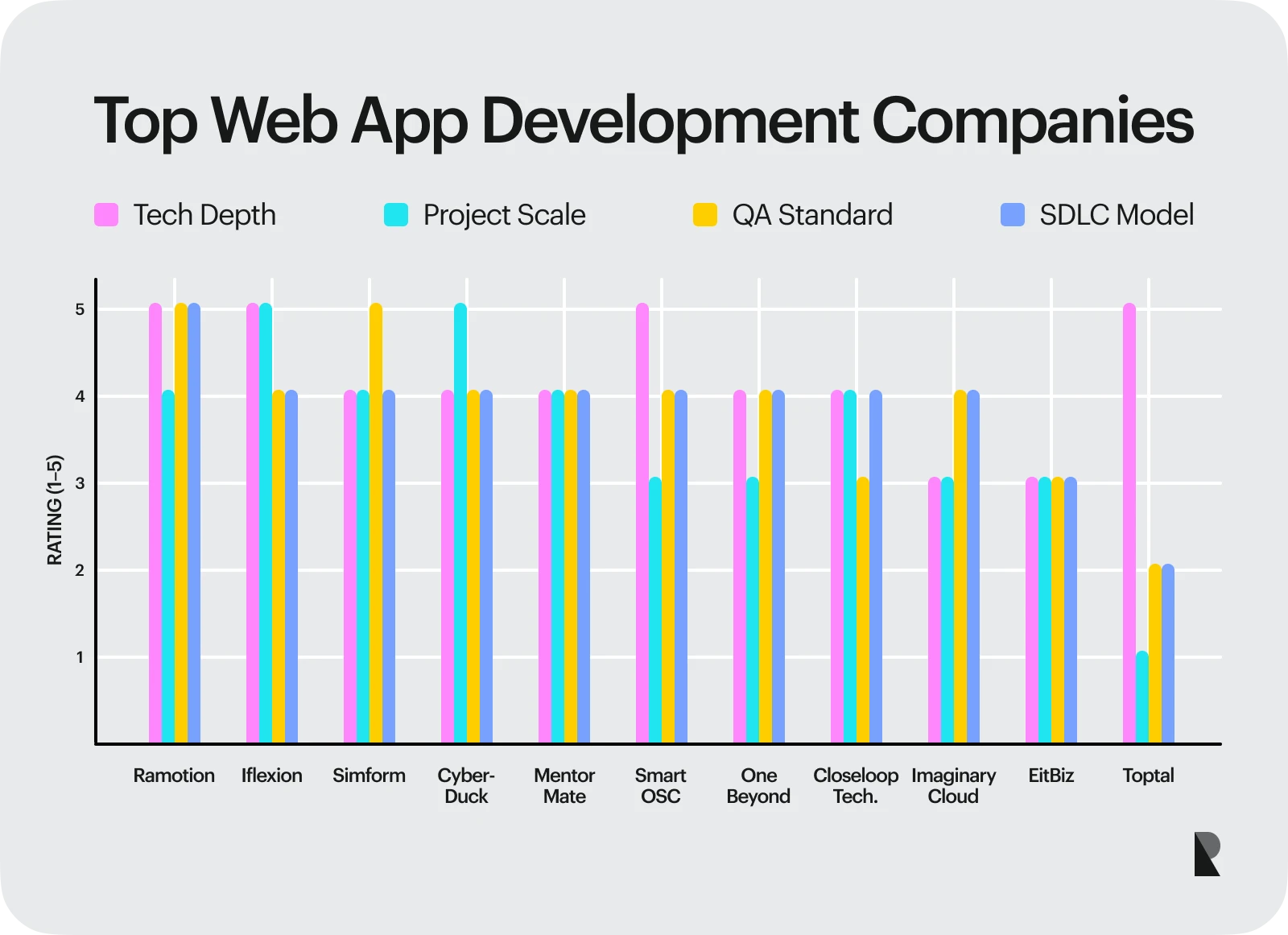
Use the comparison chart as a quick way to sanity-check your shortlist against the capabilities that matter most for a B2B or SaaS product: technical depth, ability to handle complex projects, quality practices, and the maturity of their development process. It will help you focus your time on the few partners most likely to match your standards and stage.
The chart gives a clear, friendly snapshot of how leading web app development companies stack up across four key strengths: tech depth, project scale, QA standards, and SDLC models. Most companies show solid consistency, with Ramotion, Iflexion, and SmartOSC standing out for their strong technical expertise and well-structured development processes.
Others like Simform, Cyber-Duck, and MentorMate demonstrate balanced performance across categories, making them reliable choices for teams seeking all-around capability rather than specialization.
Some companies take a more focused approach. For example, Imaginary Cloud and EitBiz show moderate ratings across most areas, appealing to teams looking for dependable but simpler engagements. Meanwhile, Toptal stands out with very high tech depth but lower scores in scale and structure, making it ideal for organizations prioritizing top-tier engineering talent over large, process-heavy development cycles.
Ramotion
Ramotion
Best for:
- SaaS platforms.
- B2B product experiences.
- Fintech and healthcare products.
- Teams that need design and development under one roof.
- Companies preparing for growth, funding, repositioning or product expansion.
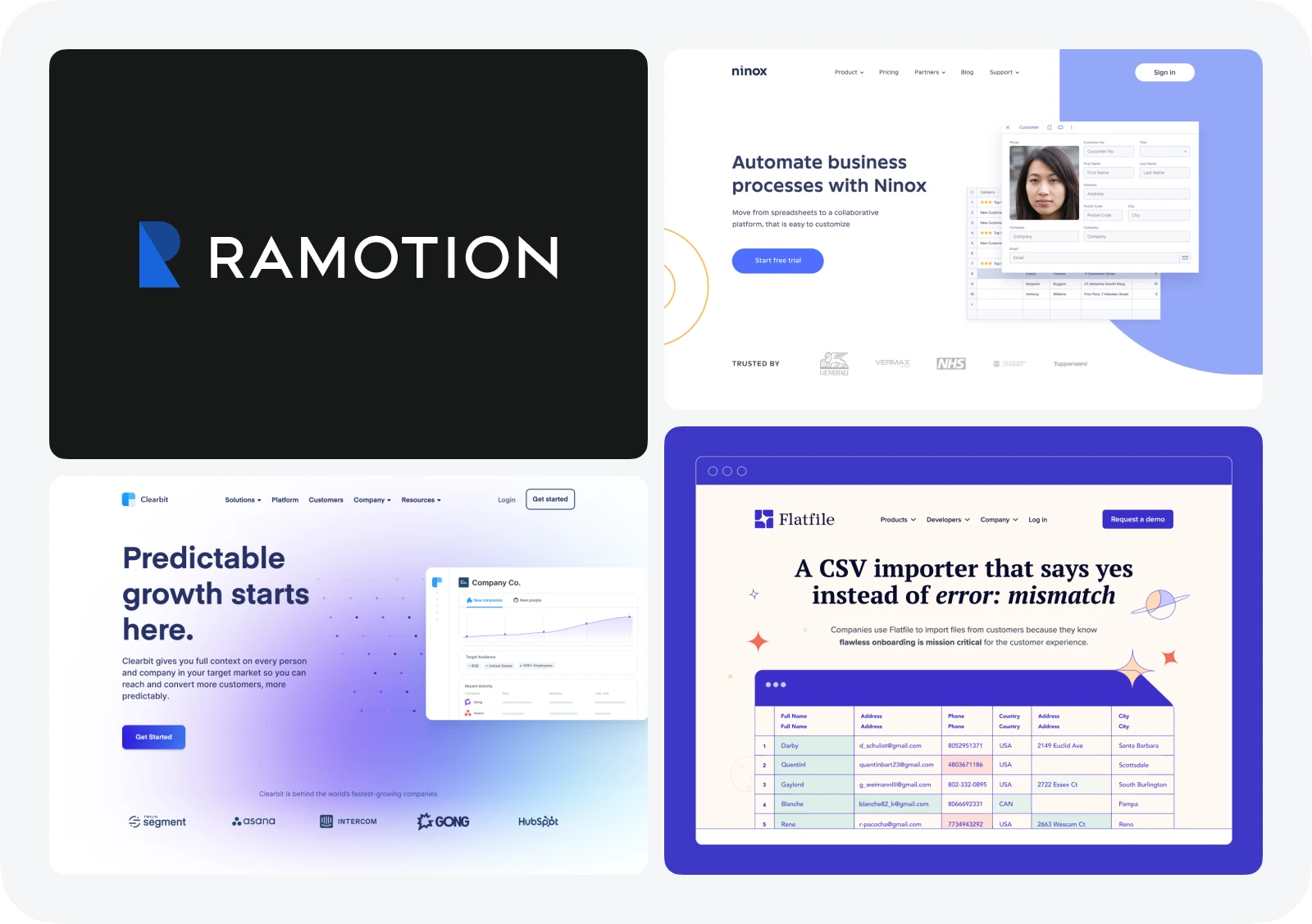
What I would verify before signing: Ask for examples where design decisions directly improved product usability, activation, conversion or operational efficiency. Ramotion’s public work includes product and brand projects for technology companies, and the homepage highlights case studies involving clients such as Firefox, Stripe, Salesforce, Descript, Clearbit and Streamlit.
Tech Stack: Focused on modern, scalable architectures: Microservices backend, API Design & Development, Database Architecture, Continuous Integration (CI/CD), DevOps, and Type-Driven Development.
Strengths: Design-Centric Developers (developers understand design principles), high performance optimization, Proactive UX Improvements during implementation, and HIPAA-compliant healthcare app development.
Potential downside: If you need a small tactical build with minimal design involvement, a specialist freelancer or lower-cost engineering team may be more appropriate.
Ramotion is a strong fit when a web app is not only a technical system but also a brand and product experience. We combine branding, UI/UX, design systems and web app development, which is valuable when the interface, product story and underlying functionality need to mature together.
I would shortlist Ramotion for SaaS, B2B, fintech, healthcare and technology companies that need a partner capable of thinking across product strategy, interface design and implementation.
| Location | San Francisco (CA, USA) |
| Founded | 2009 |
| Team size | 10–49 |
| Clients | Firefox, Descript, Salesforce |
| Services | UI/UX design, branding, web application development services |
| Budgets | $35,000+ |
| Industries | SaaS, tech, B2B |
| Website | ramotion.com |
| Social links | LinkedIn, Twitter |
Iflexion
Best for:
- Enterprise software.
- Legacy application modernisation.
- Large-scale custom development.
- Organisations that need broad technical coverage.
What I would verify before signing: Confirm the exact seniority of the team assigned to your project, not just the company’s total capabilities. Large vendors can vary significantly by delivery pod.
Tech Stack: Comprehensive and highly versatile. Certified experts for Microsoft, AWS, Google, Salesforce, Odoo, and SAP Commerce. Focus on BI, ML, and secure development lifecycle (end-to-end encryption, MFA).
Strengths: Massive Scale and Maturity. 25+ years in business, 1,000+ specialists (86% senior/mid-level), 2,000+ projects completed. ISO 9001 and ISO 27001 certified for quality and security management.
Potential downside: The scale and breadth that make Iflexion attractive for enterprise work may be more than a startup needs.
Iflexion is a long-established software development company suited to enterprise-grade systems, legacy modernisation and complex custom development.
| Location | Decatur, USA; London, UK |
| Founded | 1999 |
| Team size | 500+ |
| Clients | Toyota, Adidas,Phillips |
| Services | Custom development, legacy modernization, QA |
| Budgets | $20,000+ |
| Industries | Manufacturing, logistics, retail |
| Website | iflexion.com |
| Social links |
Simform
Best for:
- Cloud migration.
- Digital product engineering.
- AI and ML-enabled platforms.
- DevOps-heavy projects.
- Scale-ups modernising infrastructure.
What I would verify before signing: Ask how Simform would balance architecture ambition with your first business milestone. Sophisticated engineering is valuable only when it supports the next meaningful product outcome.
Tech Stack: Digital Product Engineering, Cloud/DevOps Engineering, Data Engineering, and AI/ML Engineering. Focus on full-stack observability and modern cloud-native systems.
Strengths: Engineering-Focused Excellence. Named the #1 AI services provider globally by Clutch (2025). Achieved Datadog Advanced Tier Partner Status. Strong approach to Co-Engineering and digital innovation.
Potential downside: For a simple MVP, the level of engineering depth may be more than the project requires.
Simform is a strong candidate for companies that need cloud-native engineering, data engineering, AI/ML capability and product modernisation.
| Location | Orlando, USA |
| Founded | 2010 |
| Team size | 1000+ |
| Clients | Redbull, Tryg |
| Services | Web application development services, cloud migration, DevOps |
| Budgets | $30,000+ |
| Industries | Tech, education, logistics |
| Website | simform.com |
| Social links | LinkedIn, Twitter |
Cyber-Duck
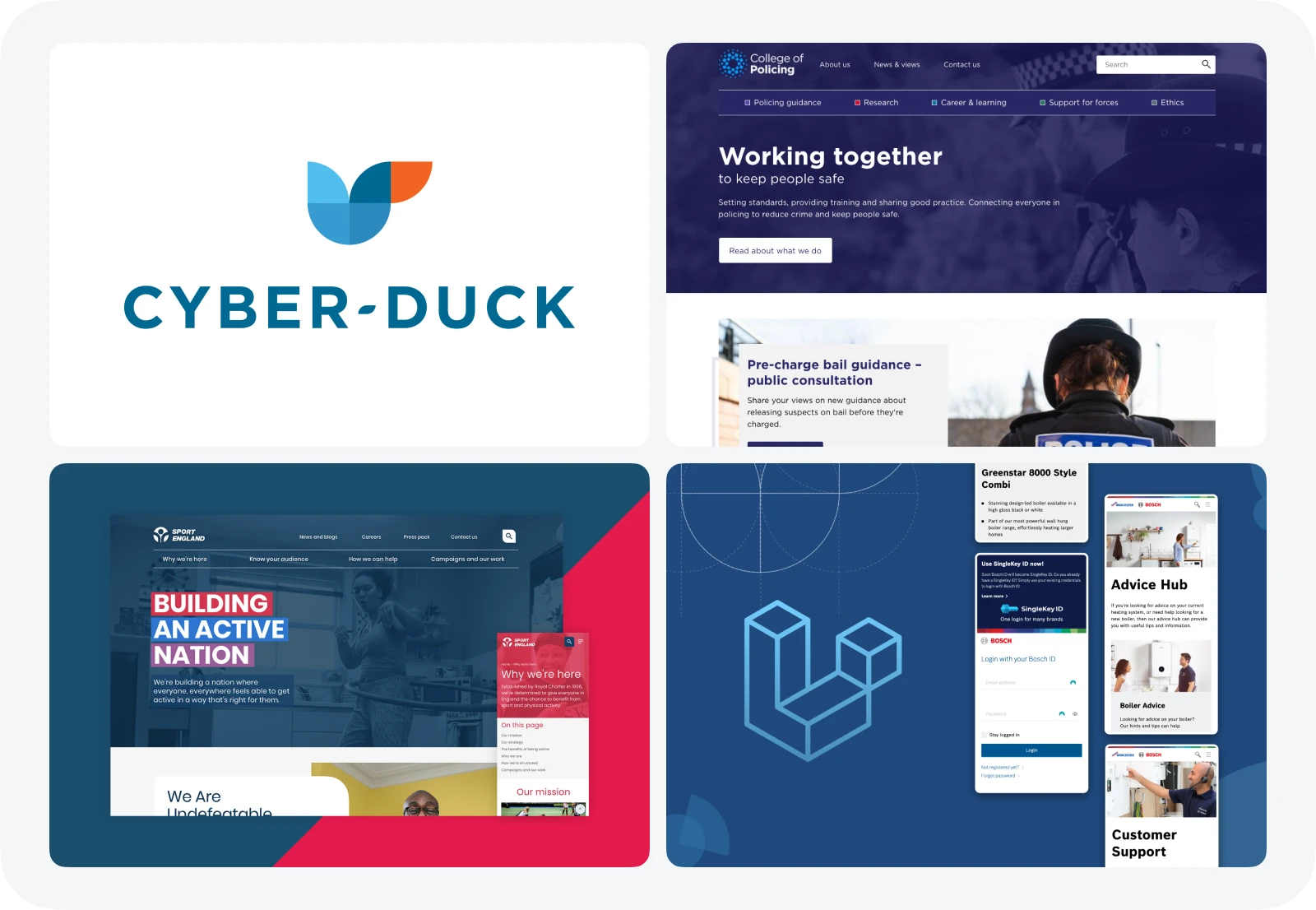
Best for:
- Public sector.
- Healthcare.
- Finance.
- Accessibility-heavy products.
- Organisations with strict compliance expectations.
What I would verify before signing: Ask how accessibility, security and service design are embedded in discovery, design, development and QA. Do not accept a vague “we follow best practices” answer.
Tech Stack: Focus on Human-centered design, secure web application development, CMS/DXP, and DevOps/Platform Engineering. Complies with OWASP security standards.
Strengths: Most Accredited Agency. Certified by ISO 9241 (Human-centered design) since 2011 and ISO 27001 (Information Security) since 2016. Works to the Government Digital Service Standard (GDS).
Potential downside: A rigorous process can increase timeline and cost, but that may be the right trade-off for regulated work.
Cyber-Duck is a strong UK option for organisations that care about accessibility, service design, security and public-sector standards.
| Location | London, UK |
| Founded | 2005 |
| Team size | 50–249 |
| Clients | NHS, Bank of England, Sport England |
| Services | UX design, secure web apps, digital transformation |
| Budgets | $35,000+ |
| Industries | Public sector, health, finance |
| Website | cyber-duck.co.uk |
| Social links | LinkedIn, Twitter |
MentorMate
Best for:
- Healthcare and life sciences.
- Enterprise platforms.
- Digital transformation.
- Complex stakeholder environments.
What I would verify before signing: Ask who will own technical decisions day to day and how the vendor will document them. In a large organisation, governance matters as much as capability.
Tech Stack: Full digital stack: Strategy, Design, AI, and Engineering. Expertise in integrating ethical, scientifically backed, empathetic AI into user-centered solutions.
Strengths: Deep Compliance Knowledge. Builds durable and scalable solutions that can withstand HITRUST and SOC2 certification requirements, and is compliant with FDA and IEC62304 for medical device software.
Potential downside: A large delivery organisation can feel impersonal if the engagement model is not clearly defined.
MentorMate is suited to larger digital transformation and healthcare/life sciences projects where product, compliance and engineering need to work together.
| Location | Minneapolis, USA |
| Founded | 2001 |
| Team size | 1000–9999 |
| Clients | Cargill, Soundview |
| Services | Custom web app development, strategy, cloud |
| Budgets | $60,000+ |
| Industries | Health tech, pharma, enterprise |
| Website | mentormate.com |
| Social links | LinkedIn, Instagram |
SmartOSC
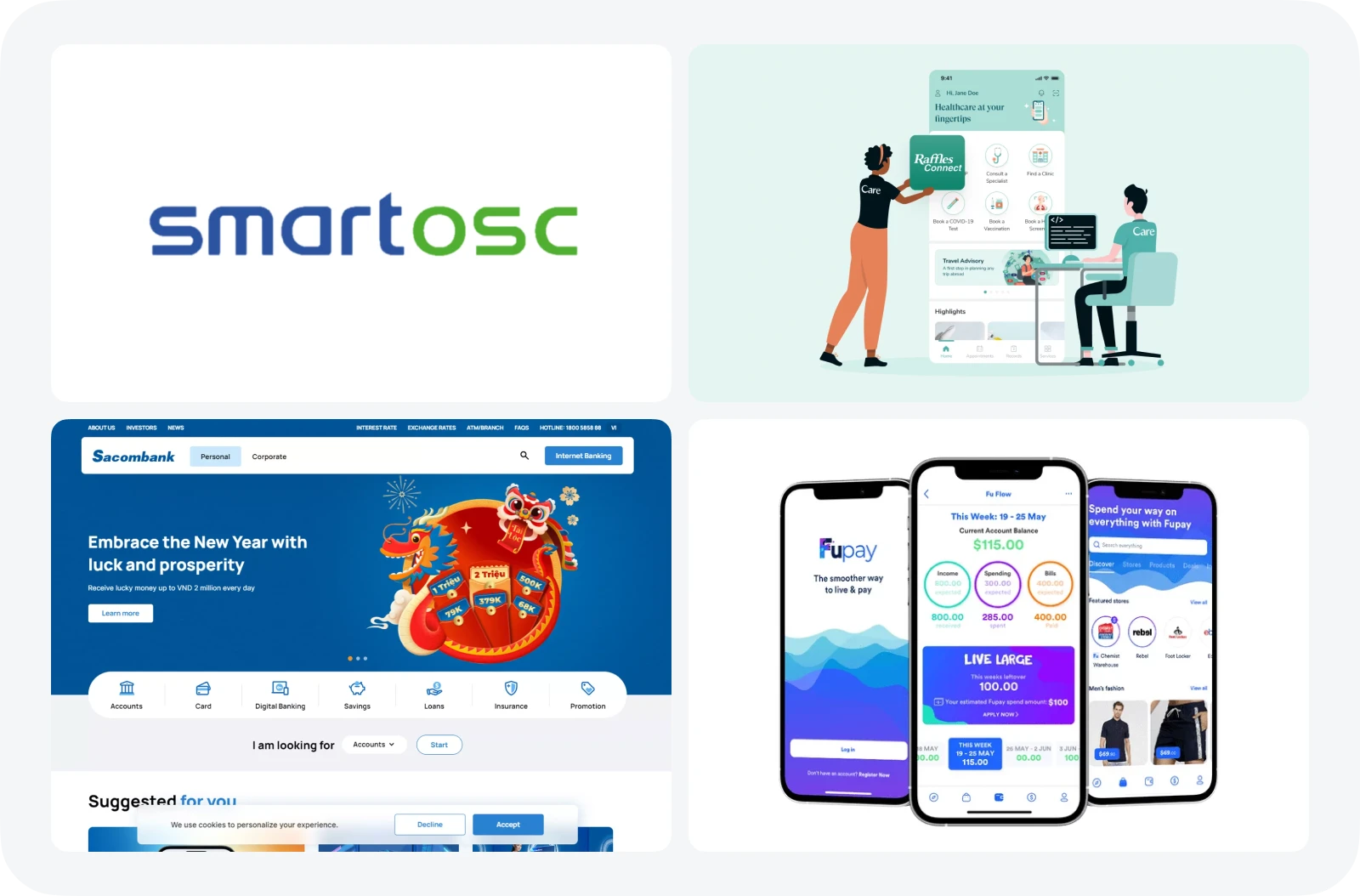
Best for:
- E-commerce platforms.
- Composable commerce.
- Headless commerce.
- Retail operations.
- Multi-market digital platforms.
What I would verify before signing: Ask for evidence of performance, reliability and operational improvements in commerce environments similar to yours.
Tech Stack: Highly specialized in E-commerce/DXP platforms. Strong focus on AI for operations, including predictive inventory, smart shelving, loss prevention, and demand forecasting models.
Strengths: Operational AI Expertise. Focus on using AI "behind the scenes" in supply chain and logistics to deliver real savings and agility, which is crucial for modern retail margins.
Potential downside: Its strongest differentiation is commerce. If your product is not commerce-led, another partner may be a closer fit.
SmartOSC is especially relevant for enterprise commerce, digital transformation and high-volume retail ecosystems.
| Location | Hanoi, Vietnam; Melbourne, Australia; Seattle, USA; Singapore |
| Founded | 2006 |
| Team size | 800+ |
| Clients | Asus, Paypal, Lotte |
| Services | eCommerce, web application development firm, custom solutions |
| Budgets | $55,000+ |
| Industries | Retail, tech, B2B |
| Website | smartosc.com |
| Social links | LinkedIn, YouTube |
One Beyond
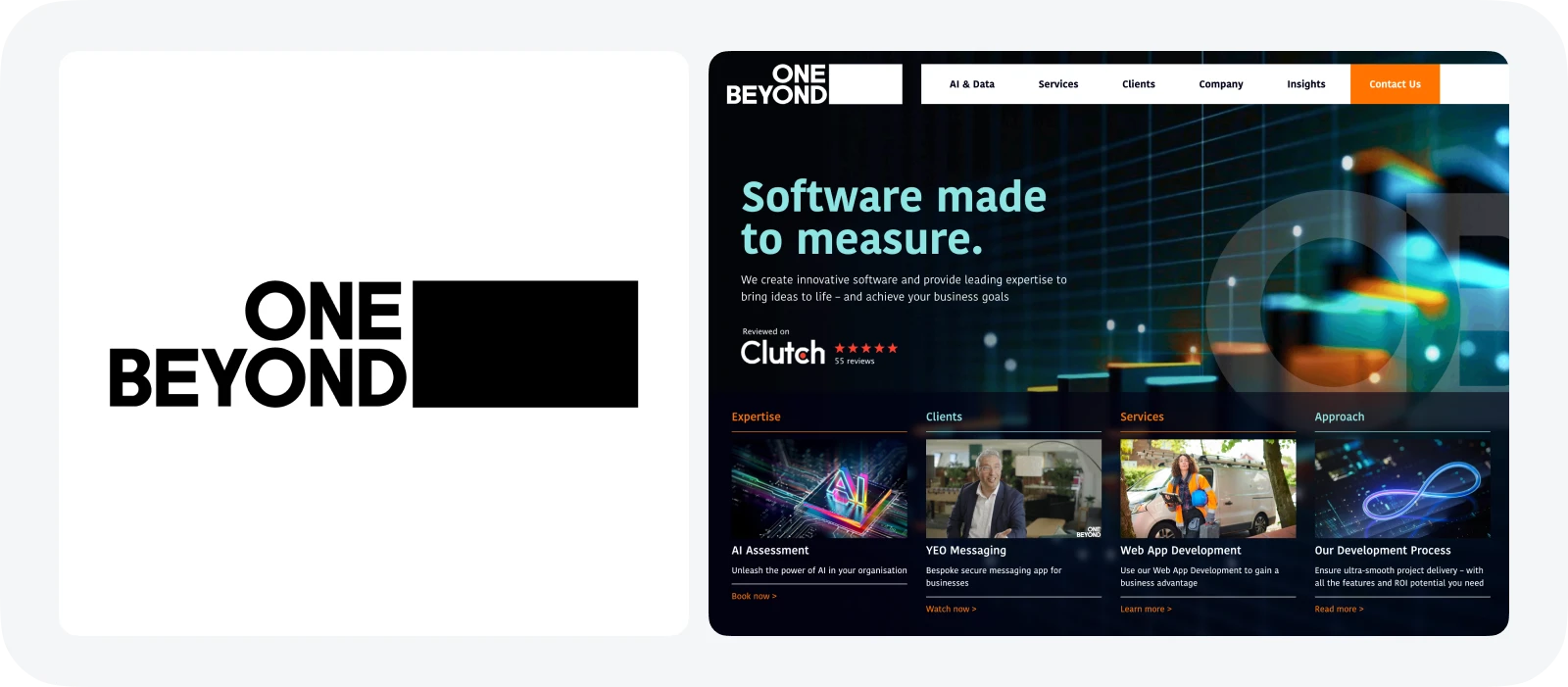
Best for:
- Bespoke business systems.
- Government and healthcare projects.
- Enterprise integrations.
- Microsoft and cloud-oriented stacks.
What I would verify before signing: Spend extra time on discovery, project governance and decision ownership. Bespoke software succeeds when scope, stakeholders and trade-offs are made explicit early.
Tech Stack: Microsoft .NET, Power BI, React, and Node.js. Also proficient in Python, MySQL, and Cloud deployment (Microsoft Azure/AWS).
Strengths: Cost-Efficiency and Quality. Accredited with Microsoft Solutions Partner and AWS Select Tier Services Partner status, plus ISO 9001 & ISO 27001, all while offering competitive nearshore rates ($50 - $99/hr).
Potential downside: If the initial project shape is unclear, you risk avoidable friction later.
One Beyond is a good fit for established organisations that need bespoke software, integrations and dependable delivery.
| Location | Farnborough, UK; Budapest, HU; Madrid, ES |
| Founded | 1994 |
| Team size | 300+ |
| Clients | Costa, NHS |
| Services | Custom web app development, cloud, systems integration |
| Budgets | $60,000+ |
| Industries | Government, healthcare, enterprise tech |
| Website | one-beyond.com |
| Social links | LinkedIn, Facebook |
Closeloop Technologies
Best for:
- Founders needing technical leadership.
- Product discovery and build.
- Fintech, healthtech and SaaS.
- Businesses that need system integration.
What I would verify before signing: Ask how strategic recommendations will translate into delivery decisions, milestones and measurable outcomes.
Tech Stack: Full Stack Engineering, Cloud Engineering, Data Engineering, Generative AI integration, and platform integration (Salesforce, NetSuite).
Strengths: C-Level Expertise. Provides a Virtual CTO offering, delivering C-level expertise and strategic planning, backed by accountability for project success.
Potential downside: Strategic involvement can increase cost. That may be worthwhile, but only if you need senior technical guidance.
Closeloop is useful for companies that want strategic technology guidance alongside delivery.
| Location | Mountain View, CA |
| Founded | 2011 |
| Team size | 50–249 |
| Clients | LastPass, We are social |
| Services | Web application development firm, MVP builds, R&D consulting |
| Budgets | $35,000+ |
| Industries | Healthcare, fintech, SaaS |
| Website | closeloop.com |
| Social links | LinkedIn, Instagram |
Imaginary Cloud
Best for:
- MVPs.
- Digital acceleration.
- Fintech and healthtech products.
- UX and code audits.
- Product teams that want early iteration.
What I would verify before signing: Ask how they manage technical debt as the product grows. A fast MVP is useful only if it does not create a rebuild problem six months later.
Tech Stack: Proficient in web, software, and mobile. Expertise includes Data Science, AI/Machine Learning integration, and best practices for Code Review and managing technical debt.
Strengths: Highly process-oriented with proven processes for quality and debt-free delivery. Offers Code Audits and UX Audits to optimize existing products.
Potential downside: For very large enterprise transformation, you may need a larger delivery bench.
Imaginary Cloud is a process-oriented digital product company suited to MVPs, scale-ups and companies that value structured delivery.
| Location | London, UK; Lisbon, Portugal |
| Founded | 2009 |
| Team size | 50–249 |
| Clients | Nokia, BNP Paribas, Thermo-Fisher |
| Services | Web app development services, UX/UI design, data science |
| Budgets | $30,000+ |
| Industries | Fintech, healthcare, SaaS |
| Website | imaginarycloud.com |
| Social links | LinkedIn, Instagram |
EitBiz
Best for:
- SMB web apps.
- Mobile and web development.
- Cost-conscious builds.
- Businesses without a large internal technical team.
What I would verify before signing: Ask for a clear support model after launch. Smaller teams often need more help with maintenance, bug triage and future iteration.
Tech Stack: Full-stack development capabilities, often utilizing common modern stacks. Developers are noted for their technical skills and ability to solve complex problems.
Strengths: Dedication and Reliability. Clients consistently highlight the team's professional, reliable, and attentive nature, willingness to stick to a fixed price, and accommodating nature to changes/extra functionality.
Potential downside: It may be less suitable for advanced architecture, compliance-heavy or enterprise-scale systems.
EitBiz is a practical option for smaller and mid-market companies that need web and mobile development without a heavy enterprise process.
| Location | Fort Wayne, USA; London, UK; Delhi, India |
| Founded | 2017 |
| Team size | 50–249 |
| Clients | Getting Ahead, Trailer, Medical Optics |
| Services | Mobile and web app development, design, DevOps |
| Budgets | $15,000+ |
| Industries | Retail, eLearning, healthcare |
| Website | eitbiz.com |
| Social links | LinkedIn, Pinterest |
Toptal
Best for:
- Staff augmentation.
- Senior freelance developers.
- Filling specific skill gaps.
- Internal teams that already have product and engineering leadership.
What I would verify before signing: Be honest about your internal capacity. If you lack a product owner, tech lead and QA process, hiring individual contributors may not solve the whole problem.
Tech Stack: The platform provides talent across virtually every modern and niche tech stack. Talent is matched based on project requirements, skills, and experience.
Strengths: Unmatched Vetting Process. Less than 3% of candidates are accepted after a multi-stage process including timed skill tests, live screenings, and test projects.
Potential downside: You remain responsible for delivery management, architecture coherence, QA and product outcomes.
Toptal is not a traditional web app development agency. It is better understood as a curated talent network.
| Location | San Francisco, USA |
| Founded | 2010 |
| Team size | 1000–9999 |
| Clients | Shopify, Airbnb, Bridgestone |
| Services | Web app development agency, UI/UX, team augmentation |
| Budgets | $20,000+ |
| Industries | SaaS, eCommerce, fintech |
| Website | toptal.com |
| Social links | LinkedIn, Twitter |
How to choose the right web app development company?
Start with the business problem, not the feature list
A good vendor should ask why the web app matters. Are you trying to shorten the sales cycle? Improve onboarding? Replace manual workflows? Increase retention? Support a new product line?
If an agency jumps straight into features, I would slow the conversation down.
Check the hard skills
Do not be impressed by a wall of logos or acronyms. Ask the team to explain the stack by responsibility:
- What handles the interface?
- What handles business logic?
- What stores data?
- What handles authentication?
- What monitors performance?
- What happens when traffic spikes?
- What is the rollback plan if a release fails?
A mature team can explain these trade-offs in plain language.
Look for T-shaped capability
The best product teams have depth and range. A senior back-end engineer does not need to be a brand designer, but they should understand why UX, performance and maintainability are connected.
In my experience, the strongest web app teams reduce handoff friction. Designers understand implementation constraints. Engineers understand user journeys. Product leads understand the commercial outcome.
Evaluate the portfolio for outcomes
A beautiful interface is not enough.
Look for case studies that show:
- Faster onboarding.
- Reduced manual work.
- Better activation.
- Improved conversion.
- Fewer support tickets.
- Higher reliability.
- Stronger retention.
- Clearer internal workflows.
In our internal case-study reviews, the most useful success indicators were not awards or visual polish. They were measurable changes such as reduced onboarding friction, faster task completion, clearer self-service flows, improved activation, or lower support dependence.
Ask about discovery
A serious web app partner should not rush straight into coding. Discovery should clarify:
- User journeys.
- Business goals.
- Technical constraints.
- Existing systems.
- Data sources.
- Compliance requirements.
- Success metrics.
- First-release scope.
If onboarding is just one kickoff call and a promise to “start building”, something is missing.
Understand pricing models
Most web app development companies use one of four models.
Time and materials works well when scope is evolving and you want flexibility.
Fixed price can work for tightly defined projects, but ambiguity often becomes expensive later.
Retainers or dedicated teams suit longer roadmaps where you need stable capacity.
Performance or value-based components can work in mature relationships where both sides trust the metrics.
Ramotion’s web app development cost guide is a useful internal reference for understanding how scope, complexity and delivery model affect budget.
Questions I would ask before signing
Use these questions to move beyond the sales script:
- What would you remove if we had to cut scope by 30% before launch?
- Which parts of this project are riskiest?
- Who is accountable for outcomes on your side?
- How do you handle evidence that a feature is underperforming?
- What happens after launch?
- How do you document architectural decisions?
- How do you test security, accessibility and performance?
- Can we speak to a recent client with a similar project?
- What will we see at 30, 60 and 90 days?
- Who owns the source code, infrastructure and deployment process?
The goal is not to catch the agency out. It is to see whether they have real, lived answers.
Red flags in web app development proposals
Be cautious when you see:
- Vague scope.
- No discovery phase.
- Unrealistic timelines.
- No named delivery owner.
- No QA approach.
- No post-launch support.
- No source-code ownership clarity.
- No documentation plan.
- No discussion of scalability.
- Heavy buzzwords with little evidence.
- Case studies that show screens but no outcomes.
A reliable partner should be comfortable discussing risk. If the proposal pretends risk does not exist, the risk has not disappeared; it has simply moved into your project.
In our closed-project retrospectives, the proposal gaps most often associated with later rework were unclear acceptance criteria, no explicit QA ownership, vague integration assumptions, and missing post-launch support scope.
Key takeaways
- The “best” web app development company depends on your stage, risk and internal capability.
- Evaluate agencies by technical depth, project scale, QA standards and delivery model.
- Do not choose a partner purely on budget, technology list or portfolio visuals.
- Ask for evidence of outcomes, not just examples of screens.
- Treat discovery, documentation, QA and post-launch support as core requirements.
- If you choose a talent marketplace like Toptal, make sure you can manage product ownership and delivery internally.
- If you choose an agency, make sure it can explain trade-offs, risks and first-release priorities clearly.
- For Ramotion specifically, the strongest fit is where UX, brand, product strategy, and web app development need to work together.
FAQ
-
What does a web app development company do?
A web app development company plans, designs, builds, tests, launches and improves applications that run in a browser or web-based environment. The work usually includes product strategy, UX/UI design, front-end development, back-end development, integrations, QA, deployment and ongoing support.
-
How much does it cost to develop a web app?
Costs vary widely. A focused MVP may cost tens of thousands of dollars, while a complex enterprise platform can run into hundreds of thousands or more. Scope, integrations, compliance, design depth, infrastructure and post-launch support all affect the final budget.
-
Should I hire an agency, freelancers or an in-house team?
Use freelancers for tactical tasks, build in-house for long-term core capability, and hire an agency when speed, quality, cross-functional delivery and reduced hiring burden matter most.
-
How do I know if a web app agency is technically strong?
Ask them to explain architecture, testing, security, scalability, monitoring and deployment in plain language. Strong teams can describe trade-offs and risks clearly without hiding behind jargon.
-
What is the biggest mistake when choosing a web app development partner?
The biggest mistake is choosing on headline cost while ignoring communication quality, architecture, QA and long-term maintainability. A cheaper build can become the most expensive option if it creates technical debt or fails to support the business goal.
Concluding summary
A web app is not just a software asset. For many B2B, SaaS, fintech, healthcare and commerce companies, it is where prospects evaluate you, users learn your value and internal teams either gain leverage or inherit friction. Choose a partner by the evidence of how they think, build, test, communicate and improve. The right company will not simply ask what you want built; it will help you decide what is worth building first.

Drives the technical vision at Ramotion, uniting engineering excellence with design innovation to deliver scalable, secure, and user-focused digital solutions.