
Getting people to visit your website is a win, but it’s not enough on its own. The real challenge is convincing visitors to take desired actions once they land on your page. This is where Conversion Rate Optimization (CRO) becomes crucial in transforming your landing page into a valuable asset.
Learn the basics of CRO-focused landing pages and how you can use them to improve your website and drive business growth.
Defining Conversion Rate Optimization (CRO)
Conversion rate optimization uses targeted strategies to influence user actions on landing pages. It entails combining user behavior analysis and barrier identification, like a complicated checkout process, to drive more conversions systematically.
How to calculate conversion rate?
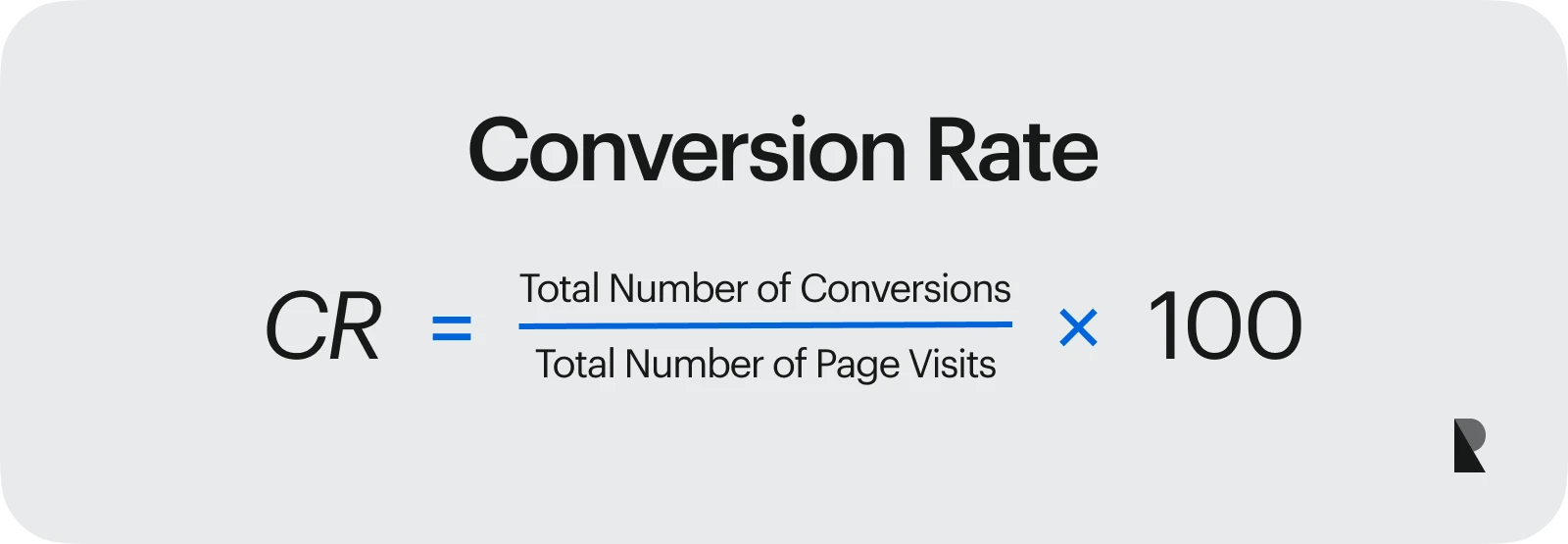
Conversion Rate Formula
Before optimizing, you have to measure your average conversion rate by dividing the total number of conversions by the total number of web visitors.
That number becomes your baseline for experiments and comparing results. A strong conversion rate indicates that your campaign, messaging, and user experience are effective in attracting higher-quality prospects.
Why CRO is critical for business growth
Your conversion rate indicates how effectively your unique strategies prompt actions, not just visits. By applying CRO, you efficiently acquire and retain customers, maximizing value from your existing traffic rather than simply increasing volume.
Conversion rate optimization brings the following benefits:
- Higher return on investment (ROI)
- Improved user experience
- Focused messaging and clear Call-to-Actions (CTAs)
- Long-term profit growth
Understanding the Conversion Funnel
The conversion funnel maps the customer journey from discovery to decision. As visitors move down the conversion funnel, it narrows until only the most interested remain. Understanding each stage helps you create unique and relevant messaging, remove friction, and guide people toward conversion.
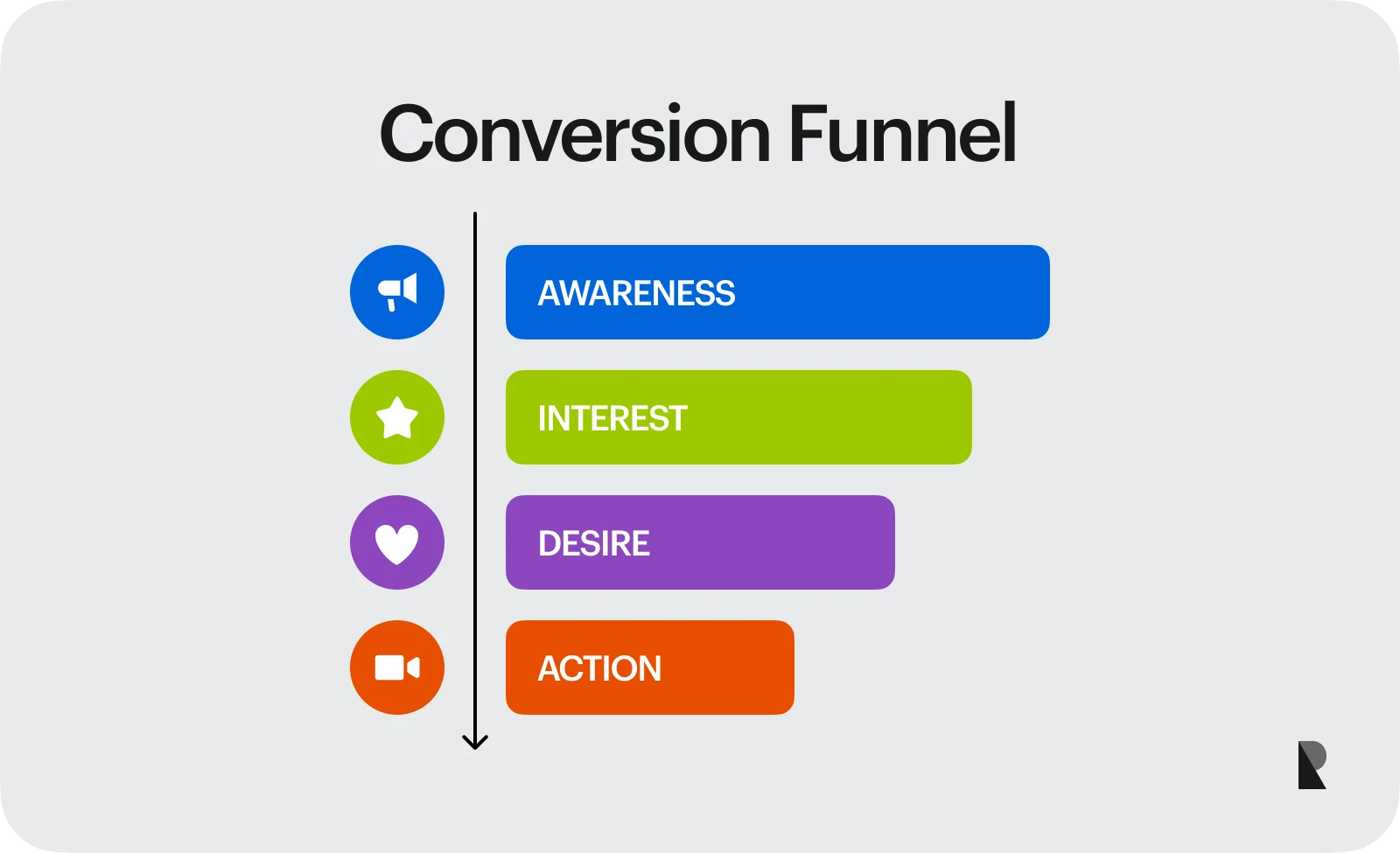
Stage 1: awareness
This is the first point of contact where brand knowledge is relatively low, and they are deciding whether you’re worth a closer look. Your goal at this stage is to capture attention with a clear, benefit-led message: what you do and why it matters.
Use simple headlines, strong visuals, and prioritize relevance. Help your target audience understand why they should care, so they move to the next stage of the funnel.
Stage 2: interest
Now, visitors want to know more. They're evaluating whether your product or service could solve their problem. At this point, educate your audience. Focus on providing easy-to-find information that highlights product features and shows how it fits their needs.
Avoid overwhelming visitors with overly complicated layouts or excessive information. Aim to maintain high engagement and build confidence in your brand.
Stage 3: consideration or desire
As they move down the funnel, fewer visitors remain, and they are comparing options. This is where detail and trust-building matter, which can be achieved through detailed product descriptions, FAQs, and social proof, among other measures. Use a focused and strong call to action (CTA), like ‘Request a Demo,’ ‘Add to Cart,’ or ‘Get Started,’ without being too pushy.
Stage 4: action
The final stage is when your audience is ready to convert, but they may still encounter barriers during the checkout process. Do they utilize your products or not? Should they sign up or complete their transaction?
They can still abandon your page if they face confusion, slow loading, or unexpected costs. Therefore, it is crucial to identify and eliminate any remaining obstacles here. The action stems from the visitor’s readiness, having evaluated all the information and feeling confident enough to commit.
Treat the funnel as a diagnostic tool to identify where the cracks are and fill these gaps with CRO strategies. Small fixes at every stage accumulate and improve conversion rates.
Key CRO Metrics to Track
How do you know if your landing page is effective? By tracking key metrics that assess performance, friction points, and user behavior. Below are the top CRO metrics to track.
Bounce rate
It measures visitors who leave without interacting. High bounce rates indicate a mismatched messaging or UI/UX design issue.
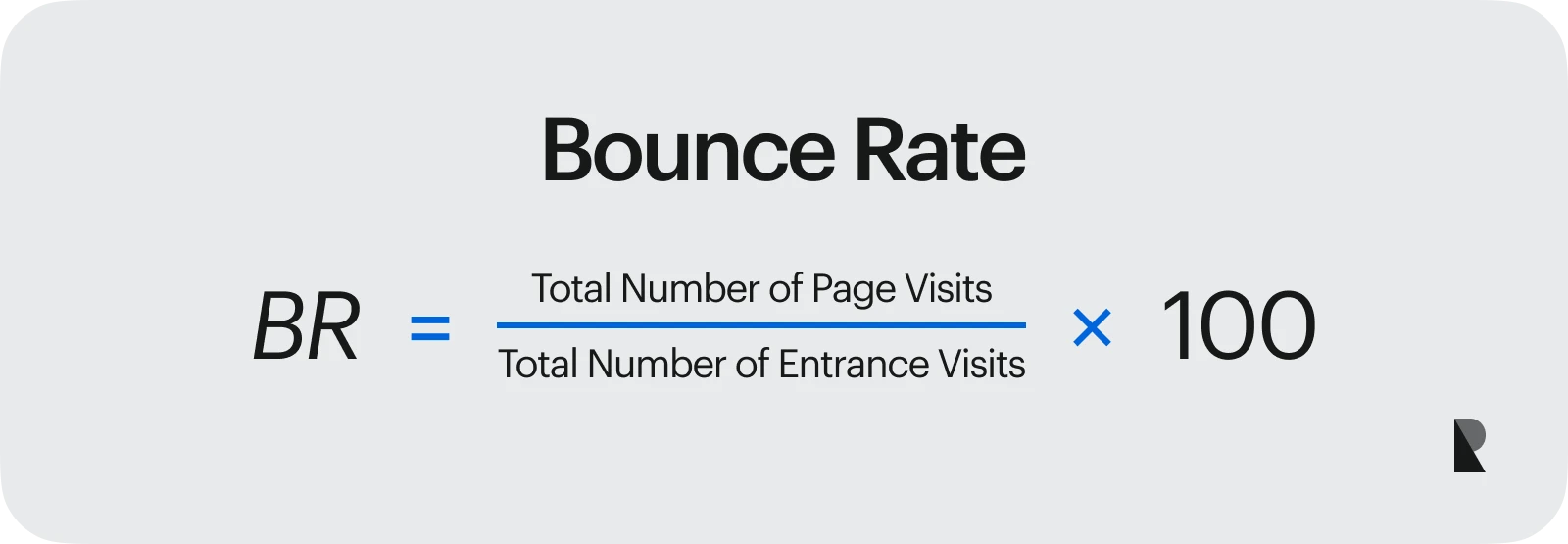
Bounce Rate Formula
Time on page
It indicates the length of engagement. Longer time on page is usually better, but very long periods without action can lead to confusion.

Average Time on Page Formula
Click-through rate (CTR)
It calculates how many visitors clicked on a specific link or CTA. A low CTR may indicate an unclear CTA, while a high CTR with low conversions suggests other issues down the funnel.
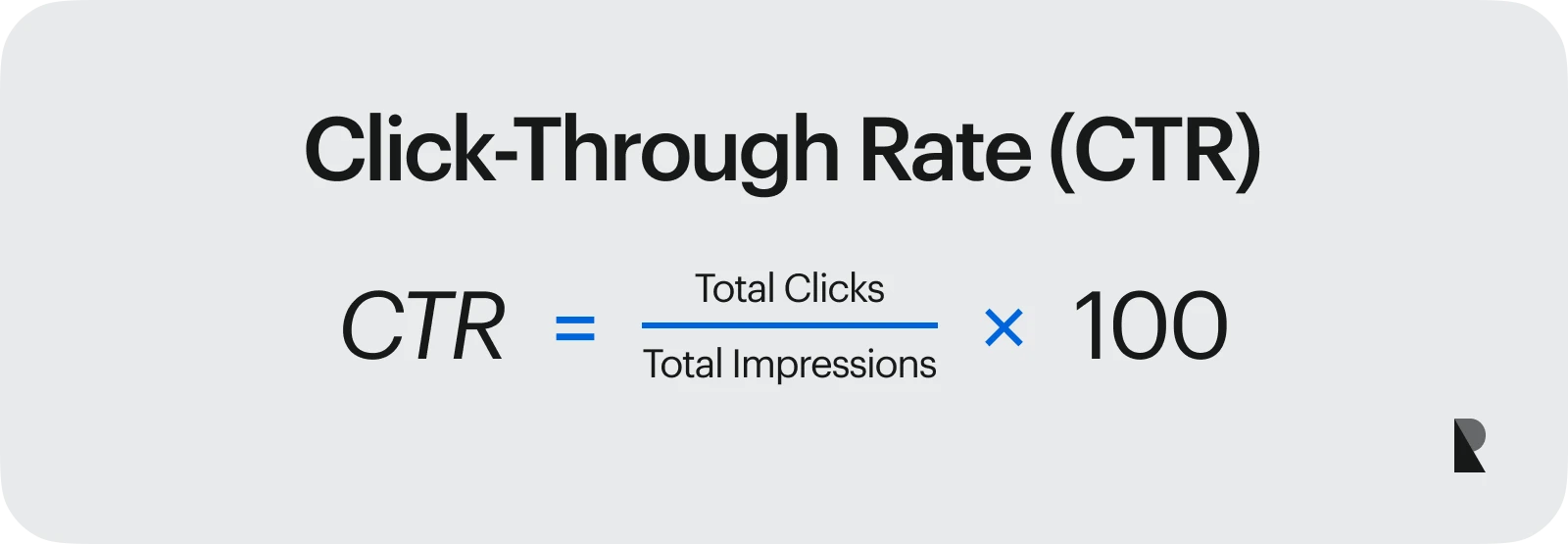
CTR Formula
Form completion rate
It reveals whether forms are too long or confusing. A low form completion rate indicates the need to improve form design to enhance the user experience.

Form Completion Rate
Abandoned carts
Abandoned carts highlight issues with the checkout process, such as hidden fees, limited payment options, or slow page load times. Track cart abandonment with analytics and use the trends to prioritize fixes.
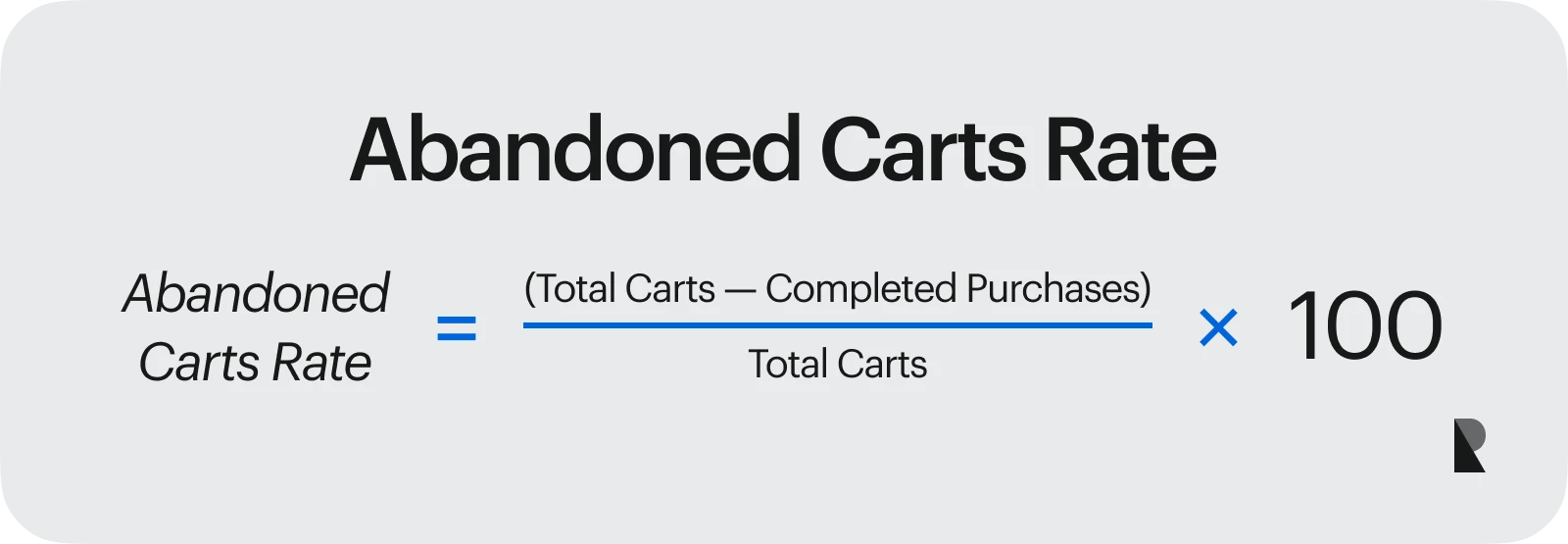
Abandoned Carts Rate Formula
The CRO Process Steps
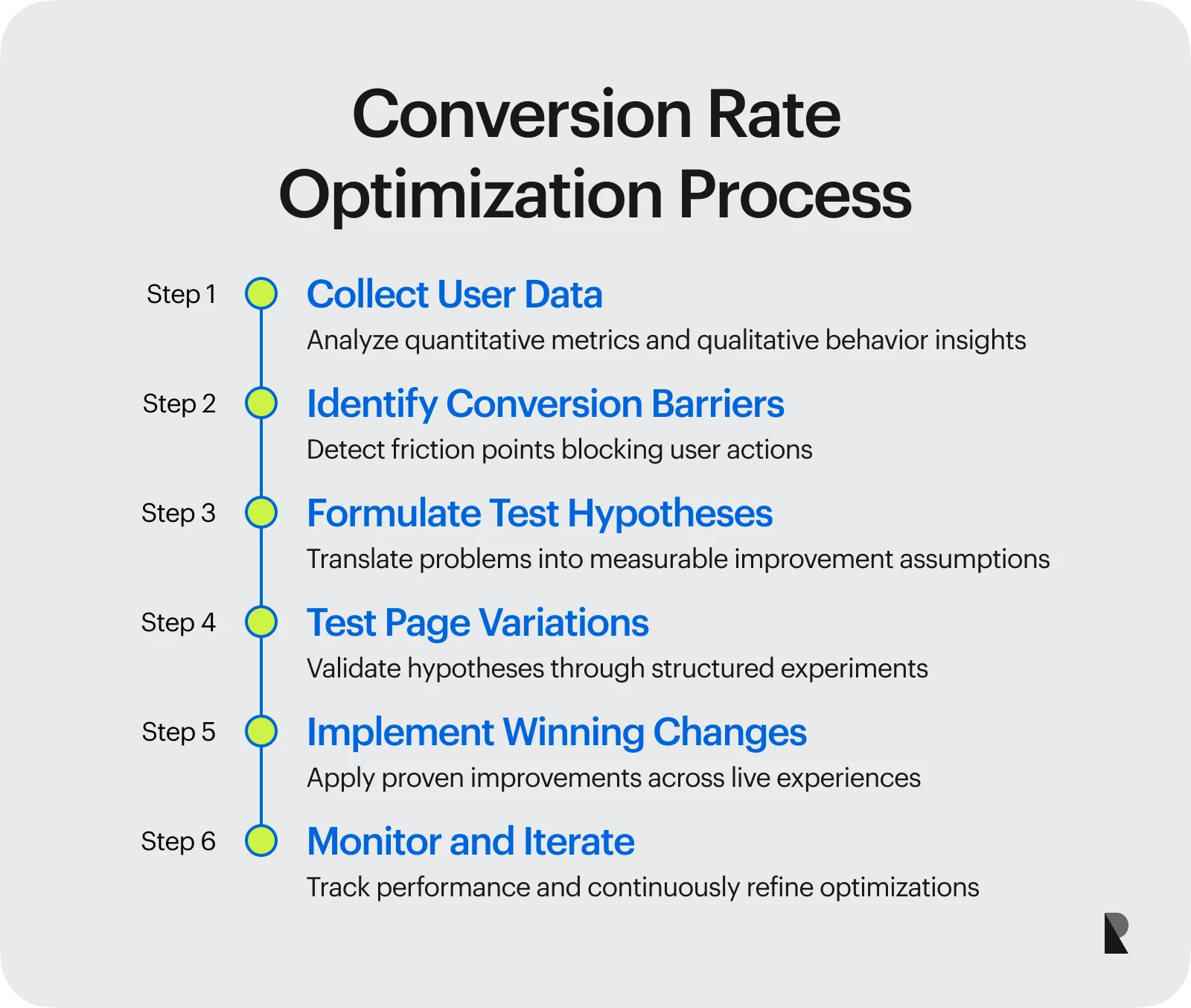
Conversion rate optimization for landing pages isn’t a one-and-done process. Each site will also look different and target different goals, but most successful CRO efforts follow the same foundational steps.
In this section, we will use a beauty salon to demonstrate how these steps work, aiming to increase conversions or online bookings.
Step 1: gather quantitative and qualitative data
Quantitative tools, such as Google Analytics, provide insights into traffic, bounce rate, and conversion rate. Qualitative tools, such as heatmaps, session recordings, and brief on-site surveys, reveal what users do and why. These insights help pinpoint user motivations.
Step 2: identify friction and barriers
Use your audit to identify the most significant barriers. For example, the salon might see that only 10% of the 300 people who clicked on the Facial Spa promotion actually booked.
That gap could be due to price anxiety, confusing service options, or a long booking form. If you’re working with an internal team or a delivery partner, reviewing common patterns used by top website design companies can help you separate genuine offer friction from fixable UX execution issues before you invest in testing. Prioritize issues that affect the most users or have the most valuable conversions.
Step 3: formulate hypotheses
Now that you know what went wrong, turn each challenge into a possible outcome when it is addressed. These hypotheses serve as the basis for your CRO experiments. They should form a clear idea of why an idea will work.
For instance, a good hypothesis reads, “Adding a clear ‘Starting from $65’ next to facial service descriptions will reduce uncertainty among potential customers, thereby increasing booking rate by 15%.”
Step 4: build and test variations (A/B, multivariate)
Run experiments to validate your hypotheses. Testing variations is a crucial step because it presents data-driven evidence. Without testing, you risk implementing changes based on opinions rather than facts, which can potentially lower conversion rates.
A/B tests enable you to compare two versions of a landing page to determine which one performs better with real users. Multivariate tests allow for the simultaneous testing of multiple element combinations to determine which version works best.
In our example, the salon can run the price anchor test for two weeks, with equal segments of the target audience assigned to each version of the landing page. This enables you to measure which page delivers a higher conversion rate with statistical significance.
Step 5: implement winning changes
The test results dictate the decision. If a version wins, roll it into the live site and brief your team on what changes were made and why. If tests are inconclusive, don’t discard them. You still learn something valuable in the process, which can help narrow future ideas.
Step 6: monitor performance regularly
CRO strategies must be sustained to ensure the positive impact lasts as long as possible. Set up regular check-ins to monitor key metrics and identify any unexpected changes. Keep testing, iterating, and adapting.
The CRO is a continuous loop that relies on tracking and analyzing data, hypothesizing solutions, testing them scientifically, implementing what works, and monitoring results to find the next opportunity.
CRO Strategies and Techniques
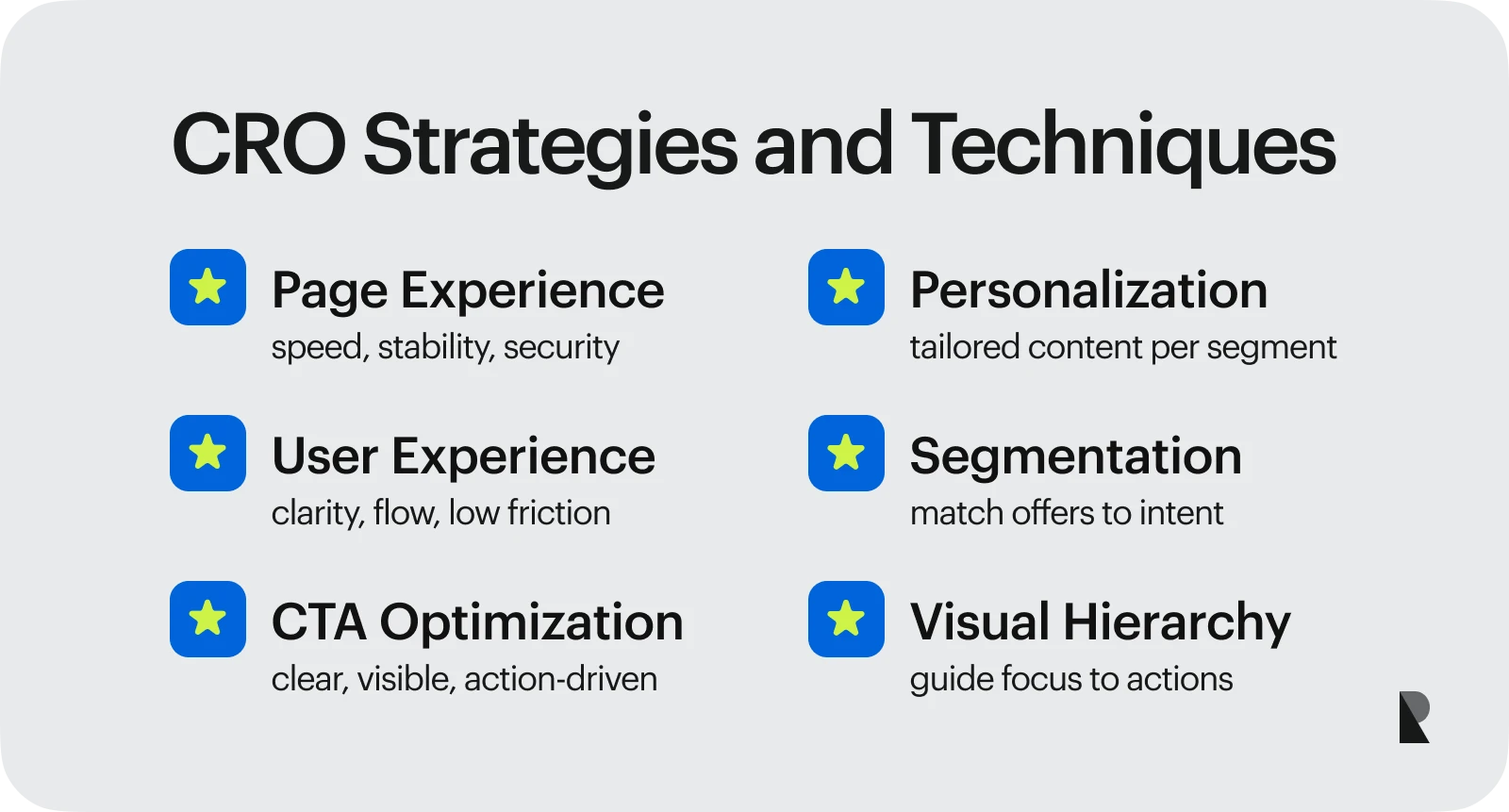
Here are additional strategies and techniques you can implement to amplify the results of your CRO process.
Improve page experience (PX) & user experience (UX)
Page experience (PX) is about the performance and reliability of your landing page. It is influenced by load time, layout shifts, and browsing safety. User experience (UX) focuses on guiding visitors towards desired actions by delivering the right message, using an intuitive layout, maintaining a clutter-free design, and reducing barriers.
Both must work together: fast pages that confuse users won’t convert, and beautiful designs that load slowly lose attention.
Optimize CTAs in landing pages
Give CTAs special care by keeping them short, action-focused, and clear. Use words that instruct users on what to do next. Place CTAs above the fold so visitors can easily see them without needing to scroll. Finally, choose contrasting colors that make your CTA buttons stand out.
Apply personalization and segmentation
Personalize and segment according to different needs and preferences. For example, dynamic content that matches a visitor’s search term or profile increases conversions, relevance, and trust. Small changes, such as customized headlines, selected offers, or alternative imagery, reduce bounce rates and improve conversions by speaking directly to distinct audience needs.
When PX, UX, CTAs, and personalization strategies work together, your landing page becomes a smoother, engaging path to conversion.
CRO Tools and Platforms
CRO requires a stack of reliable tools and platforms to support successful monitoring and implementation. Here are a few must-haves for your toolkit.
Hotjar
Hotjar creates heatmaps that track where visitors click, scroll, and move their mouse. This tool allows you to understand what works well and what confuses visitors. It reveals which parts of your landing page attract attention and which parts are ignored. Using this data, you can make changes that improve user experience and encourage more conversion actions.
Key features:
- Heatmaps
- Surveys
- Feedback
- Recordings
- User Interviews
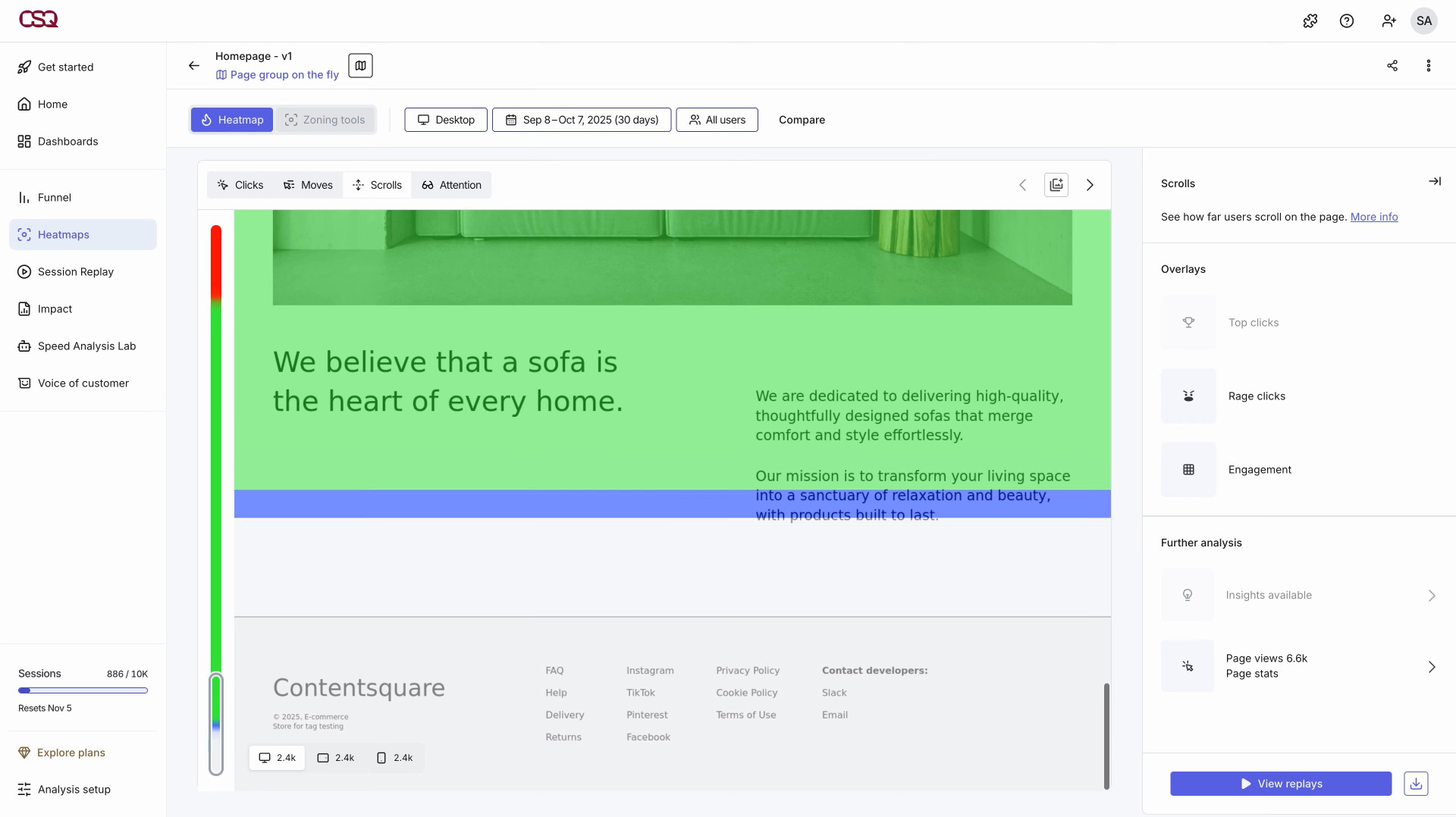
Monitor user behavior using heatmaps via Hotjar
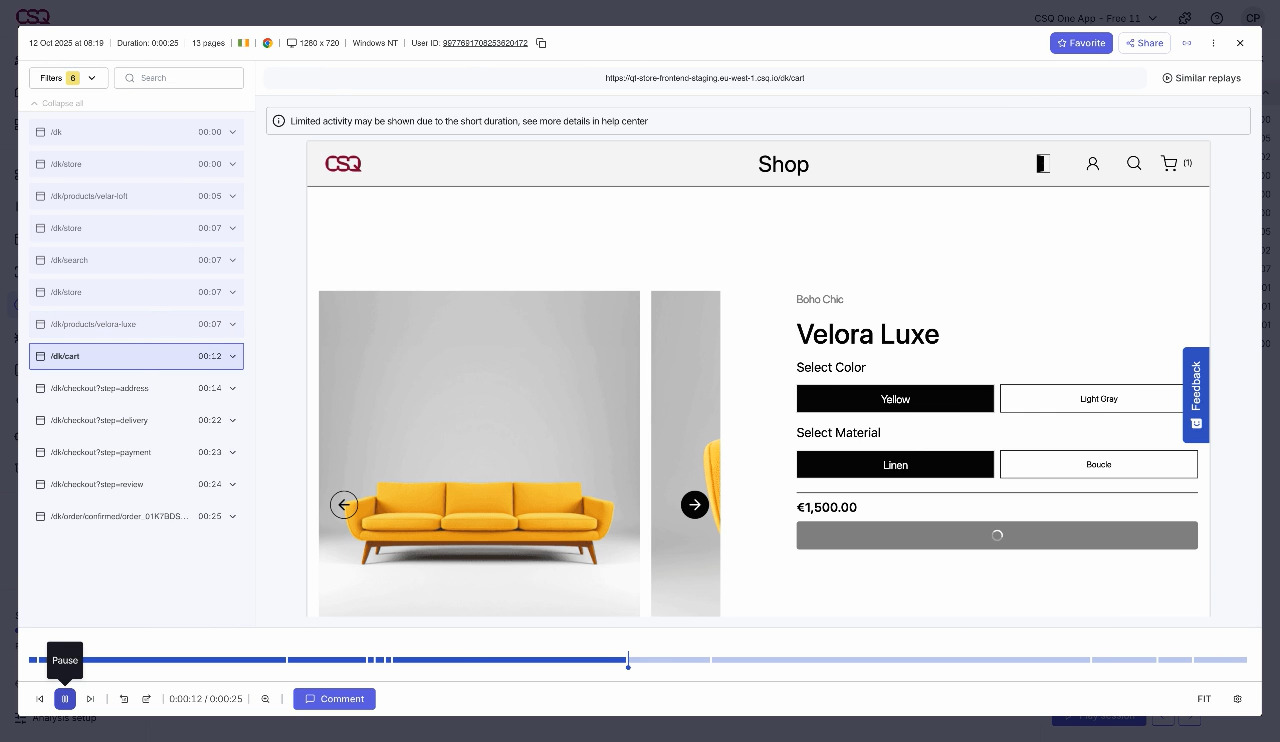
Browsing session replay via Hotjar
Google Analytics
Google Analytics analyzes data to gather important metrics, such as the number of daily web visitors, which pages they visit, and at which point in the customer journey they leave. It also goes into the specifics, like users' traffic sources and device types, so you can analyze whether certain groups have lower conversion rates. Google Analytics also helps identify problems, like slow page load times.
Key features:
- Funnel Analysis
- Tag Management
- User and Traffic Acquisition Reports
- Conversion Report
- Ecommerce Monetization Report
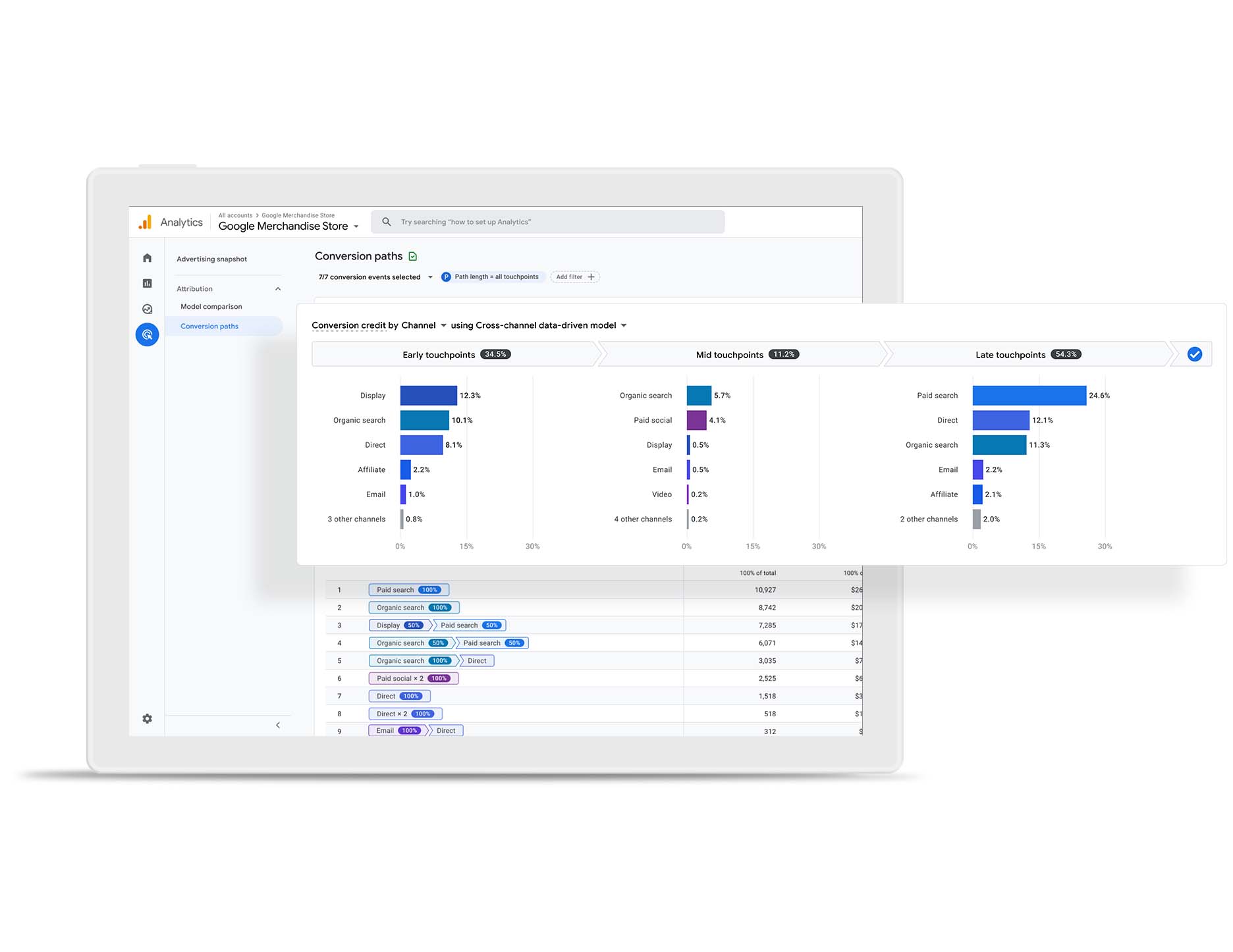
Track how each conversion channel is performing via Google Analytics
VWO
If you want a more comprehensive platform, Visual Website Optimizer (VWO) may be the right tool. It has everything you need to conduct research, tests, and gather behavior insights. It also enables personalization, allowing customer journeys to be created based on the user profiles.
Key features:
- A/B & Multivariate Testing
- Heatmaps
- Form Analytics
- VWO Personalize
- Web Rollouts
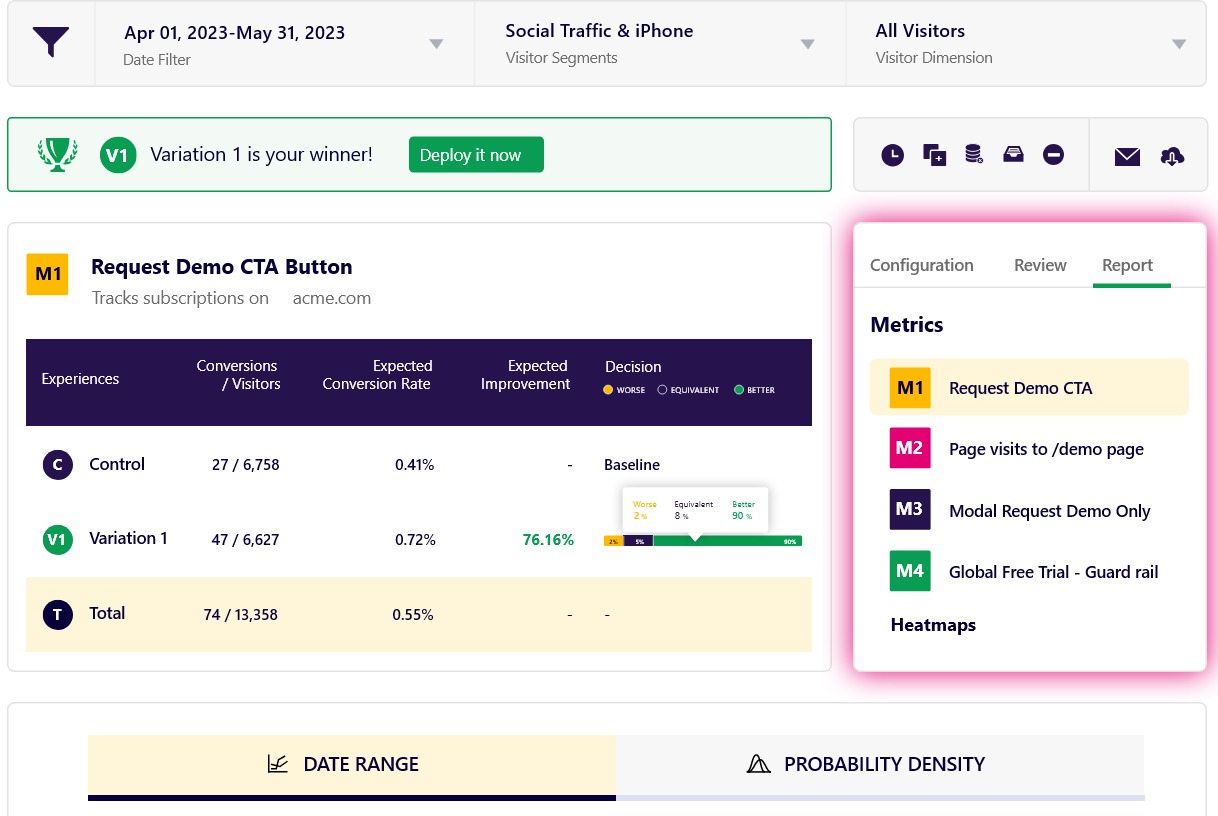
Web testing tools via VWO
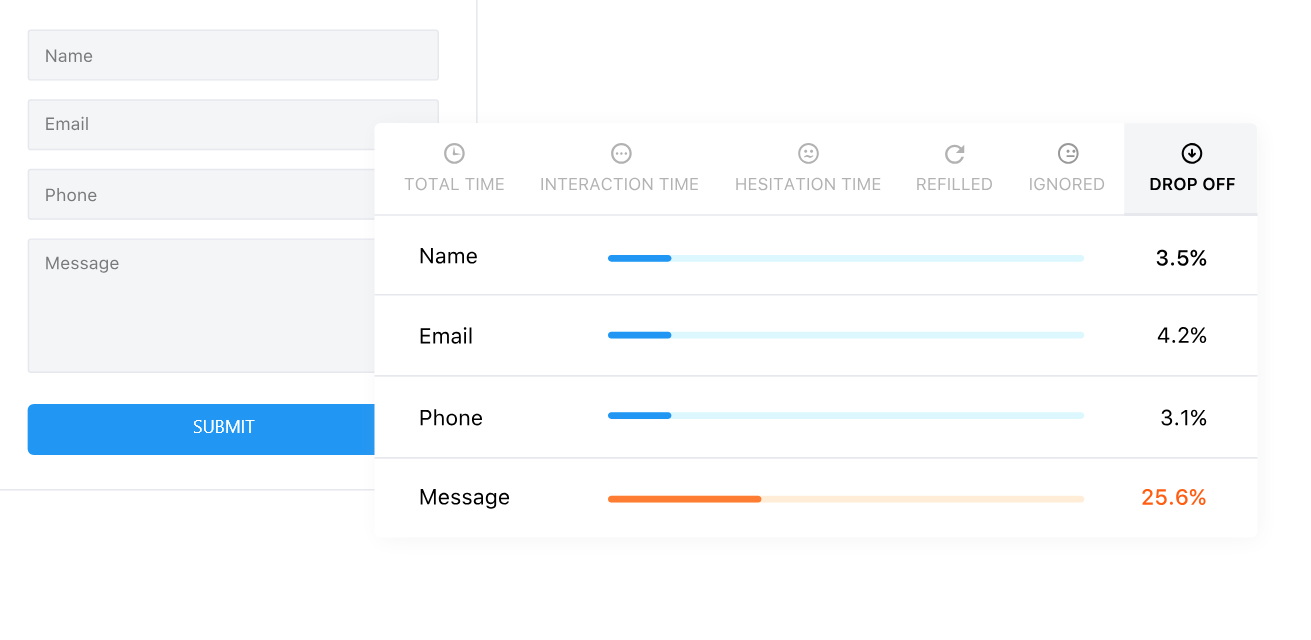
Form conversion analysis via VWO
CRO Tips According to Business Type
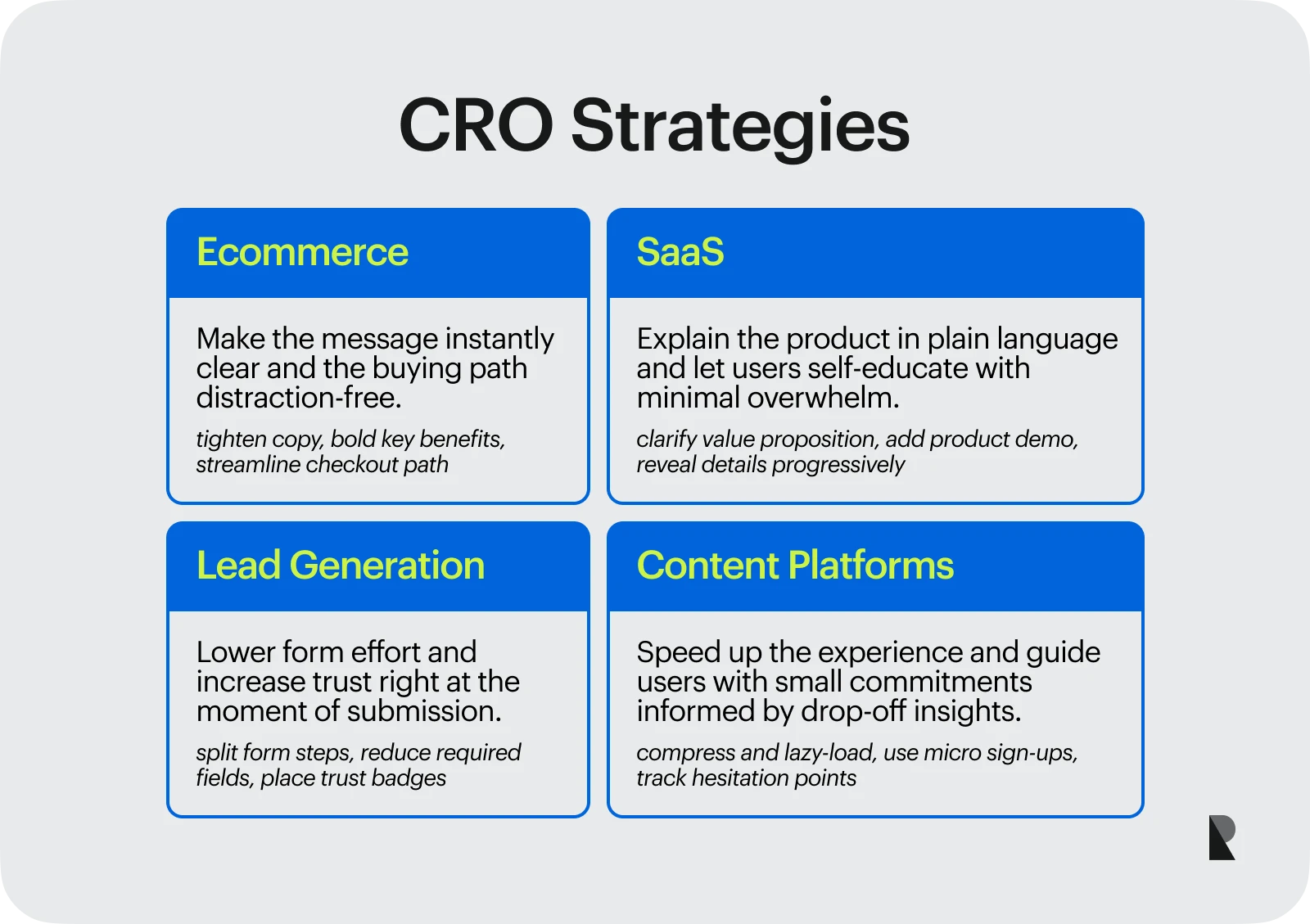
Every business faces different landing page challenges. They also measure against varying benchmarks, with an overall average conversion rate of 2.9% across all industries. Below are actionable CRO tips by business type.
CRO for E-commerce
E-commerce landing pages often deal with high bounce rates due to vague messaging and cluttered designs. Some are also not optimized for use across multiple devices, especially on mobile devices.
CRO strategies:
- Keep your titles and texts short.
- Use scannable text with bolded keywords.
- Simplify the visual path to purchase and use a layout that naturally guides the eyes through the page without distraction.
CRO for SaaS
SaaS companies struggle to explain what they offer. This is because many SaaS products can appear too technical. The market is also highly competitive, with numerous competitors. All of these leave customers more confused and indecisive.
CRO strategies:
- Lead with a clear headline and subheadline that explain benefits and features.
- Offer demos or explainer videos.
- Use progressive disclosure, such as an expandable section, for a cleaner look.
CRO for lead generation
Lead generation involves asking your audience to provide personal information by having them fill out a form. These can become overwhelming and discourage completion.
CRO strategies:
- Format your form sections into smaller blocks or steps to improve readability.
- Ask only for essential fields, split steps into smaller commitments, and show progress.
- Add trust signals, like testimonials, near the form.
- Add live chat functionality to provide immediate assistance.
CRO for content platforms
Content platforms are heavy on videos, media, and text. These cause delays when loading a landing page, resulting in a frustrating user experience. Content platforms, which heavily rely on personal preference, may request too much information upfront, thereby reducing conversion rates.
CRO strategies:
- Compress media assets and implement lazy loading to optimize performance.
- Use micro-commitments rather than large, upfront requests.
- Map moments where users hesitate or drop off so you know where to target interventions.
- Reduce cognitive overload by simplifying your landing page design.
CRO As A Long-Term Growth Engine
Making a winning landing page doesn’t require major redesigns to deliver results. With the correct data and CRO tools, you can sharpen your headlines to match intent, simplify CTAs and place them above the fold, reduce form fields, speed up load times, and add social proof. Run small A/B tests to validate changes and focus on mobile-first improvements.
These changes, although minor, can increase conversion rates, keep customers engaged, and enhance ROI, allowing you to invest in higher-impact experiments.
CRO requires commitment, from measuring data to learning and iterating strategies. In fact, you can start with one change today and track results weekly. With a scientific and disciplined approach, these optimizations can compound into meaningful growth for your business.
Dec 18, 2025

Creates insightful, strategy-driven content that translates complex design and branding concepts into accessible knowledge, supporting Ramotion’s mission to elevate digital experiences.