
Direct-to-consumer (D2C) brands sell straight to customers, bypassing retailers and distributors. At the center of this model is the D2C website, which serves as your brand’s direct sales engine and storytelling hub. It captures direct customer data, shapes the customer experience, and turns buyers into repeat customers.
However, designing a site that accomplishes all these is more complicated than it appears. With millions of D2C websites competing for attention, it must do more than showcase products. Your first step is understanding the foundation of a D2C website.
D2C Website Definition and Key Principles
A D2C website is an e-commerce platform owned and operated by a brand, designed solely to sell its products directly to end consumers. Unlike brochure sites that only present information and generate leads, a D2C site must support the full commerce flow, from website discovery to cart, payment, inventory, shipping, and returns.
D2C websites enable on-brand storytelling, repeat purchase strategies, and long-term customer relationships.
So, what makes a great D2C website?
Key principles of D2C websites
A D2C site’s core principles determine user experience and conversion. Establish them right from day one, and you lay the groundwork for success.
1. Clarity: purpose and brand identity
A D2C website must immediately convey why a visitor should buy from you, what your ultimate goal is, and how your products make their lives easier. Doing so separates a persuasive storefront from a passive catalog, so put your core value proposition and unique brand identity front and center.
Use a clear visual hierarchy and benefit-focused copy to eliminate distractions and guide visitors smoothly toward conversion.
2. User experience: intuitive and seamless navigation
Effective D2C websites focus on strategies that prevent friction.
Data shows over 70% of online shopping journeys end in abandoned carts. These issues are often caused by hidden shipping fees, complex checkouts, and a poor mobile experience, among others.
Remove barriers by streamlining processes, like a hassle-free one-click checkout system. Ensure fast load times, giving your potential customers less time to hesitate.
3. Trust and transparency: building brand confidence
Convincing customers to buy online rather than in-store is challenging because many prefer to touch or try products, speak with a real person, or take their purchases home immediately. Therefore, trust depends on how your site presents itself.
This means having a clear design, as well as genuine social proof, such as testimonials and customer reviews. Equally important is security and compliance through secure payment gateways, strong encryption, and up-to-date legal/privacy practices.
Website Architecture & Structure
A D2C website should include core pages and a navigation system that help users learn more about the company, its products, and benefits, and allow customers to purchase them on the spot.
Core pages & navigation
Below are essential pages you should have in your D2C website.
- Home page: The welcome hub that quickly communicates your company’s value proposition and links visitors to key pages.
- About Us: A brief origin of your company, its mission, and a people-first snapshot that builds credibility and emotional connection. It humanizes the brand.
- Product listing and product detail pages: Listing pages organize SKUs, while detail pages answer the 'whats', 'whys', and 'hows', and include specifications, prices, and strong CTAs and imagery to drive conversions.
- Shopping cart: A clear and editable list where users confirm order quantities before checkout.
- Checkout page: Visitors who are ready to purchase are directed to this page to finalize the transaction and enter key payment and delivery information.
- Contact us: Multiple accessible touch points (email address, toll-free telephone number, and social media pages) so customers can easily reach your company.
- FAQs: Quick answers to commonly asked questions that reduce customer support load and remove purchase barriers.
- Resource center: A content hub for blogs, video tutorials, product demos, case studies, and other information about your company, product, or industry.
- Privacy policy and terms & conditions: Plain-language disclosure of data collection, usage, third-party tools, and security measures. It includes rules on warranties, payments, and shipping.
These pages should be updated regularly to ensure the direct-to-consumer website complies with legal regulations, reflects changes in the business, and meets users' needs.
Technical performance optimization
Even a slight delay can reduce conversions, so regularly optimizing your company’s D2C site performance is essential. Focus on three practical fixes:
- Media optimization. Compress and resize images and videos, and subset or self-host fonts to reduce file weight without harming visual quality.
- Leverage lazy loading. Don’t load images or videos until the visitor scrolls close to them. This means the page loads faster because the browser doesn’t download everything at once.
- Reduce bloating. Integrating third-party tools for different functions can overload the system with multiple requests. Keep these tools to a minimum by conducting periodic inventories and removing redundant or barely used ones.
Design and Visual Identity
Strong design and clear visual identity make your D2C site intuitive, engaging, and more persuasive. If you’re partnering with outside specialists to elevate that experience, scanning a curated roundup of best website design agencies can help you benchmark teams by process, commerce depth, and brand craft before you shortlist. So, use a simple visual hierarchy to guide attention, trim anything that causes cognitive overload, and keep colors, imagery, typography, and voice consistent so your brand feels familiar and trustworthy.
Here’s where these strategies matter most.
Hero section: building a strong first impression
The ‘Hero’ section is the first thing visitors see. It can be a static image, an animation, or a video placed on top of the home page. Alongside the visuals is the main message or a call to action.
Its goal is to capture user attention and encourage them to explore further. You must be strategic, as you only have a few seconds to make a strong first impression.
Let’s look at some guidelines you can implement when creating your D2C site hero.
- Demonstrate your product using a video or an image that evokes strong emotions from consumers.
- Keep your message concise yet meaningful, ensuring it is clear and understandable at a glance.
- Implement a responsive design to ensure your hero section remains captivating across all devices, particularly on smartphones.
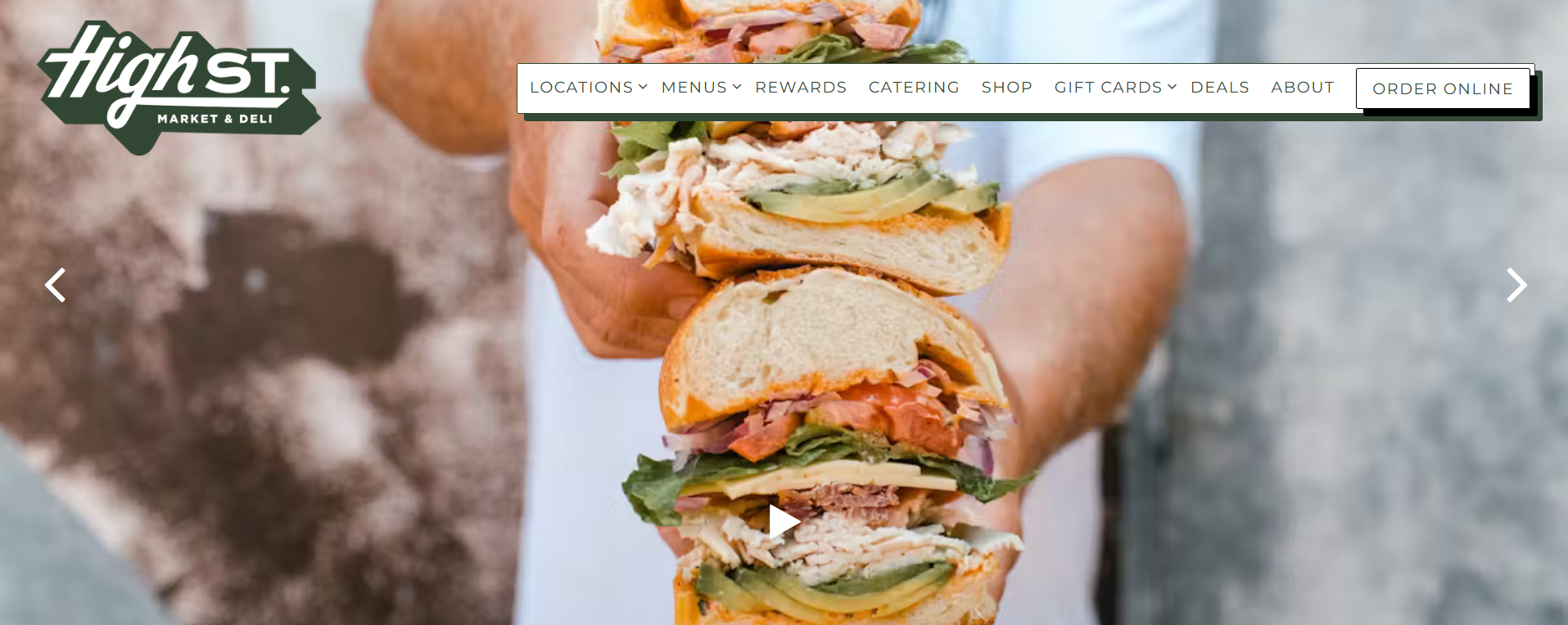
Mouthwatering images of deli-style sandwiches trigger cravings from web visitors. Image via High Street Deli

Copy and imagery align, and the prominent display of discount offers sparks curiosity. Image via Everlane
Product presentation guidelines
Product pages can quickly overwhelm shoppers. So, it’s crucial to prioritize information without cluttering the design layout or relying on heavy-handed personalization.
Treat each page like a well-curated in-store display, featuring must-know details, high-quality visuals, and relevant reviews, so customers can make informed decisions quickly. Here’s how.
- Highlight benefits in addition to features. Tell how it makes life easier or better for your buyers.
- Invest in high-quality images and integrate a 360° view to create a more immersive buyer experience, one that goes beyond simply clicking buttons and viewing images.
- Keep product information simple and avoid using technical jargon.
- Always end with a clear Call to Action (CTA) so buyers don’t have to guess what to do next.
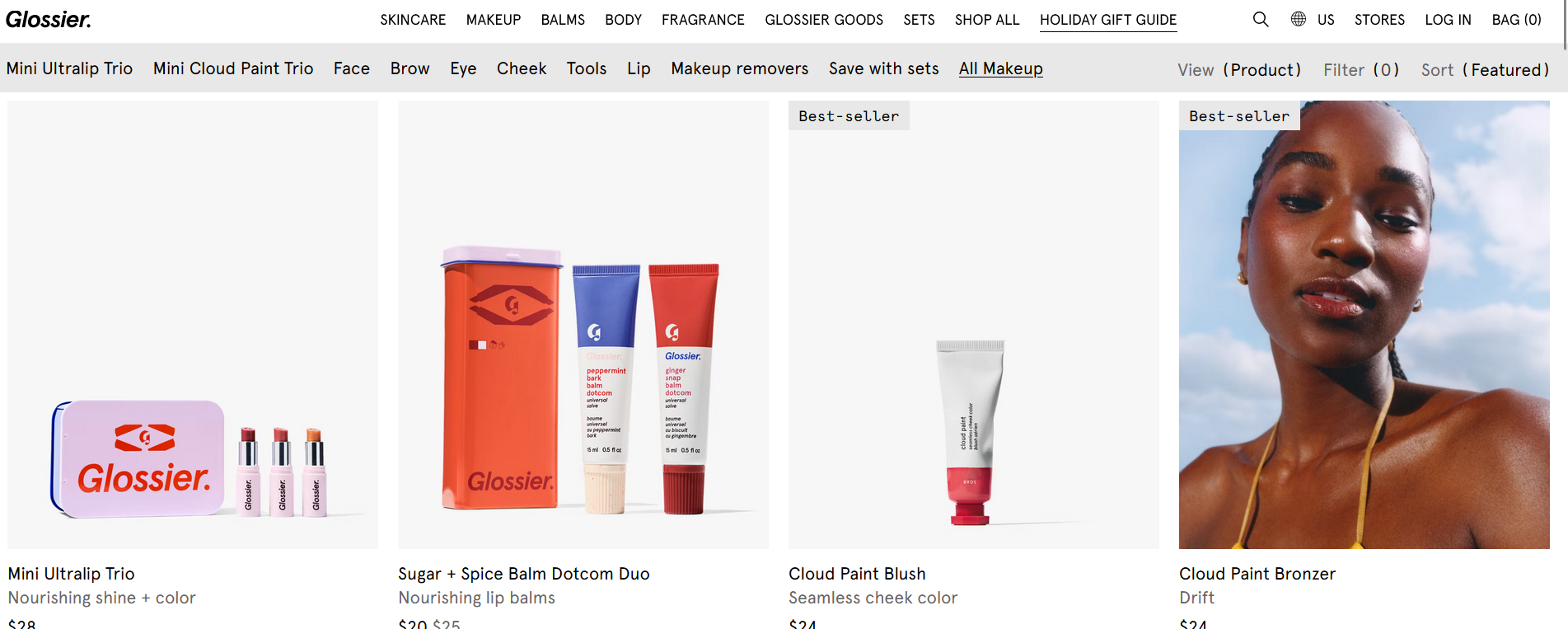
Clean aesthetic and interactive design provide a stress-free and engaging shopping experience. Product page via Glossier
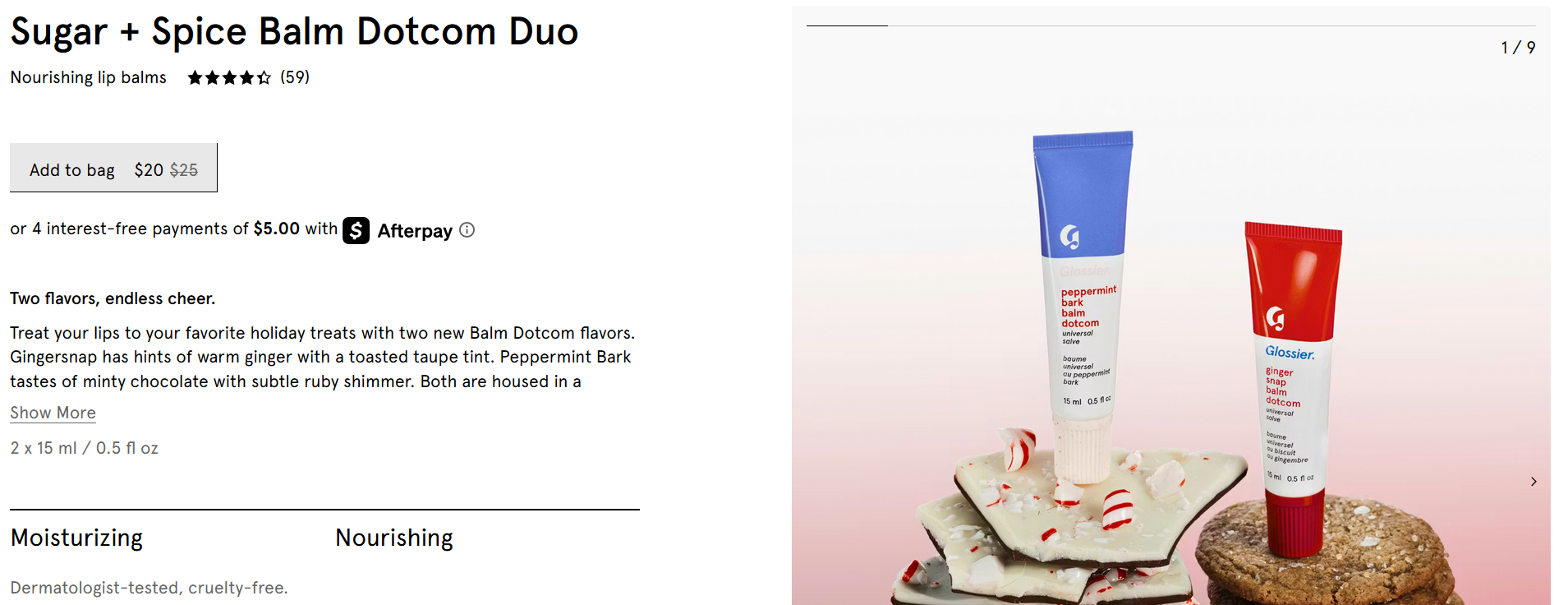
A comprehensive product description that doesn’t bore readers, matched with clear benefits to consumers. Image via Glossier
Content Strategy & Brand Storytelling
A direct-to-consumer website goes beyond transactions. Humanize your brand by creating content that is clear, relatable, and valuable. Utilize this content to educate, inspire, and foster a community of like-minded customers.
Brand story and mission
Effective brand storytelling explains why your business exists—its vision, mission, and core message-and must appear beyond the About page. Weave this narrative into product copy, campaigns, and other content to build consistency, authenticity, and customer trust.
When crafting your brand story and mission, follow a structured narrative that highlights your customers' pain points and how your products or services solve them. Feature real voices, from your founders, team members, and actual customers who have benefited from your brand.
Finally, amplify the story across channels beyond your website, like your social media and email marketing, to maintain a cohesive brand voice and message.
Educational and value-added content
Customers are presented with hundreds of options across every imaginable product category. This makes purchase decisions a little more complex. However, by providing educational information that allows customers to learn more about products and services without being aggressively sold to, they are more likely to buy from you than from your competitors.
Use a Resource Center for guides, FAQs, tutorials, and educational articles, prioritizing topics sourced from social media, emails, and customer support. Doing so makes your customers and followers feel heard and important.
UX, Performance Speed, and Conversion Optimization
A negative user experience resulting from poor website performance and a lack of transparency can decrease your conversion rate. In fact, 40% of online shoppers in the US abandon carts due to high extra costs, the need to create an account to check out, and slow websites.
You can turn this around by ensuring a smooth checkout process and a highly personalized and secure web experience.
Checkout process optimization
The checkout process has to be as friction-free as possible. Meaning, ask only essential info and reduce form fields as every extra field can make people quit the process. Allow browsers to auto-fill lengthy information, such as addresses or payment details.
Speaking of payment, offer more accessibility by including PayPal, Apple Pay, Google Pay, and other options in addition to credit cards. Allow guest checkout to expedite the process. And finally, optimize the checkout process for different devices.
Personalization and data usage
The balance between personalization and data usage can be iffy. While personalization enhances the user experience, collecting personal data poses privacy risks that can erode customer trust.
To address this, D2C brands must implement a clear consent and transparency framework, collecting only the necessary data and offering easy opt-out options. This makes customers feel safe and in control over the personal information they choose to share.
Marketing, Traffic, and Retention Optimization
For a D2C website to become successful, it needs all the help it can get, from boosting web traffic to capturing repeat customers through marketing strategies.
Traffic channels and growth strategies
You can drive customers to your website by leveraging the following key acquisition channels:
- Search engine optimization (SEO): The use of strategic keywords in your web content to increase visibility of your website when people search for things you sell.
- Pay per click (PPC): Investing in paid ads that appear on search engines to get quick visits from potential customers.
- Social media marketing: Using social media platforms, like Instagram, Facebook, and TikTok, to cross-promote your D2C website and connect with customers where they spend time.
- Influencer marketing: Partnering with people your target audience follows on social media who can recommend your products to their communities.
- Email marketing: Sending personalized offers, such as discounts, via email to keep your audience engaged.
Keep in mind that each traffic channel attracts different types of customers. Therefore, it is essential to strike the right balance by evaluating your budget, goals, and target audience to increase visits and sales.
Loyalty and repeat purchase strategies
Maximize your gains from various traffic channels by implementing strategies that encourage repeat visits.
For instance, you can offer tiered loyalty programs, referral rewards, and subscription-based loyalty perks. You can also leverage gamification strategies to increase interactions, especially among young customers. For other repeat-purchase enhancements, consider upselling products based on past purchases and implementing automated reminders for abandoned carts.
D2C Website Examples and Best Practices
Warby Parker: seamless virtual customer journey
Warby Parker delivers an end-to-end shopping experience. Users can virtually try frames via the app, find clear pricing, and book eye exams with visible fees.
What is notable about the brand’s D2C website is its honest pricing and curated information, which are essential in building trust. It integrates tools that reduce friction in the selection process. The brand’s purpose-driven storytelling and social initiatives deepen emotional connection, which strengthens brand trust.
Their responsive mobile design, dedicated virtual app, and helpful chat and phone support further reduce purchase anxiety and obstacles.

Quiz to find the right frame via Warby Parker
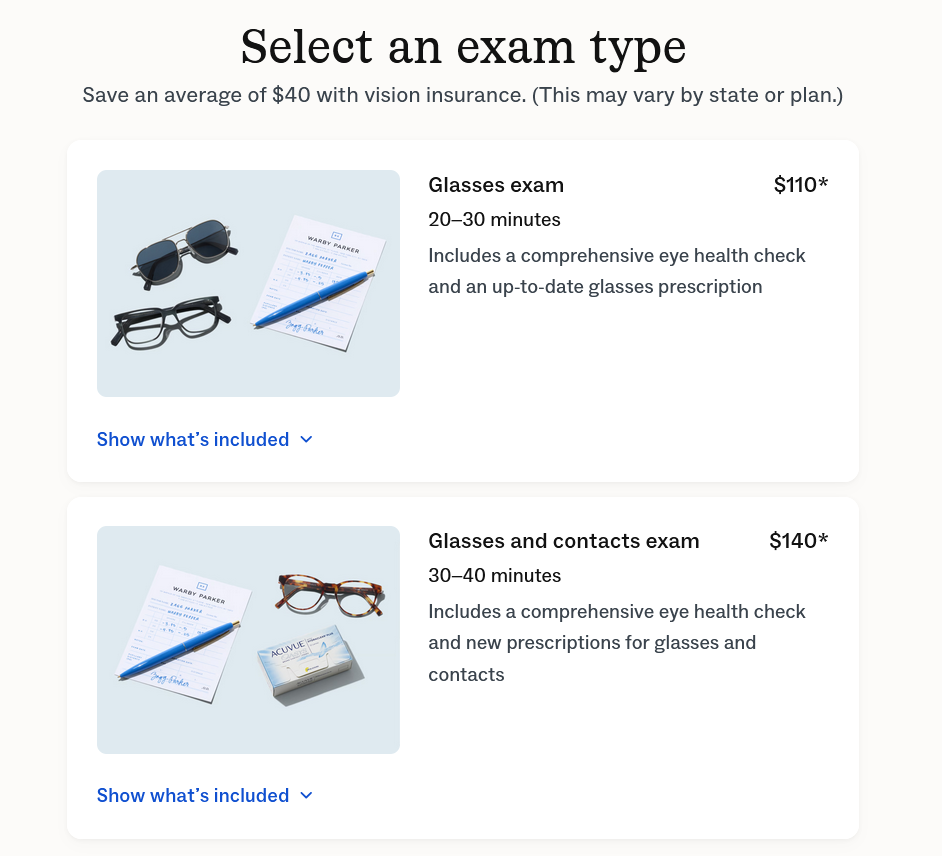
Visitors can book eye exams before purchasing via Warby Parker

Customers can virtually try different frames using the Virtual Try-on app. Image via Warby Parker

Customers can personalize their orders via Warby Parker
Casper: problem-solution content
Choosing a mattress can be overwhelming, especially for first-timers. Casper addresses this on its D2C site by offering tools that simplify the selection process.
The site features a Casper Quiz to match sleepers with the right mattress, access to sleep specialists by phone, and special deals shown at the top of pages. The catalog is intentionally small for its mattress line, so shoppers aren’t paralyzed by choice.
Casper’s D2C website design has successfully provided a customer-centric experience by anticipating common barriers and offering practical solutions.
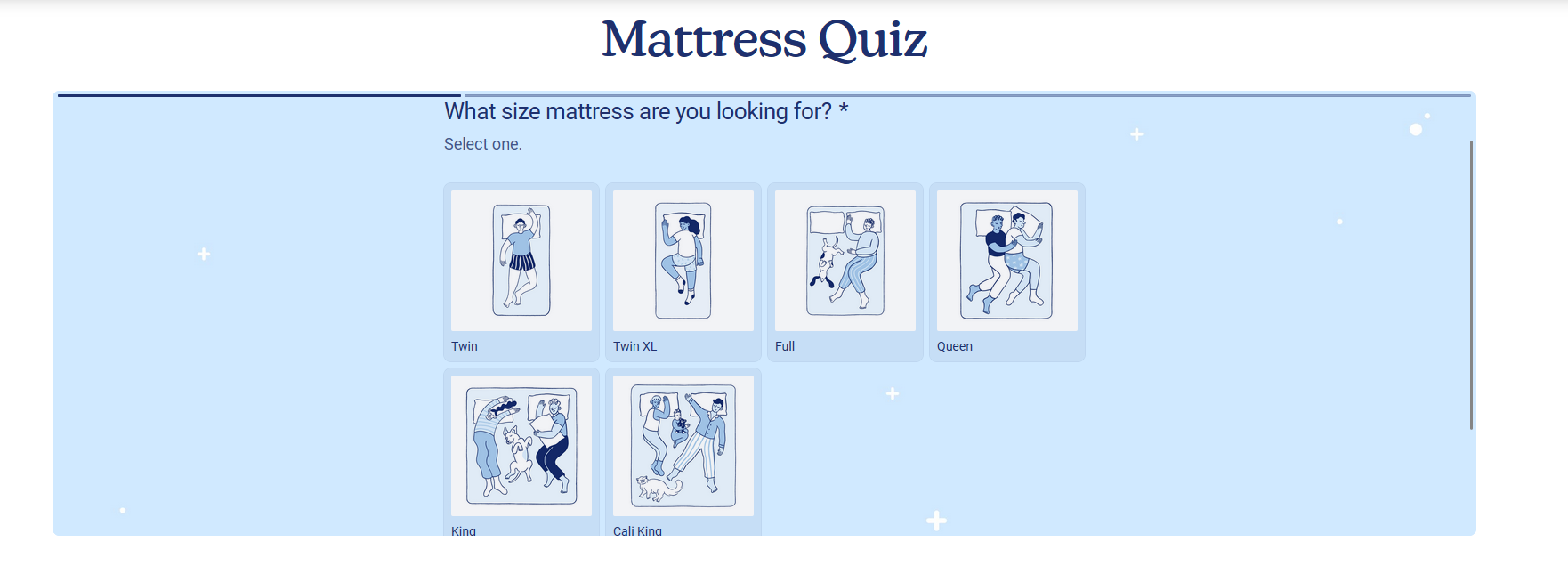
Mattress quiz via Casper
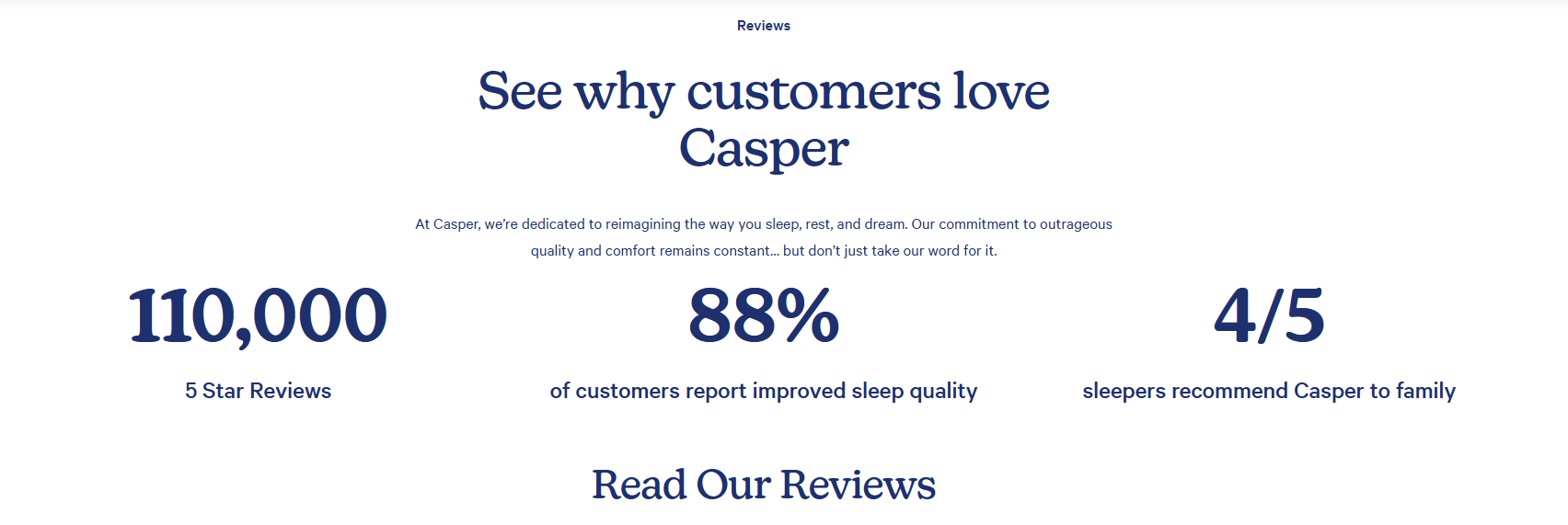
Potential customers can access customer feedback. Image via Casper
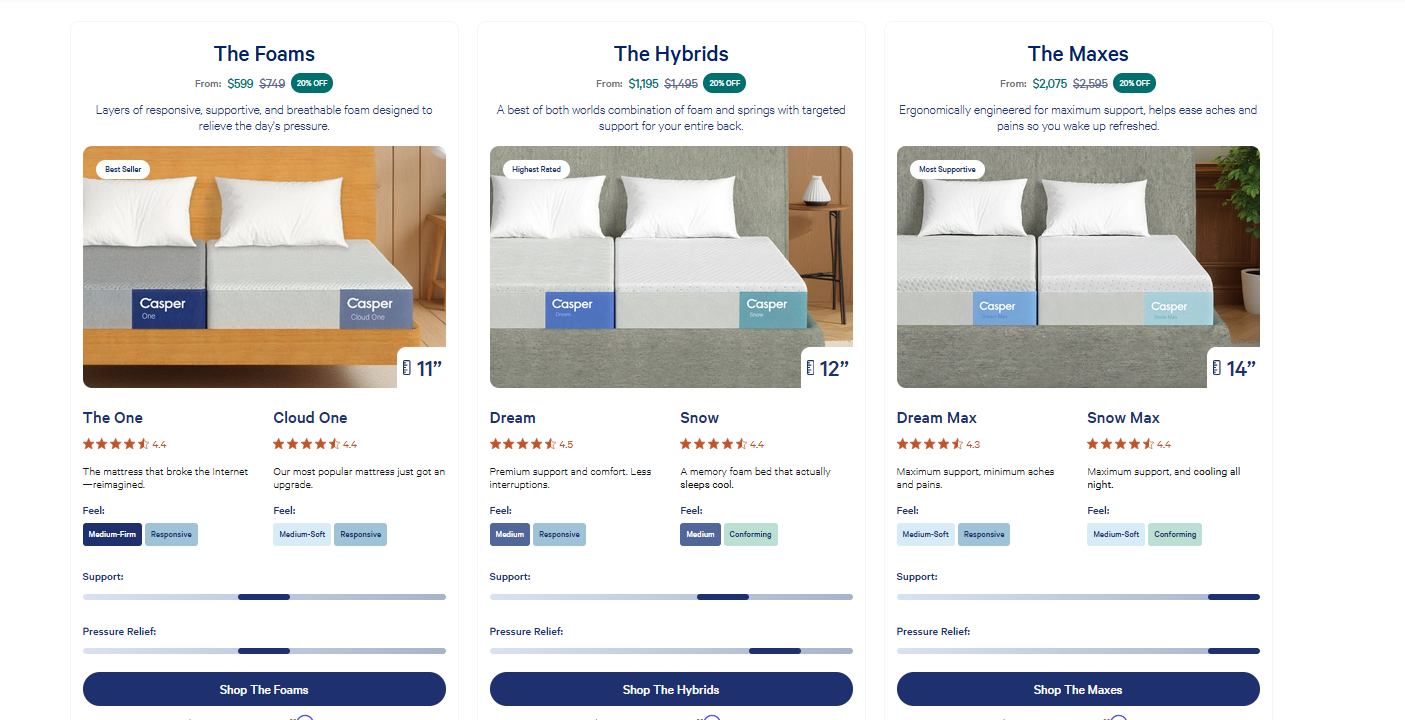
The product catalog is as simple as it can get, providing an overview of key information customers may want to know. Image via Casper
Away: minimalism and product transparency
Away is a luggage company, but it has positioned itself as a travel lifestyle brand. This is evident in its content, which features travel-related articles, videos, images, and podcasts, attracting customers with a penchant for adventure.
The D2C website also peppers reviews from NYT Wirecutter, a dedicated platform for product recommendations by The New York Times, effectively strengthening the brand’s credibility.
As you scroll through the products page, you’ll see honest reviews—good and bad—with a rating snapshot from actual customers. The brand is quick to recognize product improvement recommendations, demonstrating authenticity and a commitment to addressing the challenges customers encounter.

The use of enticing images that evoke happiness and relaxation appeals to avid travelers. Image via Away
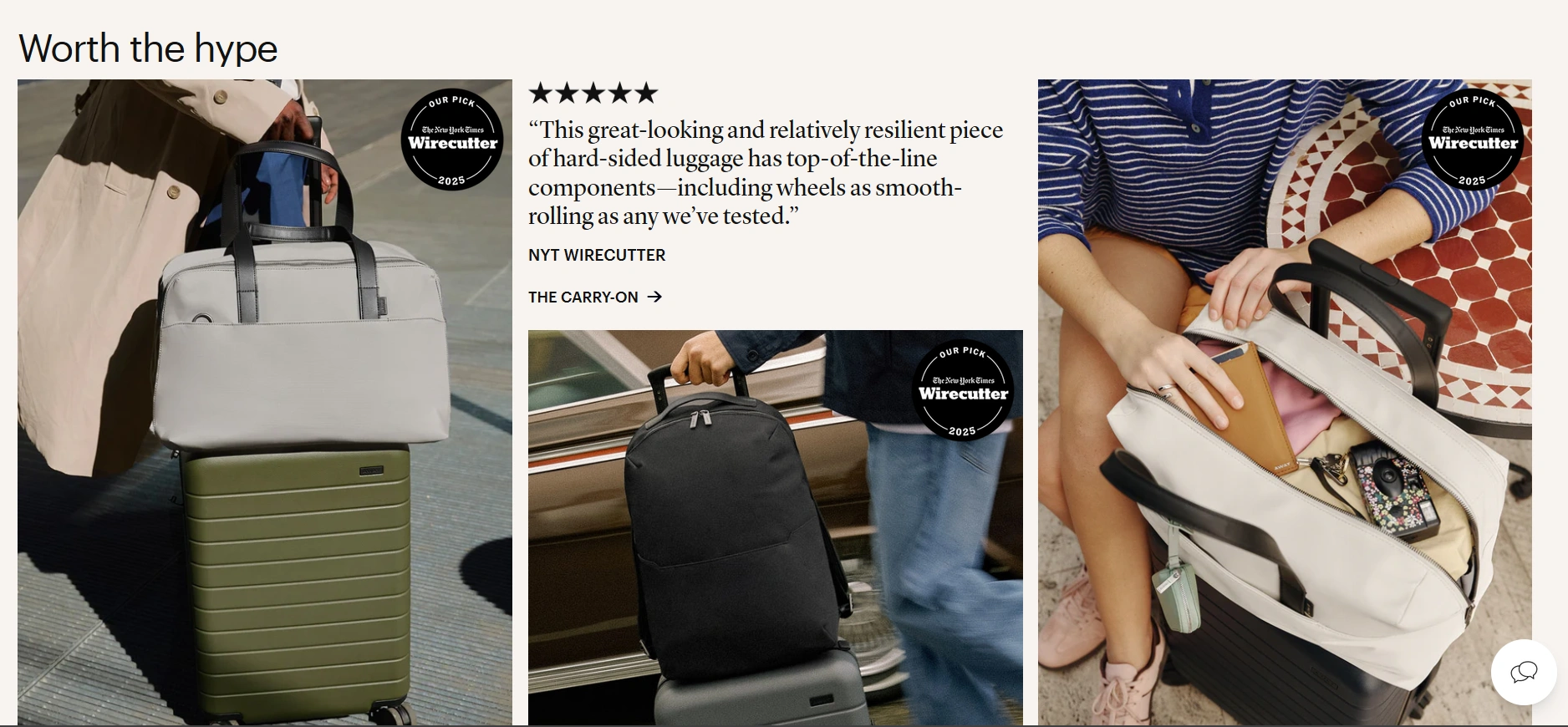
The website displays the badge of approval it earned from The NYT Wirecutter, which strengthens brand credibility. Image via Away
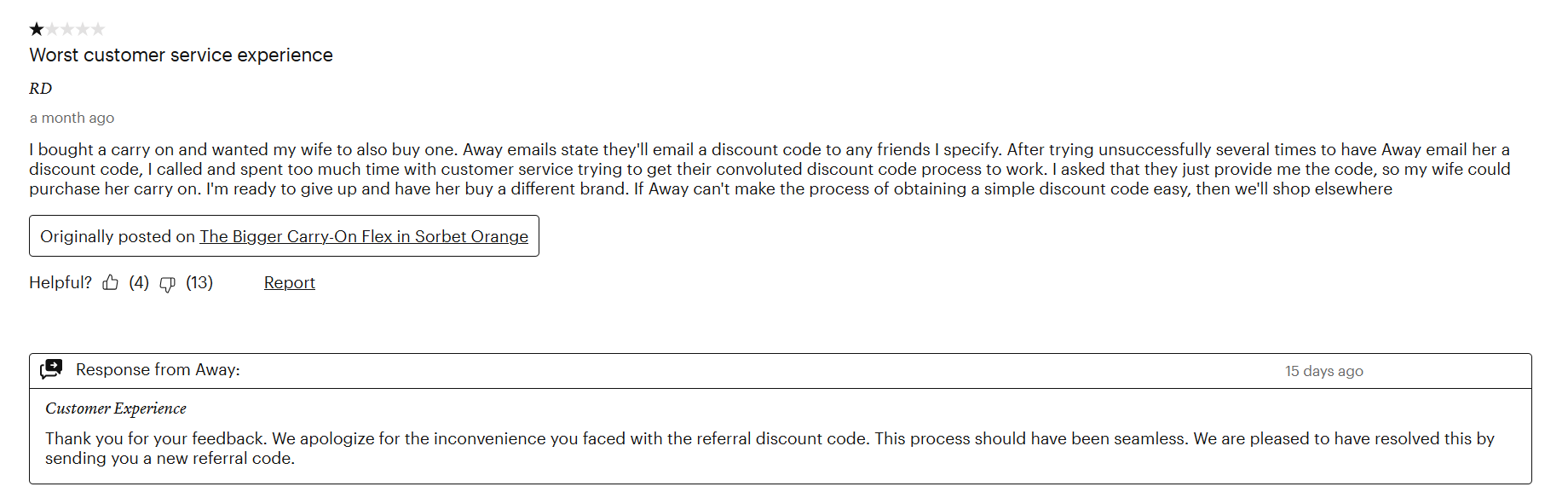
The brand ensures it responds to complaints and implements fixes as quickly as possible. Image via Away
Build a Growth-Oriented D2C Website
Your D2C website can take your business to greater heights. However, it must embody three key elements: a clear value proposition, a highly personalized and seamless user experience, and content that drives lifetime value.
That said, optimization is not an option. It’s an ongoing process that requires long-term commitment, constant tracking and measuring, and multiple iterations that adapt to customer and industry needs. With a unique, fine-tuned D2C website, you can effectively set your brand apart from the competition and position it for future growth.
Start refining yours today.
Dec 11, 2025

Creates insightful, strategy-driven content that translates complex design and branding concepts into accessible knowledge, supporting Ramotion’s mission to elevate digital experiences.