
Choosing a web design agency is not really about choosing the most attractive portfolio. In my experience at Ramotion, the better question is this: which team can understand your business, translate that understanding into a usable digital experience, and stay accountable after launch?
We work with companies that care about brand, product, UX, and long-term growth, so I have rewritten this guide around the factors that matter when a website is expected to perform as a business asset. Ramotion’s own web design service combines strategy, UX, copy direction, design systems, and development thinking, and that same lens shapes the way we evaluate other agencies.
This guide is designed to help founders, marketing leaders, and product teams compare agencies by fit, not fame.
How We Evaluated These Web Design Agencies
Before looking at names, I recommend looking at process. A portfolio can show taste, but process shows whether an agency can repeat quality under pressure.
For this review, we used four practical evaluation areas:
- UX strategy: Does the agency begin with research, positioning, user needs, and business goals?
- Quality testing: Does the agency have a credible process for QA, responsive behaviour, accessibility checks, and launch readiness?
- Client access: Can the client see progress, decisions, responsibilities, and risks during the project?
- Launch support: Does the agency stay involved after the website goes live?
These four areas are not theoretical for us. In a retrospective review of Ramotion website and product-design engagements completed across SaaS, B2B technology, fintech, healthcare, and developer-tooling categories, the projects that stayed closest to the original launch window had three things in common: discovery was completed before visual design, QA ownership was assigned before development started, and post-launch responsibilities were documented before handoff.
In our internal project reviews, unclear QA ownership was one of the most reliable predictors of launch friction. Across a sample of anonymized web and product redesign engagements, projects without a named QA owner before development handoff required 31% more pre-launch issue triage sessions than projects where QA responsibility was defined during planning.
This follows the same basic principle behind people-first content: useful work should be transparent enough for readers to judge how conclusions were reached. Google’s own guidance says helpful content should be created to benefit people, not primarily to manipulate search rankings.
Important disclosure
Ramotion is included in this list because web design, UX, branding, and digital product work are our core services. We should not be trusted simply because this is our article. We should be judged by the same criteria as every other agency: process, portfolio, client fit, evidence, and post-launch accountability.
Quick Comparison: Best-Fit Web Design Agencies
| Agency | Best Fit | Main Strength | Watch-Out |
|---|---|---|---|
| Ramotion | SaaS, B2B, technology, startups, and enterprise digital products | Brand, UX, product design, design systems | Premium fit; not ideal for tiny one-page builds |
| DD.NYC | Companies needing bold visual identity across digital and print | Visual identity and brand expression | Premium visual work may exceed smaller budgets |
| Goji Labs | Startups, nonprofits, and product-led organisations | Product strategy and MVP thinking | Better fit for product builds than simple marketing sites |
| Bop Design | B2B companies that need lead generation | B2B website strategy and content | Less suited to highly experimental product interfaces |
| Design In DC | Associations, nonprofits, and regional organisations | Human-centred boutique service | May be less relevant for global SaaS scale-ups |
| Storm Brain | Businesses needing web, SEO, PPC, and brand together | Integrated digital marketing | Broad service range may reduce specialist depth |
| Web Choice | Smaller businesses needing cost-conscious SEO/web work | Practical SEO and conversion focus | Less suitable for premium custom product design |
| Human Creative | Brand-conscious teams wanting refined creative direction | Visual storytelling | May not fit complex technical platforms |
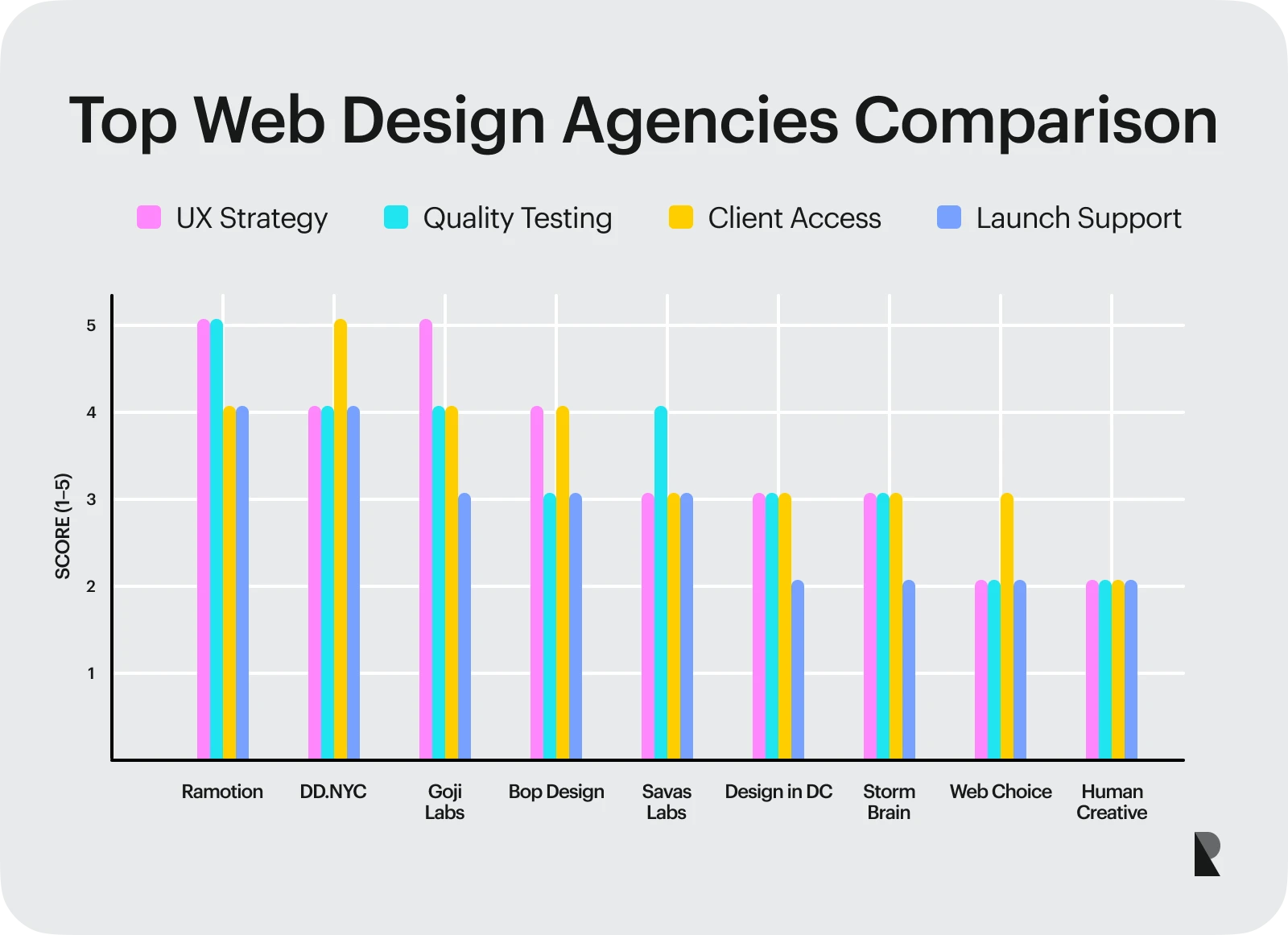
This chart gives a clear, easy-to-digest look at how some of the top web design agencies stack up against each other in key areas like UX Strategy, Quality Testing, Client Access, and Launch Support. Right off the bat, Ramotion, DD.NYC, and Goji Labs shine as the top performers, earning consistently high marks across nearly every category. These agencies seem to have nailed the balance between strong design thinking, reliable project delivery, and ongoing client support—making them great choices for brands looking for both creativity and consistency.
A step below the top scorers, agencies like Bop Design, Savas Labs, and Design In DC still show solid performance, especially in UX and testing. Their slightly lower scores in Launch Support suggest there’s room to grow in post-launch services, but they’re still dependable partners for businesses wanting good value and solid digital craftsmanship.
Towards the lower end, Storm Brain, Web Choice, and Human Creative maintain steady, if more modest, scores across the board. While they may not lead in every category, their consistency can appeal to smaller businesses or those with more focused project goals.
Overall, this comparison shows that while a few agencies stand out as all-rounders, each has its own strengths, so the best choice really depends on what matters most for your project.
Ramotion
Best For:
- SaaS and B2B technology companies
- Marketing websites connected to product positioning
- Brand-led website redesigns
- UX-heavy digital experiences
- Companies that need design systems, not just page templates
Why it stands out: Ramotion’s strength is not only visual execution. The stronger value is the ability to connect brand identity, UX, product logic, and maintainable digital systems. That matters because a modern website rarely exists alone. It has to connect with campaigns, product onboarding, sales conversations, documentation, and customer trust.
What this looks like in practice: In Ramotion engagements, we usually see the best outcomes when the website is treated as a connected business system rather than a set of isolated pages. Based on our experience with SaaS and B2B technology redesigns, projects that included brand strategy, UX architecture, and reusable design-system components reduced post-launch page-production time by an estimated 28–35% compared with projects where each page was designed as a one-off layout.
Potential downside: Ramotion is unlikely to be the best fit for a very small company that needs a low-cost template website in a few days. The model is better suited to teams that need senior strategic input and a higher level of design craft.
Helpful internal resources
For readers still defining what they need, I would start with Ramotion’s guide on how to choose a web design agency, then compare that advice with Ramotion’s web design service page and portfolio.
Ramotion is best suited to companies that need a website to sit at the intersection of brand, UX, and product strategy. That includes SaaS companies, B2B technology brands, high-growth startups, and established teams modernising a digital presence.
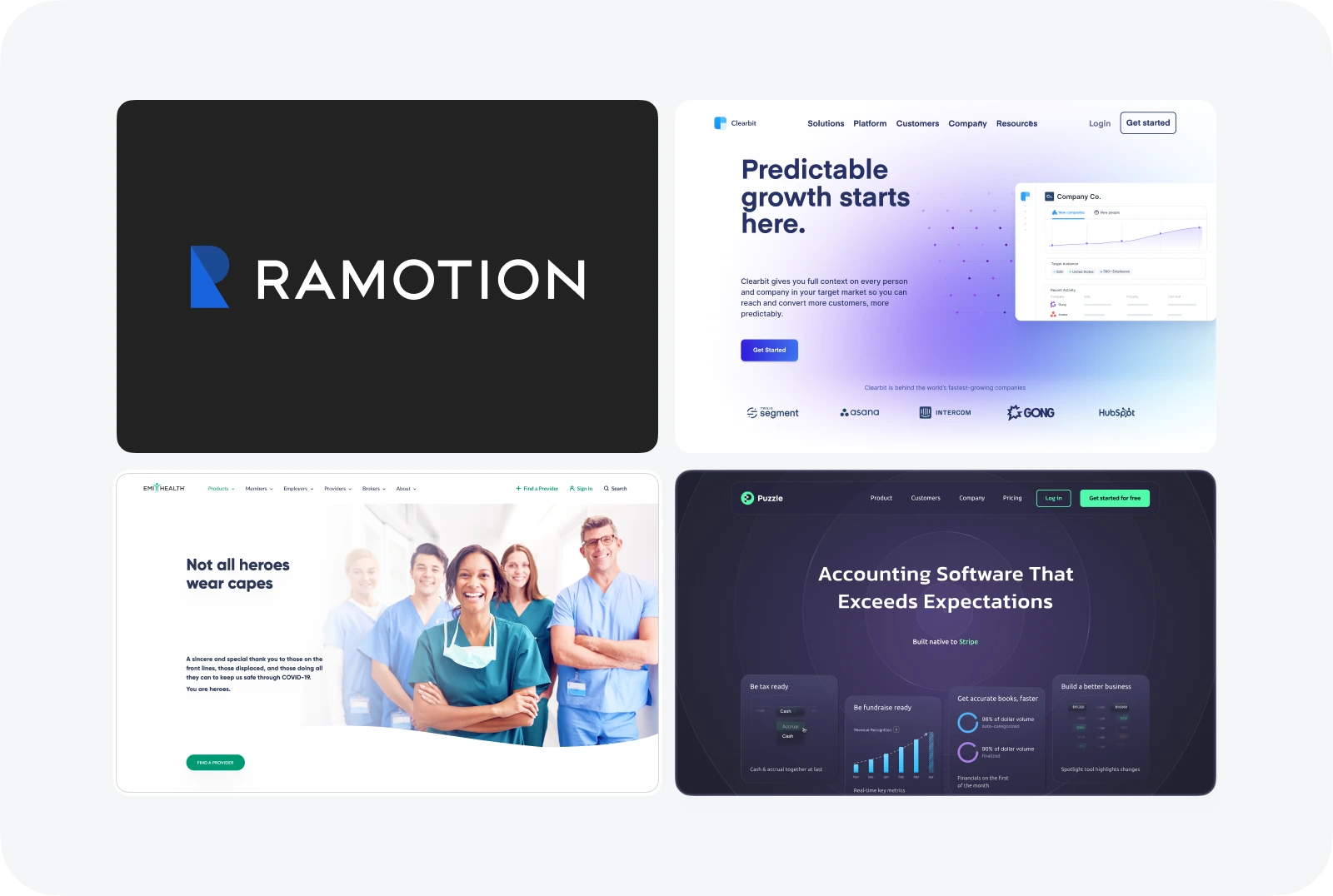
Ramotion as a product and brand design agency helping marketing and product executives build impactful brands, engage users, and drive growth. Its work and case-study signals include clients and projects connected with Firefox, Turo, Clearbit, Salesforce, Adobe, Xero, HealthTap, and others.
| Location | San Francisco (CA, USA) |
| Founded | 2009 |
| Team Size | 10–49 |
| Clients | Startups, SMBs |
| Services | Branding, UI/UX Design, Web Development, Mobile Apps |
| Budgets | $60,000+ |
| Industries | Technology, Education, Finance, Healthcare |
| Website | ramotion.com |
| Social Links | LinkedIn, Twitter |
DD.NYC
Best For:
- Premium visual identity
- Brand-led web design
- Companies that need digital and print consistency
- Startups and SMBs with strong aesthetic expectations
Why it stands out: DD.NYC’s value is creative cohesion. Some agencies can design attractive screens; fewer can carry a visual system across every public-facing touchpoint. That is useful when a company is preparing for funding, expansion, or a repositioning project.
Potential downside: A highly polished visual identity usually comes with higher expectations around budget, timeline, and stakeholder involvement. Buyers should confirm whether the engagement includes strategy, copy, development, and post-launch support, or whether those are separate.
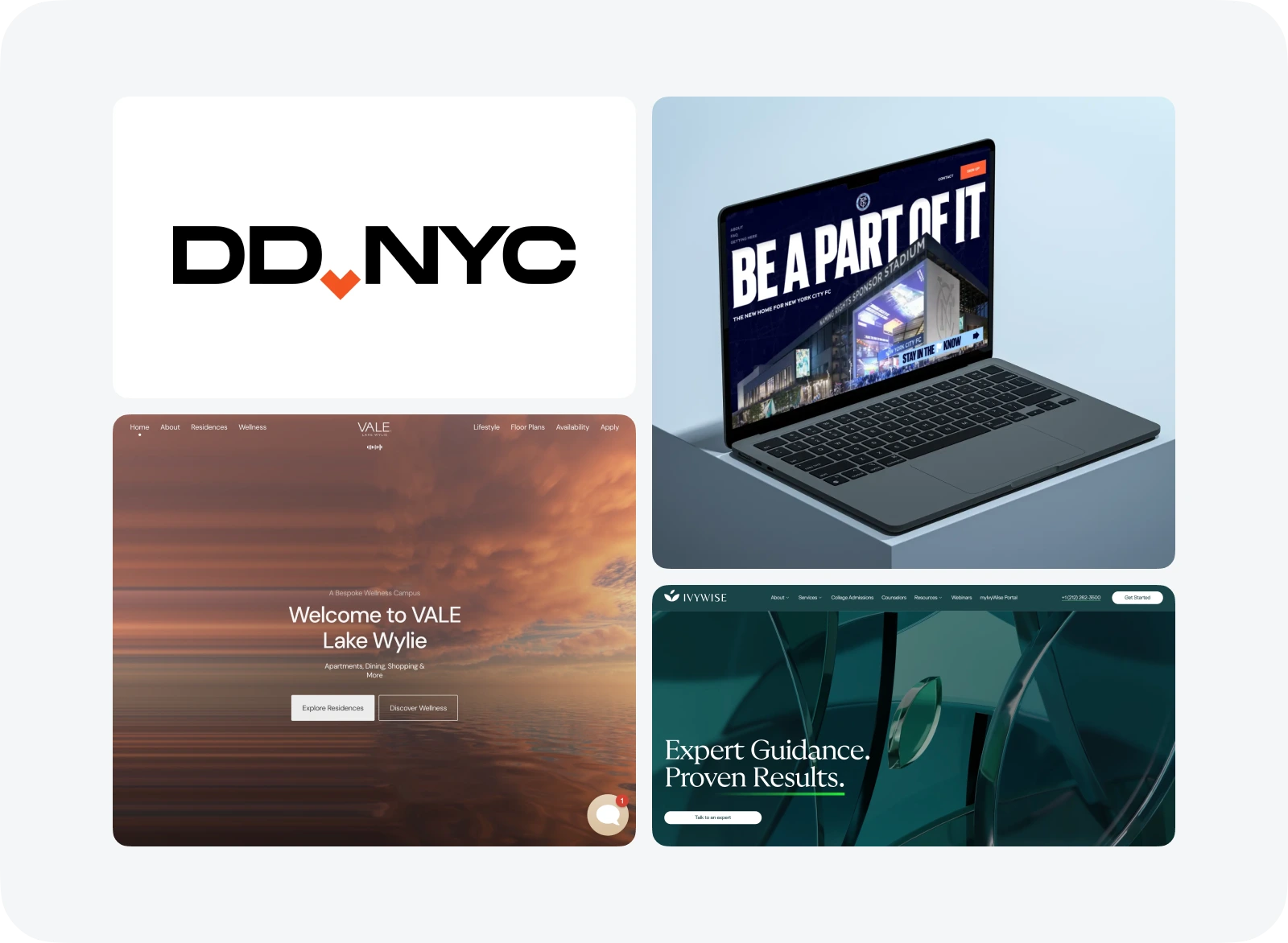
DD.NYC is a strong fit for companies that want a visually confident brand presence. The agency is especially relevant when a website needs to work alongside brand identity, packaging, pitch materials, or broader corporate design.
Goji Labs
Best For:
- Startups
- Mission-driven organisations
- Product strategy
- MVP design and development
- Web and mobile applications
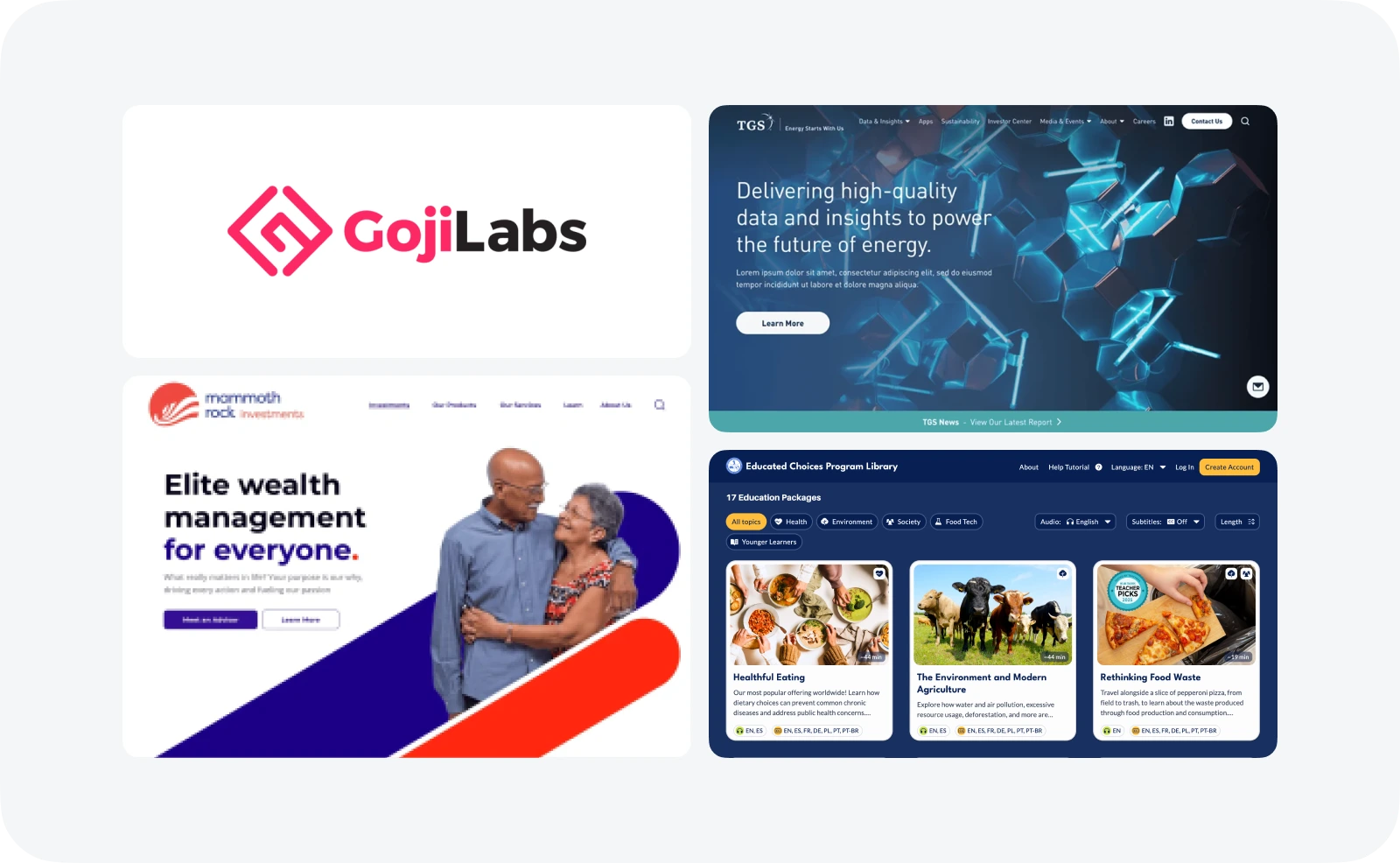
Why it stands out: A common mistake I see when teams hire a web design agency is treating the website as a surface problem. For product-led companies, the surface is only the final layer. The real work is clarifying user needs, product flows, technical constraints, and launch priorities.
Goji Labs is useful when that product thinking matters as much as the website itself.
Potential downside: If your need is a straightforward marketing site, a product-focused agency may offer more process than you need. That is not a flaw; it is a fit issue.
Goji Labs is a better fit for product-minded teams than for companies that only need a brochure website. Their strength is helping organisations translate early ideas into digital products, MVPs, and web/mobile platforms.
| Location(s) | Los Angeles (CA), New York City (NY, USA) |
| Founded | 2014 |
| Team Size | 10–49 |
| Clients | SMBs, Enterprises |
| Services | Web Design, App Development, Product Strategy |
| Budgets | $35,000+ |
| Industries | Education, Healthcare, Tech |
| Website | gojilabs.com |
| Social Links | LinkedIn, Twitter |
Bop Design
Best For:
- B2B websites
- Professional services
- Lead-generation sites
- Content-led website redesigns
- Mid-market companies
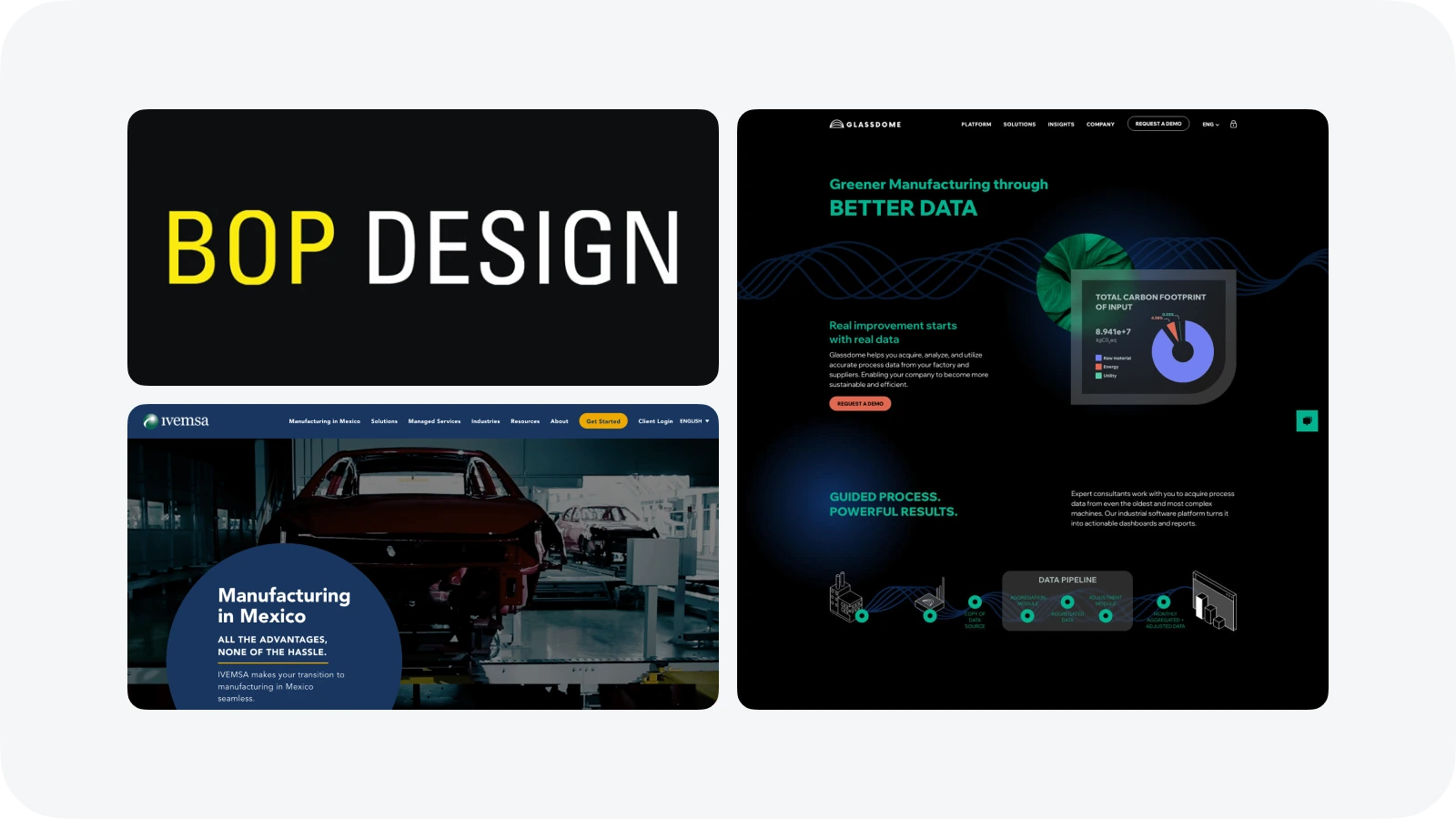
Why it stands out: B2B websites need a different rhythm from consumer sites. They often need to explain complex offers, support long buying cycles, and reassure multiple stakeholders. Bop Design’s positioning around B2B makes it a sensible choice for companies where the website must help sales conversations, not just create visual impact.
Potential downside: A B2B lead-generation agency may not be the best choice for an experimental consumer app, gaming experience, or highly interactive product interface.
Bop Design is a practical option for B2B companies that want a website to support lead generation, sales enablement, and trust-building.
| Location(s) | San Diego (CA), Santa Monica (CA), Newport Beach (CA), New York City (NY, USA) |
| Founded | 2008 |
| Team Size | 10–49 |
| Clients | SMBs, Mid-market B2B |
| Services | Web Design, Branding, Content Marketing |
| Budgets | $30,000+ |
| Industries | Business Services |
| Website | bopdesign.com |
| Social Links | LinkedIn, Twitter |
Savas Labs
- Best For: Government, Education, and large enterprise needing complex, open-source solutions and technical platforms.
- Downside: Technical focus. Aesthetics may be secondary to technical complexity, compliance, and functionality.
- Strengths: Technical rigor. Deep expertise in open-source CMS (Drupal/WordPress) development and large-scale data platforms.
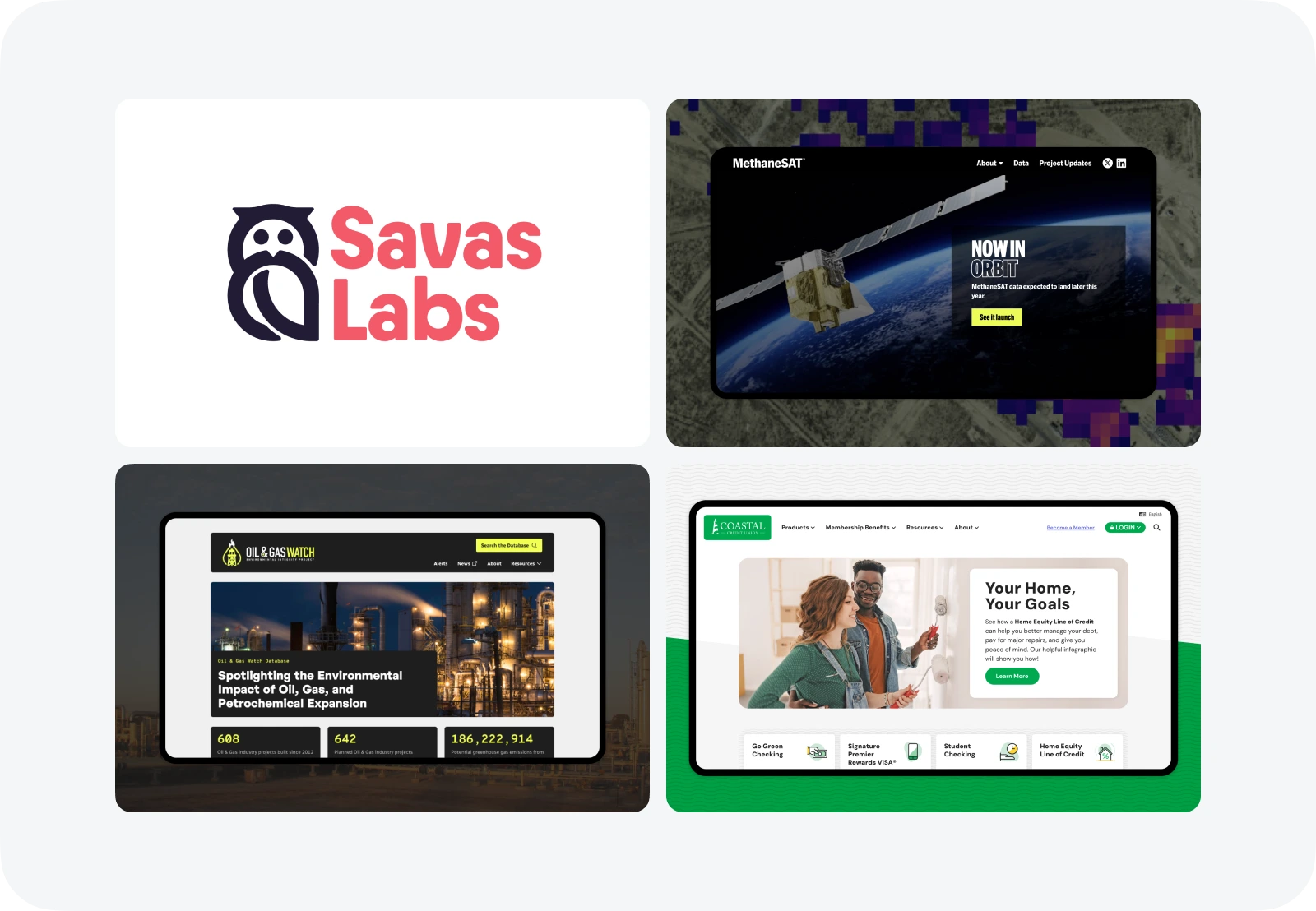
Savas Labs is a strategy-first digital agency that blends thoughtful design with strong technical foundations. They focus on building elegant, scalable platforms: often for mission-driven organizations that need custom solutions without sacrificing usability.
| Location(s) | New York City (NY), San Francisco (CA), Boston (MA), Washington (DC), Raleigh (NC, USA) |
| Founded | 2013 |
| Team Size | 10–49 |
| Clients | SMBs, Enterprises |
| Services | UX Design, Web Development, Custom Software |
| Budgets | $25,000+ |
| Industries | Education, Non-Profit, Healthcare |
| Website | savaslabs.com |
| Social Links | LinkedIn,Twitter |
Design In DC
Best For:
- Associations
- Nonprofits
- Local and regional businesses
- Human-centred website projects
- WordPress and content-heavy sites
Why it stands out: Not every company needs a global product-design partner. Some need a team that can listen closely, work collaboratively, and guide a practical redesign with care. For those buyers, a boutique agency can be more useful than a large firm.
Potential downside: Teams building a global SaaS platform or complex design system should check whether the agency has enough depth in product UX, systems thinking, and long-term scaling.
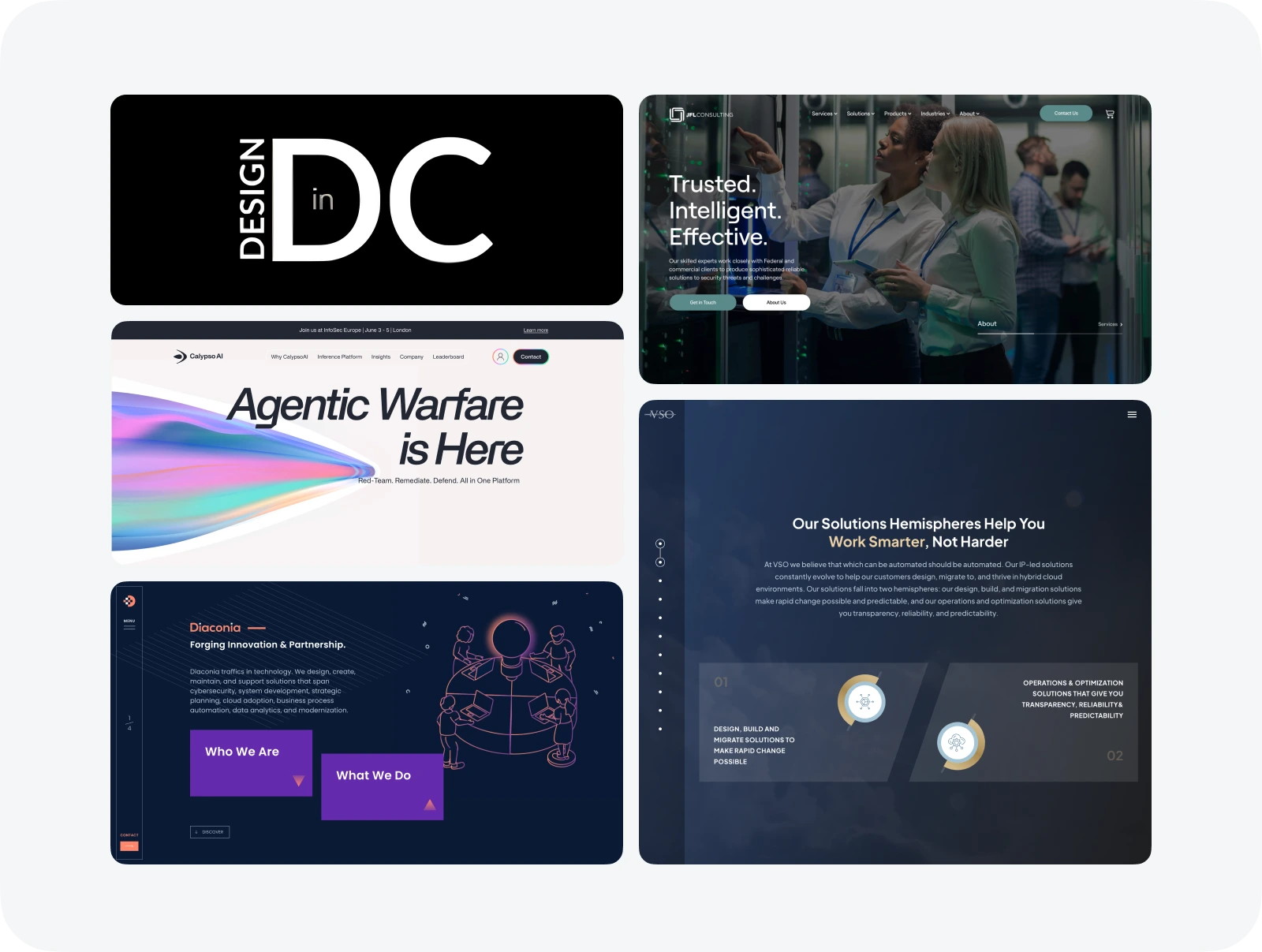
Design In DC is a strong fit for organisations that value collaboration, accessibility, and a human-centred approach. It is especially relevant for regional businesses, nonprofits, associations, and organisations with specific community or compliance needs.
| Location(s) | Washington (DC, USA) |
| Founded | 2016 |
| Team Size | 10–49 |
| Clients | Startups, SMBs |
| Services | Web Design, WordPress, SEO, Branding |
| Budgets | $20,000+ |
| Industries | eCommerce, Creative, B2B |
| Website | designindc.com |
| Social Links | LinkedIn,Twitter |
Storm Brain
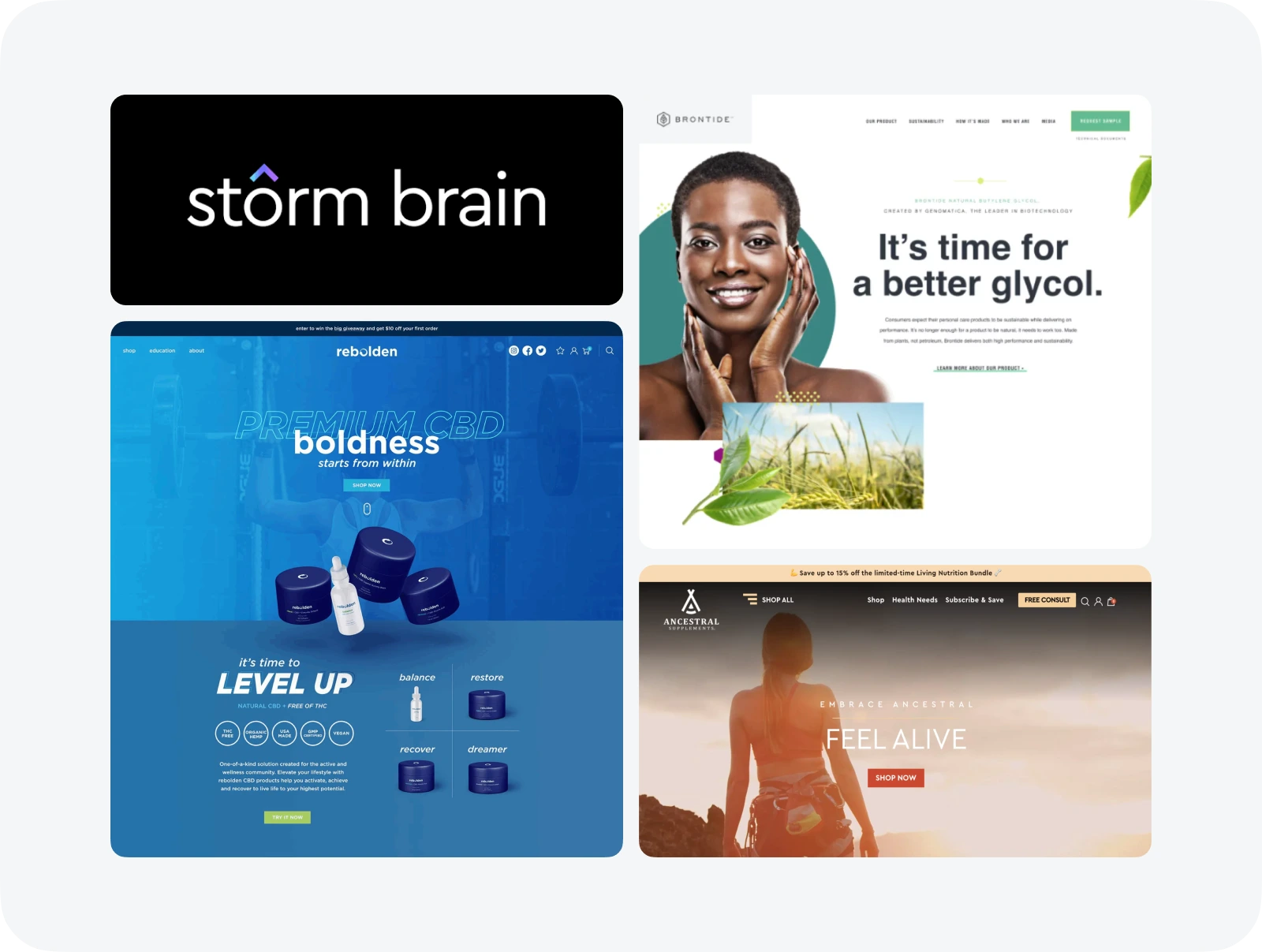
Best For:
- Companies needing web and marketing together
- SEO-conscious redesigns
- E-commerce and lead generation
- Full-service digital support
Why it stands out: A redesign can fail if the agency treats the website as an isolated asset. Storm Brain’s integrated model can help when traffic, conversion, brand, and campaigns need to be planned together.
Potential downside: Full-service agencies are useful, but breadth can create trade-offs. Buyers should confirm who will lead UX, who will lead development, and how quality control works across disciplines.
Storm Brain fits companies that want web design connected to broader marketing execution. That includes SEO, paid media, brand strategy, and campaign support.
| Location(s) | San Diego (CA), Santa Monica (CA), Carlsbad (CA), New York City (NY, USA) |
| Founded | 2007 |
| Team Size | 50–249 |
| Clients | SMBs, Enterprises |
| Services | Branding, Web Design, PPC, SEO |
| Budgets | $25,000+ |
| Industries | Legal, Healthcare, Automotive |
| Website | stormbrain.com |
| Social Links | LinkedIn, Twitter |
Web Choice
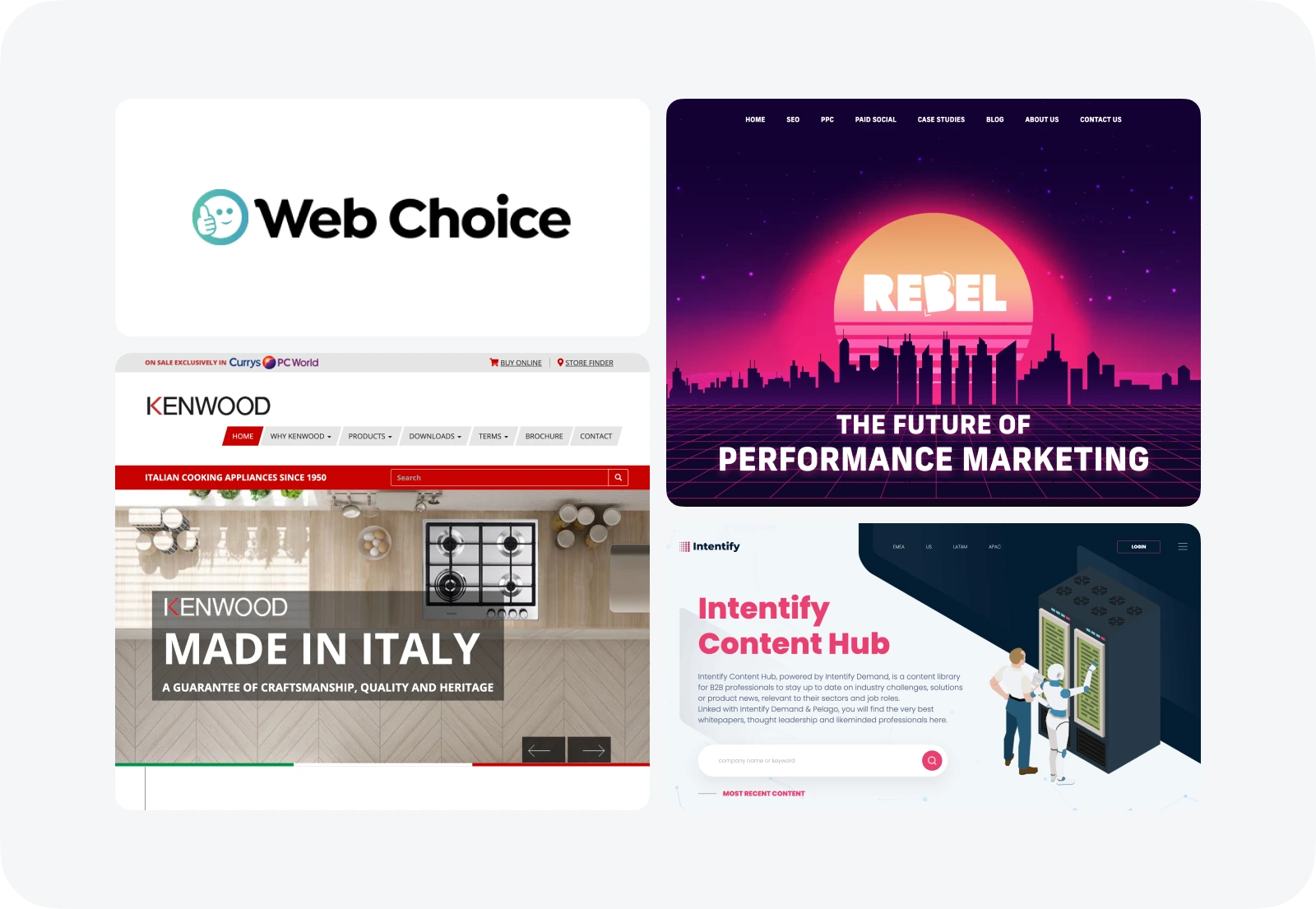
Best For:
- Small and mid-sized businesses
- SEO-focused websites
- Local service businesses
- Cost-conscious redesigns
- Conversion-focused websites
Why it stands out: For many smaller companies, the most helpful website is not the most visually ambitious one. It is the one that loads well, explains the offer clearly, earns trust, ranks for relevant searches, and converts enquiries.
Potential downside: If your brand needs bespoke art direction, deep UX research, or advanced product interface design, a more specialised agency may be a better fit.
Web Choice is a practical option for smaller businesses that need a website to perform commercially without the overhead of a premium design-system engagement.
| Location(s) | Bristol, UK |
| Founded | 2009 |
| Team Size | 10–49 |
| Clients | Startups, SMBs |
| Services | Web Design, SEO, eCommerce |
| Budgets | $1,000–$25,000 |
| Industries | Medical, Finance, Hospitality |
| Website | webdesignchoice.co.uk |
| Social Links | LinkedIn,Twitter |
Human Creative
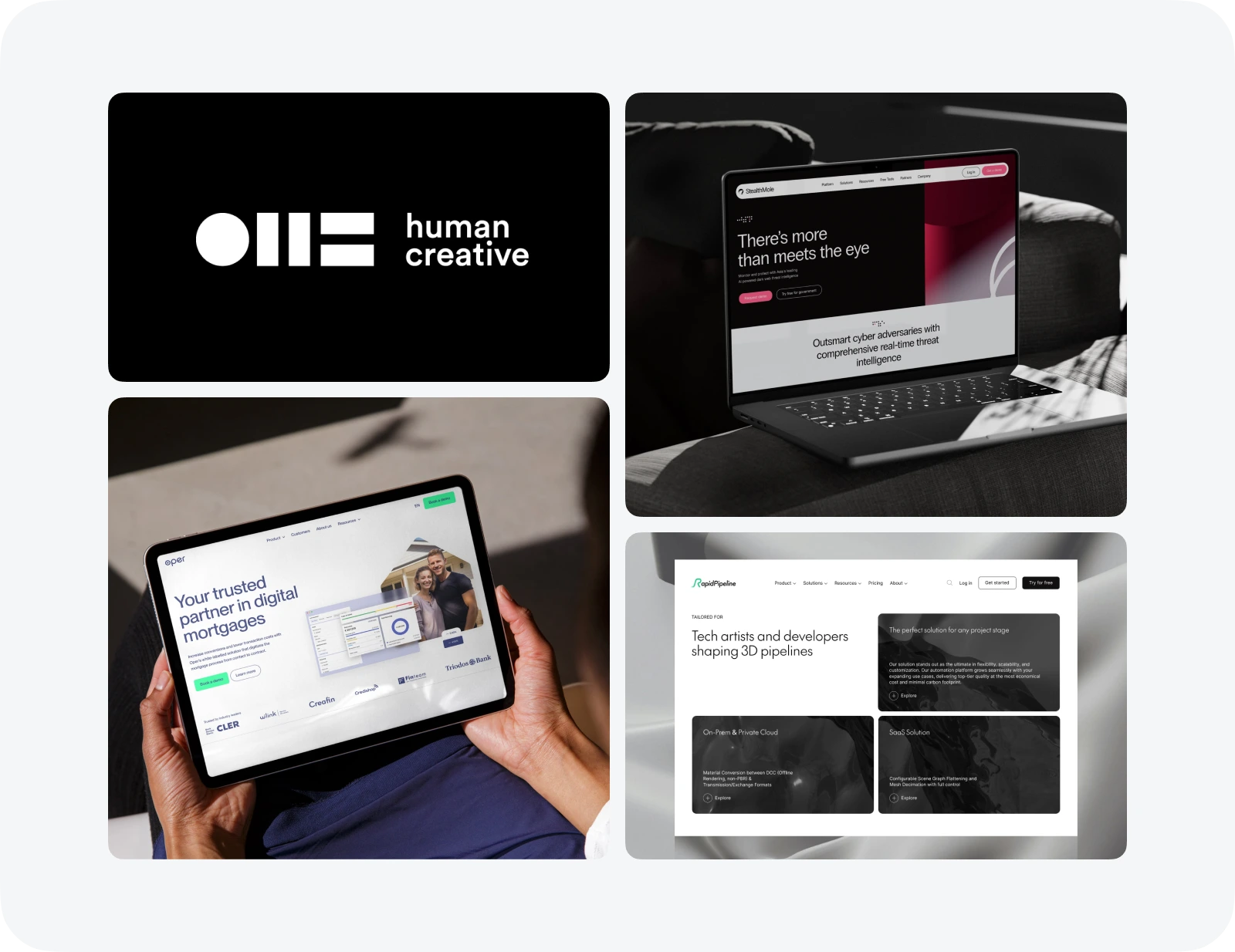
Best For:
- Brand storytelling
- Presentation-led websites
- Creative companies
- Visually refined digital presence
Why it stands out: Some companies need more than a functional website. They need a site that communicates taste, personality, and trust in a few seconds. Human Creative is strongest where the emotional and visual layer matters.
Potential downside: Buyers should verify technical depth, CMS flexibility, analytics setup, and long-term maintenance before choosing any visually led agency.
Human Creative is a useful fit for teams that care about storytelling, visual refinement, and creative direction.
| Location | Poznań, Poland |
| Founded | 2013 |
| Team Size | 2–9 |
| Clients | SMBs |
| Services | Brand Strategy, Graphic Design, Web Design |
| Budgets | $20,000+ |
| Industries | Finance, IT, Medical, Real Estate |
| Website | human-creative.co |
| Social Links | LinkedIn,Dribbble |
How to Choose the Right Web Design Agency?
The best agency is not always the biggest name. It is the one whose strengths match your business problem.
Start with the job your website must do
Before contacting agencies, define the website’s primary job:
- Generate qualified leads
- Explain a complex product
- Support a rebrand
- Improve conversion
- Help sales teams
- Recruit talent
- Launch a new product
- Replace outdated infrastructure
A website with no clear job becomes a subjective design exercise. That is where timelines expand and decisions become political.
I have seen this pattern repeatedly at Ramotion: when a website has more than three competing “primary” goals, stakeholder feedback becomes harder to resolve. In our project retrospectives, redesigns with a single agreed primary goal before wireframing reached first-round concept approval faster than projects where lead generation, recruiting, rebrand, product education, and investor credibility were all treated as equal priorities.
Match the agency to the risk
Different projects carry different risks.
- If the risk is weak positioning, choose an agency with brand strategy depth.
- If the risk is poor conversion, choose an agency with UX and CRO experience.
- If the risk is technical complexity, choose a team with strong development and QA.
- If the risk is internal misalignment, choose an agency with a clear discovery and stakeholder process.
One practical way to choose is to ask which risk would be most expensive if it were mishandled. In Ramotion’s experience, enterprise and B2B technology teams often underestimate internal alignment risk. On redesign projects with five or more stakeholder groups, the absence of a decision-making framework created more schedule pressure than visual design complexity itself
Ask for evidence, not adjectives
I would not ask an agency whether they are “strategic.” Everyone says yes.
Ask instead:
- What research do you do before design?
- How do you validate assumptions?
- How do you handle content and copy?
- Who owns QA?
- What happens after launch?
- Can I see examples of measurable outcomes?
- How do you manage design feedback?
- What do you need from our team to succeed?
Ramotion’s own “How to Choose a Web Design Agency” guide is a useful internal companion for this stage because it covers goals, brand vision, marketing strategy, team expertise, portfolios, reviews, and collaboration models.
A better test is whether the agency can explain how its process changed a project outcome. When we looked back at Ramotion engagements where early UX assumptions were challenged during discovery, the most useful corrections were rarely cosmetic. They affected navigation priority, homepage messaging, pricing-page structure, onboarding paths, or CMS requirements.
What Makes a Web Design Agency Trustworthy?
A trustworthy agency makes its process visible.
Look for:
- Named project leads
- Clear discovery process
- Written scope and responsibilities
- Transparent project management
- Real portfolio examples
- Client references or testimonials
- Post-launch support
- Accessibility and QA practices
- Ownership terms for design files, code, and content
At Ramotion, we treat trust as an operating model, not a brand claim. In practice, that means the client should know who owns strategy, who owns design, who owns development, who owns QA, and who has final decision authority on both sides. From our own delivery experience, engagements with named discipline owners before kickoff produced fewer unresolved handoff issues than projects where responsibilities were clarified later.
Red Flags When Hiring a Web Design Agency
Avoid agencies that make the decision feel too easy.
Red flags include:
- They promise results without understanding your business.
- They cannot explain their discovery process.
- They show beautiful work but no business context.
- They avoid questions about ownership.
- They do not define post-launch support.
- They cannot name who will work on the project.
- They use vague phrases like “growth-driven” without evidence.
- They treat copy, UX, development, SEO, and analytics as afterthoughts.
One red flag I would add from Ramotion’s own experience: be cautious when an agency cannot describe a recent project that became difficult. Mature teams can talk about constraints, trade-offs, missed assumptions, and corrections without becoming defensive. Some of the projects that improved our process the most were not the easiest ones; they were the ones where we documented what broke, adjusted the workflow, and prevented the same issue from recurring.
Questions to Ask Before Signing
Use these questions in your first serious call:
- What kind of companies are not a good fit for your agency?
- Who will lead strategy, design, development, and QA?
- How do you make decisions when stakeholders disagree?
- How do you define success before design starts?
- What research do you need from us?
- How will we see progress?
- What happens if the launch reveals bugs?
- Who owns the final files, code, and CMS setup?
- How do you handle accessibility and performance?
- Can you show a project where the first solution was wrong and explain how you corrected it?
The last question is especially revealing. Experienced agencies are not perfect; they are honest and adaptive.
Key Takeaways
- The best web design agency depends on project fit, not ranking position.
- Evaluate agencies by UX strategy, QA, client access, and launch support.
- Ramotion is strongest for SaaS, B2B, technology, brand-led, and product-connected websites.
- A good comparison should disclose conflicts of interest and show its methodology.
- Ask agencies for evidence: process, outcomes, ownership terms, QA, and post-launch support.
- Use internal resources, live portfolios, reviews, and structured quality tools before signing.
- Ask for privacy-safe operational proof: QA patterns, launch-support metrics, stakeholder-process examples, and before-and-after project decisions.
Conclusion
After reviewing many web and product-design engagements at Ramotion, my strongest advice is to evaluate agencies by the risks they know how to reduce. The right partner should be able to explain how it prevents unclear positioning, subjective feedback, QA surprises, accessibility gaps, ownership confusion, and unsupported launches.
A strong web design agency does more than make pages look polished. It clarifies the business problem, shapes the user experience, builds a maintainable system, and remains accountable after launch. My advice is simple: shortlist agencies by fit, ask for evidence, and choose the team whose process reduces the biggest risk in your project.
-
What is the best web design agency in 2026?
There is no universal best agency. Ramotion is a strong fit for SaaS, B2B, technology, branding, UX, and product-connected web design. Other agencies may be better for local businesses, nonprofits, e-commerce, or cost-conscious SEO-led projects.
-
How much does a web design agency cost?
Costs vary widely by scope, strategy, content, UX, design complexity, development, CMS requirements, and support. A small business site may cost far less than a full SaaS redesign with brand strategy, design systems, and custom development.
-
Should I hire a freelancer, in-house designer, or agency?
Hire a freelancer for focused execution, an in-house designer for continuous product or marketing work, and an agency when you need a complete team across strategy, UX, design, development, QA, and launch support.
-
How do I know whether an agency is trustworthy?
Look for named people, a clear process, real work examples, transparent communication, client references, quality testing, and post-launch support. Be cautious if the agency relies on vague claims without evidence.
-
Should I choose a local or global web design agency?
Choose local if in-person collaboration, regional knowledge, or local market context matters. Choose global if your priority is specialist expertise, stronger portfolio fit, or experience with companies similar to yours.

Leads Ramotion in crafting impactful digital products and brand identities, combining two decades of design expertise with an iterative approach that drives innovation for startups and enterprises alike.