
With over 13 million blog posts published every day (just on WordPress!), we’re in a content explosion. But while the supply seems infinite, many are not driving the results brands look for. Low traffic and poor conversion rates mean a lot of work ends up unseen. The solution isn’t to stop creating; it’s to create a content optimization strategy that helps you refresh, restructure, and repurpose existing assets so they become reliable growth drivers.
But first—what is a content optimization strategy, why does it matter, and how can you create and successfully implement one?
What is a Content Optimization Strategy?
A content optimization strategy is a plan of tactics to meet business goals—more reach, higher conversions, better retention. It combines SEO, content gap analysis, and linking and aligning content to search intent. Central to this is SERP (Search Engine Results Page) analysis, studying what search engines reward (featured snippets, People Also Ask, video carousels) so you know which format, structure, and content features rank well.
Why Content Optimization Strategies Matter
Optimized content answers user needs quickly, ranks better, and converts more. For small and medium businesses with limited budgets, optimization is the ultimate cheat code as it is often more efficient than constant new production and cheaper, too. It reduces internal competition between pages, updates content for accuracy, improves user experience, and increases trust, raising ROI.
If you’re still on the fence, here’s what the numbers say:
- According to Ahrefs, 96.55% of the over 14 billion pages in its index DO NOT get traffic from Google.
- An experiment by HubSpot reveals content optimization can boost organic search views up to 106%.
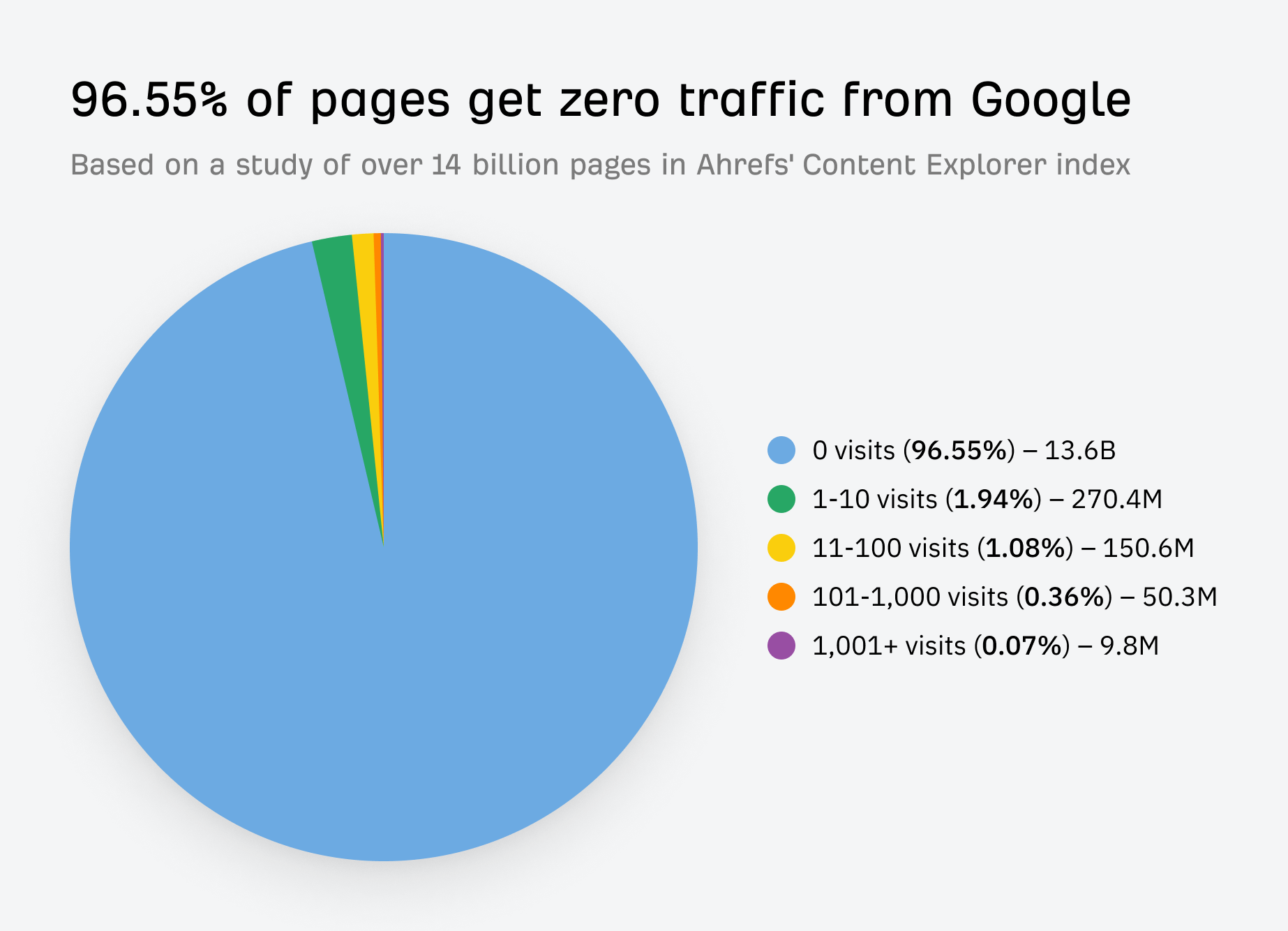
Web traffic statistics via Ahrefs
Types of Content Optimization
There are many ways to optimize content to achieve your goals. It all boils down to knowing what the problems are so you know which types to implement.
1. SEO and search intent optimization
Match each page to a single intent (to learn, find a site, compare, or buy), and use the right keywords and formats for that intent.
Wise: From 7.7 to 60M+ Monthly Organic Website Visits
Wise, a digital money transfer platform, scaled organic traffic by creating targeted pages for currency pairs and other long-tail queries. Fast-loading pages that answered these specific intents ranked highly on search engines like Google.
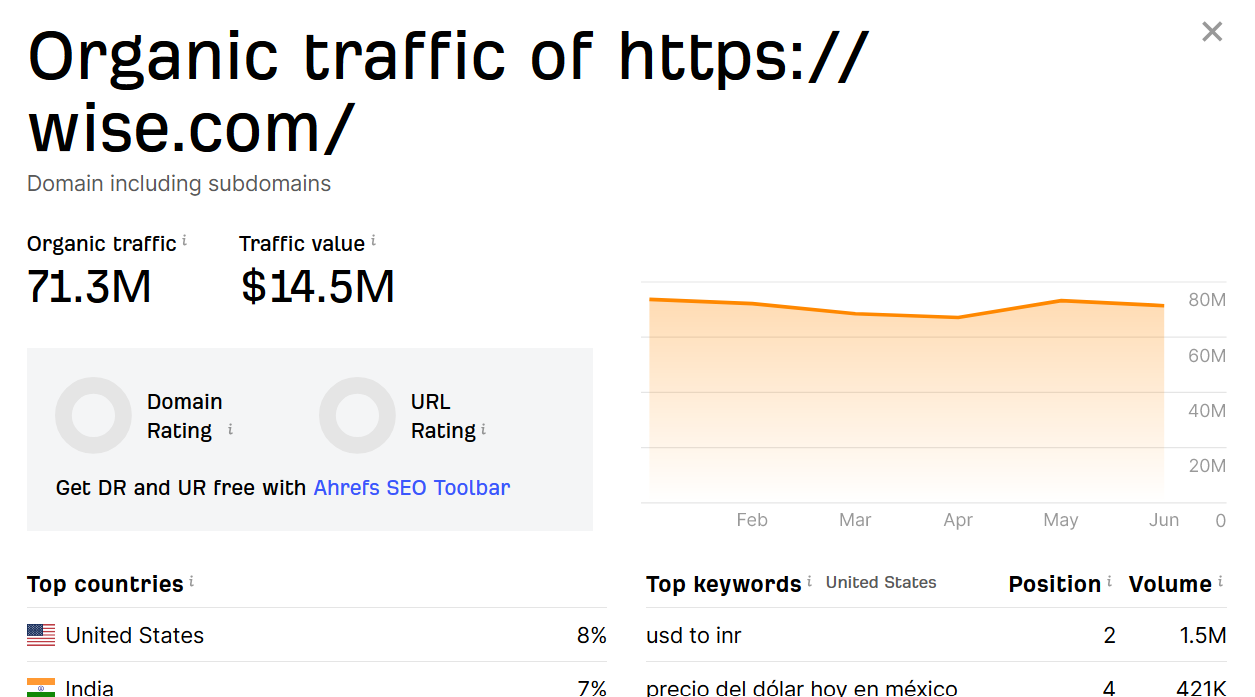
Organic traffic of Wise in 2026 via Ahrefs
2. Readability and structure optimization
Users and search engines prefer scannable and well-structured content. Remove friction by simplifying language, using headings and lists, and adding summaries and FAQs, among others.
*Chipotle: Reducing Decision Fatigue *
Chipotle prioritizes a “benefit first, detail on demand” approach. For example, the menu page prioritizes seasonal offers with a clear message of why customers should give them a try. This bypasses rational hesitation and triggers an instinctive response. The rest of the menu page categorizes food items into groups and uses bigger text for labels, so customers find what they want (bowls, burritos, tacos, salads) without having to scroll through hundreds of options.
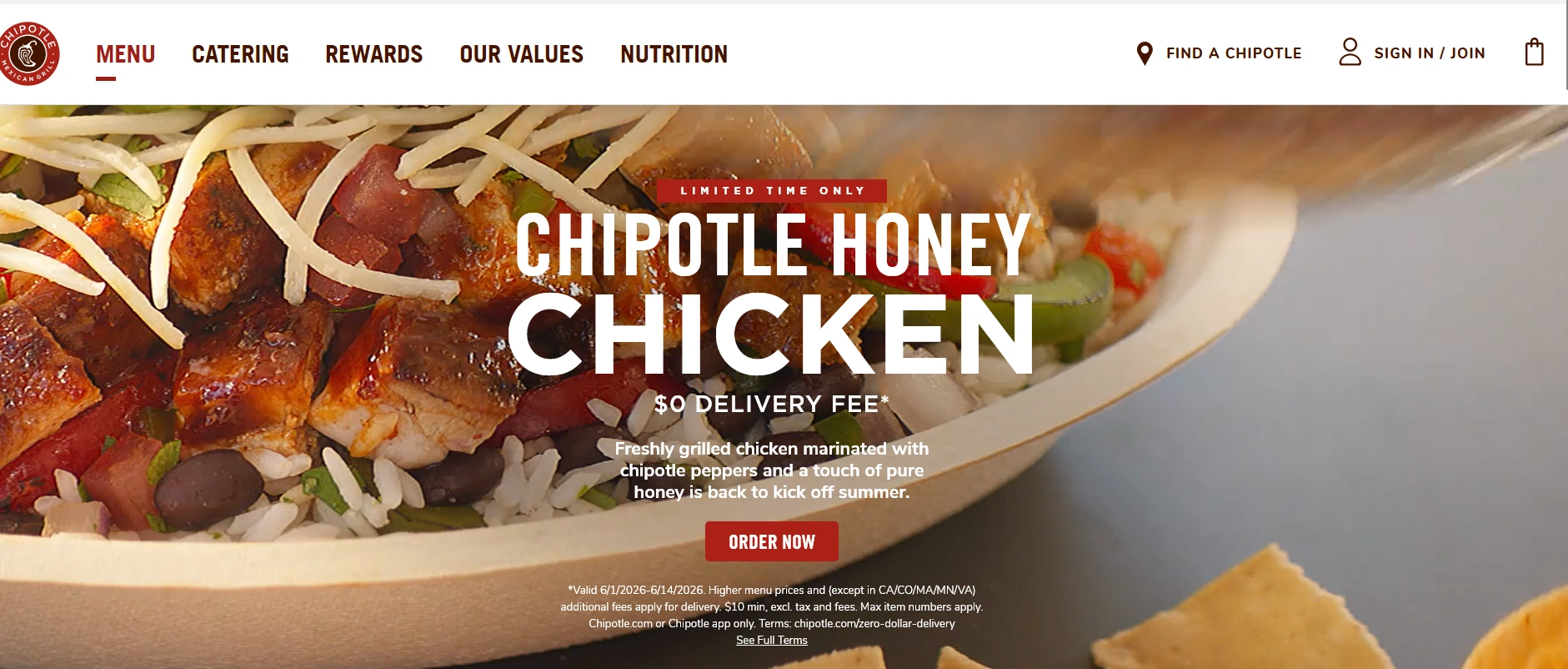
Limited offer via Chipotle
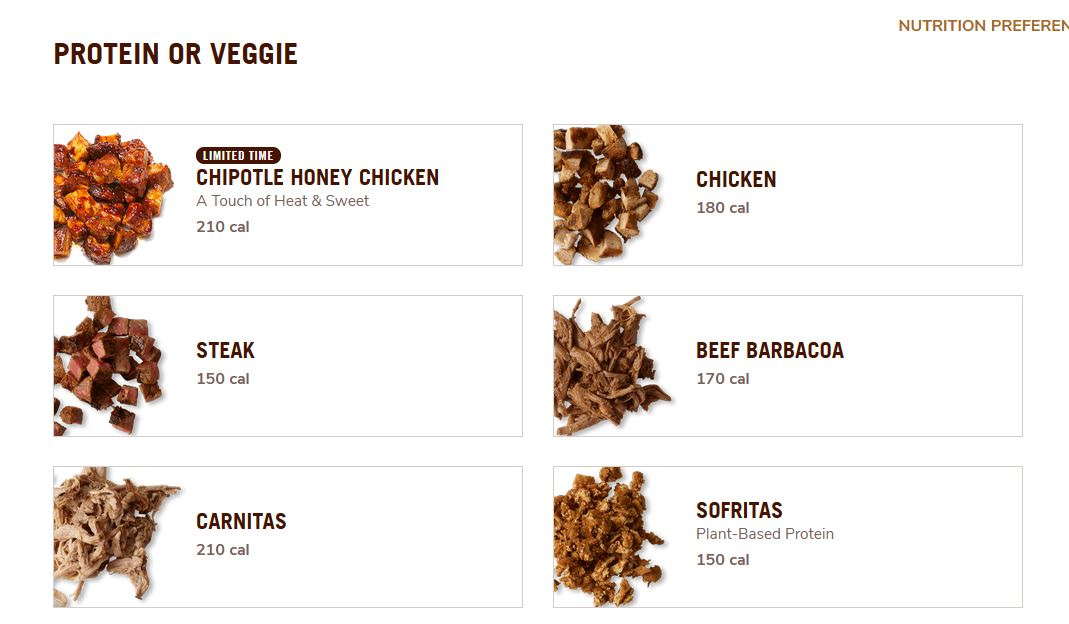
Burrito bowl menu items organized in individual cards via Chipotle
3. Conversion and user journey optimization
If users frequently drop off during onboarding, journey maps reveal the need for more in-app tutorials or step-by-step guides. If users are confused at a specific phase, more concise copy or more intuitive calls-to-action (CTAs) may help.
Sephora: Personalized Customer Experience
By mapping the user journey, Sephora identified a key problem: online shoppers struggle to choose the right product for their own skin because they cannot test it, leading to abandonment. Sephora reduced purchase hesitation with a Smart Skin Scan and an AI chat that recommends products and links to relevant content.

Smart Skin Scan is accessible via the app. Image by Sephora
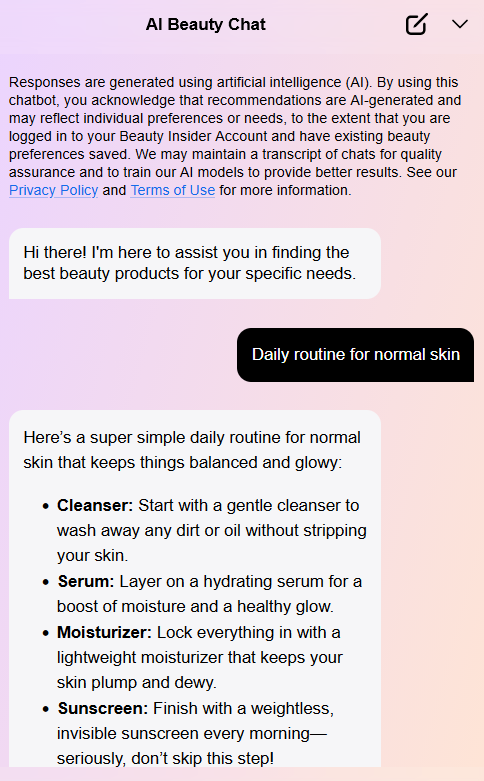
AI-powered chat feature via Sephora
4. Content freshness and accuracy optimization
Content decay is one of the most challenging problems businesses face. Audit and update high-potential pages rather than endlessly publishing new posts. Fresh and accurate content gets more traffic, is prioritized by Google, and strengthens trust.
HubSpot: Historical Content Optimization
HubSpot used to invest heavily in new monthly content, but an internal audit revealed that the majority of HubSpot’s monthly blog views came from previous articles published before that month. This prompted the company to redirect its resources and assess its highest-value traffic assets. The comprehensive historical optimization resulted in an average of 106% increase in monthly organic search views.
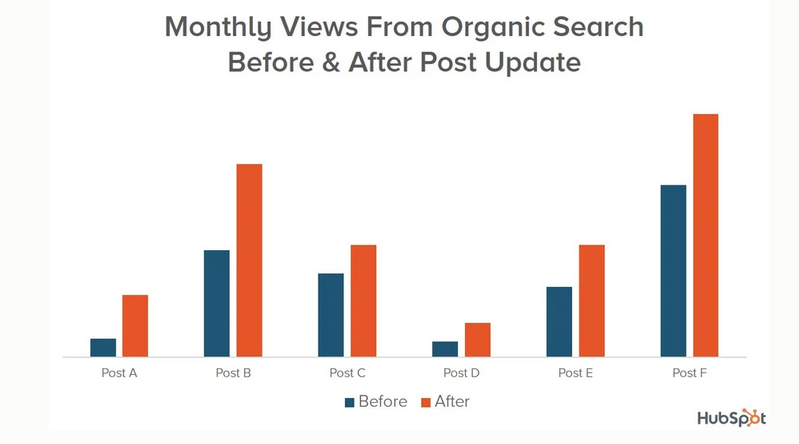
Organic views before and after content optimization. Image via HubSpot
Distribution and social experimentation
The same content that works on LinkedIn will fail on Facebook. This is because every distribution channel requires its own optimized asset to attract different audiences. So, personalize content per channel according to audience needs, expectations, and behavior rather than broadcasting identical posts.
Work with one of the professional custom website development companies to help your business implement content optimization strategies and realize your goals.
How to Create a Content Optimization Strategy
Content optimization strategies anchor on the user intent, search engine ‘crawlability,’ and information hierarchy. Below are fundamental steps to give you a strong start.
Step 1: Run an audit
Find the content/pages that got a little traction last month, but not enough. These are what you can start working on. During an audit, you have to:
- Review impressions and click-through rates. Put a pin on pages that rank low on search results.
- Assess bounce rate. High bounce rates and short session durations mean users find your content unhelpful.
- Remove outdated content. Information should be current and understandable, and links should be easily accessible.
- Cross-check content for redundancies. Overlapping topics may steal content traffic from each other. Look for content gaps and cannibalization.
- Scan for missing title tags, meta descriptions, and headers. Ensure pages are structured correctly and keywords are optimized.
Step 2: Set content optimization goals
Strategic goals eliminate the guesswork for your content team. They help prioritize the type of content needed to achieve results and how to allocate the right resources.
A simple guide when setting goals is to follow the SMART framework—specific, measurable, achievable, relevant, and timely. This framework provides a clear definition of success, saves time, and ensures realistic planning.
Ask yourself:
- What does success look like?
- How will we measure progress and completion?
- Do we have the resources?
- Why now?
Step 3: Conduct research and intent analysis
Market research and intent analysis shine a light on what people search for, why they search for it, and how satisfied they are with current results. It involves analyzing the Search Engine Results Page (SERP) and unearthing gaps in content features.
Start with a Google search in incognito mode—location and browser history are hidden—to show the “pure” SERP that most users see. Search your target words, keyword + reviews, and keyword without brand, and check the results if your content pops up.
Other essential tools you can use for intent analysis include Semrush (keyword discovery), Ahrefs (web traffic), AlsoAsked.com (most searched subtopics), and Frase.io (content gap analysis).
Step 4: Implement content updates
Make updates that match intent and improve UX. If you’re updating an article, begin by rewriting the title to match search intent plus a trigger. For instance, “Digital Marketing Tips” can be changed to “7 Digital Marketing Strategies That Increase Engagement by 200%”. You have a specific search intent, a trigger word, and a promised outcome.
You can then look into specific questions from the SERP and address them in your updated article. Make sure you have the latest statistics, dates, or external links and reference them properly.
Step 5: Run technical checks
Technical checks ensure that search engines can properly index and interpret your updated content without errors or barriers that would hinder higher ranking. Check the following:
- Indexing status. Check if your website or a specific updated page is indexed so Google can find and crawl it.
- HTTP status code. Confirm if your website is running correctly. A status code of 200 confirms the request is successful.
- Canonical tag. Check for errors in canonical tags, which can completely hide your website from search engine results.
- Broken links. Run checks on updated pages to identify dead links.
Step 6: Republish content, measure results, and iterate
Make sure you republish the optimized version under the original URL. But if you must, implement a 301 redirect from the old URL to the new one. Don’t forget to update the publishing date, too.
Track and measure results, like click-through rate and conversions, to determine whether the optimization was effective. Let the new content gain traction, track its performance periodically (at 14, 45, and 90 days), and make incremental changes. If nothing improved after 90 days, remove the page or redirect it to a better-performing page.
Content Refresh: What to Update in Existing Content
Spend time on pages that already have potential and optimize with the following checklist.
Title tag and meta description
Front-load target keywords and show the benefit. Match it with a meta description that aligns with the language of the SERP. If the top three results use urgent, direct language, then adapt. Your meta description should highlight the user benefits of your content.
Take Airbnb’s article title that begins with the high-value keyword phrase “FIFA World Cup 2026”, which is one of the most searched topics in 2026. It is then followed by a meta description that entices readers with rewards. Airbnb ensures they appear for that exact query and not for a generic “World Cup content” page.

Highly targeted title tag and meta description via Airbnb
Content hierarchy (H1, H2,...)
Formatting your content with proper headings signals to search engines what matters and in what order. With H1 for the main topic, H2 for major sections, and H3 for subsections, it provides search engines with an outline that tells if your content is relevant for a particular search query. A clear content format allows users to navigate by headings and decide whether it meets their needs.
Introduction
Ensure your introduction contains target keywords and optimize it for CTR. A well-written introduction also attracts users and can be a deciding factor on whether they should stay or bounce.
There’s no single formula for writing the perfect introduction, but it must clearly state the problem and promise the solution they will get by reading.
Content gaps
Content gaps happen when you miss topics or themes that Google and users expect to find. This lowers your rank on search engines. Add answers to SERP questions and fill missing subtopics. Don’t forget to match the dominant format, whether that’s a listicle, how-to, etc.
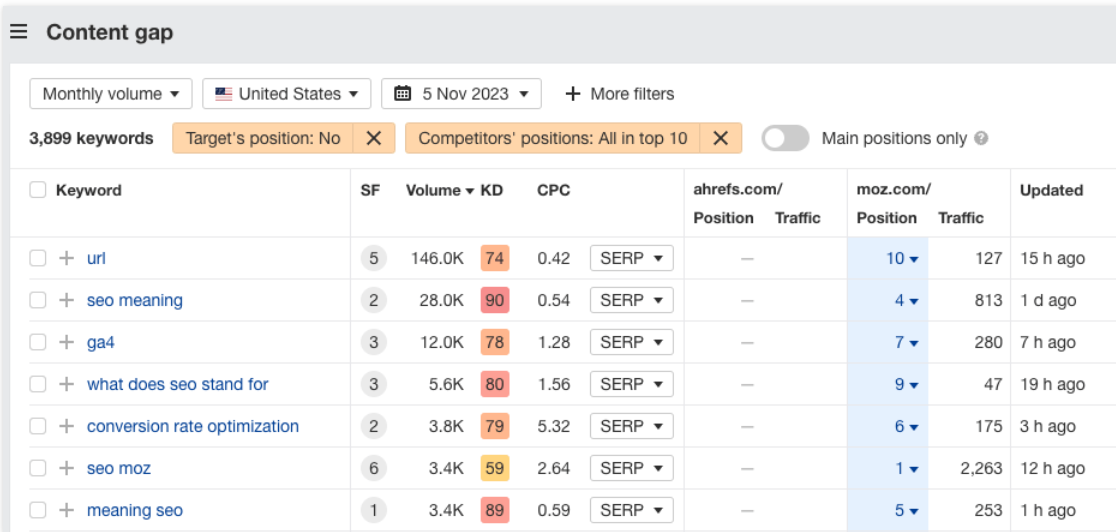
Sample content gap analysis via Ahrefs
Facts and links
Unverified facts and outdated examples can deem your content irrelevant to users and search engines. That said, always cross-check your claims and data on verified sources—government databases, industry reports, press releases, documentation, etc. For links, you can use a crawler like Screaming Frog to look for client or server errors, orphaned pages, and under-linked pages.
FAQs
Google sources answers to “People Also Ask” boxes from your FAQs. Meaning, a user can get your answer without ever visiting your site. If your FAQ is outdated and poorly formatted, you lose that attention to competitors.
Look for questions from SERP and address them in your FAQ. You can also pull questions from your database—customer queries from support tickets, emails, and chats. Provide concise answers that link to longer content, so you don’t siphon traffic from your own pages.
CTAs
Companies often assume users are ready to act when they slam a “Buy Now” button on their website. It’s important to understand what part of the journey users are in as they explore your content and match it with the appropriate CTA. You must remove or address every friction before you ask users to take action.
Match CTAs to user intent and journey stage. Use clear, active language that tells users what happens next. For instance, use “Launch Your Website for Free” instead of “Start Free Trial”.
How to Measure Content Optimization Results?
Track three stages to determine how effective your content strategy is—discovery (visibility), selection (engagement), and action (business outcomes).
Visibility metrics
These metrics reveal whether search engines can find your optimized content and where they rank it. If you don’t see any positive results, your content strategy simply didn’t work.
- Average position (by query): It ranks your page for a specific keyword, averaged across all searches that triggered it. Position 1 gets more clicks than position 10.
- Impression share: Zero to low impressions means Google does not associate your page with the keyword.
- Share of Voice: It measures visibility compared to competitors for a shared set of keywords.
- SERP feature ownership: It tracks whether your page appears in featured searches, People Also Ask, or other non-standard search result formats.
Engagement metrics
Determine whether people actually interact with your optimized content til the end.
- Organic click-through rate: It measures the percentage of impressions that result in clicks. Formula: (Total Clicks ÷ Total Impressions) x 100
- Average time on page: The ideal time spent on a page is around 60 to 120 seconds, depending on the type of content.
- Pages per session: A user who clicks two or more pages in a single session is more likely to convert.
- Bounce rate: It measures how many left the page without interacting further.
Business impact metrics
Find out if your content strategy is generating revenue or measurable business value.
- Organic conversion rate: The percentage of organic visitors who complete a desired action.
- Revenue per organic visitor: High traffic doesn’t mean anything if they do not buy.
- Cost per acquisition (CPA): Organic CPA should at least be 30 percent lower than paid CPA for the same keyword.
- Lead-to-customer close rate: The percentage of new leads from your optimized content that eventually become paying customers.
Start with one or two metrics from each category and be consistent.
How AI Tools Help with Content Optimization
AI speeds up repetitive tasks, but doesn’t replace human judgment. Use AI to:
1. Find content gaps
AI speeds up the process by scanning through robust content libraries to identify overlapping themes and patterns. It then determines topics you can explore to fill these gaps based on what the SERP rewards.
AI Tools: Semrush, Surfer’s Topical Map
2. Improve structure and readability
AI can spot patterns that your brain stops seeing after multiple reviews. It can automate content restructuring and reorganize it into logical sections. Some AI tools can also calculate reading grade levels, ensuring your content is clear and accessible to your audience.
AI Tools: Semrush, CARAble, Yoast SEO
3. Generate meta descriptions, FAQs, and repurpose content
AI can scan content and generate personalized meta descriptions for multiple pages simultaneously. It can also generate relevant and SEO-optimized questions and answers for your FAQ and identify questions you are missing.
Finally, you can automate repurposing long-form content with AI. It can even rewrite them and produce output based on different platforms.
AI Tools: Ahrefs, Ferndesk, QuillBot
Review AI output for accuracy and brand fit
Always treat AI as a supplementary tool. And like any tool, its value depends entirely on how you use it. An AI does not produce publish-ready content without a human who knows what good content looks like. But it can be a valuable tool in accelerating and scaling your processes.
Content Optimization: An Ongoing Journey to Growth
Content optimization drives growth by turning one-off posts into evergreen assets, lowering acquisition costs, and protecting organic traffic from changing algorithms. Do it consistently by auditing regularly, prioritizing high-impact pages, measuring results, redistributing strategically, and acting on feedback. Start small, and, in just months, you’ll cut content waste and improve customer retention.

Creates insightful, strategy-driven content that translates complex design and branding concepts into accessible knowledge, supporting Ramotion’s mission to elevate digital experiences.