
Building a successful online presence today goes beyond visual design and engaging content. Businesses need websites that are reliable, fast, and easy to navigate for both users and search engines. As competition increases, technical SEO has become just as critical as creativity in ensuring a site performs well and ranks effectively.
Whether you are collaborating with a website development agency or working with an internal team, understanding the technical SEO foundation of a website helps you make better decisions and set clearer expectations. A well-optimized site not only supports marketing efforts but also ensures sustainable visibility and long-term growth in search results.
In this article, you will learn the basics of technical SEO, the key elements that support search performance, and how to keep your website technically optimized. Read along to understand why technical optimization is essential and how it helps create a strong, SEO-optimized website.
Technical SEO is the structural foundation of a website. It ensures that search engines can properly access, crawl, and understand your site. Without a strong technical setup, even the best-designed website can struggle to perform well in search results. This makes technical SEO a crucial component of any successful optimization strategy.
High-quality content and strong backlinks do help improve visibility, but they deliver results only when the technical base of a website is correct. If pages load slowly, contain errors, or are not readable by search engines, your rankings will suffer. Thus, a well-optimized technical foundation enables content and links to function effectively, supporting your website's stable growth.
Defining Technical SEO
Technical SEO is the process of optimizing a website's infrastructure so that search engines can crawl, index, and rank its pages efficiently. For executives aligning marketing and engineering, benchmarking how leading website design and development companies operationalize technical SEO (through performance budgets and crawl-friendly structure) can sharpen cross-team governance and accountability. To understand what is technical SEO, it helps to see how it differs from other SEO types.
What is Technical SEO?
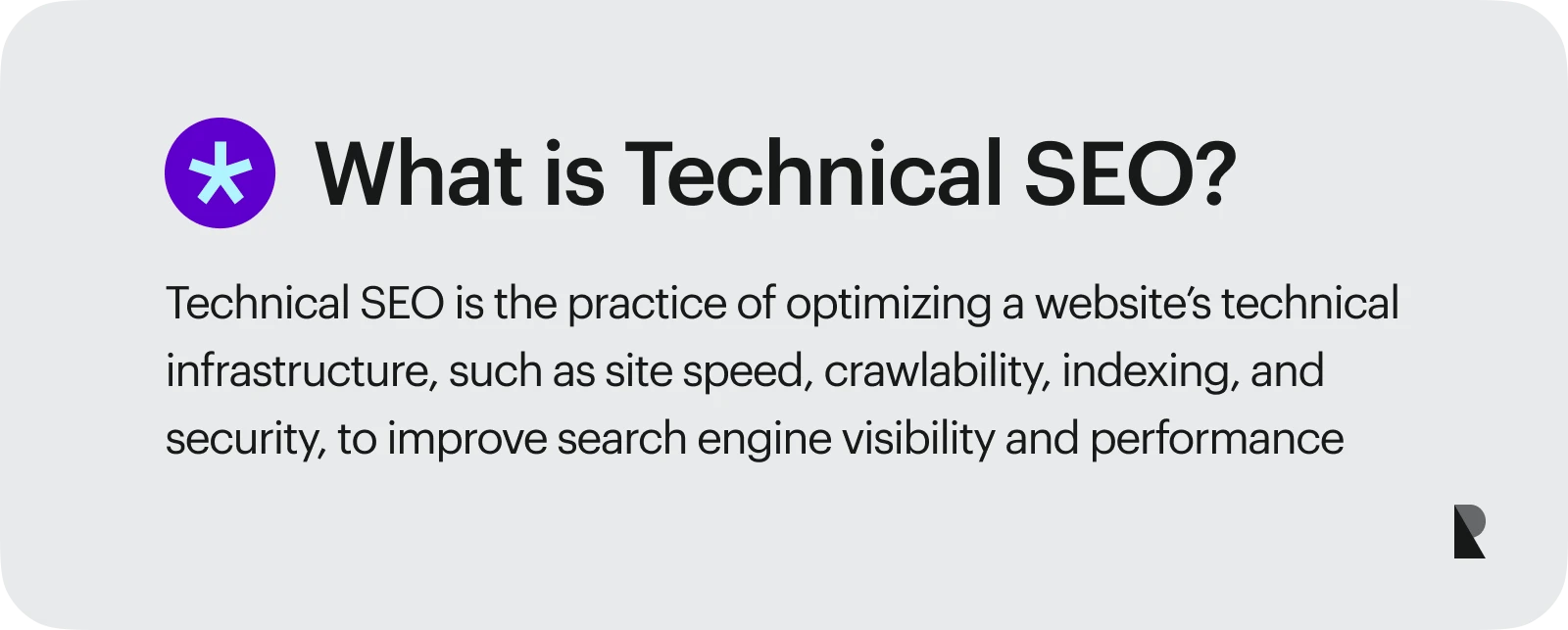
Technical SEO is the practice of optimizing a website’s infrastructure and backend elements, such as site speed, crawlability, indexing, security, and site architecture, to help search engines easily access, understand, and rank its pages effectively.
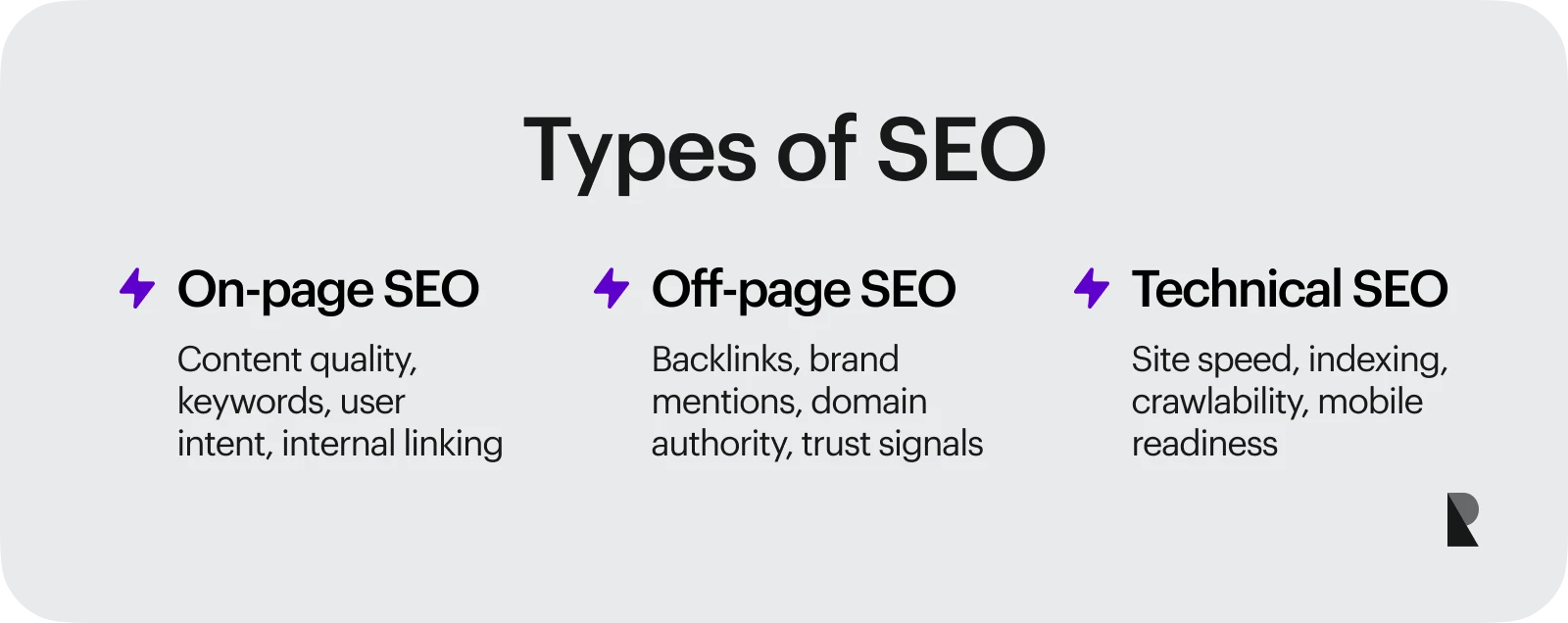
The three main types of SEO are:
- On-page SEO - it focuses on content, keywords, and user intent
- Off-page SEO - it deals with backlinks and external signals
- Technical SEO - it supports both by handling the backend setup that makes all other optimization efforts work
Thus, the area of technical SEO is a comprehensive approach towards optimizing your website. It focuses on site structure, speed, security, and overall performance. These elements are important because they directly affect how search engines process a website.
When the technical foundation is strong, content and links can deliver better and more consistent results. Hence, with a proper technical SEO, you ensure that your on-page and off-page SEO efforts also produce effective results.
Why Technical SEO Matters?
Technical SEO matters because Google’s ability to crawl and index your site decides whether a page appears in search results. If search engines cannot crawl or index a page, it will not be visible to users. A well-structured and optimized website makes it easier for search engines to understand and rank your content.
Googlebot discovers these pages by following links, reading sitemaps, and checking site signals. It then processes each page to decide if it should be indexed. When the technical setup is clear, this process happens smoothly and efficiently.
Meanwhile, technical issues can limit performance and reduce rankings. Some common issues include slow page load times, duplicate content, and broken pages, such as 404 errors.
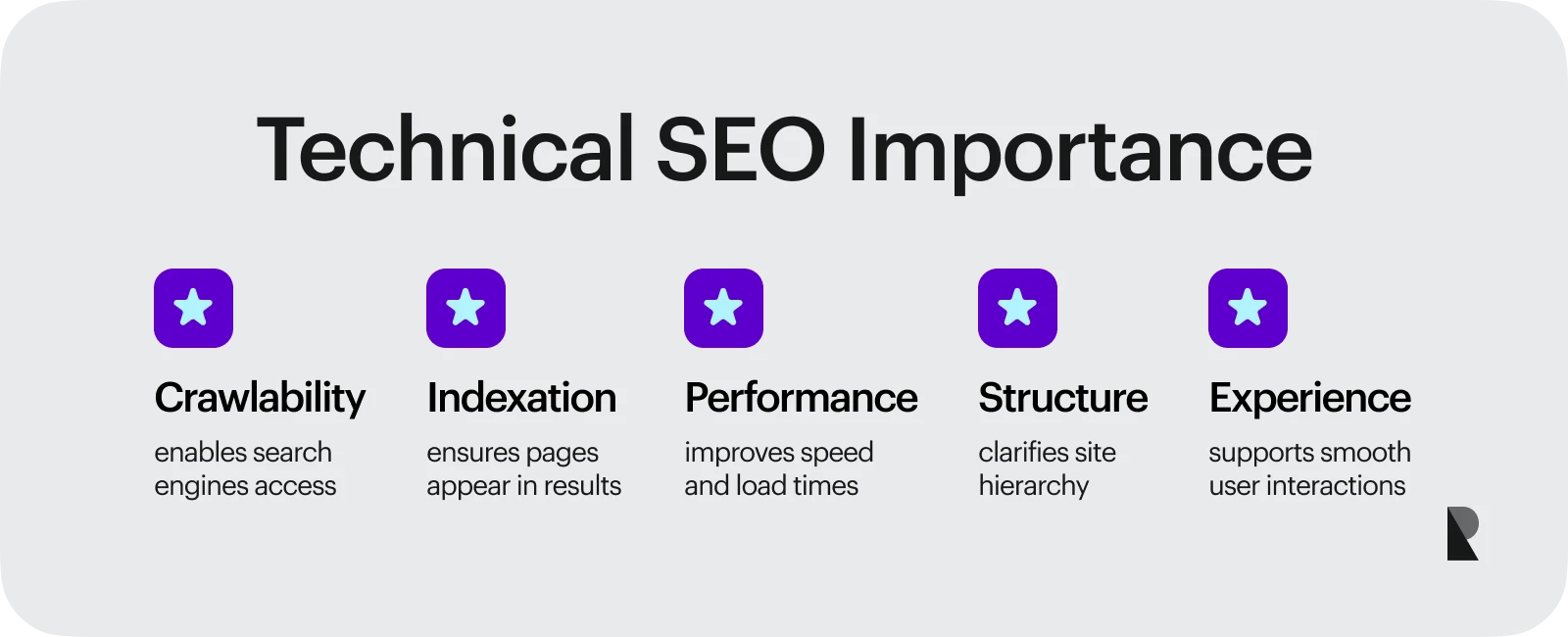
Such issues confuse search engines when crawling your website or web page. You can improve your website’s crawl efficiency by fixing these issues. It will also result in a better user experience and an improved search visibility overall.
Core Elements of Technical SEO
The core elements of technical SEO form the foundation of a well-performing website. These components help search engines crawl, understand, and rank pages correctly. When these elements work together, they support visibility, usability, and long-term growth. Let’s take a look at these core elements that can strengthen your technical SEO.
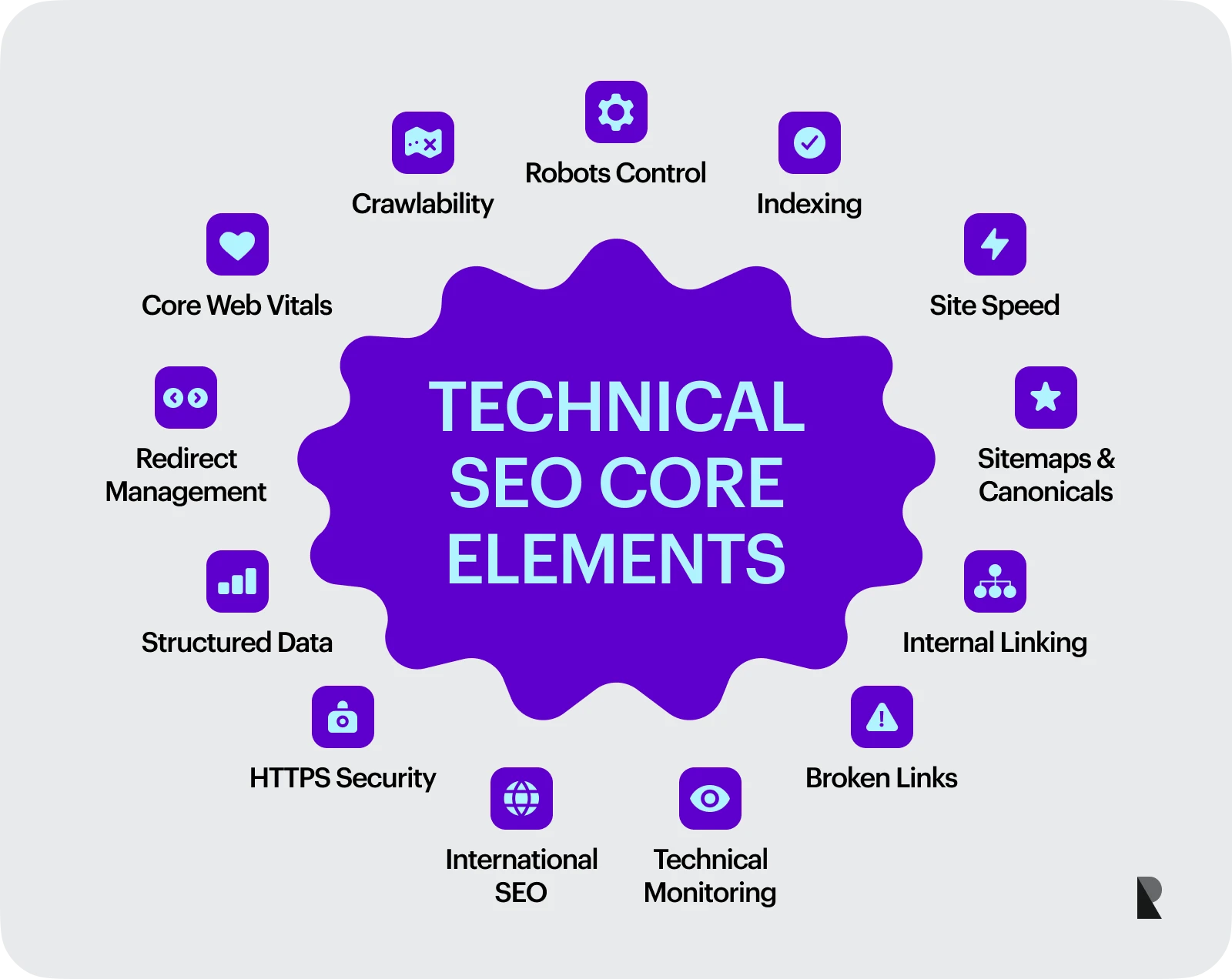
Crawlability
Crawlability refers to how easily search engines can access and navigate your website. It depends on clean URL structures, functional internal links, and stable server responses. Strong crawlability ensures that important pages are discovered and evaluated without delay.
Robots.txt & meta robots
The robots.txt file controls which sections of a website search engines are allowed to crawl. Meta robots tags provide page-level instructions, such as noindex or nofollow. Together, they help restrict low-value pages while prioritizing essential content.
Indexing
Indexing determines whether a crawled page is stored in a search engine’s database and shown in results. To ensure proper indexing, priority pages must be accessible, error-free, and free from unnecessary noindex tags. Effective indexing enables search engines to focus on high-quality content across any website.
XML sitemaps & canonicals
XML sitemaps serve as a roadmap for search engines, listing key pages that should be indexed. Canonical tags signal the preferred version of a page when similar or duplicate URLs exist. Together, these elements prevent duplication issues and strengthen ranking signals.
Site speed & core web vitals
Site speed has a direct impact on user experience, search rankings, and conversion rates. Core Web Vitals measure loading performance, interactivity, and visual stability of a website. Optimizing these metrics helps retain users and improve search visibility.
Structured data / schema
Structured data adds context to web pages, helping search engines better understand the content. It also enables enhanced SERP features such as rich snippets, reviews, and FAQs. These enhancements improve visibility and click-through rates.
Internal linking & architecture
Effective internal linking connects related pages and distributes link equity across the site. This provides a clear and logical site architecture, which makes navigation easier for users. It also helps search engines understand content hierarchy on a website.
Redirects & canonicalization
Redirects are used to guide users and bots from outdated URLs to active ones. They help consolidate link equity and prevent traffic loss. When combined with canonicals, they reduce conflicts between multiple URL versions.
HTTPS & security
HTTPS secures the data exchanged between users and the website. It builds trust and is a confirmed ranking factor because secure sites are favored by both users and search engines.
Fixing broken links & 404s
Broken links and 404 errors interrupt user journeys and reduce crawl efficiency. Regularly identifying and fixing these issues helps maintain smooth navigation and strong crawlability.
International SEO & Hreflang
Hreflang signals tell search engines which language or regional version of a page to display. Proper hreflang tags prevent duplicate content issues across regions and ensure accurate international targeting.
Monitoring & technical maintenance
Technical SEO requires continuous monitoring and updates. Regular audits help detect errors early and adapt to algorithm changes. Ongoing maintenance keeps the website technically healthy over time.
Since technical SEO is the foundation that supports all other SEO efforts, managing its core elements ensures stronger and more effective results.
Crawling Optimization
Crawling optimization focuses on how search bots discover and scan URLs on a website. Bots find pages through internal links, XML sitemaps, and external references. Strong crawlability ensures that important pages are reached and processed without delay. This helps search engines use their crawl budget efficiently.
Since not all URLs deserve equal attention, duplicate pages and parameterized URLs can waste valuable crawling resources. Thus, it is considered best practice to limit these URLs using canonical tags, proper URL structure, and controlled parameters. This allows bots to focus on high-value pages during crawling.
Several tools are available to help monitor and improve crawling efficiency. Some notable options include:
- Google Search Console (GSC) shows crawl stats and errors
- Screaming Frog identifies duplicate URLs and crawl issues
- Server log analysis reveals how bots actually move through the site, making it easier to improve crawl behavior over time.
You can rely on one or more of these tools to monitor your site’s crawlability and address the issues they highlight.
Indexing Optimization
After crawling, pages are evaluated and added to an index. Thus, indexing optimization focuses on how search engines store your pages in the index and, hence, display them in search results. Poor indexing wastes crawl budget by directing search engines to low-value or duplicate pages instead of content that matters most.
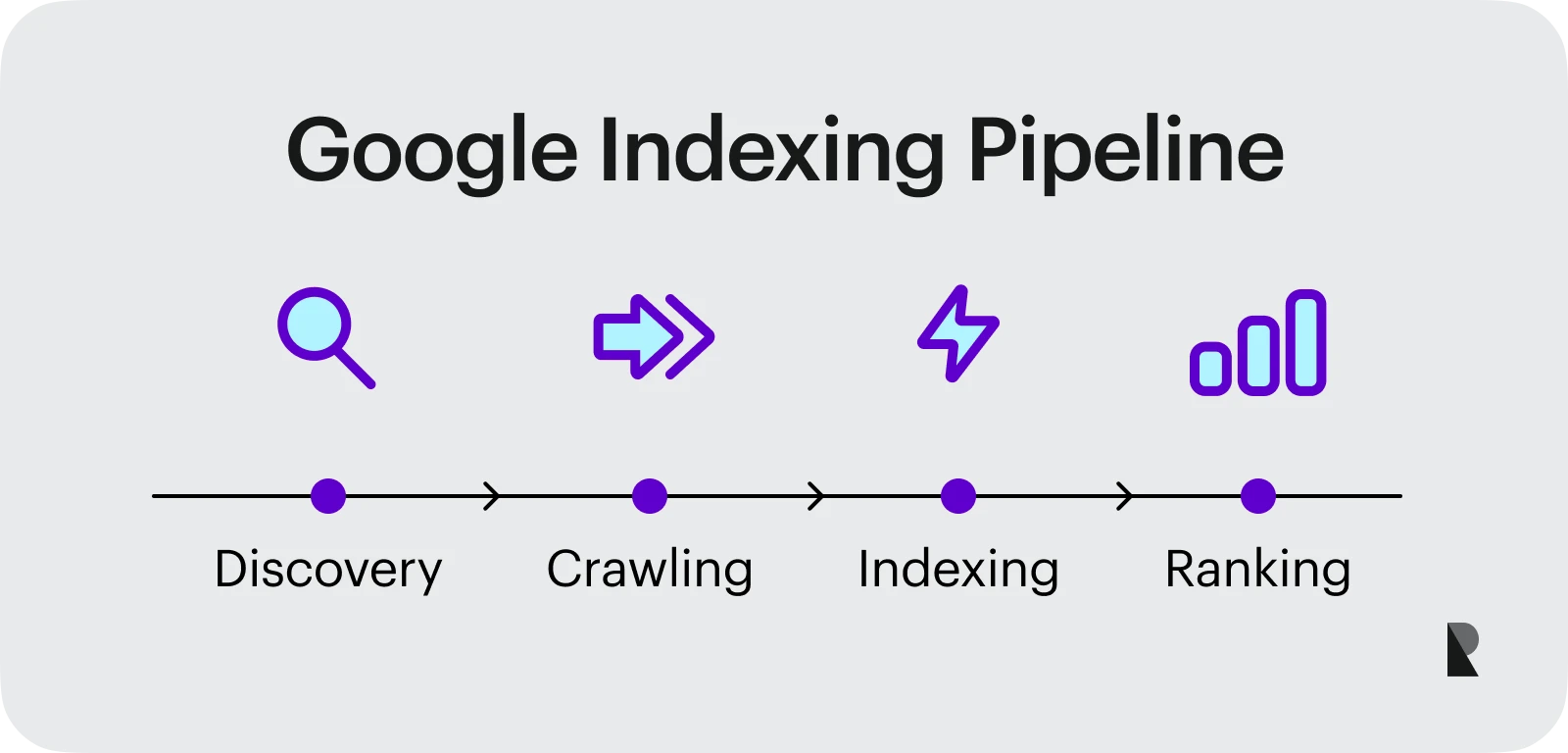
Hence, it is important to control duplicates because repeated pages can confuse search engines and weaken your site’s rankings. Proper optimization ensures that only valuable pages are indexed.
Plus, not every web page must appear in search results. For instance, service pages like admin panels, filters, or internal search results should be closed from indexing. This can be done using noindex tags, which helps improve overall site quality and keeps the index clean.
XML sitemaps and canonical tags also play a key role in indexing control. Sitemaps should include only priority pages, while canonicals should point to the preferred version of each page. Combining these efforts ensures a proper indexing optimization of your site, boosting its visibility and ranking in the long run.
Traits of a Technically Optimized Website
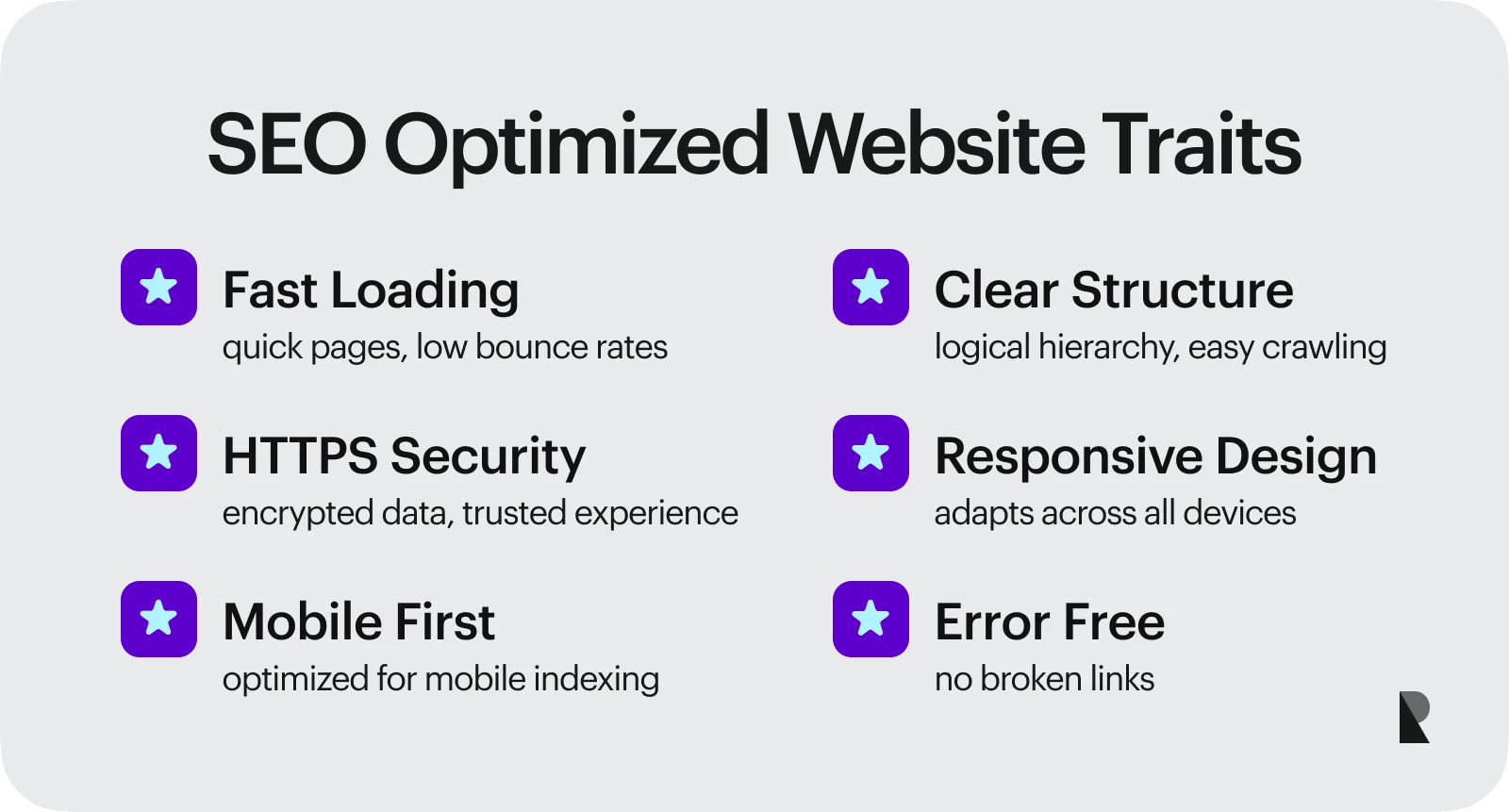
A technically optimized website adheres to clear standards that enhance performance, usability, and search visibility. These traits work together to create a strong and reliable foundation. Some key traits that should be on your checklist are:
Fast loading pages
Meeting Core Web Vitals benchmarks is essential for a smooth browsing experience. Fast pages reduce user frustration, lower bounce rates, and signal to search engines that your website is reliable and of high quality.
Secure HTTPS setup
Protecting user data is critical, especially when handling delicate content. HTTPS establishes trust with users and is a recognized ranking factor in search engines, making security a crucial component of technical SEO.
Mobile-first design
With the majority of traffic coming from mobile devices, strong mobile friendliness is crucial. A mobile-first approach ensures your site displays and functions well across all screen sizes, improving usability and supporting mobile-first indexing.
Error-free pages
Minimizing broken links, 404 errors, and unnecessary redirect chains ensures a smooth navigation experience. Properly managed redirects also preserve link equity and prevent search engines from encountering technical barriers.
Logical site structure
Clear site architecture helps users find content easily and allows search engines to understand the hierarchy and importance of each page. This improves crawlability and ensures your most important pages are prioritized.
Responsive layout
Adapting seamlessly to different devices and screen sizes enhances the user experience and maintains high engagement. A responsive layout also supports technical SEO by making it easier for bots to render and index content correctly.
When these elements are in place, the website becomes easier to manage, easier to use, and more effective in search performance. Thus, strengthening different aspects of your technical SEO in the process.
Additional Technical SEO Best Practices
Additional technical SEO best practices help maintain a healthy and scalable website over time. This section works as a practical checklist of ongoing tasks that support a site’s visibility, performance, and stability.
Regular attention to these areas is crucial for maintaining a site’s technical foundation and ensuring it remains aligned with search engine requirements. Let’s explore these further.
Use structured data for rich results
Structured data helps search engines understand the content’s context more clearly. Adding Schema types such as FAQ, Reviews, Products, Recipes, and Events can trigger rich snippets in search results. These enhanced listings enhance visibility and often result in higher click-through rates.
Implement HTTPS & strong security
HTTPS protects user data and builds trust with both users and search engines, making it a confirmed ranking factor. You must regularly verify SSL installation, check for mixed content errors, and monitor certificate expiry to avoid security warnings.
Fix broken links & redirect chains
Broken links and long redirect chains harm crawlability and frustrate users. Tools like Screaming Frog and Ahrefs help identify these issues quickly. You must address these issues in a timely manner to improve navigation, user retention, and overall site efficiency.
Run regular technical audits
Technical audits help identify and address hidden issues before they impact performance. Quarterly audits using Google Search Console, SEMrush, or Sitebulb are recommended practices. This proactive approach supports stable traffic growth and prevents ranking drops for your website.
Monitor core web vitals
Core Web Vitals measure real user experience through LCP, FID, and CLS. Improving these metrics involves optimizing images, upgrading hosting, and using efficient font loading. A strong performance of your website here supports both rankings and usability.
Ensure mobile-first optimization
With mobile-first indexing, search engines primarily use the mobile version of a website for ranking. Since most traffic now comes from mobile devices, your responsive design is essential. Google’s Mobile-Friendly Test can help you validate the mobile performance of your site.
Build clear URL & folder structure
URLs should be short, descriptive, and free of unnecessary parameters. A clean folder structure makes the hierarchy clear for users and bots. This improves crawl efficiency and content understanding.
Create an optimized custom 404 page
A custom 404 page helps users recover from errors instead of leaving the site. It should include navigation links, a search option, and clear messaging. A helpful 404 page reduces bounce rate and improves user experience.
Here’s a recurring technical SEO maintenance checklist for you to follow:
| Task | Purpose | Recommended frequency |
|---|---|---|
| Review structured data | Enable rich results and rich snippets | Quarterly |
| Check HTTPS & SSL status | Maintain trust and security | Monthly |
| Fix broken links & redirects | Improve crawlability and UX | Monthly |
| Run technical SEO audits | Detect and prevent issues early | Quarterly |
| Monitor Core Web Vitals | Improve performance and rankings | Monthly |
| Test mobile usability | Support mobile-first indexing | Quarterly |
| Review URL structure | Maintain a clear site hierarchy | Bi-annually |
| Update custom 404 page | Reduce bounce rates | As needed |
By following these best practices consistently, you can strengthen your site’s technical health and ensure long-term SEO performance. Ongoing maintenance helps search engines trust your website and allows you to adapt as technical standards evolve.
Measuring Technical SEO Success
Measuring technical SEO success starts with tracking clear and meaningful key performance indicators. These metrics show how well your website performs for users and search engines, and whether technical improvements are delivering results.
Key Technical SEO KPIs include:
- Page speed metrics that reflect loading performance and stability
- Indexed pages to confirm important content is visible to search engines
- Crawl errors that indicate technical barriers or access issues
- Organic growth to measure long-term improvements in visibility
These metrics play a direct role as ranking factors and strongly affect user experience. Faster websites keep users engaged and help search engines process pages more efficiently. Plus, reducing crawl errors and proper indexing further ensures smooth access to high-value content.
You can use several tools for measuring technical SEO performance. Some key tools on the list are:
- Google Search Console (GSC) for indexing, coverage, and crawl insights
- PageSpeed Insights for real-world loading and performance data
- Lighthouse for in-depth audits focused on performance and user experience
Using these metrics and tools together helps maintain a healthy technical foundation and supports steady search performance growth.
Conclusion
Technical SEO is not a one-time task but an ongoing discipline that requires regular attention and updates. As websites evolve and search engines change, maintaining a strong technical foundation becomes essential for consistent performance.
Speed, security, and structure play a critical role in long-term growth. Fast-loading pages improve user experience, secure websites build trust, and a clear site structure helps search engines understand content better. Together, these elements ensure sustainable visibility and lasting SEO success.
To stay ahead, regularly audit your website’s technical health, monitor Core Web Vitals, fix errors, and optimize performance. Ask yourself: Is your site fast, secure, and easy to navigate? Small, consistent improvements in these areas can lead to significant gains in rankings, user engagement, and long-term digital growth.
Dec 15, 2025

Creates insightful, strategy-driven content that translates complex design and branding concepts into accessible knowledge, supporting Ramotion’s mission to elevate digital experiences.