
Modern websites are expected to do much more than simply exist online. They need to attract visitors, provide seamless experiences, communicate value clearly, and encourage users to take meaningful actions.
As competition grows across industries, even small issues in performance, usability, or content can have a significant impact on business results. Many organizations invest heavily in building websites, but long-term success depends on continuous improvement.
Whether you manage optimization internally or work with the best website development companies, understanding how websites can be improved over time is essential for maximizing traffic, engagement, and conversions.
This is where website optimization becomes a critical part of digital success. In this article, we explore the key areas of website optimization and how they contribute to better performance, user experience, and business outcomes.
Read along to learn how SEO, speed, UX, accessibility, content, and conversion optimization work together to create a more effective website.
Introduction
Website optimization is the systematic process of improving a website to achieve better performance, usability, visibility, and business outcomes. It is not a one-time project or a single fix. Instead, it involves ongoing analysis, testing, and refinement to ensure the website continues to meet user needs and business goals.
The objectives of website optimization can vary depending on the organization. Some businesses focus on increasing traffic, while others aim to generate more leads, drive sales, improve registrations, boost user engagement, or enhance the overall user experience.
Regardless of the goal, optimization helps remove barriers that prevent users from taking desired actions. Effective website optimization requires multiple disciplines to work together. It is not limited to search rankings or page speed alone.
A well-optimized website aligns SEO, performance, user experience (UX), conversion rate optimization (CRO), accessibility, content quality, and technical health. When these elements are continuously improved as part of a unified strategy, the website becomes easier to find, faster to use, and more effective at delivering results.
Defining Website Optimization
Website optimisation is the process of improving a website’s performance, usability, accessibility, search visibility, and ability to drive meaningful user actions.
The goal is to optimize every aspect of the site so that visitors can find information easily, navigate without friction, and complete desired actions such as making a purchase, filling out a form, or signing up for a service.
Many people associate optimization only with SEO or technical improvements. While these are important, website optimization covers much more than improving rankings in search engines.
It also includes enhancing content, increasing page speed, improving accessibility, refining user experiences, and removing barriers that prevent users from engaging with the site. A successful optimization strategy focuses on the complete user journey.
It ensures the website is easier to find through search, faster to load on any device, clearer to understand through well-structured content, and simpler to use through intuitive design and functionality. When these elements work together, the website delivers a better experience for users while supporting business goals more effectively.
Why Website Optimization Matters
Many websites attract visitors but fail to deliver the results businesses expect. In many cases, the problem is not a lack of traffic but a lack of optimization. Slow page speed, weak site structure, unclear calls to action (CTAs), poor mobile usability, and confusing content can create friction that causes users to leave before completing important actions.
An optimised website helps address these issues by making it easier for users to find information, navigate pages, and take the next step. This directly supports key business goals such as improving visibility in search, increasing user retention, reducing friction throughout the customer journey, and generating more leads or sales.
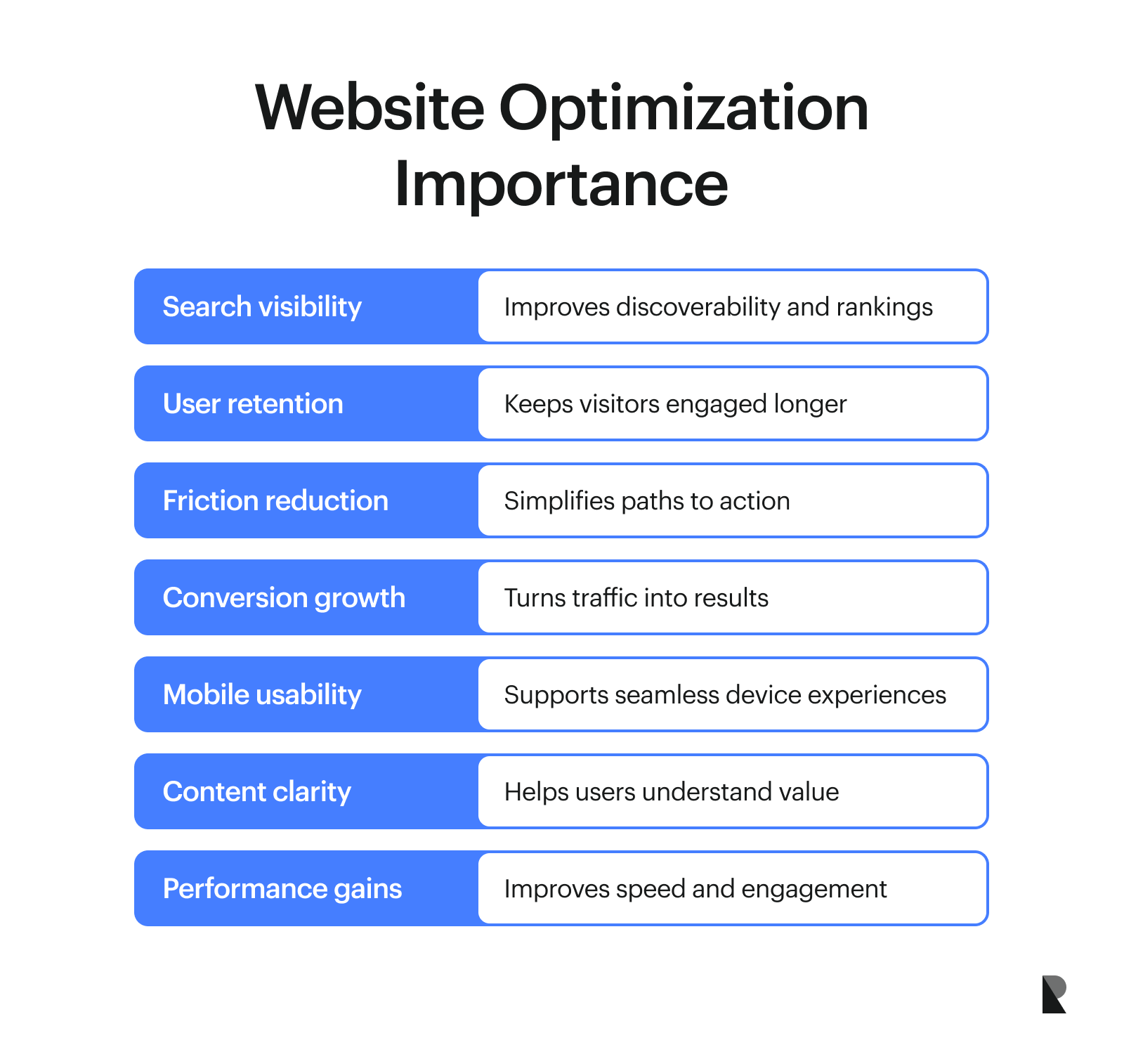
As a result, businesses can achieve a higher conversion rate without necessarily increasing traffic. Website optimization also strengthens the overall user experience by ensuring the site is fast, intuitive, and accessible to a wider audience.
Factors such as accessibility, mobile responsiveness, clear content, and efficient navigation contribute to a more positive experience for visitors. At the same time, these improvements lead to measurable performance gains, including better engagement, lower bounce rates, longer session durations, and increased conversions.
Main Types of Website Optimization
Website optimisation is not a single activity. It is a combination of several connected disciplines that work together to improve overall website performance. Each type of optimization focuses on a specific area, but all contribute to creating a faster, more visible, and more effective digital experience.
Some optimization efforts focus on helping users and search engines discover and understand content more easily. Others concentrate on improving site speed, usability, accessibility, or conversion performance. While each discipline has its own goals and techniques, they are most effective when implemented as part of a unified optimization strategy.
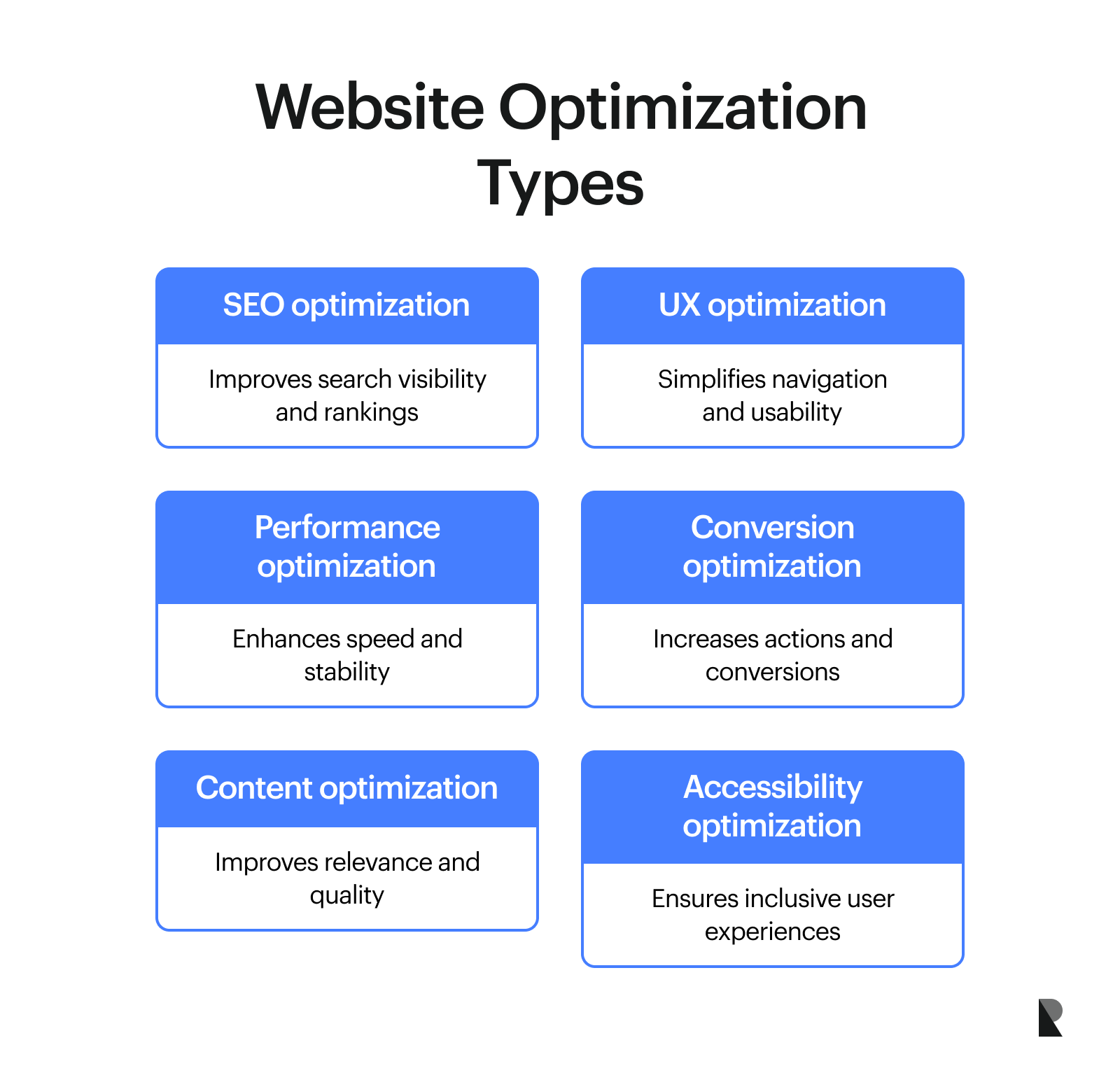
The main types of website optimization include:
- SEO optimization
- Performance optimization
- UX optimization
- Conversion rate optimization (CRO)
- Content optimization
- Accessibility optimization
These areas help improve visibility in search, enhance user satisfaction, and support better business outcomes. The following sections provide an overview of each type and its role in creating a high-performing website.
SEO optimization
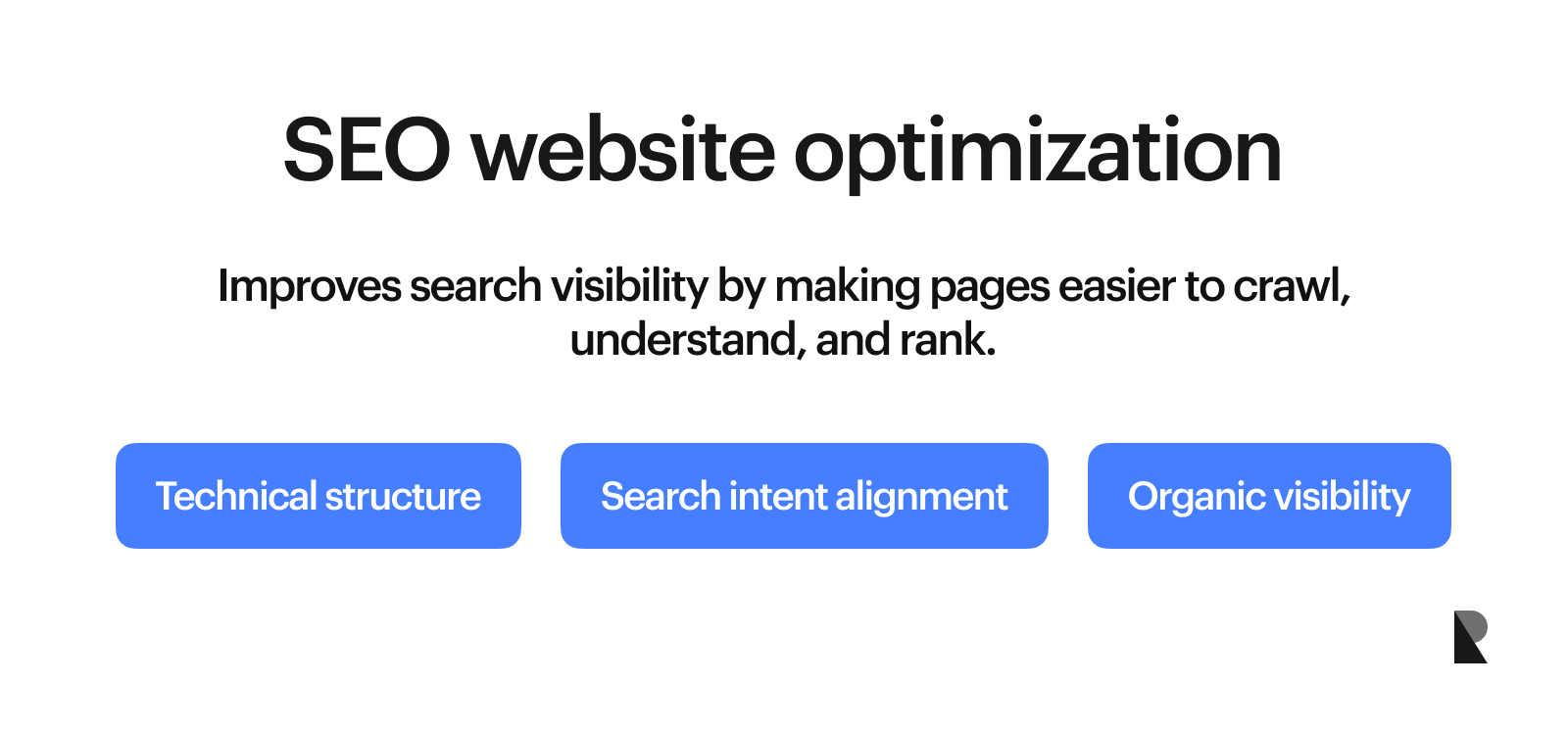
SEO optimization focuses on improving a website’s visibility in search results and increasing organic traffic. It helps search engines understand, crawl, and rank website pages more effectively. As a result, users are more likely to discover the site when searching for relevant information, products, or services.
Understanding key factors of SEO optimization
Effective SEO involves several interconnected elements. These include understanding keyword intent, optimizing metadata, using clear headings, building internal links, ensuring proper indexing, and implementing technical SEO best practices. It also requires high-quality content and a logical page structure that helps both users and search engines navigate the website with ease.
Successful website optimisation goes beyond adding keywords to a page. SEO combines technical accessibility, useful and relevant content, and a well-organized site architecture. When these elements work together, the website becomes easier to find, easier to understand, and more likely to attract qualified organic traffic over time.
Performance optimization
Performance optimization focuses on improving a website’s loading speed, responsiveness, and overall stability. It ensures that pages load quickly, function smoothly, and provide a reliable experience across different devices and network conditions.
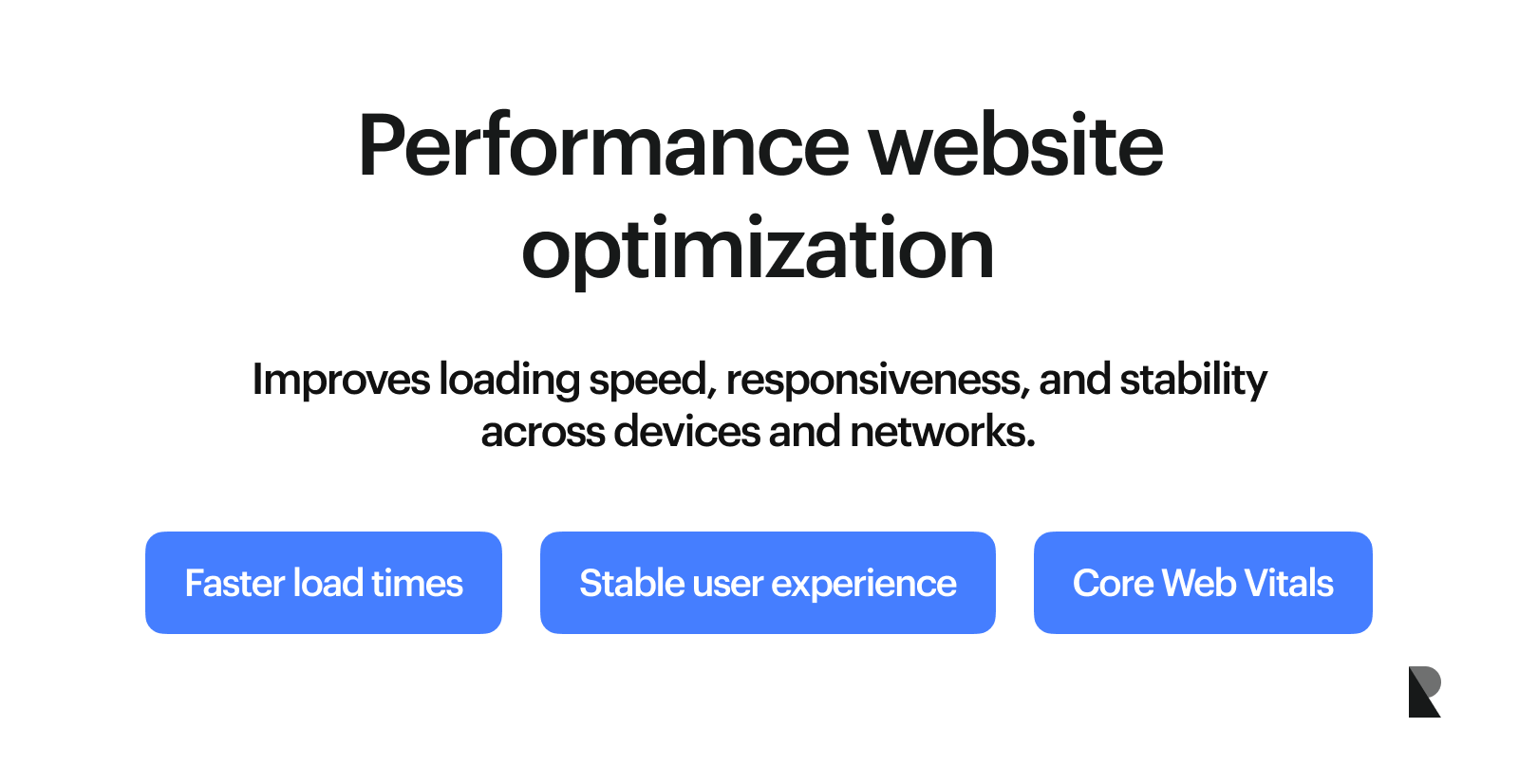
As a key part of website optimisation, performance improvements help create a faster and more efficient website for users. Several factors influence website performance, including image sizes, code quality, third-party scripts, caching strategies, and hosting infrastructure.
Optimizing images, reducing unnecessary code, minimizing scripts, and implementing effective caching can significantly improve page speed. Monitoring metrics such as Core Web Vitals and other page speed indicators also helps identify areas that need improvement.
Slow performance can negatively affect user experience by increasing frustration and causing visitors to leave before interacting with the site. It can reduce engagement, lower conversion rates, and impact overall business results. By improving speed and stability, organizations can create a more reliable website experience that supports user satisfaction and long-term growth.
UX optimization
UX optimization focuses on making a website easier, faster, and more intuitive for users to navigate and interact with. The goal is to create a seamless experience that helps visitors find information, complete tasks, and achieve their objectives with minimal effort.
As an important part of website optimisation, UX improvements reduce confusion and make every interaction more effective. Several elements contribute to a strong user experience. Clear navigation helps users move through the site easily, while a logical page structure makes information easier to understand.

Readable content, well-designed forms, and mobile-friendly layouts further improve usability. Accessibility is also a key consideration, ensuring that people with different abilities can use the website effectively. Together, these elements create smoother user journeys from the first visit to the final action.
When users can quickly understand where to go and what to do next, they are more likely to stay engaged and complete desired actions. Better UX reduces friction points such as confusing menus, lengthy forms, or difficult navigation paths.
As a result, users can act faster, whether they are making a purchase, submitting a form, signing up for a service, or finding important information. This leads to improved satisfaction, stronger engagement, and better overall website performance.
Conversion rate optimization
Conversion Rate Optimization (CRO) is the process of increasing the percentage of website visitors who complete a desired action. These actions may include making a purchase, filling out a form, signing up for a newsletter, requesting a demo, or downloading a resource.
The goal is to help more users take meaningful actions without necessarily increasing website traffic. CRO focuses on understanding how users interact with a website and identifying factors that influence their decisions.
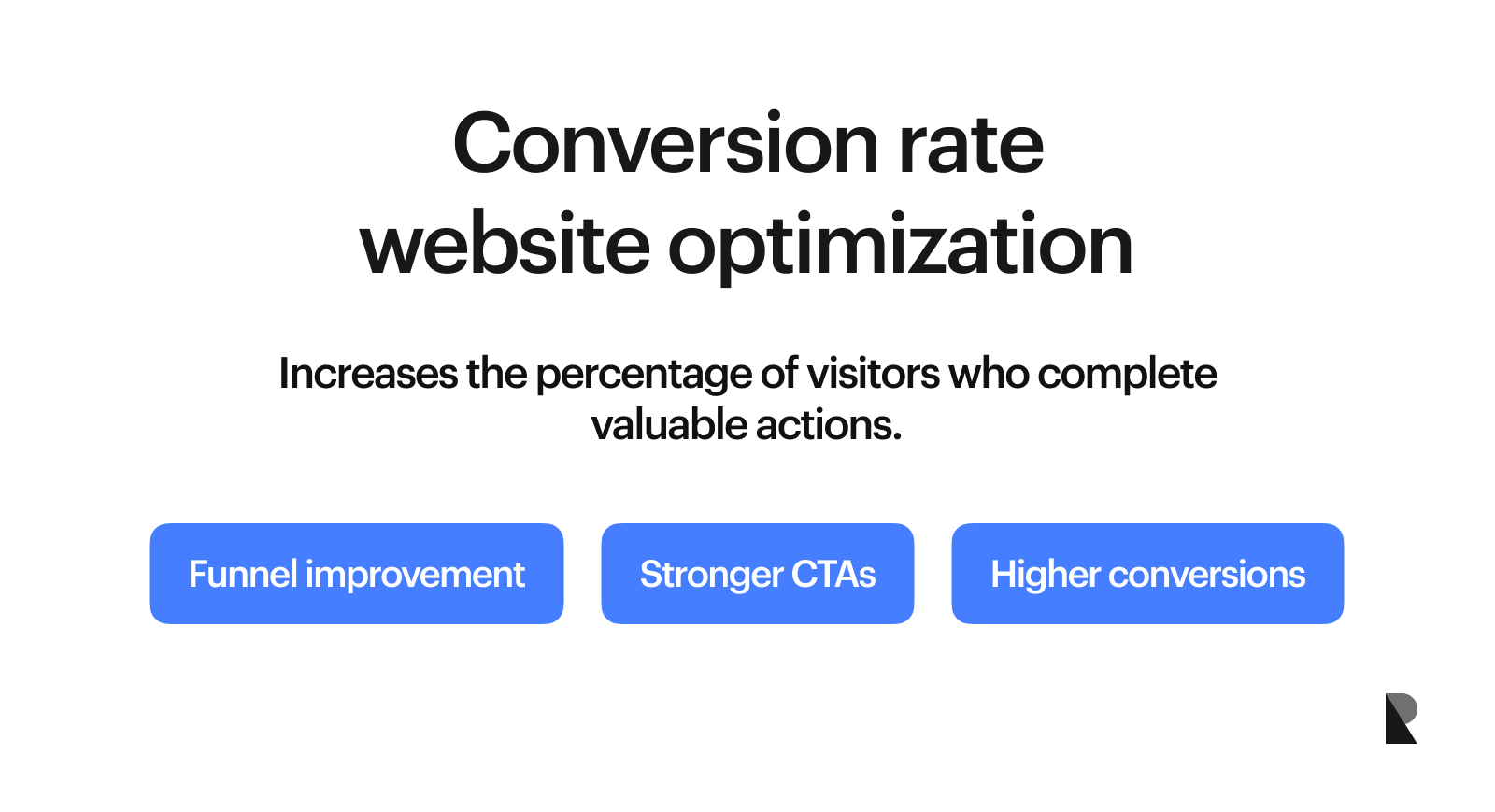
Key elements of conversion optimization include:
- clear calls-to-action (CTAs)
- user-friendly forms
- strong trust signals
- compelling offers
- well-designed landing pages
Teams also use funnel analysis to identify where users drop off and A/B testing to compare different versions of pages and determine which performs better. It is important to understand that CRO is not simply about changing button colors or making visual adjustments.
Effective optimization focuses on improving clarity, strengthening user motivation, and removing barriers that prevent users from taking action. When visitors can easily understand the value being offered and complete tasks without friction, conversion rates often improve naturally.
By continuously testing and refining the user experience, businesses can create more effective customer journeys and generate better results from their existing traffic. As a result, CRO plays a critical role in improving website performance, increasing conversions, and supporting overall business growth.
Content optimization
Content optimization focuses on improving the quality, relevance, and usefulness of website content. Its purpose is to ensure that content meets user needs, answers important questions, and supports business goals.
Well-optimized content helps visitors find the information they need while making it easier for search engines to understand and rank pages. This process involves reviewing and improving existing content rather than simply creating new pages.
Common activities include updating outdated information, improving content structure, matching content to search intent, removing duplicate content, and strengthening internal linking between related pages.
These improvements make content more valuable and easier to navigate for both users and search engines. Effective content optimization also focuses on delivering clearer and more complete answers.
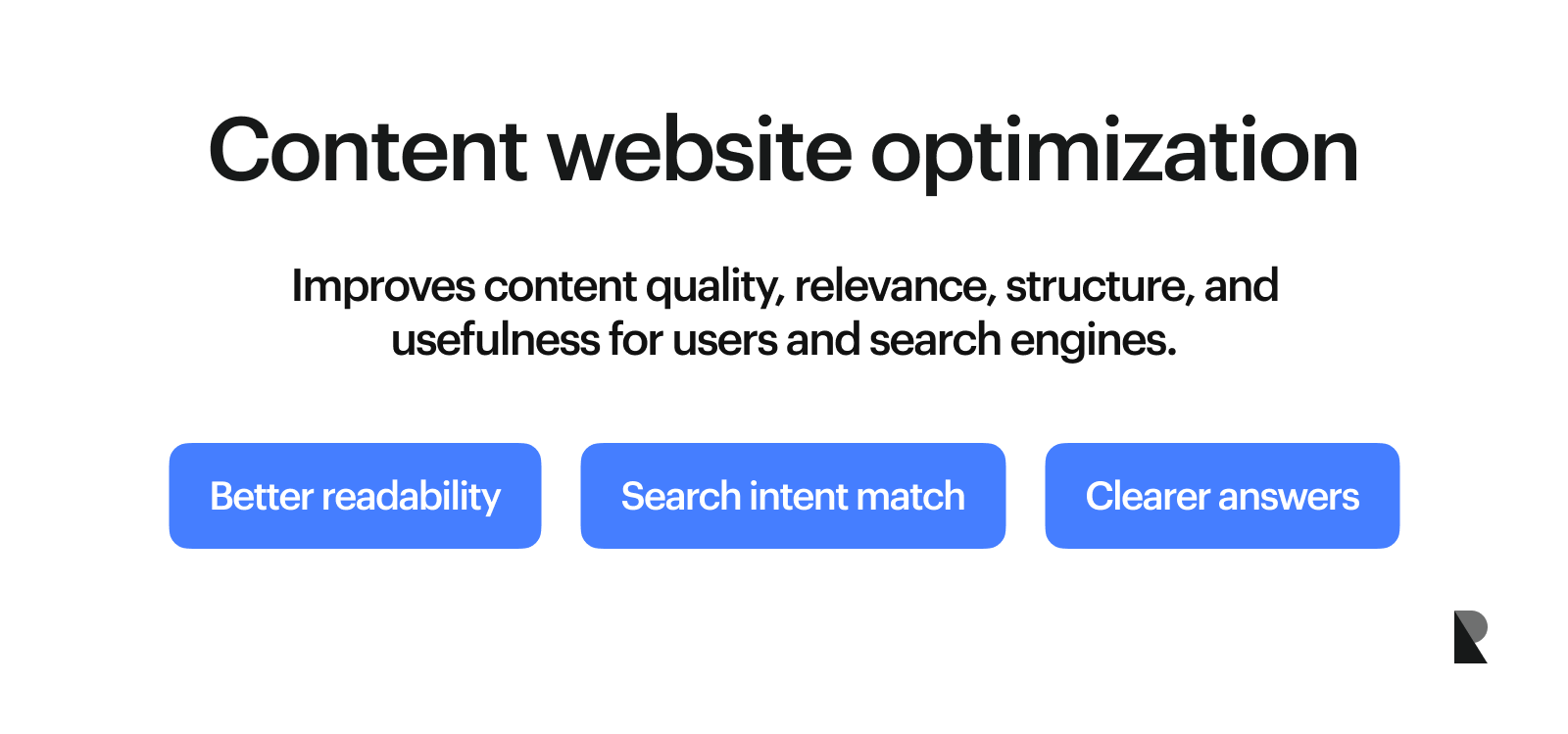
This may include adding FAQ sections, providing detailed explanations, supporting claims with evidence, including practical examples, and offering more specific guidance for users. Well-structured headings, concise paragraphs, and logical content flow further improve readability and engagement.
When content is relevant, accurate, and easy to understand, users are more likely to stay on the website and take action. As a result, content optimization contributes to better user experiences, stronger search visibility, and improved overall website performance.
Accessibility optimization
Accessibility optimization ensures that a website is usable for people with different abilities and interaction methods. It focuses on creating an inclusive experience so that all users, including those with visual, auditory, motor, or cognitive limitations, can access and interact with content without barriers.

This makes accessibility a core part of overall website quality, not an optional feature. Key areas of accessibility optimization include proper color contrast for readability, descriptive alt text for images, and full keyboard navigation support.
It also involves well-structured headings, clear form labels, helpful error messages, and compatibility with assistive technologies such as screen readers. These elements work together to ensure that users can understand, navigate, and complete actions on the website effectively.
Accessibility should not be treated as a checkbox task or a final-stage fix. Instead, it should be built into the design and development process from the beginning. When a website is accessible, it becomes more usable for everyone, improves overall user experience, and supports better engagement and reach.
How to Optimize a Website Step by Step
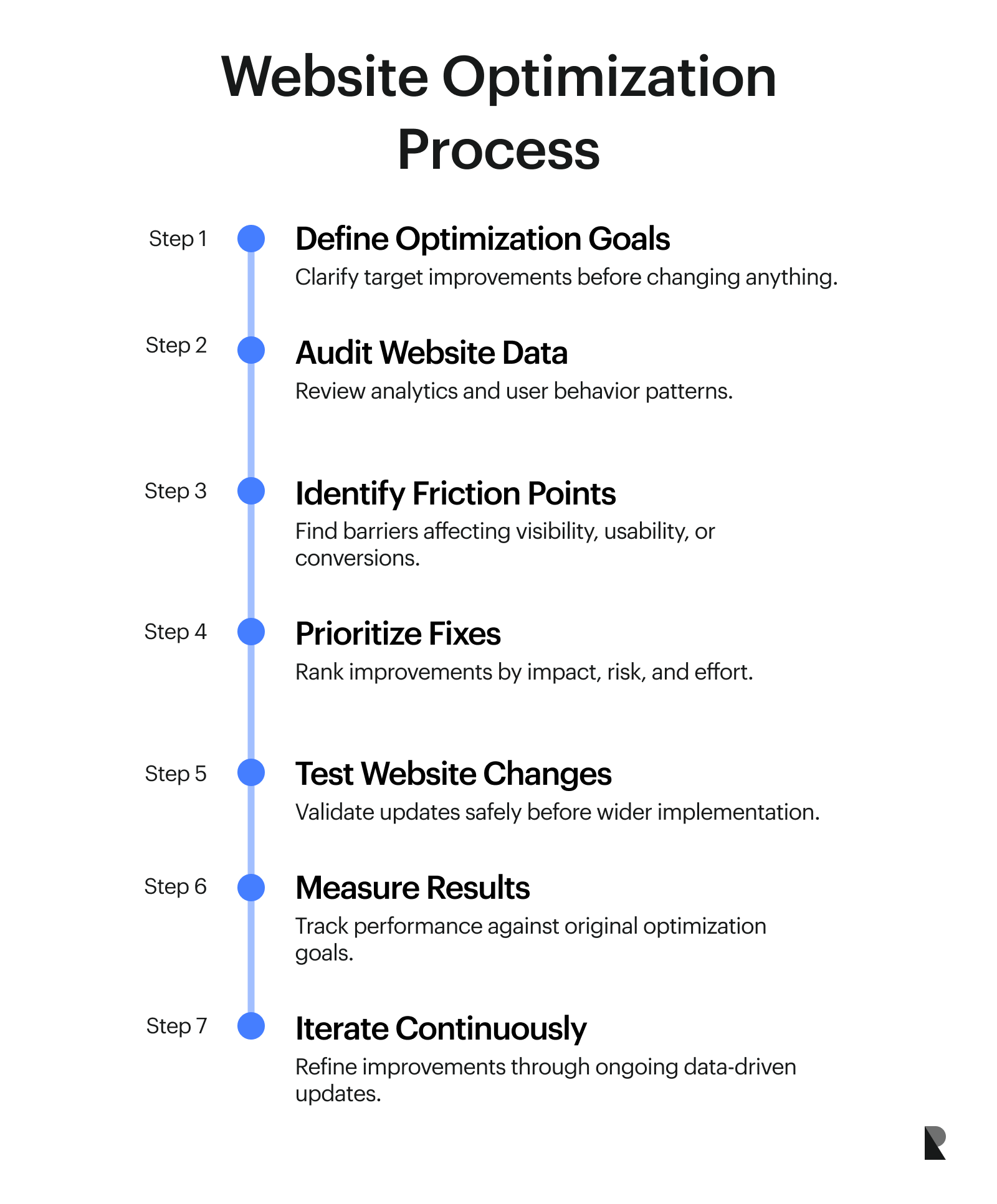
Website optimization should always begin with clear goals and real data, not random changes or assumptions. Before making any updates, it is important to understand what you want to improve, such as traffic, engagement, or conversions.
Data from analytics and user behavior helps identify what is actually happening on the website and where improvements are needed. A structured process works best for effective optimization. The typical sequence is: define the goal, audit the site, find friction points, prioritize fixes, test changes, measure results, and then iterate.
Each step builds on the previous one and ensures that improvements are based on evidence rather than guesswork. This approach also helps improve visibility on search engines and strengthens overall performance in Search results.
Website optimization is usually achieved through iterative improvements instead of one large redesign. Incremental changes allow teams to test ideas safely, reduce risks, and refine performance over time. This method ensures steady growth in rankings, better usability, and improved results from search engines, while keeping the website stable and user-friendly.
Website Optimization Metrics to Track
Tracking the right metrics is essential for effective website optimization. Each metric should be aligned with a specific goal or discipline, such as SEO, performance, UX, or conversion improvement. This helps teams understand what is working and where improvements are needed in website performance.
SEO-related metrics help measure visibility on search engines. These include organic traffic, keyword rankings, impressions, clicks, and the number of indexed pages. Together, they show how well a website is performing in search results and how easily users can find it through search.
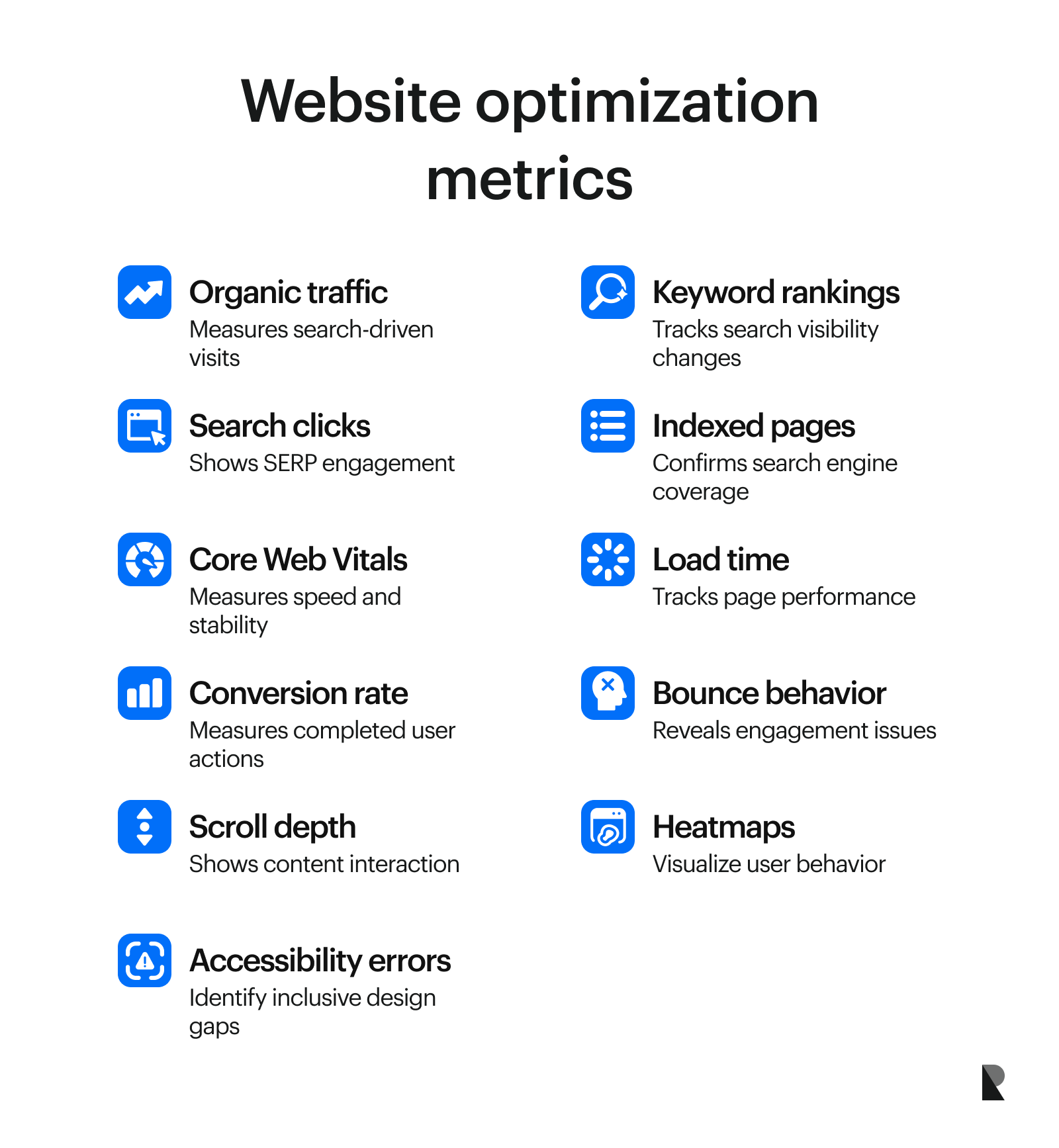
Performance metrics focus on speed and stability. Key indicators include Core Web Vitals, page load time, and overall responsiveness. These metrics directly impact user satisfaction and play a major role in both engagement and retention.
CRO and UX metrics measure how effectively users interact with the site. These include conversion rate, bounce behavior, conversions such as form submissions, purchases, demo requests, and sign-ups. UX-focused metrics also include scroll depth, user paths, and heatmaps that show how users navigate pages.
Accessibility metrics ensure that the site is usable for all users. These include audit error reports, keyboard navigation usability, color contrast issues, and form accessibility checks. These indicators help improve inclusivity and overall user experience.
It is important to understand that no single metric defines success. A website may improve in one area while showing a decline in another. For example, faster speed may not immediately improve conversions, or higher traffic may not always lead to better engagement. Balanced analysis across all metrics is necessary to fully understand and improve website performance.
Website Optimization Is an Ongoing Process
Website optimization is not a one-time task. It is a continuous process that needs regular updates, testing, and improvements. A website changes over time, user behavior evolves, and search trends shift. Because of this, ongoing optimization is required to maintain strong performance and results in web optimization.
Effective optimization works as a connected system. SEO, performance, UX, accessibility, content, and CRO all need to work together. SEO improves visibility, performance improves speed, UX improves usability, accessibility ensures inclusivity, content improves relevance, and CRO increases conversions.
When these areas are aligned, the overall website becomes more efficient and effective. A simple and practical optimization loop helps maintain consistent growth. It starts with defining clear goals, followed by identifying weak points in the website.
Next, teams prioritize improvements, implement changes, measure results, and then repeat the process regularly. This cycle ensures that web optimisation is ongoing, structured, and continuously improving over time.

Creates insightful, strategy-driven content that translates complex design and branding concepts into accessible knowledge, supporting Ramotion’s mission to elevate digital experiences.