


Finding the right web design agency for your company is one of the most impactful decisions you can make for your brand. It’s 2026. Your website is not a brochure. It’s a living, evolving tool that supports your brand identity, converts visitors, and shapes how people perceive your business. It doesn’t matter if you’re a startup just looking to launch or a legacy company trying to modernize your online presence — the design agency you choose will influence the outcome from start to finish.
To help you decide about your different options, we’ve curated a list of the top web design agencies in 2026. It draws information from our decades-long experience in the field and verified data from Clutch, agency portfolios, and publicly available information. We hope this will give you a more detailed look at each firm’s strengths, specialties, and relevance to specific industries or business needs. We hope you’ll find your ideal fit right here.
Web Design Agencies Ranking System
We know that choosing a web design agency is a big decision. That's why we don't just pick agencies we like. We use a simple, fair, and proven system to grade every agency on this list.
Our entire system is based on the four rules to decide if a website or business is high-quality and trustworthy. We turn these rules into clear checks:
Does the agency really know what they're doing? We check this by seeing if they do formal research and strategy (UX Strategy) before starting design, and if they have strict Quality Testing processes. Can you rely on them? We check this by looking at how honest they are with clients (Client Access) and if they stand by their work after it's finished (Launch Support).
By using these standards, we ensure the ranking is based on real business quality, not just nice pictures in a portfolio. We believe an agency's process is the biggest clue to its reliability. Instead of giving opinions on how their websites look, we give scores on how they work:
- UX Strategy: Do they plan well? A high score means they don't guess—they talk to real users and run studies before drawing anything.
- Quality Testing: Are they precise? A high score means they use dedicated testers and separate testing websites to find bugs before you do.
- Client Access: Are they honest? A high score means you get a login to their project software (like Asana), so you can see progress anytime.
- Launch Support: Do they stick around? A high score means they provide detailed training and guarantee to fix any bugs for 60 days or more.
This process gives you a clear, measurable number (out of 20 points) that quantifies how professional and reliable the agency is.
You never have to take our word for it. Our system is proven by:
- Verifiable Sources: We provide a Source Link for every agency's profile information. You can click these links to see external reviews (like Clutch) and check the facts yourself.
- No Bias: The total score is the only factor determining the rank. This ensures our ranking is fair, objective, and unbiased.
Top Web Design Agencies
1. Ramotion
Ramotion is a boutique agency built for companies that want consistency with every touchpoint—from how they look to how they work. The Ramotion team brings brand identity, user experience, and front-end development together in one place, building digital ecosystems that feel connected and intentional from the first click to the last interaction.
Ramotion partners with high-growth startups and tech-forward companies that don’t just want a “normal vendor.” They want a collaborator who can help shape how their brand shows up worldwide.
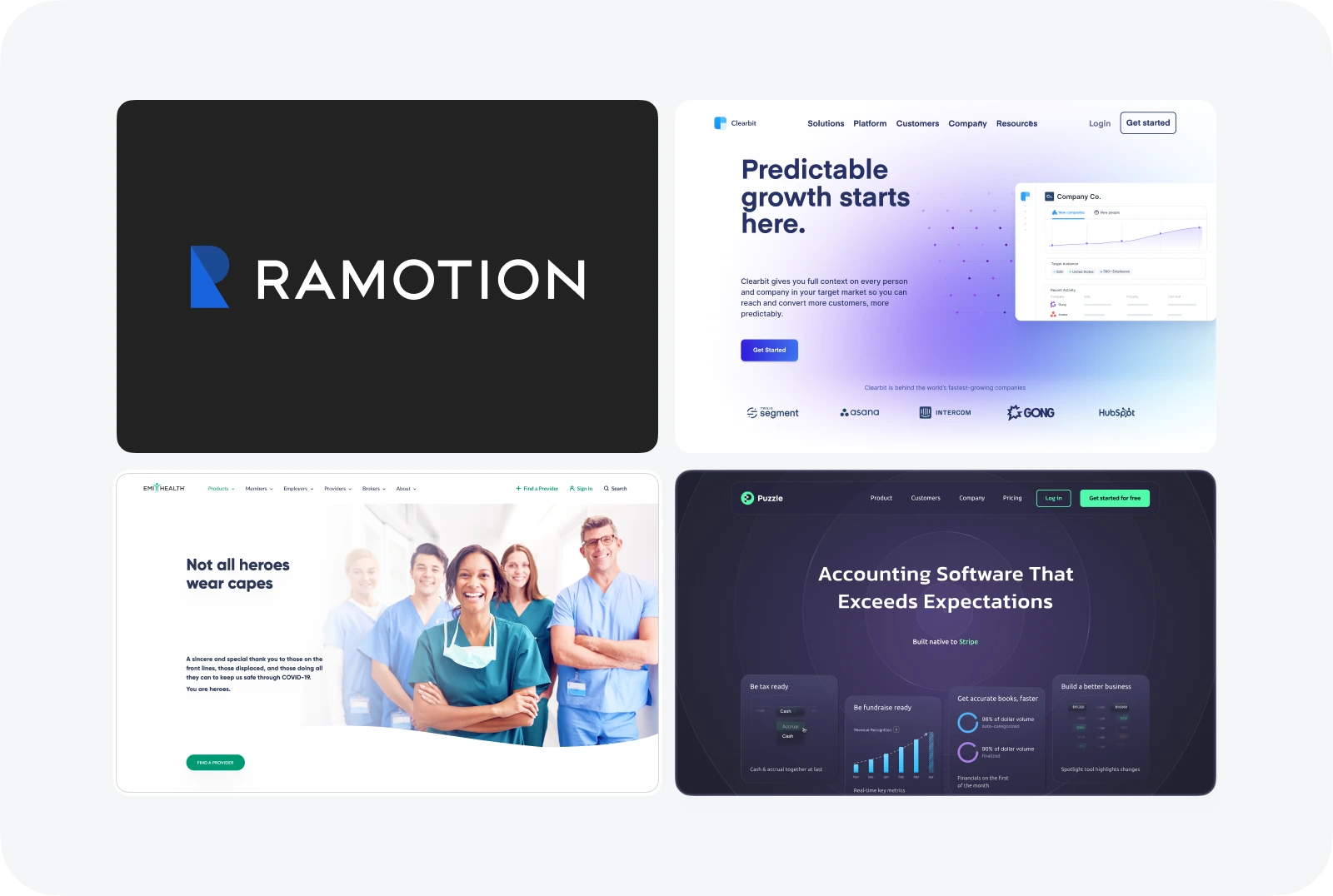
- Best For: Mid-to-enterprise SaaS and B2B tech needing high-end branding & UI/UX design systems.
- Downside: Project delays/pace. Some clients noted a slower pace in delivery, though quality remains high.
- Portfolio: Mozilla, Salesforce, Adobe, Netflix, Xero. (B2B, fintech, mobile UI/UX).
- Strengths: Exceptional visual design quality; strong in brand strategy and complex UI/UX design.
- Unique Feature: Design systems expertise: One of the most-followed and highly rated design teams on Dribbble/Behance.
Ramotion’s process is precise but flexible, combining creative thinking with strong systems and brilliant execution. Ramotion also intentionally keeps the client roster tight. That way, every project gets senior attention, and every decision serves a long-term goal. For brands looking for digital assets that perform as well as they present, Ramotion delivers with depth, clarity, and lasting value.
| Location | San Francisco (CA, USA) |
| Founded | 2009 |
| Team Size | 10–49 |
| Clients | Startups, SMBs |
| Services | Branding, UI/UX Design, Web Development, Mobile Apps |
| Budgets | $60,000+ |
| Industries | Technology, Education, Finance, Healthcare |
| Website | ramotion.com |
| Social Links | LinkedIn, Twitter |
2. DD.NYC
DD.NYC is a design agency with a strong visual identity of its own — and it shows in every project they touch. Known for striking layouts and high-impact visuals, they specialize in branding, web design, packaging, and presentation assets for ambitious companies looking to make a lasting impression. Their aesthetic feels modern and bold, often combining clean typography with confident visual storytelling.
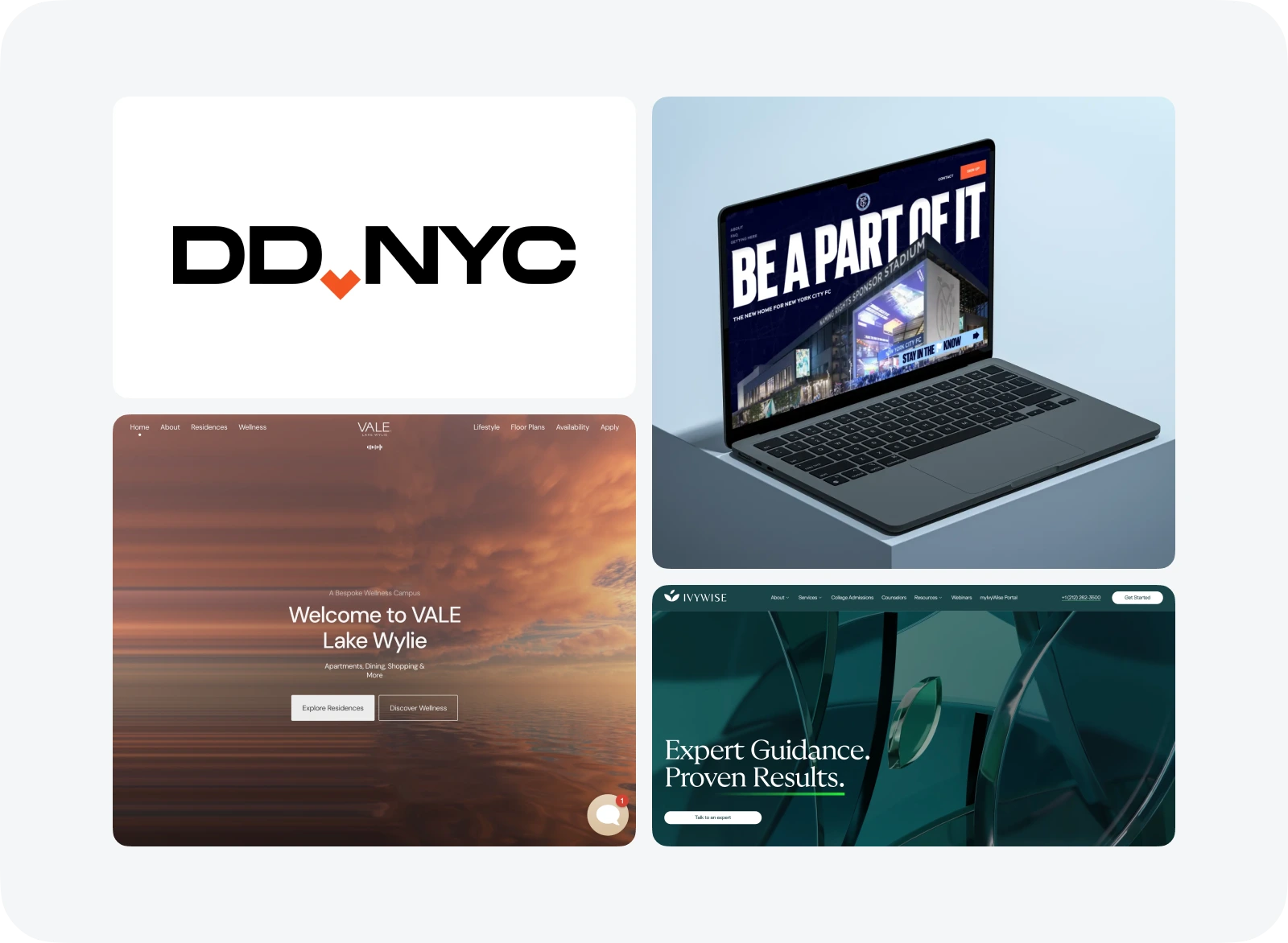
- Best For: Companies needing a high-impact, cohesive visual identity that translates across digital and print media.
- Downside: Premium rate. Charges a high hourly rate ($150-$199/hr), making them a premium design option.
- Portfolio: Brands like Forbes and scholastic (inferred from external reviews). Portfolio is design-heavy.
- Strengths: Brand identity & creativity. Known for exceptional branding and creative prowess in user-centered UI/UX design.
- Unique Feature: Unified brand identity. Skilled in translating a high-end visual aesthetic across digital, packaging, and corporate identity.
Beyond looks, DD.NYC delivers design systems that work across print and digital alike, making sure the client looks consistent at every customer touchpoint. Their team moves fluently between corporate identity, marketing collateral, and responsive web design, making them especially well-suited for startups and small business owners who want to unify their brand presence under one roof.
3. Goji Labs
Goji Labs is a product-focused design and development agency that helps companies — especially mission-driven startups and nonprofits — bring bold digital ideas to life. Their strength is translating complex visions into usable, scalable web and mobile platforms. With a team skilled in product strategy, UX/UI, and full-stack development, they guide clients from early-stage planning through launch and iteration.
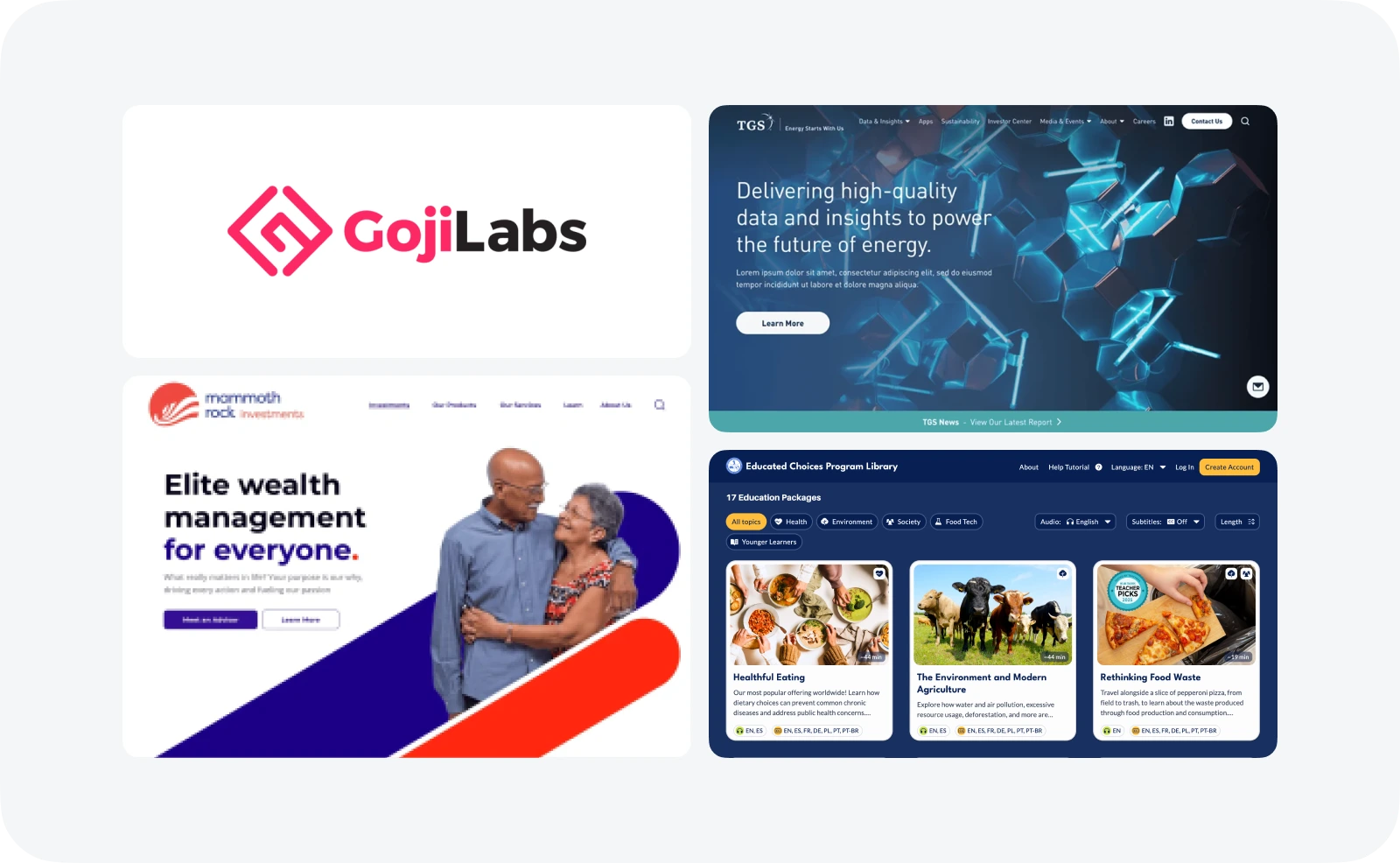
- Best For: Startups and large nonprofits focused on product strategy & MVP development to secure funding.
- Downside: High pricing/project minimums ($25k+), potentially making them inaccessible to smaller ventures.
- Portfolio: Helped clients secure over $1B in funding; projects include specialized web/mobile apps.
- Strengths: Product strategy. Expertise in UX research and technical advisory for successful product launches.
- Unique Feature: Venture-focused. High client satisfaction (95%) and a strong focus on removing technical barriers for high-growth ventures.
What sets Goji Labs apart is its founder-like mindset. They don’t just build what’s asked of them—they challenge assumptions, test ideas, and help shape digital products that actually work in the market. From MVPs to enterprise platforms, they build with clarity and care, aiming for long-term success, not just short-term flash.
| Location(s) | Los Angeles (CA), New York City (NY, USA) |
| Founded | 2014 |
| Team Size | 10–49 |
| Clients | SMBs, Enterprises |
| Services | Web Design, App Development, Product Strategy |
| Budgets | $35,000+ |
| Industries | Education, Healthcare, Tech |
| Website | gojilabs.com |
| Social Links | LinkedIn, Twitter |
4. Bop Design
Bop Design is a B2B-focused web design agency that helps small and mid-sized companies turn their websites into lead-generating machines. They don’t just build pages — they create digital strategies rooted in real business goals, buyer behavior, and long-term growth. With a team that includes strategists, designers, developers, and content experts, they bring a full-service approach to web design tailored for the B2B space.
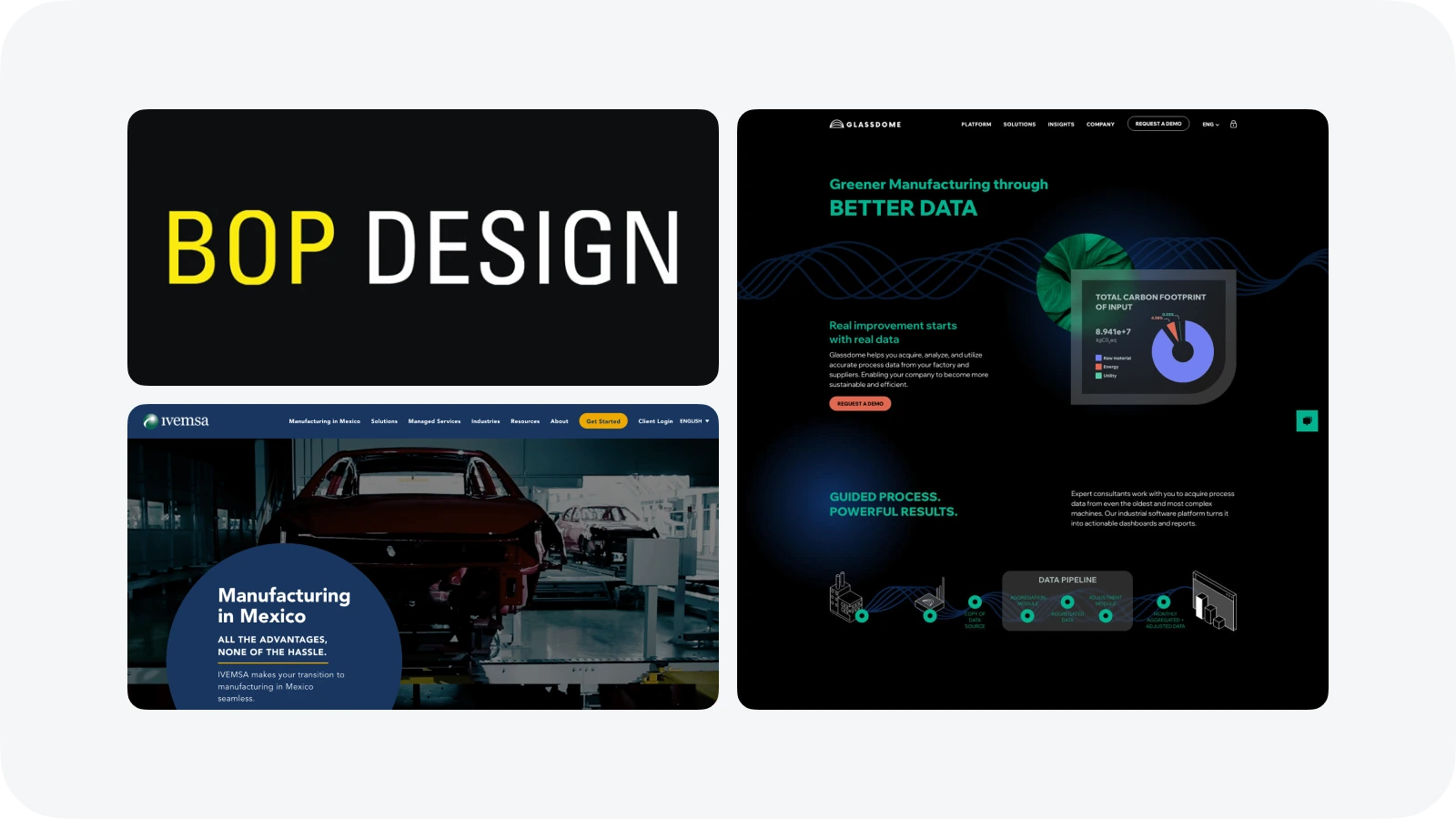
- Best For: B2B companies focused on lead generation, sales enablement, and simplifying complex messaging.
- Downside: Post-launch support: Some clients reported challenges with slower response times for post-launch issues.
- Portfolio: Transportation services, industrial sector B2B clients. Case studies focus on SEO/lead growth.
- Strengths: B2B full-service strategy. Holistic approach to B2B branding, design, and content marketing.
- Unique Feature: B2B focus only: 100% focused on B2B, which leads to highly tailored and effective strategies for this niche.
Their sites are always built clean and scalable — but what sets them apart is how they tie every design decision to tangible business outcomes. Bop Design is a firm that helps brands that sell complex services simplify their messaging and clarify their value. Their smaller size means clients get direct access to the team doing the work, with thoughtful execution from start to finish.
| Location(s) | San Diego (CA), Santa Monica (CA), Newport Beach (CA), New York City (NY, USA) |
| Founded | 2008 |
| Team Size | 10–49 |
| Clients | SMBs, Mid-market B2B |
| Services | Web Design, Branding, Content Marketing |
| Budgets | $30,000+ |
| Industries | Business Services |
| Website | bopdesign.com |
| Social Links | LinkedIn, Twitter |
5. Savas Labs
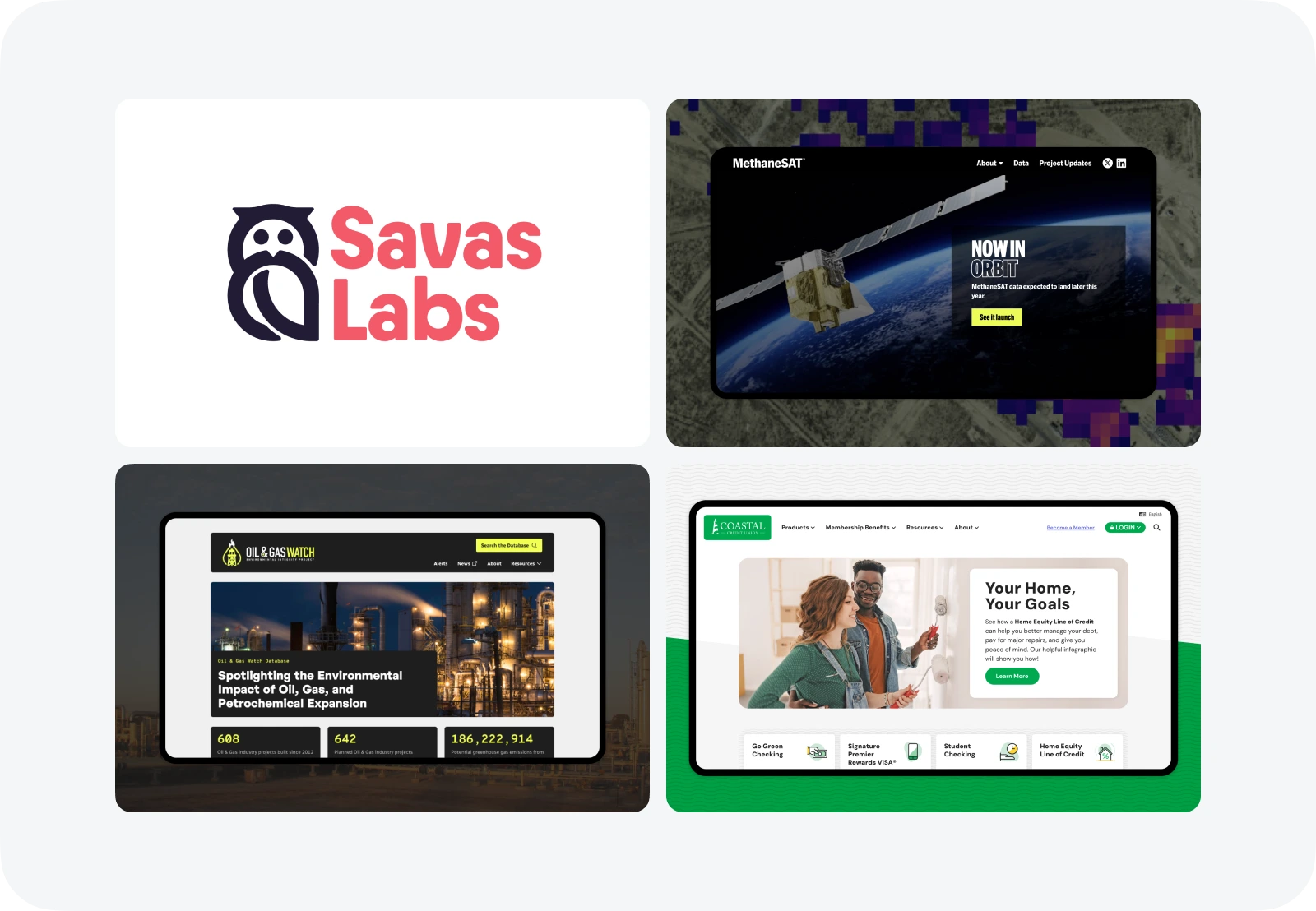
Savas Labs is a strategy-first digital agency that blends thoughtful design with strong technical foundations. They focus on building elegant, scalable platforms — often for mission-driven organizations that need custom solutions without sacrificing usability. With deep roots in UX, CMS development, and open-source frameworks like Drupal and WordPress, they’re especially well-suited to education, healthcare, and nonprofit clients with complex needs and high content demands.
- Best For: Government, Education, and large enterprise needing complex, open-source solutions and technical platforms.
- Downside: Technical focus. Aesthetics may be secondary to technical complexity, compliance, and functionality.
- Portfolio: Specialized work for technical/regulated sectors using open-source platforms (inferred).
- Strengths: Technical rigor. Deep expertise in open-source CMS (Drupal/WordPress) development and large-scale data platforms.
- Unique Feature: Open source focus. Specialized commitment to open-source solutions and platforms common in the public sector.
Their process is hands-on and data-informed, balancing creative problem-solving with rigorous execution. Savas Labs doesn’t just ship code or push pixels — they partner with clients to build evolving systems. Long-term support and iterative improvement are part of their DNA, making them an intense match for teams that value continuity and collaboration.
| Location(s) | New York City (NY), San Francisco (CA), Boston (MA), Washington (DC), Raleigh (NC, USA) |
| Founded | 2013 |
| Team Size | 10–49 |
| Clients | SMBs, Enterprises |
| Services | UX Design, Web Development, Custom Software |
| Budgets | $25,000+ |
| Industries | Education, Non-Profit, Healthcare |
| Website | savaslabs.com |
| Social Links | LinkedIn,Twitter |
6. Design In DC
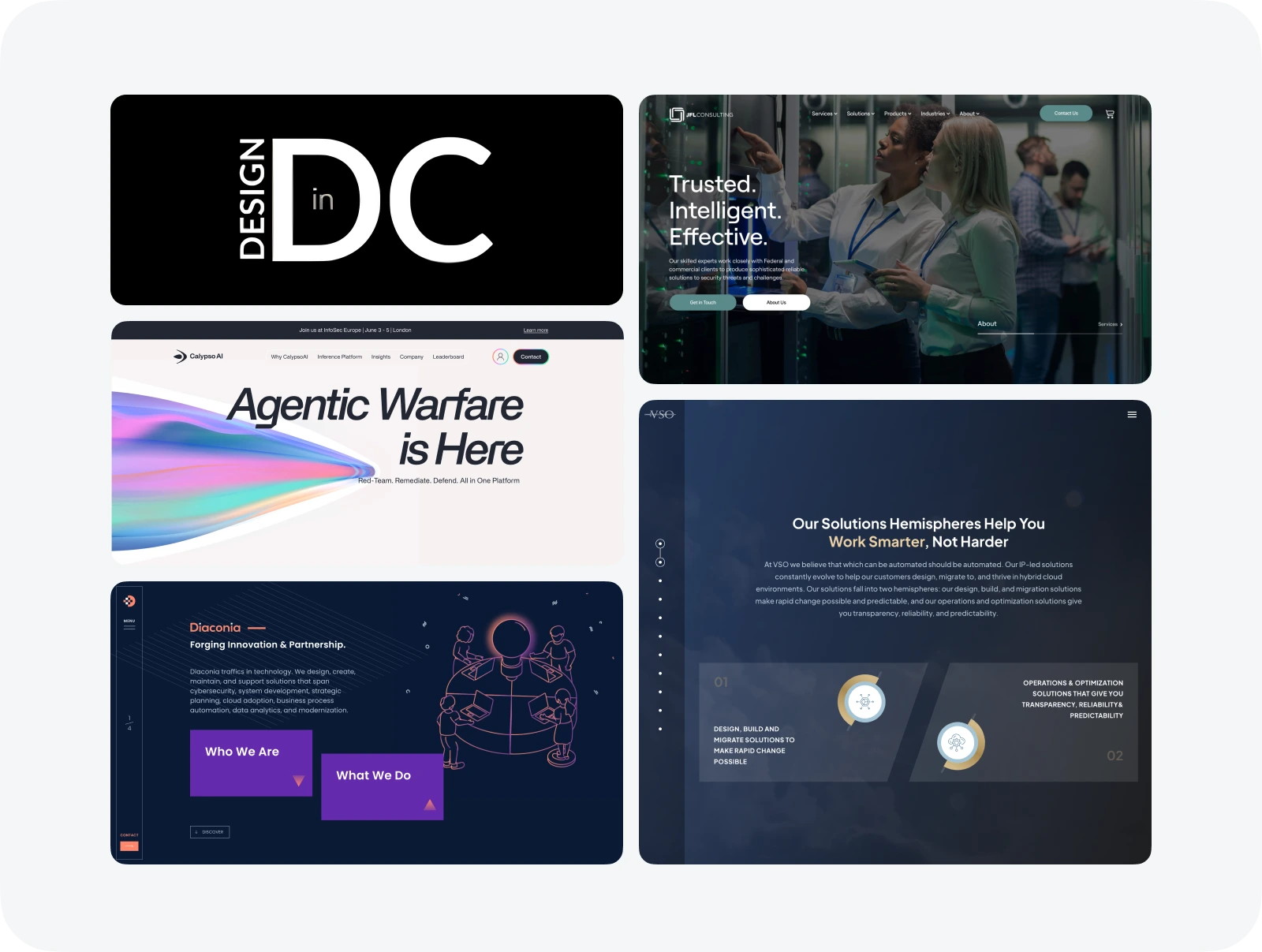
Design In DC is a boutique agency that combines human-centered design with technical execution to deliver digital experiences that resonate. Their work is grounded in flexibility, collaboration, and creativity, making them a go-to partner for companies that want their websites to do more than just look good. From front-end design to scalable back-end builds, their team approaches each project with equal imagination and accountability.
- Best For: Local DC/Mid-Atlantic businesses, associations, and nonprofits needing human-centered boutique design.
- Downside: Geographic focus. Likely limited capacity or exposure to cutting-edge global enterprise-level product design trends.
- Portfolio: Local associations, nonprofits, and businesses in the DC/Mid-Atlantic region (inferred).
- Strengths: Human-centered approach. Strong focus on accessible, human-centered design principles and boutique client service.
- Unique Feature: Local market focus. Deep understanding of the specific needs and compliance requirements of DC-based associations and organizations.
Design In DC stands out because of how closely it works with its clients. It doesn’t just take a brief and run—it embeds itself in the project, treating each build as a joint effort. Its focus on project management, combined with a strong creative eye and technical versatility, results in design work that’s strategic, dependable, and always aligned with the client’s specific needs.
| Location(s) | Washington (DC, USA) |
| Founded | 2016 |
| Team Size | 10–49 |
| Clients | Startups, SMBs |
| Services | Web Design, WordPress, SEO, Branding |
| Budgets | $20,000+ |
| Industries | eCommerce, Creative, B2B |
| Website | designindc.com |
| Social Links | LinkedIn,Twitter |
7. Storm Brain
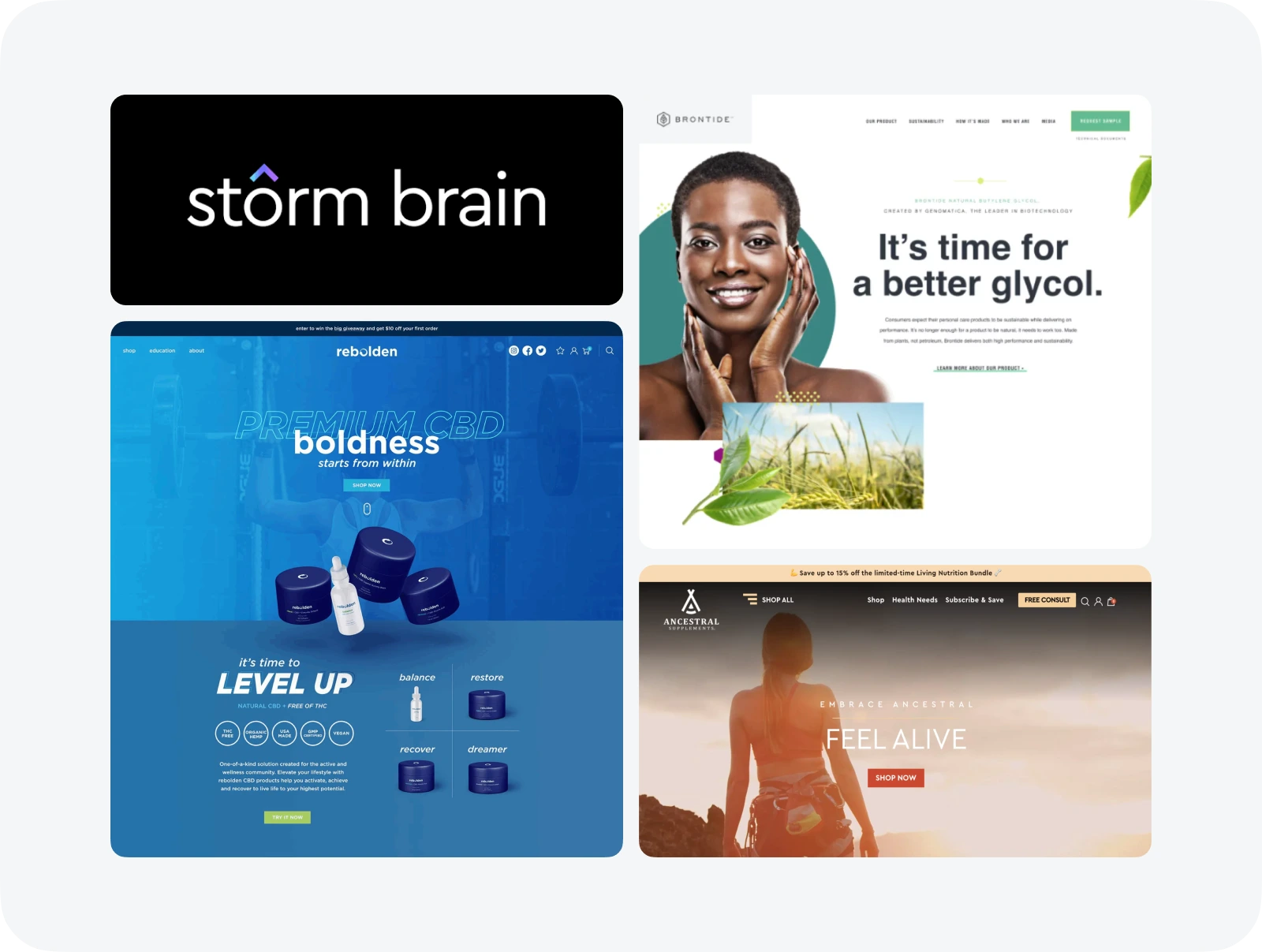
Storm Brain is a full-service digital agency that helps businesses stand out and scale up. Their work sits at the crossroads of creative design and high-impact marketing, with a strong focus on brand strategy, user experience, and performance-driven campaigns. Whether developing a new brand identity or building an e-commerce site optimized for conversion, they combine technical precision with standout creative thinking.
- Best For: Businesses seeking full-service digital marketing integrated with web development, branding, and advertising.
- Downside: Broad Scope: Their wide range of services may lead to less specialized pure product UI/UX expertise compared to boutique firms.
- Portfolio: CalPrivate Bank, University of California San Diego, Wells Fargo. (Diverse industries).
- Strengths: Integrated marketing. Expertise in combining web design with ambitious online marketing campaigns and SEO.
- Unique Feature: Full digital service. Recognized for their ability to handle branding, development, and data-driven marketing under one roof.
Their approach is collaborative and strategic. Storm Brain is an extension of their clients’ teams, taking time to understand growth goals before executing. The result is a cohesive, multi-channel presence that looks sharp and performs across SEO, paid ads, and content. For companies that want to move fast without compromising brand integrity, they offer both the vision and the horsepower.
| Location(s) | San Diego (CA), Santa Monica (CA), Carlsbad (CA), New York City (NY, USA) |
| Founded | 2007 |
| Team Size | 50–249 |
| Clients | SMBs, Enterprises |
| Services | Branding, Web Design, PPC, SEO |
| Budgets | $25,000+ |
| Industries | Legal, Healthcare, Automotive |
| Website | stormbrain.com |
| Social Links | LinkedIn, Twitter |
8. Web Choice
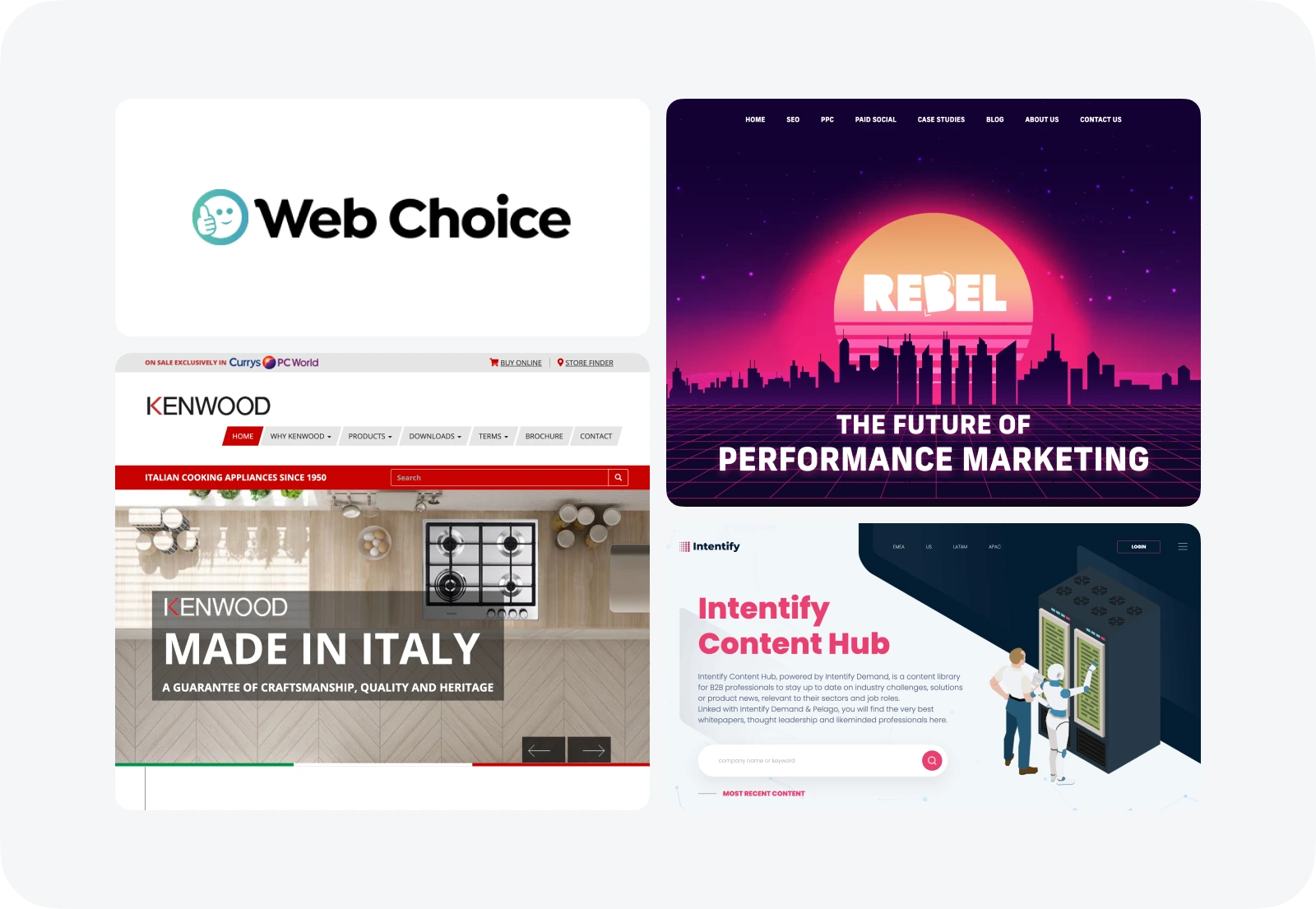
Web Choice is a UK-based agency that helps small business owners turn their websites into high-performing digital assets. Their specialty lies in building custom websites that 1) look professional, 2) rank well on search engines, and 3) convert visitors into leads. With a combined focus on content, SEO, and UX, their sites are built to sell — quietly, consistently, and around the clock.
- Best For: Small to mid-sized businesses seeking cost-effective and results-driven SEO/CRO web solutions.
- Downside: Generalist Design. Design and UX may rely on established frameworks rather than high-end custom product design.
- Portfolio: E-commerce, local businesses; high volume of smaller projects (Min. $10k+).
- Strengths: Cost-effectiveness & SEO. Known for competitive pricing and strong results in SEO and conversion rate optimization (CRO).
- Unique Feature: Value for Cost. Provides quality service and technical expertise (including complex integrations) at a budget-friendly hourly rate.
Their approach is straightforward and ROI-driven. Every element — from copy to code — is designed with a clear goal in mind: drive traffic, build trust, and increase conversions. Web Choice is particularly effective for businesses looking to boost their visibility without the overhead of a large agency. They handle everything in-house, which keeps timelines tight and communication clear.
| Location(s) | Bristol, UK |
| Founded | 2009 |
| Team Size | 10–49 |
| Clients | Startups, SMBs |
| Services | Web Design, SEO, eCommerce |
| Budgets | $1,000–$25,000 |
| Industries | Medical, Finance, Hospitality |
| Website | webdesignchoice.co.uk |
| Social Links | LinkedIn,Twitter |
9. Human Creative
Human Creative is a small, independent design studio that punches well above its weight. With a team of less than 10 people, it focuses on delivering thoughtful, strategy-driven design for clients around the world. Its approach is highly collaborative and grounded in research, making it a reliable partner for businesses that want more than surface-level aesthetics.
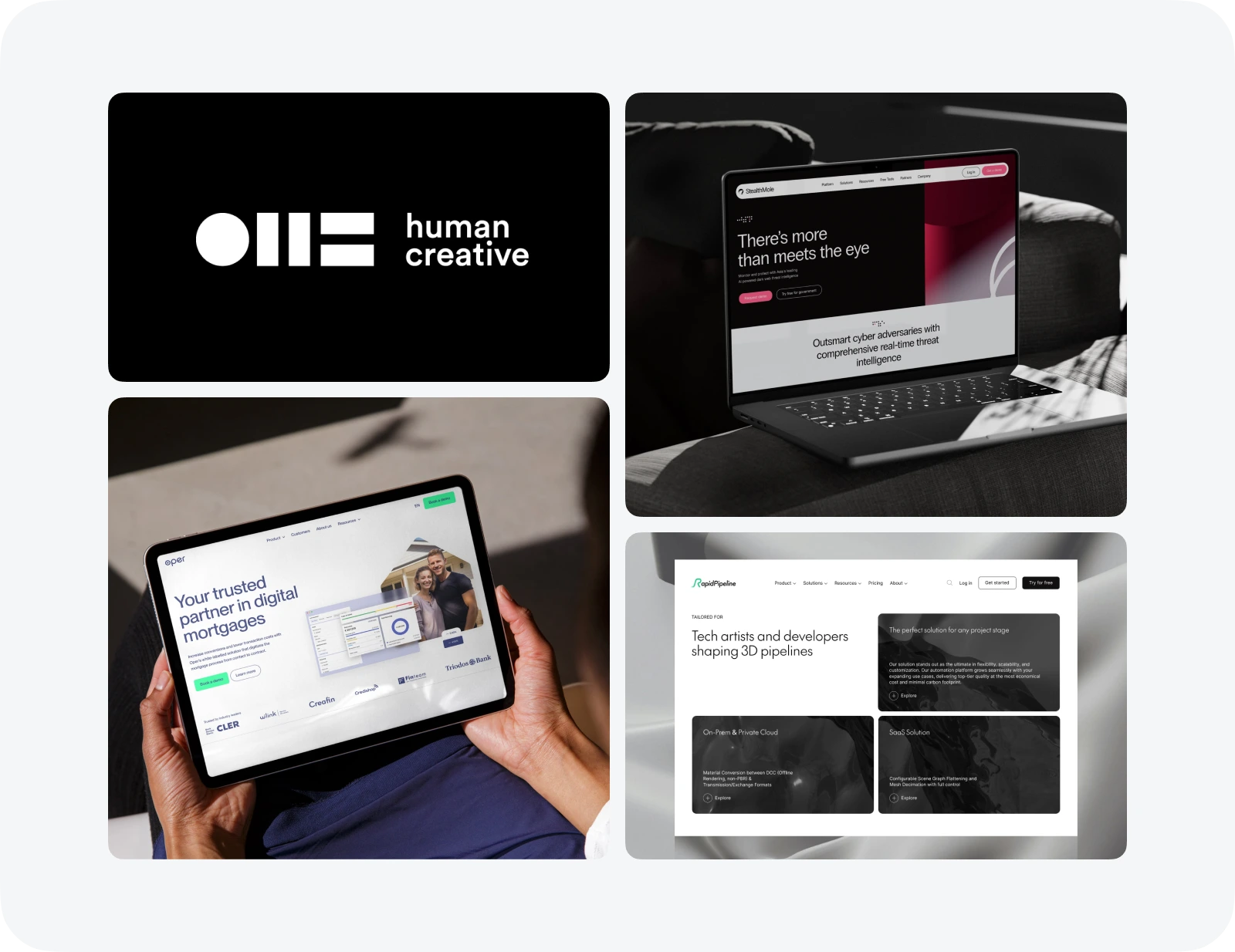
- Best For: Clients seeking a highly collaborative, strategy-driven design process from an agile, small team.
- Downside: Team size/capacity. Smaller team (under 10) means potential limits on project scale/pace or rapid resource scaling.
- Portfolio: 70+ international projects across 24 countries (fintech, wellness, varied).
- Strengths: High collaboration & strategy. Highly adaptable, research-grounded approach that integrates tightly with client teams.
- Unique Feature: Global boutique model. Small, independent studio that leverages strategy and research for diverse international projects.
To date, the studio has worked on over 70 international projects across 24 countries, proof of its ability to adapt to different markets and business models. Whether reimagining a fintech dashboard or building a wellness brand from the ground up, Human Creative combines clarity with emotional intelligence. Its size allows it to stay close to the work and build real relationships with clients.
| Location | Poznań, Poland |
| Founded | 2013 |
| Team Size | 2–9 |
| Clients | SMBs |
| Services | Brand Strategy, Graphic Design, Web Design |
| Budgets | $20,000+ |
| Industries | Finance, IT, Medical, Real Estate |
| Website | human-creative.co |
| Social Links | LinkedIn,Dribbble |
Why Do You Need the Best Web Design Company?
Your website is probably your brand’s first impression on every potential client, and you rarely get a second one. And a fantastic website doesn’t just look good: It guides users, builds trust, and turns interest into action. Design influences credibility. Speed affects engagement. And structure determines SEO visibility.
Hiring a professional web design company means investing in a partner that can help businesses reduce risk, improve outcomes, and set a foundation for long-term success. With the right agency on your side, you don’t just get design work — you get strategic thinking, development skills, and user-centered execution. Remember: Good design grabs attention. Great design builds momentum.
The flip side is equally important: doing nothing is not neutral. An outdated, slow, or confusing site quietly inflates your customer acquisition costs, depresses conversion rates, and erodes trust every day it stays live.
In B2B and fintech, where sales cycles are long and switching costs are high, buyers rarely tell you, “We didn’t convert because your website felt risky.” They just disappear, choose a competitor that feels more credible, and never come back.
How to Choose Web Design Agency?
On mobile, you get roughly three seconds to earn a visitor’s attention. Google’s research shows that about 53% of visits are abandoned if a page takes longer than three seconds to load. In other words, your website is no longer “just a brochure.” It’s a growth engine or a leak in your pipeline.
The market is crowded with agencies promising “stunning design.” But a pretty homepage doesn’t guarantee performance, leads, or revenue. Text below walks you through a strategic, business-first way to select a web design partner who can actually move your KPIs forward.
1. Internal Preparation (Before You Search)
Before you reach out to anyone, align your stakeholders on what “success” means:
- What business outcomes do you expect? (Leads, sign-ups, demos, sales, lower support requests, higher pricing power, etc.)
- Which KPIs will you track? (Conversion rate, lead quality, average order value, time on site, bounce rate, page speed, Core Web Vitals, etc.)
Put these in a one-page brief. The clearer you are, the easier it is to judge whether an agency can deliver.
Talk openly about budget. Be transparent early. Sharing a realistic budget range in the first conversation saves everyone time. Good agencies use it to shape a feasible strategy and recommend the right scope rather than guessing.
If you underpay, corners get cut: rushed discovery, shallow UX, generic templates, minimal QA. If you pay fairly for the value you expect, you attract teams that can invest senior talent, proper research, and robust development.
Define scope and pricing model. Decide which model fits your risk profile and culture:
Fixed price: Best when scope is well defined and you want financial predictability. You’ll need a clear requirements document and change control.
Time & materials: Best when discovery may change the solution, or when you want to iterate based on user feedback. You trade some cost certainty for flexibility and depth.
Many serious projects mix both: fixed for core deliverables, Time & materials for ongoing optimization and experiments.
2. Audit Web Design Agency (The Deep Dive)
Start with their own channels:
- Website: Is messaging clear? Is it fast, accessible, and easy to navigate on mobile? If they can’t do it for themselves, they won’t do it for you.
- Blog /social: Do they publish useful content or only sales posts? Do they show opinions on UX, performance, and strategy or just templates and trends?
This reveals how they think, and no what they sell.
Run the “live portfolio” test. Don’t stop at pretty screenshots in a case study. Open the live sites they’ve designed.
Test them on your phone:
- How fast do they load?
- Are key actions (contact, sign-up, checkout) obvious and smooth?
- Does the layout hold up across different screen sizes?
Given that even a few seconds of delay can cause over half of mobile visitors to leave, performance and UX are non-negotiable.
Check social proof beyond their own site. Testimonials on their website are curated. Balance them withThird-party review platforms such as Clutch, where clients rate agencies on quality, schedule, and communication.
Do reference calls properly. Ask for 2–3 recent clients whose projects are similar in scope or industry. On the call, go beyond “Were you happy?” and ask:
- What was the agency really good at?
- Where did they struggle or fall short?
- How did they handle delays or scope changes?
- How responsive were they day-to-day?
- Would you hire them again, and under what conditions?
The tone of these answers is often more revealing than the words.
Look closely at the actual team. Beyond the brand and the portfolio, you’re hiring people. Ask who will be on your project day-to-day—strategy, UX, UI, development, project management—and how senior they are. There’s a big difference between a pitch team full of senior partners and a delivery team made up entirely of juniors.
For B2B and fintech, it’s worth checking whether they’ve designed complex journeys before: multi-step signups, pricing calculators, KYC and onboarding flows, partner portals, or documentation hubs. An agency that understands those patterns will get up to speed faster and make fewer expensive mistakes.
3. Assessing “Fit” (The Intangibles)
Look for niche expertise where it matters.
Industry context changes everything. Any B2B or SaaS tech platform needs strong trust signals, regulatory awareness, and precise UX around risk and money handling. An e-commerce brand cares more about product discovery, merchandising, and checkout optimization.
Some agencies pecialize in specific verticals such as SaaS and productized B2B platforms—bringing reusable patterns, tested flows, and a sharper sense of what actually converts in those markets. You don’t always need a niche agency, but in complex or regulated industries, it can significantly shorten the learning curve.
As for balancing location and culture, a nearby partner can be valuable if:
- You prefer in-person workshops for alignment.
- Your market has strong local nuance (language, regulations, cultural norms).
- You’re running a high-stake launch with tight, real-time collaboration.
Face-to-face sessions often speed up decisions and reduce misunderstandings.
On another hand, remote agencies can work just as well—sometimes better—if they have:
- Clear communication routines (weekly check-ins, shared channels, written recaps).
- Transparent project tools (task boards, timelines, access to design files).
- A track record of remote delivery with clients in your time zone.
Ask them to walk you through how they manage a typical remote engagement, from kickoff to launch. Remember, that you’re not buying a deliverable, you’re entering a partnership.
4. Final Steps
Choosing a web design agency is ultimately about fit at three levels:
- Technical skill: Can they design and build fast, intuitive, mobile-first experiences that protect your brand and KPIs?
- Budget alignment: Is there a fair exchange between the value you expect and what you’re willing to invest?
- Cultural compatibility: Do you trust the people and the way they work enough to navigate ambiguity and tough calls together?
When those three align, your website stops being a cosmetic asset and starts acting like a real growth engine.
Common mistakes when choosing a web design agency
One of the biggest mistakes is treating web design as a commodity and choosing purely on price. In practice, a “cheaper” project that skips research, QA, or proper implementation often ends up costing more in lost revenue, missed deadlines, and rework. If the proposal looks too good to be true, it usually is.
Another common misstep is not aligning internally on goals and KPIs before you brief agencies. If your C-suite can’t agree on what success looks like, no partner will be able to hit the target. That misalignment usually shows up later as scope creep, frustration, and an underperforming site.
Finally, many teams over-index on visuals and ignore process and communication. A beautiful Figma file is worthless if stakeholder feedback isn’t managed, engineering can’t feasibly implement it, or no one is accountable for launch and post-launch optimization. Choose the team whose way of working you trust—not just the one with the flashiest mockups.
Why is web design important for businesses?
A company’s website is its most visible brand touchpoint and often the first customer interaction. Effective web design communicates credibility, improves usability, and supports business growth by converting visitors into customers. It shapes the entire digital experience and directly impacts marketing performance, sales, and customer retention.
What is web design (and what is not)?
Web design is the strategic planning, creation, and optimization of your website so it supports concrete business goals. It combines information architecture, UX, visual design, and front-end implementation to move visitors from curiosity to qualified demand. For a B2B or fintech brand, that often means turning anonymous traffic into pipeline, demo requests, and trust in how you handle data and money.
In practice, web design is less about “making things pretty” and more about orchestrating the entire digital experience around your value proposition, pricing, and sales process. It’s the connective tissue between your product pages, content, campaigns, and customer workflows.
Web design is not picking a template, swapping in your logo, and calling it a day. It’s not a one-off aesthetic refresh you forget about for five years. And it’s definitely not independent from performance, accessibility, SEO, or analytics. If it doesn’t change how prospects behave—and give you the data to prove it—it’s decoration, not design.
What does a web design agency do?
A web design agency creates digital experiences & products that align brand identity, user needs, and business goals. Its work combines strategy, UX and UI design, responsive development, and performance optimization. The agency ensures that every interaction is intuitive, consistent, and measurable across the entire customer journey.
Types of web design services (service models)
What types of web design services are there?
Most serious web design agencies offer a few different engagement models so you can match the work to where your business is. The most common is a done-for-you website or redesign: a defined project where the agency handles strategy, UX, UI, development, and launch. This is typically the right choice for rebrands, new product lines, or when your current site simply can’t support the next stage of growth.
A second model is UX and conversion consulting without a full rebuild. Here the agency audits your current site, identifies friction in key journeys—like pricing pages, signup flows, KYC flows, or multi-step forms—and recommends targeted changes. Your in-house team or existing dev partner then implements those improvements.
The third is an ongoing optimization and growth retainer. Instead of “big bang” redesigns every few years, you get a steady cadence of experiments, A/B tests, content and UX iterations, and technical improvements. For marketing leaders with aggressive pipeline targets, this model tends to align better with how demand gen actually works: continuous, data-driven, and compounding over time.
Depending on the agency, you may also see specialized offers: like design systems, product UI/UX for web apps, or dedicated support for Webflow/WordPress/Shopify. The key is to choose the model that matches your internal capacity, risk tolerance, and growth horizon.
Who should hire a web design agency (and who isn’t ready yet)?
A web design agency makes the most sense when your website is clearly holding back a business that’s already working. If you have a validated offer, real customers, and a predictable way of generating traffic, but your site looks dated, is hard to update, or converts well below industry benchmarks, you’re likely leaving a lot of money on the table. That’s especially true in B2B and fintech, where trust, clarity around risk, and complex decision-making all need to be designed deliberately.
You’re also ready for an agency when your team is stretched thin. If every change to the website requires a heroic effort from product, engineering, or a generalist marketer, a dedicated partner can free up bandwidth and bring the depth you can’t hire for in-house immediately.
On the other hand, if you’re still pre-product-market fit, pivoting every few months, or unsure who your ideal customer actually is, a large web design project is usually premature. At that stage, a simple DIY or lightweight site is often enough while you validate the fundamentals.
As a rule of thumb: if your biggest constraints are clarity of business model, you probably don’t need an agency yet. If your biggest constraints are how effectively your digital presence converts demand into revenue, you probably do.
In-house web designer vs. freelancer vs. web design agency
Once you decide that DIY is too limiting, the next question is whether to build an in-house team, hire a freelancer, or partner with an agency. Each path has a different risk profile, especially in tech and fintech where the stakes and complexity are high.
An in-house designer or UX team gives you continuous access and deep product context. This works well if your website is just one part of a broader design workload across product, data tools, and internal interfaces. The trade-off is cost and time: recruiting, onboarding, and retaining senior talent is slow and expensive, and they may still need external support for heavy builds or development.
A freelancer can be a great option for tightly scoped, smaller projects—landing pages, brand polish, or incremental improvements. You get flexibility and lower overhead, but you’re relying on a single person’s capacity, process, and availability. For multi-stakeholder projects with complex integrations and compliance requirements, that can become a bottleneck.
A web design agency gives you a cross-functional team—strategy, UX, UI, development, SEO, analytics—along with a defined process and delivery discipline. You pay more per hour than you would for a single hire, but you de-risk the project by plugging into an existing system rather than trying to invent one from scratch. For CMOs and founders who need to move quickly without building an entire digital team, this is often the most efficient route.
In reality, most high-growth companies end up with a hybrid: a lean in-house team that owns strategy and brand, supported by an external agency for heavy lifts and specialized expertise.
What red flags to watch out for when hiring a web design agency?
Be careful if an agency focuses only on aesthetics without understanding user goals or business objectives. Lack of clarity about process and deliverables usually signals weak project management. Portfolios that show visuals without explaining results or metrics make it difficult to evaluate expertise.
A generic design style across clients often suggests a lack of strategic thinking. Poor communication during discovery or planning stages often leads to misalignment later in development.
Questions to ask a web design agency before you sign
The questions you ask in early conversations reveal more than the answers you get in a proposal. You’re not just validating capability; you’re stress-testing how the agency thinks about risk, accountability, and outcomes.
A few high-leverage questions to put on the table:
- Who will be on our project team, and what percentage of their time will be dedicated to us?
- How will we measure success, and what will you report on monthly or quarterly?
- How do you handle changes in scope once we learn from users or stakeholders?
- Who owns the design files, code, and content after launch?
- How do you support the site post-launch—bug fixes, optimizations, and new pages?
- Can you walk us through a recent project similar to ours, including what didn’t go as planned and how you handled it?
The goal is to see whether the agency is comfortable being transparent about trade-offs, constraints, and real-world delivery.
How to measure the business outcomes of web design?
Business KPIs for web performance
The most direct indicators are conversion rate, lead quality, engagement time, and bounce rate. A strong web design should improve customer acquisition efficiency and lower cost per conversion.
Customer metrics (CX + loyalty)
Returning visitor rate, satisfaction scores, and task completion rates show whether users find the site useful and easy to navigate. Positive customer experience metrics translate into higher loyalty and lifetime value.
Financial modeling of design impact
Good design drives measurable financial impact through higher revenue per visitor and reduced acquisition costs. Modeling ROI includes tracking pre- and post-launch performance, sales lift, and long-term contribution to digital brand equity.
How to calculate ROI of web design?
Measuring outcomes is the first step. Turning that into ROI means connecting design improvements directly to revenue and margin. At a basic level, you’re asking: “How much incremental profit did the new site generate compared with what we invested?”
A simple way to frame it is:
ROI = (Additional profit attributed to the new site – Total project cost) ÷ Total project cost
Imagine you invest $30,000 in a redesign. After launch, your conversion rate improves and you see an additional $15,000 in net profit per month from the same media spend and sales effort. Over 12 months, that’s $180,000 in additional profit. Subtract the $30,000 investment and you have $150,000 in net gain. Divide $150,000 by $30,000 and your ROI is 5x, or 500%. The exact numbers will vary, but this is the level of financial clarity you should expect from your web design partner.
How long web design projects take?
Timelines depend on scope, complexity, and how quickly your team can make decisions. As a rough guide, a focused redesign of a simple marketing site might take 6–8 weeks from kickoff to launch. A more complex B2B or fintech site: with multiple product lines, gated content, integrations, and stakeholder groups—typically runs 3–4 months. Large-scale transformations can stretch beyond that.
Under the hood, most projects follow similar phases: discovery and research, information architecture and UX, visual design, development, content migration, QA and performance optimization, and launch. Compressing any one of these steps too aggressively usually pushes the risk downstream—into bugs, missed requirements, or disappointing performance.
From a “time to value” perspective, you should start seeing leading indicators—like improved engagement on critical pages and cleaner analytics—within weeks of launch. Pipeline and revenue impact will naturally lag your sales cycle. For long B2B cycles, it’s reasonable to expect a full picture of ROI over 6–12 months.
What the onboarding and project process looks like
A good engagement starts with a structured onboarding. That usually means a kickoff workshop with key stakeholders, an audit of your current site and analytics, and a deep dive into your product, positioning, and sales process. The goal is to understand what’s already working, where users drop off, and how the website should support your broader growth strategy.
From there, the agency will translate that understanding into a strategy, sitemap, and key user journeys. You’ll review and refine wireframes before visual design starts, then approve design directions that set the tone for the full site. Development, content work, and integration run in parallel where possible, with regular check-ins and demos so nothing drifts too far from expectations.
As launch approaches, expect a structured QA phase: device and browser testing, performance and Core Web Vitals checks, analytics and tracking validation, and contingency planning for go-live. After launch, there should be a defined hyper-care window for fixing issues quickly and a plan for ongoing optimization rather than just handing over files and disappearing.
What deliverables and reports should you expect from a web design agency?
While every engagement is a little different, most B2B and fintech projects produce a predictable set of deliverables. At a minimum, you should expect clarity on strategy, tangible design and build outputs, and ongoing visibility into performance.
Typical deliverables include:
- Discovery and strategy outputs: stakeholder interview notes, user or buyer insights, clarified positioning, and an information architecture or sitemap that reflects how your market actually buys.
- UX artefacts: key user journeys, low- or mid-fidelity wireframes for critical flows (home, product, pricing, onboarding, resources), and documented assumptions to test.
- Visual design deliverables: high-fidelity page designs, a basic design system or style guide (typography, color, components), and guidance on how to extend the system as the site grows.
- Implementation assets: fully responsive page templates, reusable components or modules, and integrations with your CMS and core tools such as analytics, marketing automation, CRM, and—where relevant—your product.
- Content deliverables: approved copy for key pages in an editable format, messaging guidance for future pages, and any supporting assets (illustrations, icons, diagrams) created specifically for your brand.
- Launch documentation and handover: access details for environments and tools, technical documentation where needed, and instructions for your team on how to publish, edit, and maintain the site.
- Performance and optimization reports: a post-launch review comparing pre- and post-launch KPIs, plus ongoing reports (for retainers) that summarize experiments, insights, and priorities for the next cycle.
Who owns the work and intellectual property?
Ownership is one of the least glamorous but most important parts of your agreement. In most cases, once you’ve paid in full, you should own the final website, including the codebase, page designs, and any bespoke assets created specifically for your brand. The agency will usually retain the right to show selected work in their portfolio, but that shouldn’t limit how you use or extend the site.
It’s worth being explicit about design files (for example, Figma), components, illustrations, icons, and any third-party assets like stock photography or fonts. You want clarity on what’s fully owned, what’s licensed, and what restrictions—if any—those licenses imply. The same applies to your CMS, hosting environment, and integrations: access and control should sit with your company, not the agency.
If the project ends early or you change partners later, clear IP and access clauses prevent a lot of friction. Make sure these topics are covered in the contract and don’t be afraid to ask the agency to walk you through their standard approach.
How web design agencies price their work?
Time-based pricing
Projects are billed hourly or daily based on the time required for design, UX research, and development. It offers transparency but depends on tight scope management.
Fixed-price pricing
A defined project fee agreed in advance for specific deliverables such as a website redesign or e-commerce build. Clients gain budget certainty while the agency controls scope and timeline.
Retainers or value-based agreements
Ongoing collaboration for optimization, maintenance, and growth. Payment is tied to the value created, such as increased traffic, improved conversions, or continuous A/B testing.
European vs. American web design agency pricing in 2026
European agencies often favor retainers and long-term digital partnerships. American firms more frequently use project-based pricing with clear timelines and rapid delivery. Average rates in the US remain higher ($120–220 per hour) compared with Europe (€90–160), though hybrid and remote teams are narrowing this gap.
Beyond the pricing mechanism itself, the biggest drivers of cost are scope and complexity. A small marketing site with a handful of page types, simple integrations, and minimal content work sits at one end of the spectrum. At the other end are multi-language, multi-product B2B or fintech sites with complex forms, gated content, bespoke visual systems, and deep integrations into your product and revenue stack. The latter requires more senior time, more QA, and more coordination—and the budget should reflect that.
You may occasionally encounter performance-linked or revenue-share models, especially around conversion optimization. In these cases, part of the agency’s compensation is tied to agreed outcomes—such as uplift in qualified demo requests or a reduction in cost per acquisition—often layered on top of a base fee that covers hard costs. These models can work well when data is clean, attribution is solid, and both parties are comfortable sharing risk.
Regardless of the model, the pricing conversation should feel like a joint exercise in prioritization. A good agency will help you decide what absolutely has to be in scope for launch, what can be phased, and where an incremental approach will give you a faster payback and better ROI.
Conclusion
Choosing the right web design agency comes down to many different factors, your budget, goals, vision, and the industry you operate in. It doesn’t matter if you need a custom website, brand strategy, or complete digital marketing support, working with one of the top web design firms gives you the experience, creativity, and technical know-how to succeed long term.
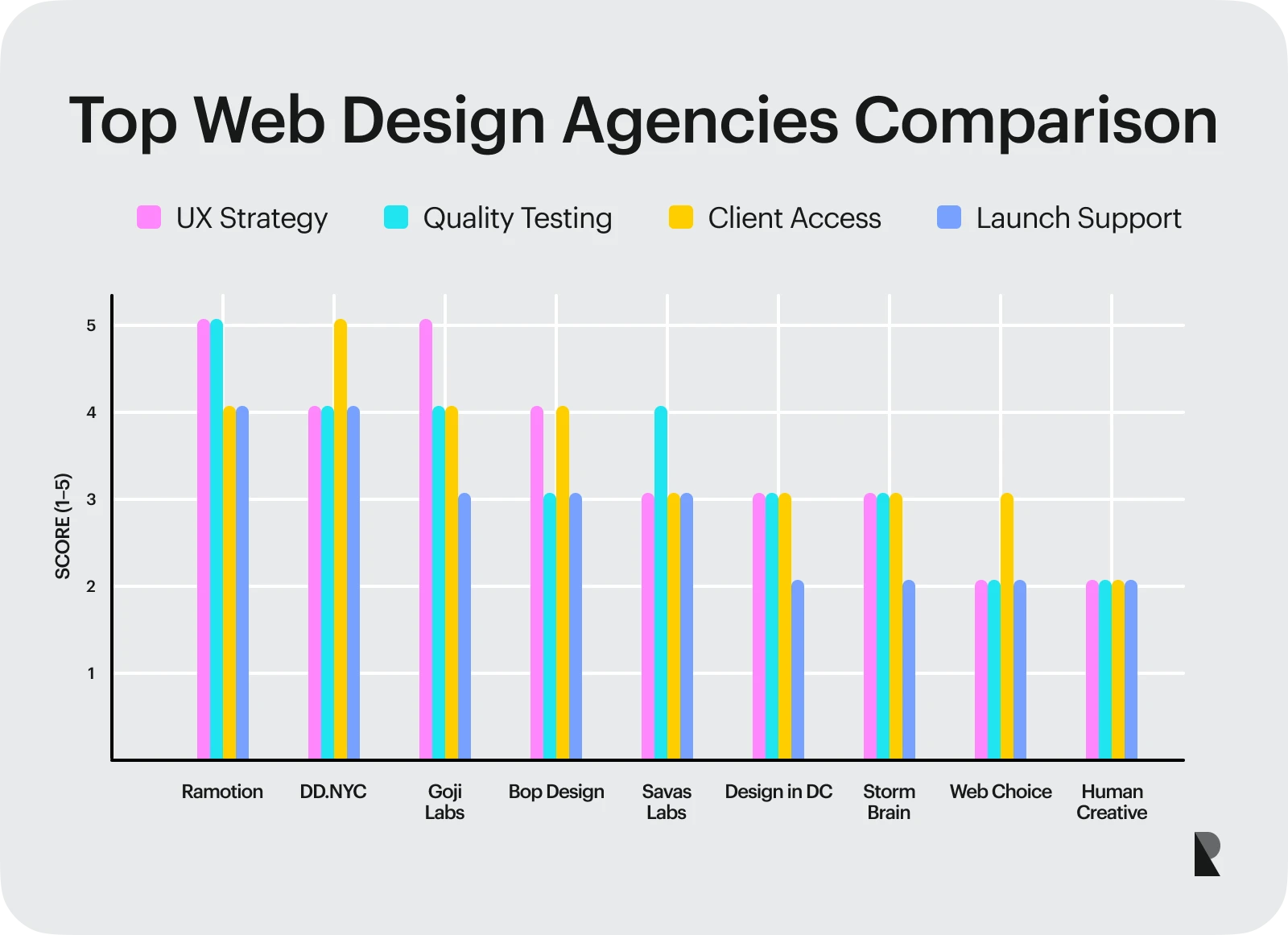
This chart gives a clear, easy-to-digest look at how some of the top web design agencies stack up against each other in key areas like UX Strategy, Quality Testing, Client Access, and Launch Support. Right off the bat, Ramotion, DD.NYC, and Goji Labs shine as the top performers, earning consistently high marks across nearly every category. These agencies seem to have nailed the balance between strong design thinking, reliable project delivery, and ongoing client support—making them great choices for brands looking for both creativity and consistency.
A step below the top scorers, agencies like Bop Design, Savas Labs, and Design In DC still show solid performance, especially in UX and testing. Their slightly lower scores in Launch Support suggest there’s room to grow in post-launch services, but they’re still dependable partners for businesses wanting good value and solid digital craftsmanship.
Towards the lower end, Storm Brain, Web Choice, and Human Creative maintain steady, if more modest, scores across the board. While they may not lead in every category, their consistency can appeal to smaller businesses or those with more focused project goals. \
Overall, this comparison shows that while a few agencies stand out as all-rounders, each has its own strengths—so the best choice really depends on what matters most for your project.
May 14, 2025

Creates insightful, strategy-driven content that translates complex design and branding concepts into accessible knowledge, supporting Ramotion’s mission to elevate digital experiences.